With the Milano Cortina 2026 Winter Games kicking off on February 6, the Queen of the Dolomites unveils a bold new soul. From restored icons to Alpine minimalism, here is the definitive guide to the retreats taking home the gold medal for style.
The wait is over. With February 6th fast approaching, the world’s spotlight is set to turn to the Winter Olympic Games Milano Cortina 2026. But while athletes hone their edges for the races, an equally crucial competition has already been played—and won—on the terrain of hospitality.
Cortina meets this Olympic moment profoundly transformed. The town has evolved beyond the nostalgia of its Golden Age, using the momentum of the Games to rewrite its identity—a renaissance that has seen historic grandes dames reinvent themselves and new boutique hotels introduce a contemporary vision of wellness and hospitality.
Discretion and substance now reign supreme: spaces that dialogue with the Tofane mountains through invisible glass, and spas that aim for deep recovery, where luxury lies in the quality of time and silence. For those heading to the valley to experience the Olympic magic, or for those seeking the perfect hideaway far from the cheering crowds, we have selected the 10 essential addresses that define Cortina’s new direction.
Grand Hotel Ampezzo Cortina
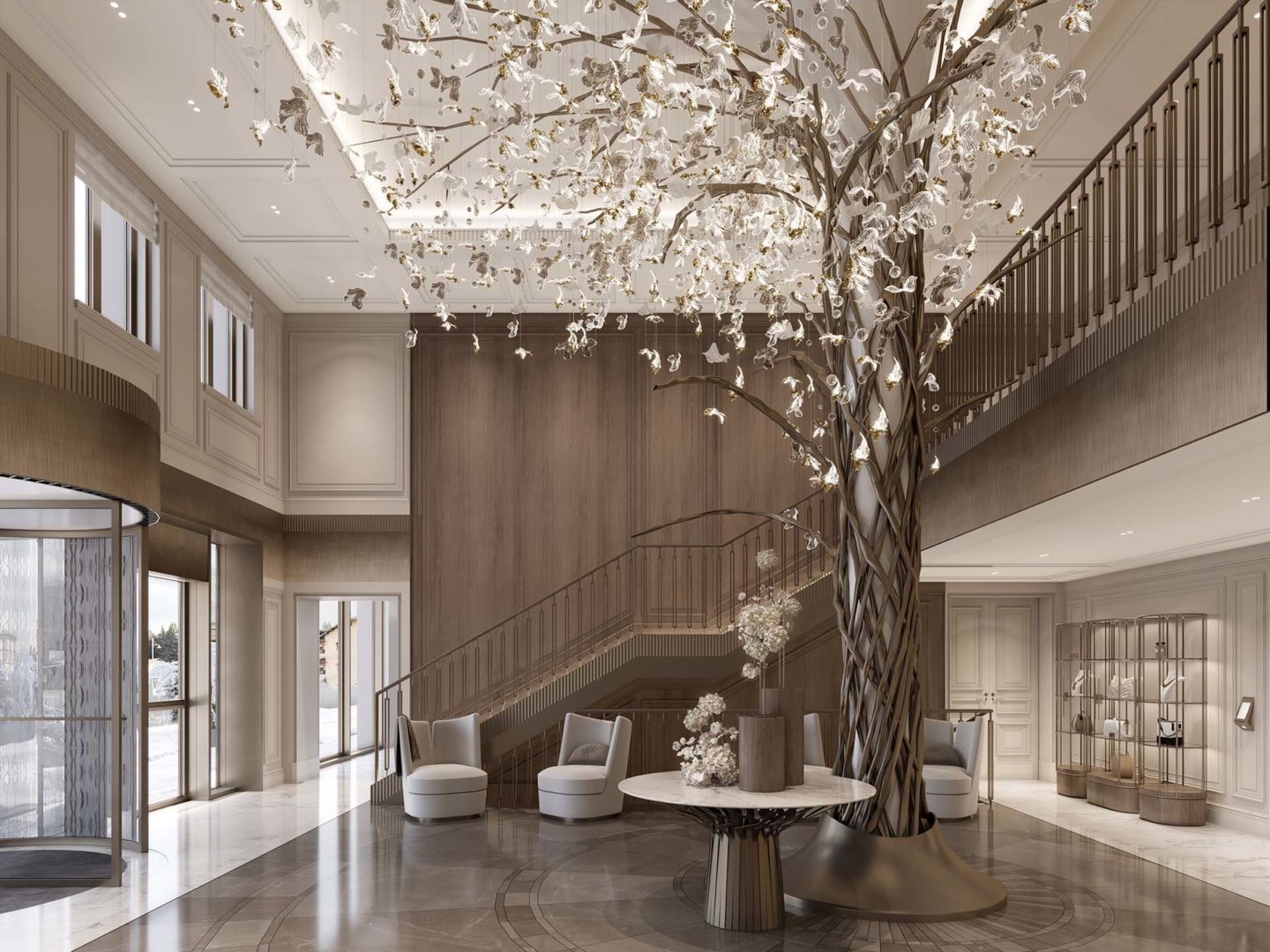
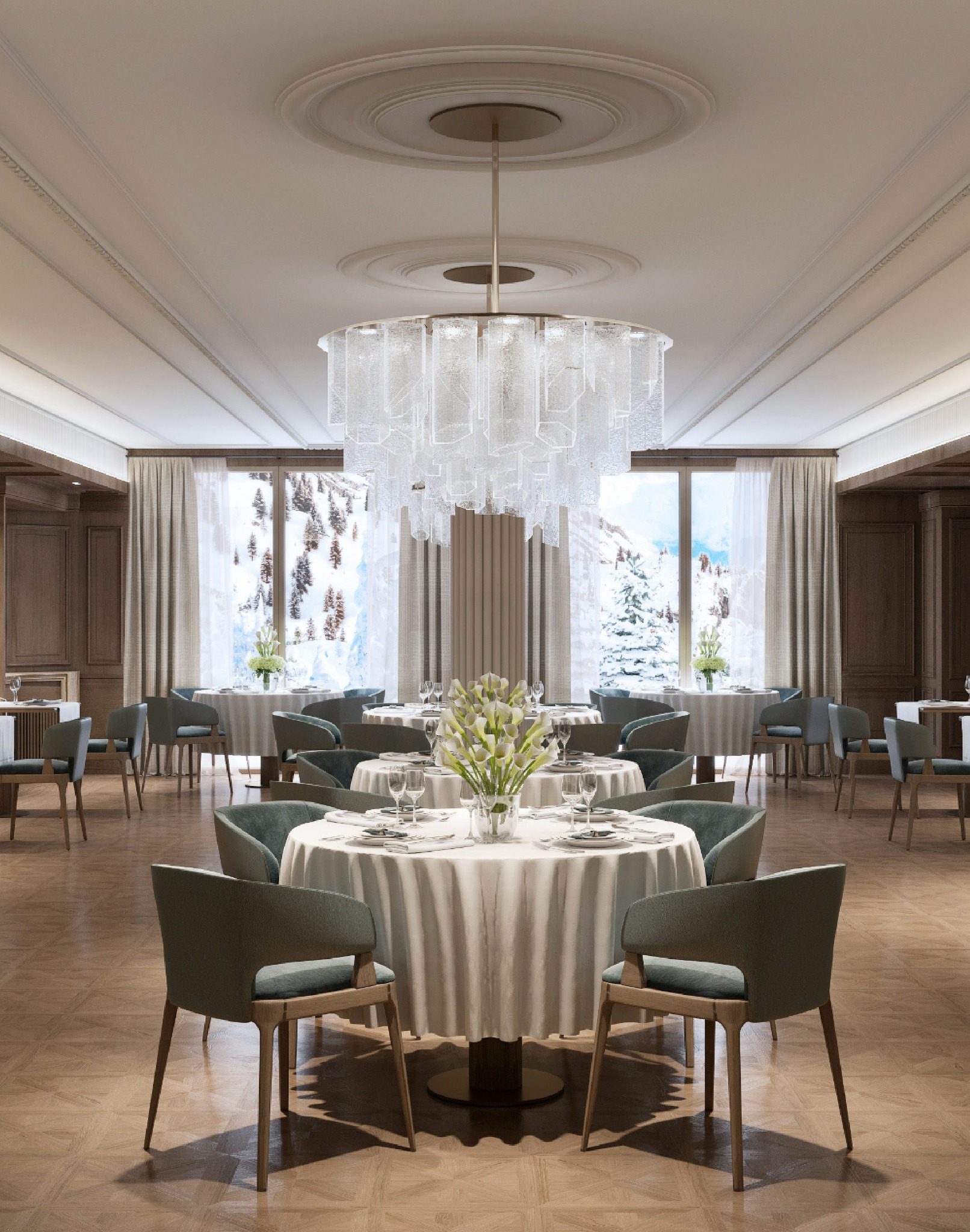
The debut of the Grand Hotel Ampezzo heralds the rebirth of a 1920s icon, a property that served for decades as the steward of elite vacationing history. Emerging from a long slumber on Via della Stazione, the building reopens in soft opening under the Dhom Collection banner—a group effectively cementing its Cortina footprint by placing this landmark alongside the Grand Hotel Savoia and Lajadira Boutique Hotel & Spa. Far from an exercise in nostalgia, the project fuses the exterior’s Habsburg gravitas with a cosmopolitan reinterpretation of the interiors.
The location is strategic, deftly bridging the classic Ampezzo divide between accessibility and privacy. Situated in Cortina’s beating heart, the hotel acts as a nexus between the sporting dimension and the social scene: the nearby Faloria cable car ensures direct access to the Dolomiti Superski circuit, while the boutiques and social rituals of Corso Italia remain mere moments away.
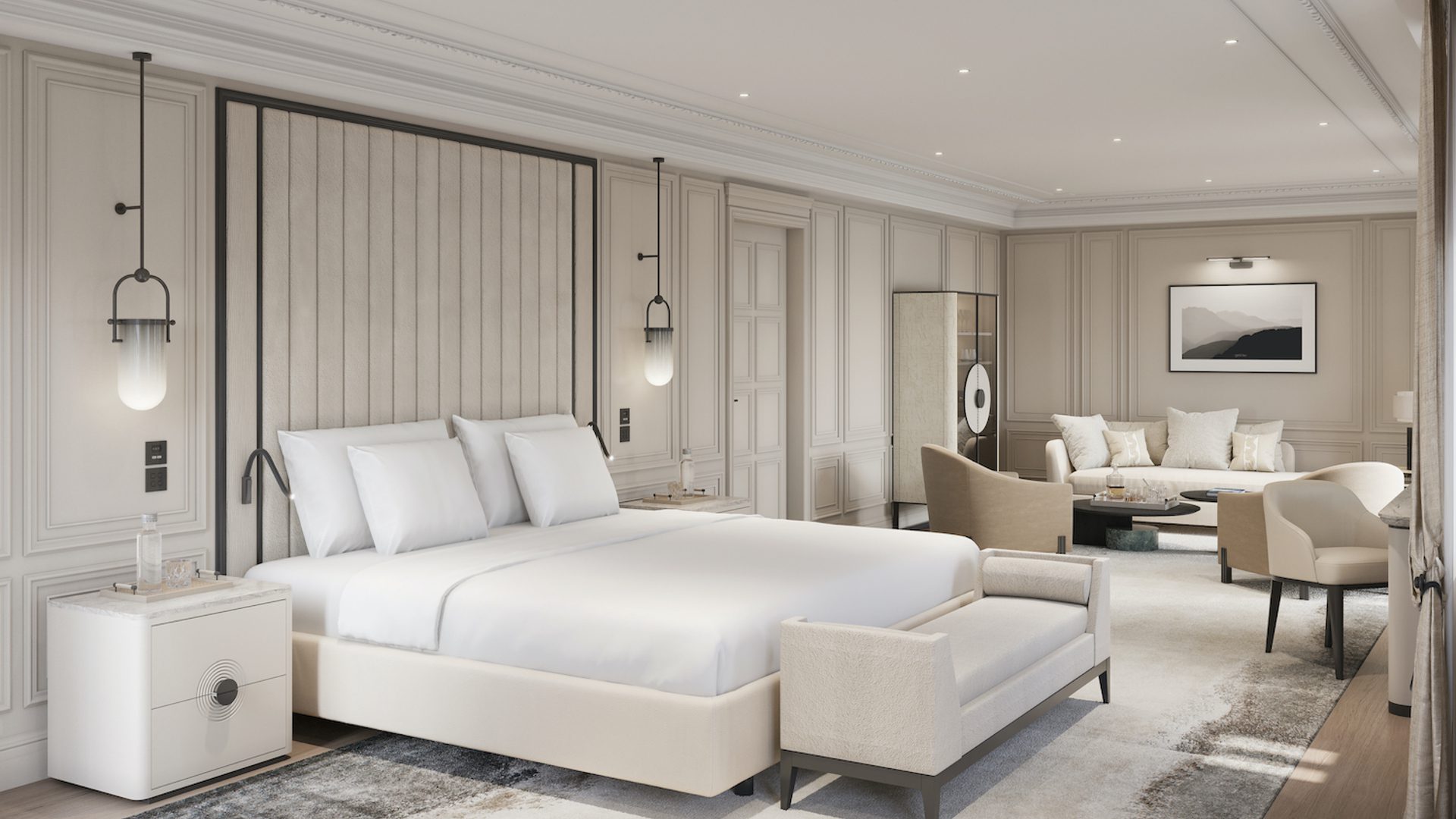
Architecturally, the 70 rooms and suites are masterclasses in quiet luxury. Defined by subtraction, the interior design eliminates visual noise to prioritize noble materials such as marble, boiserie, and fine woods. The color palette, anchored in whites, beiges, and the nuances of Dolomite rock, interplays with natural light to create an oasis of silence in the center of the Queen.
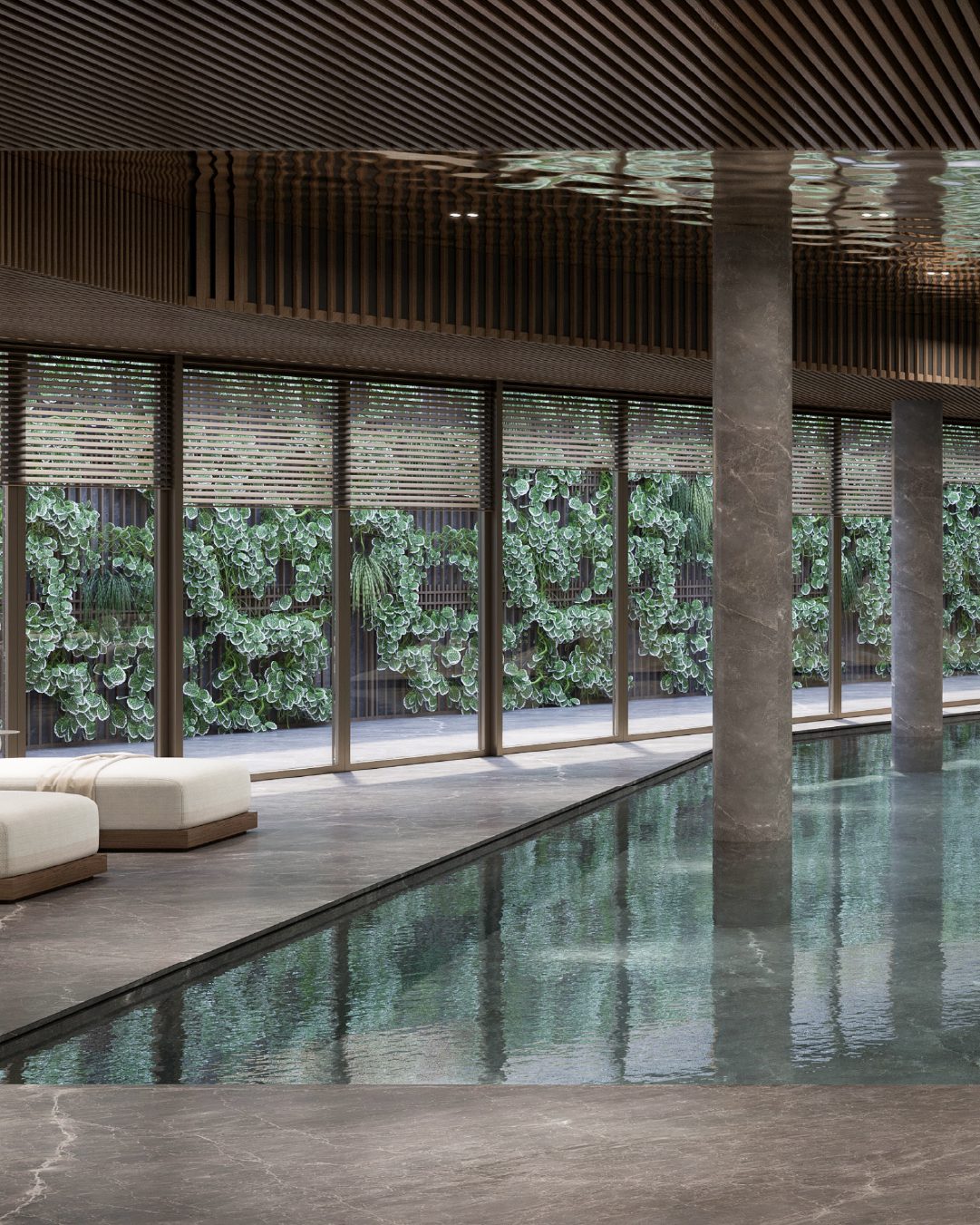
Spanning over 1,000 square meters, the spa carves out a genuine wellness enclave. Here, the architecture choreographs a rhythm between fluid elements and thermal shocks—ranging from the pool to the ice room—yet the true differentiator remains the philosophy. The pursuit is Longevity: Alpine rituals and natural ingredients serve as catalysts for holistic recovery and profound regeneration.
Grand Hotel Savoia Cortina
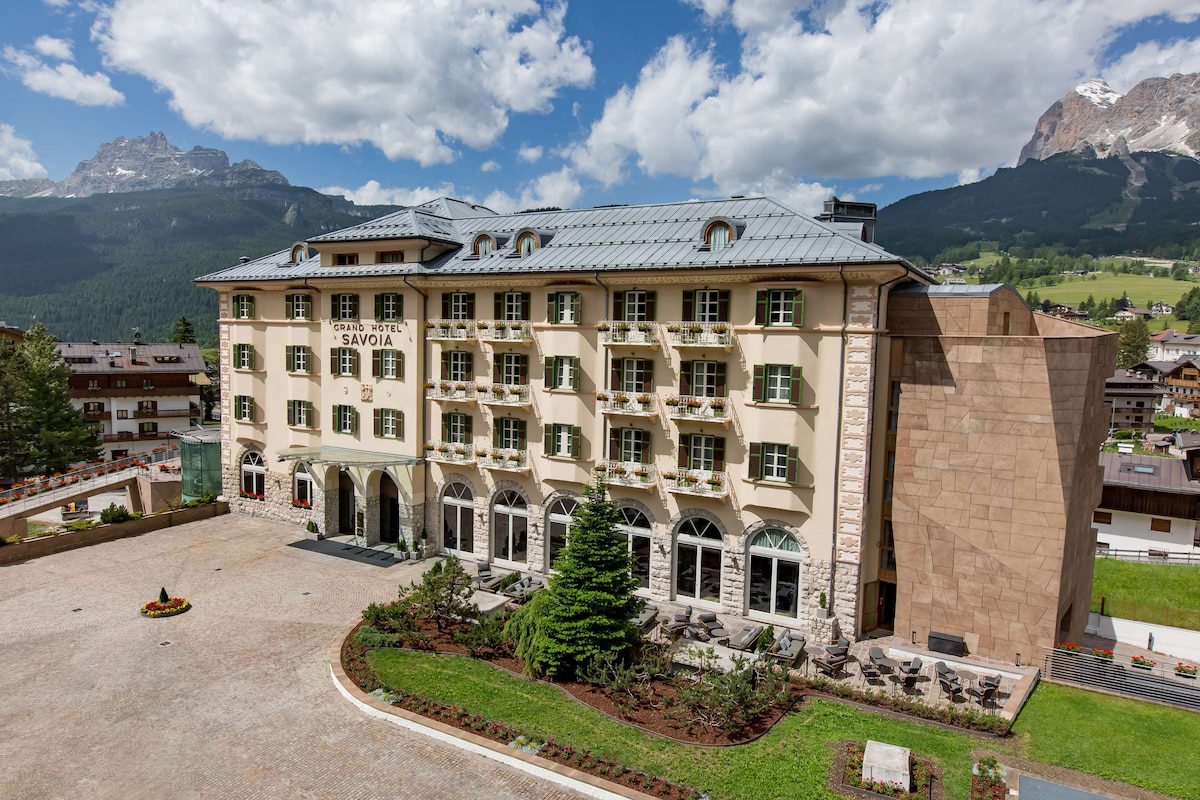
Founded in 1922, the Savoia stands as a definitive fixture of travel’s Golden Age, having played host to royalty and jet-setters alike while commanding the Ampezzo skyline. Under the Radisson Collection banner, the hotel enjoys a renaissance following a restoration by Schema 4 Architects (2021). Eschewing a radical break in favor of a cultured reinterpretation, the project preserves the hotel’s historical stature while answering a timely question: ‘In an age of excess, what constitutes just enough?
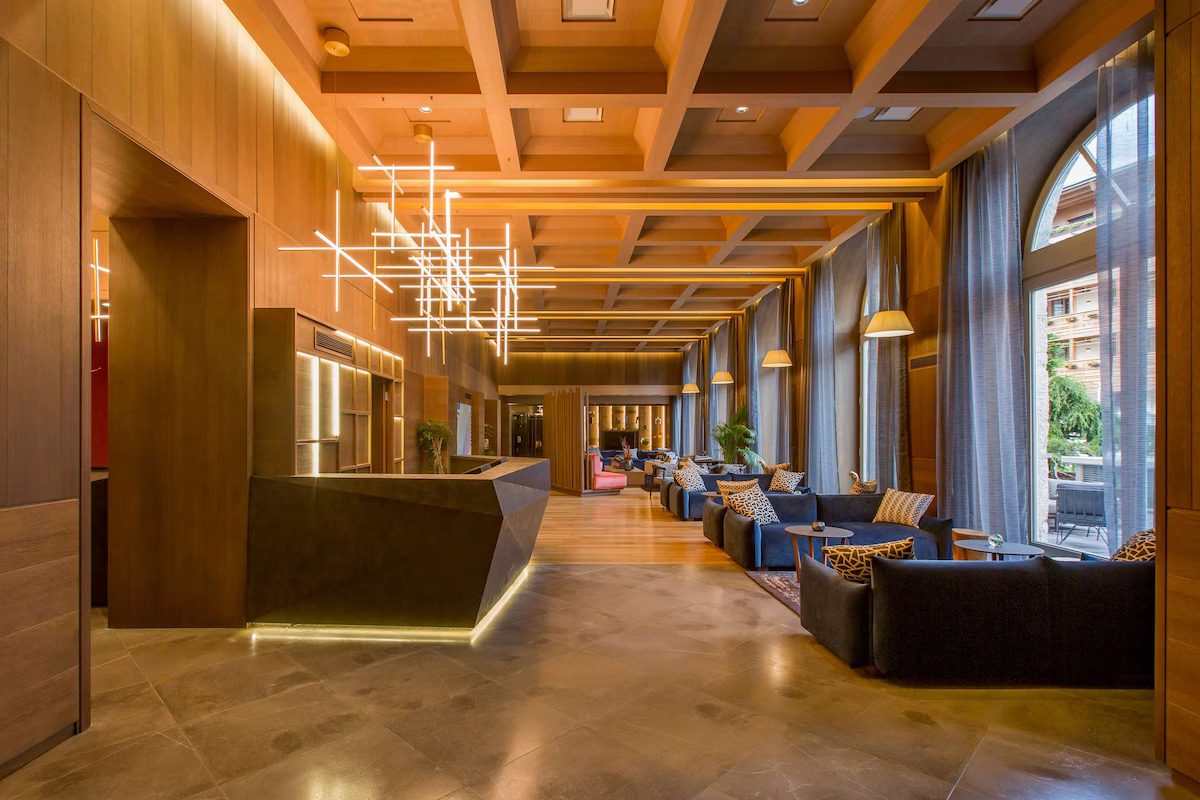
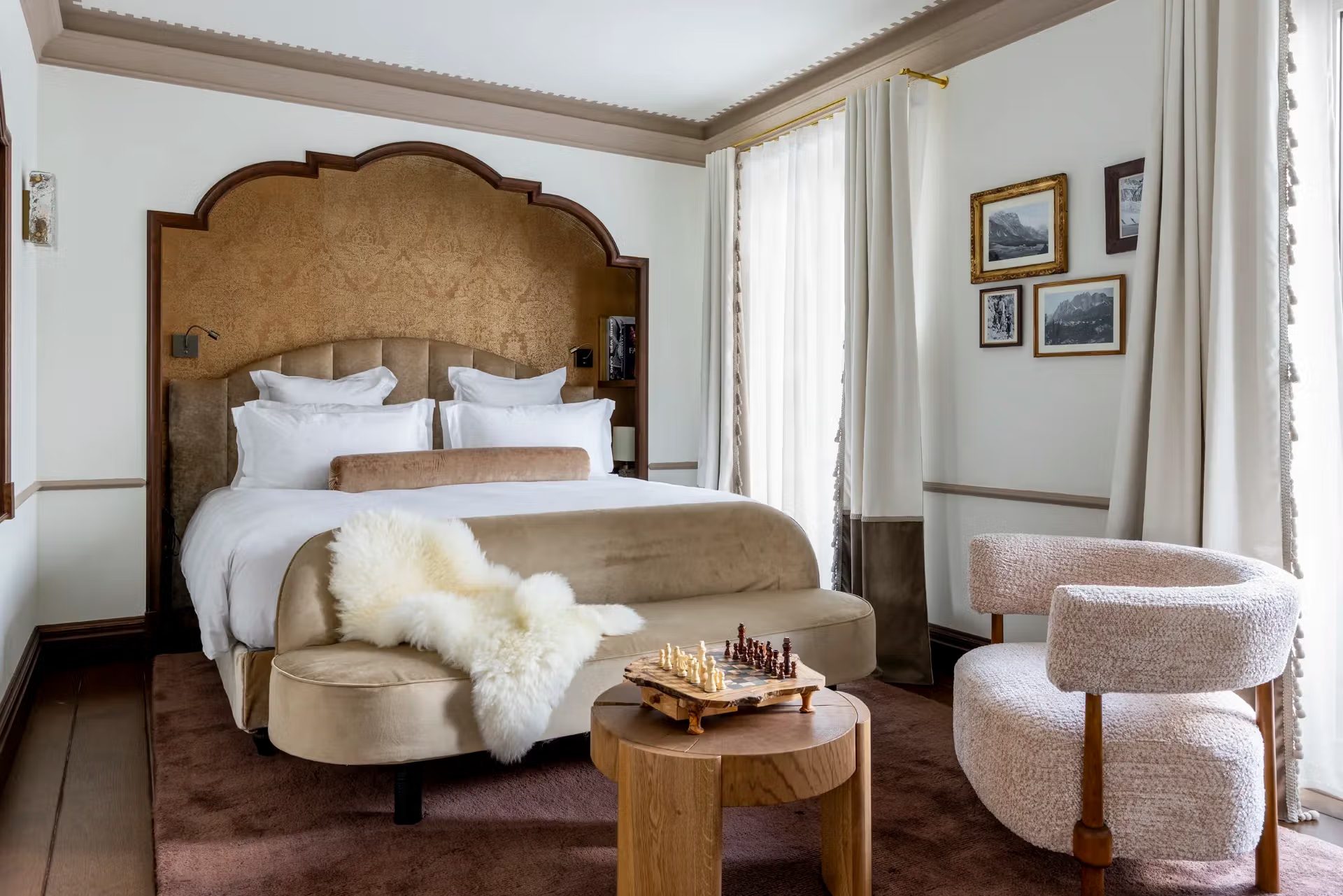
The outcome is a seamless fusion of rustic warmth and cosmopolitan elegance. Interiors channel the Alpine environment through a palette drawn directly from nature: larch green, dolomite gray, and earthen mocha. This visual continuum dissolves the boundary between indoors and out, flowing silently into the 132 rooms and suites.
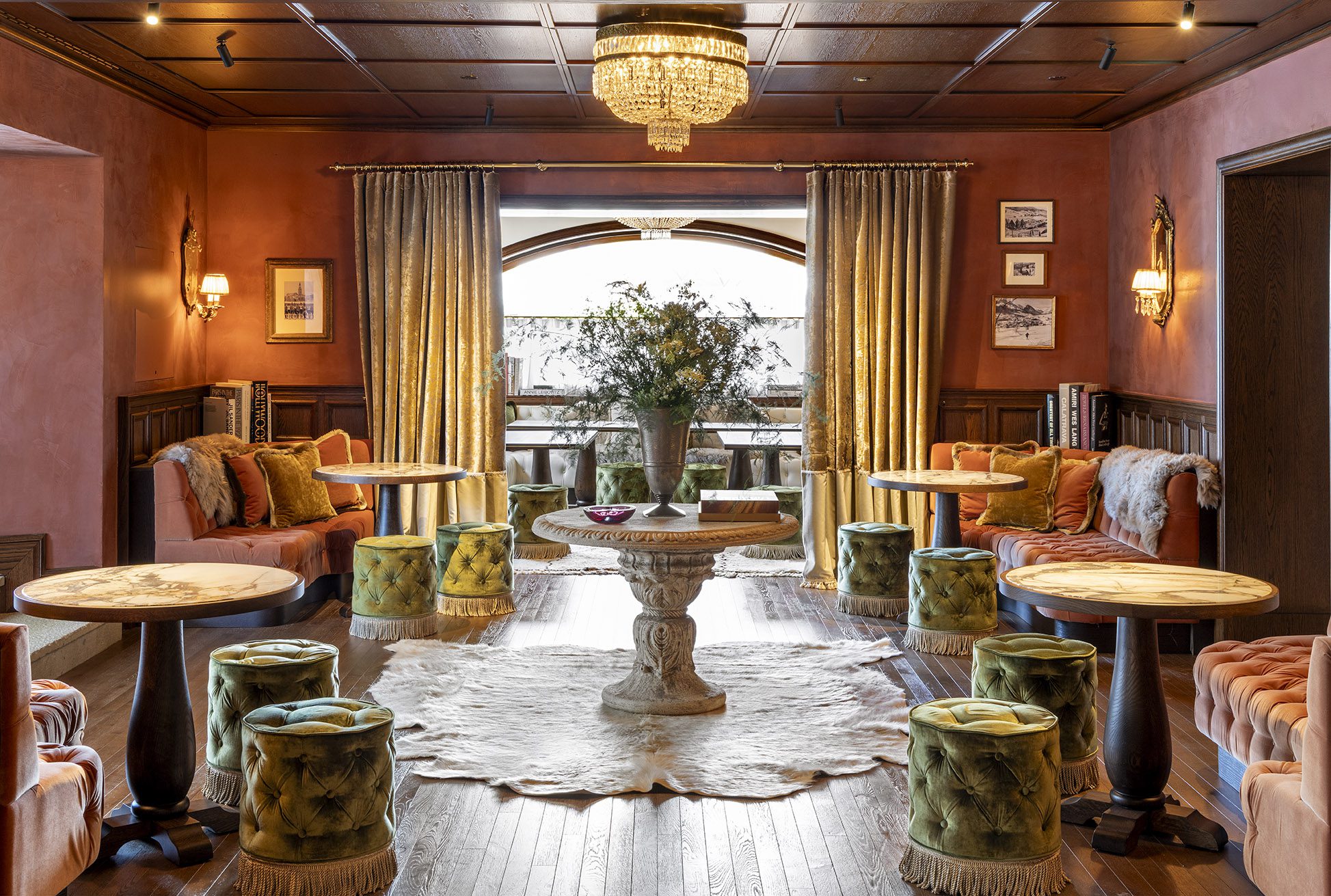
Here, the traditional chalet aesthetic matures into a contemporary private refuge. The home away from home atmosphere hinges on the tactile warmth of parquet, which conceals omnipresent technology to ensure fluid connectivity without disrupting the room’s hushed intimacy. The manifesto of exclusivity, however, is penned on the ninth floor: the 87-square-meter Royal Suite Savoia redefines privacy with three bedrooms, a panoramic terrace, and—a requisite for dignitaries and celebrities—a private elevator guaranteeing absolute anonymity.
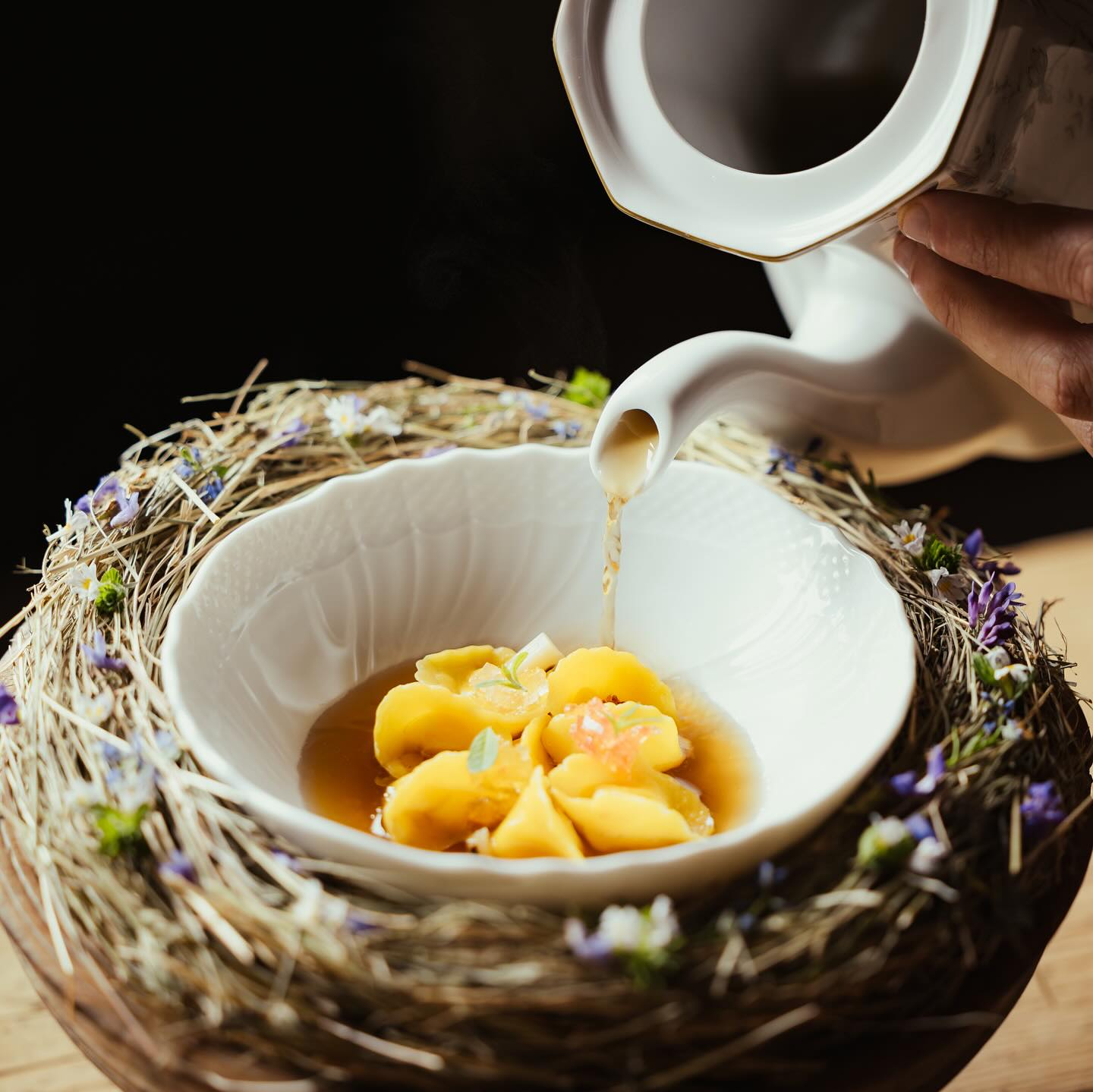
Ambition shifts to the kitchen, where the hotel defies the stigma of in-house dining to embrace the town. While Chef Luigi Sarsano’s Savoy Restaurant reinterprets tradition with a light hand (the beetroot casunziei are essential), the true departure arrives via 1224 Restaurant. Launched in late 2024 and helmed by Chef Michele Mezzarosa, this fine dining venue champions seafood—a refined, saline alternative to standard game fare. The name nods to the altitude, yet the aspirations soar decidedly higher.
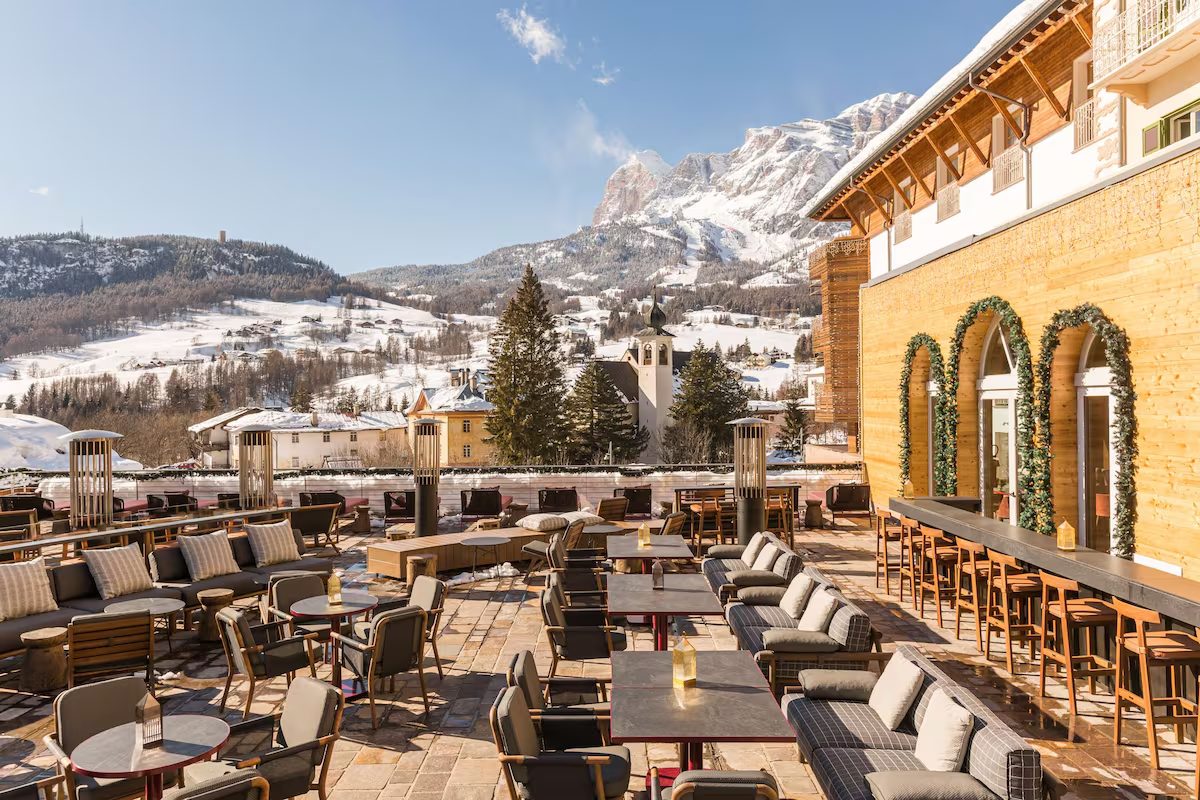
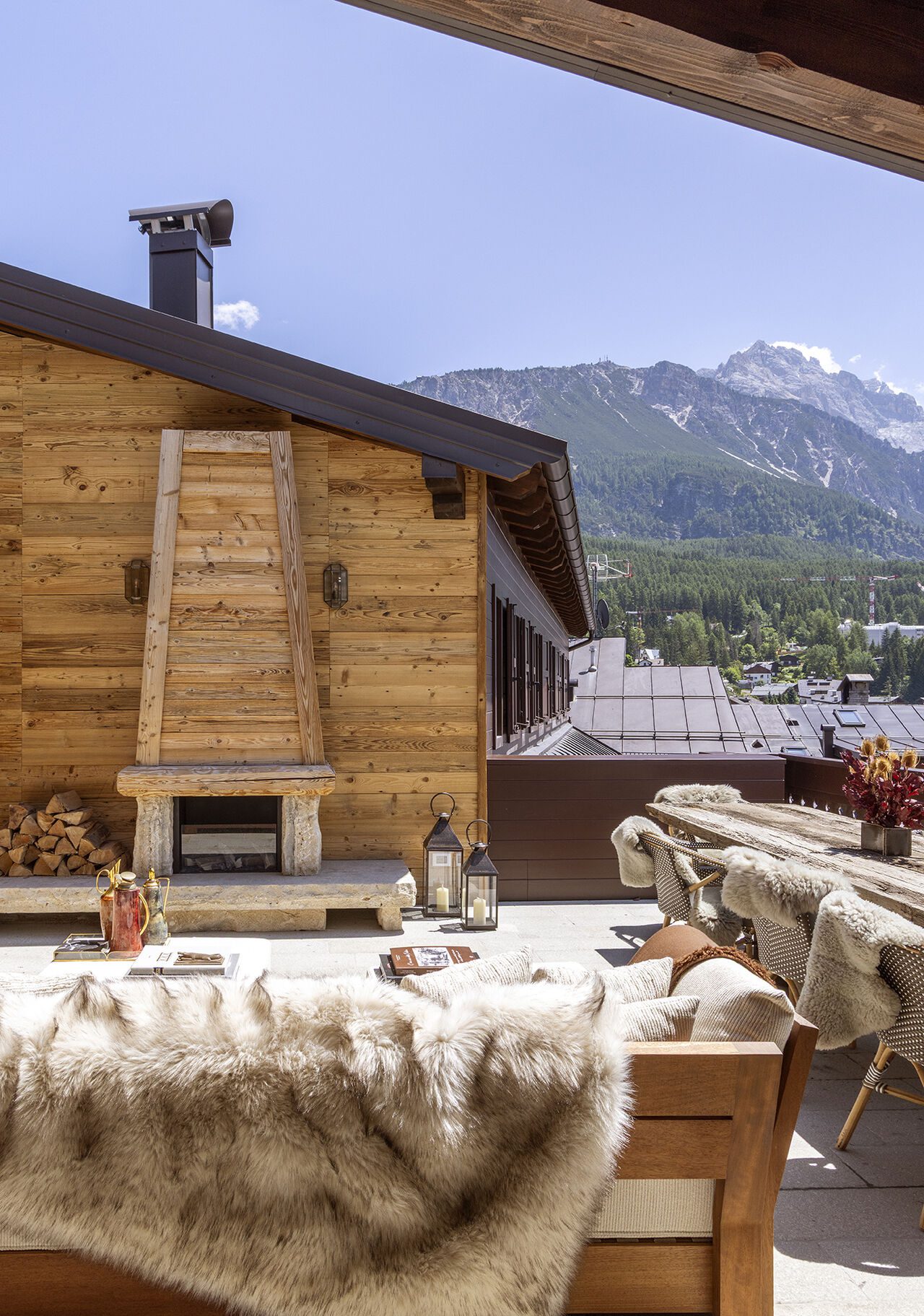
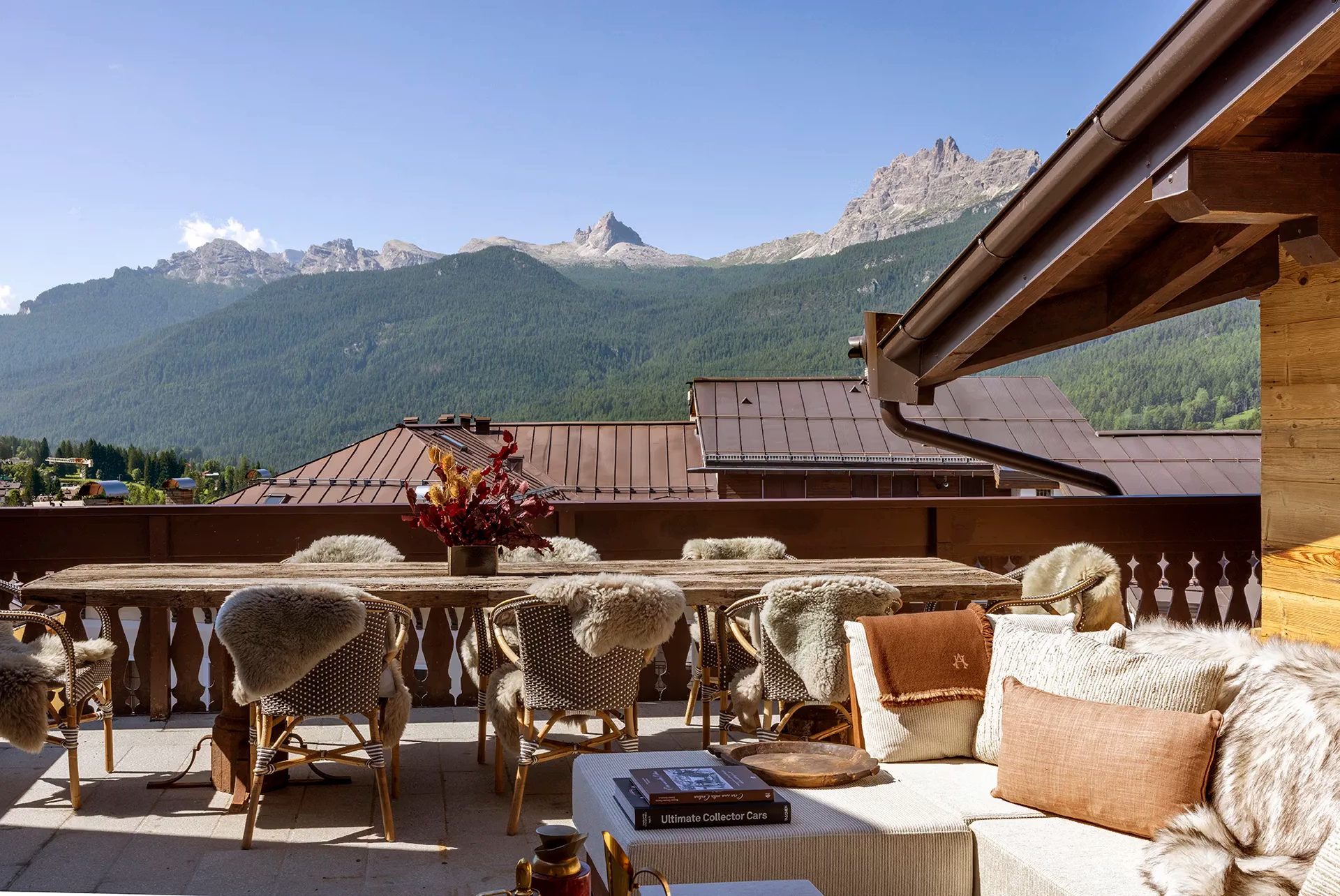
The hotel’s social pulse quickens on the 1224 Terrace. With its 360-degree panorama of the Tofane, it has cemented itself as the place to be for après-ski and nightlife, fueled by signature cocktails and DJ sets. Counterbalancing this vibrancy is the Savoia Spa: 700 square meters of regeneration in partnership with [comfort zone], where pool, saunas, and sports treatments complete a circle of hospitality that deftly navigates business, leisure, and lifestyle.
Hotel Ancora Cortina
Hotel Ancora marks the bold entry of contemporary design into Cortina’s historic fabric. Dating back to 1826 and long a bastion of Ampezzo hospitality, the property is reborn today as a member of The Leading Hotels of the World, driven by the vision of Renzo Rosso. Far from a conservative restoration, the OTB patron has orchestrated a metamorphosis, transforming the town’s oldest address into a global style hub.
Dubbed an “emotional restoration,” the project thrives on juxtaposition. The iconic facade, with its ornate wooden balconies, continues to command Corso Italia, remaining a privileged vantage point for the social rituals of the Dolomites’ Queen. Step across the threshold, however, and folklore surrenders to a high-fashion vision curated by Vicky Charles’ studio, Charles & Co. The aim was to eschew the predictability of chain hotels in favor of a private designer residence: “I want guests to feel at home,” explains Rosso, who curated the space with personal books and archival pieces, an invitation to “carve out a journey within the journey.”
Standardization is banished. The 35 rooms—reduced from 38 to prioritize spatial generosity—are tailored refuges, designed to be bold yet never loud. Vernacular materials like larch and local stone converse with velvets and tactile fabrics, grounded in a palette that warms to rust, sage, and deep browns.
The pursuit of privacy extends to the wellness area, which claims its own precise dimension: a curated 200-square-meter refuge featuring a sauna, Turkish bath, and designer treatments.
Public spaces, meanwhile, unfold as a fluid extension of urban life. The historic terrace on Corso Italia serves as an open-air salon that pulses from breakfast through aperitif. This social energy flows into the beverage realm with two distinct concepts: Drinks & Bites, a temple of signature mixology for a quick pause, and Club Brave, hidden in the underground, a subterranean soul promising to reignite and redesign the Cortina night.
Finally, the philosophy of personalization—the true hallmark of Rosso’s stewardship—permeates the culinary narrative. Orchestrated by Executive Chef Andrea Crivetto, the dining experience finds a dual expression: the relaxed conviviality of La Veranda and the exclusive intimacy of Il Ristorante.
Eight Cortina
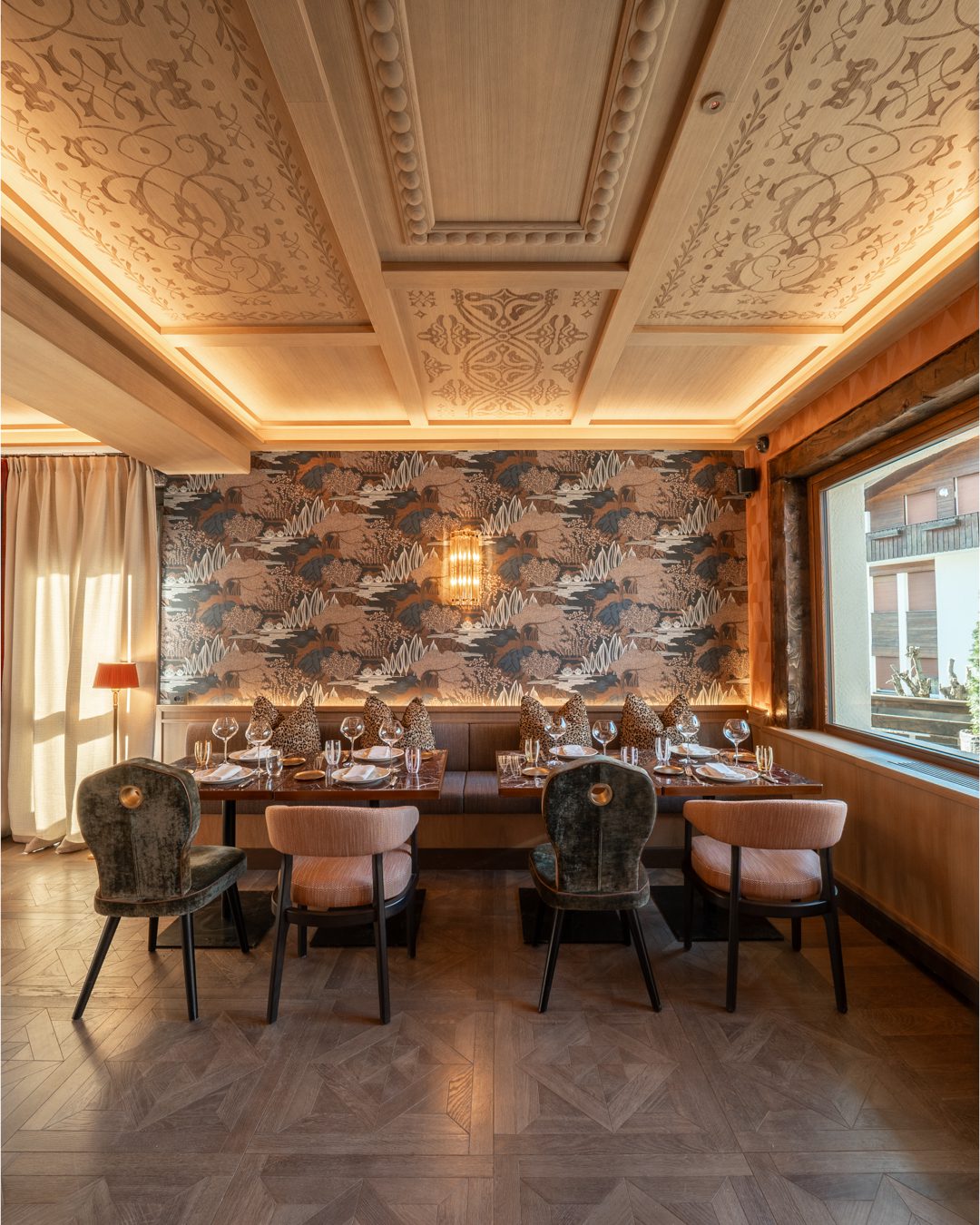
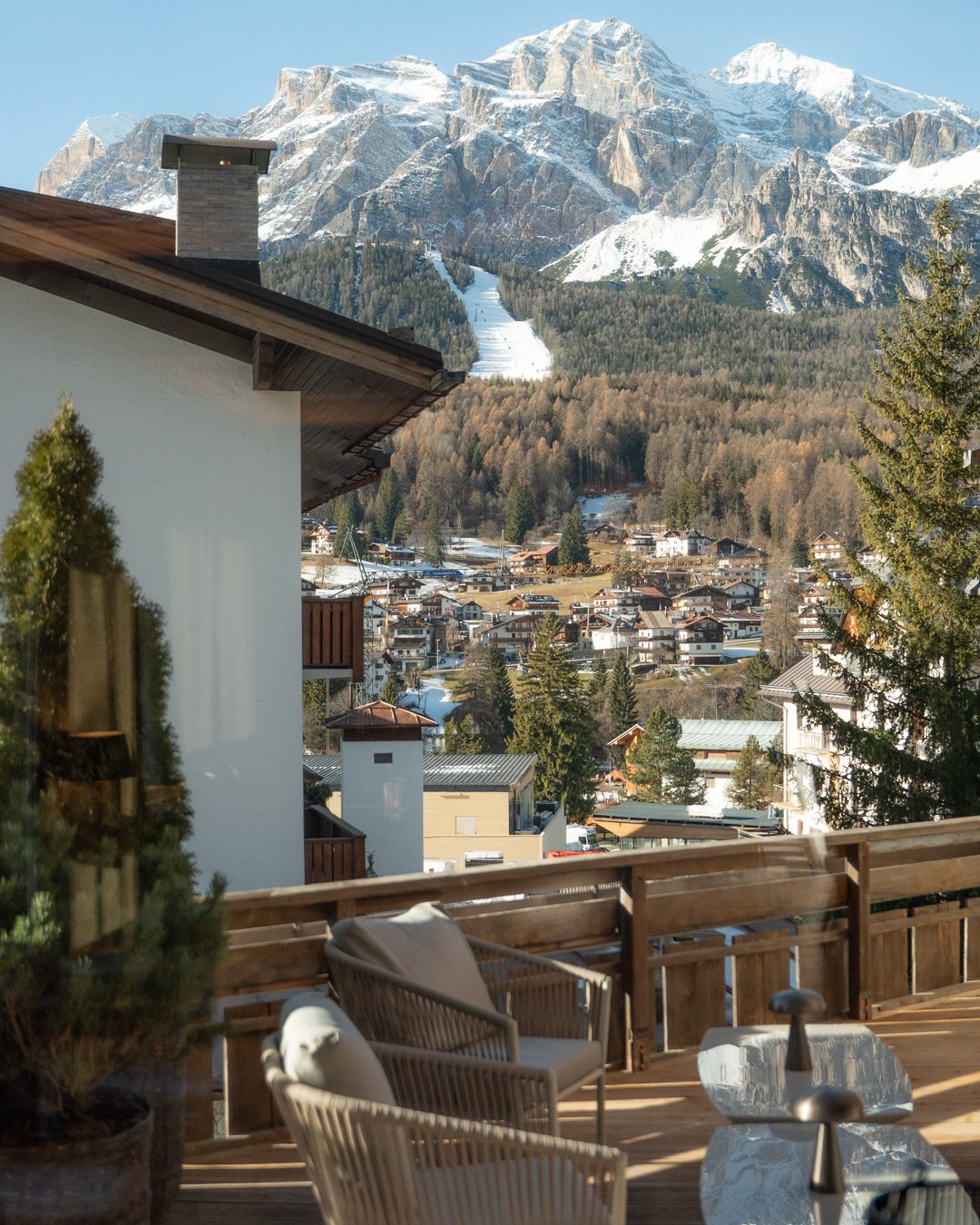
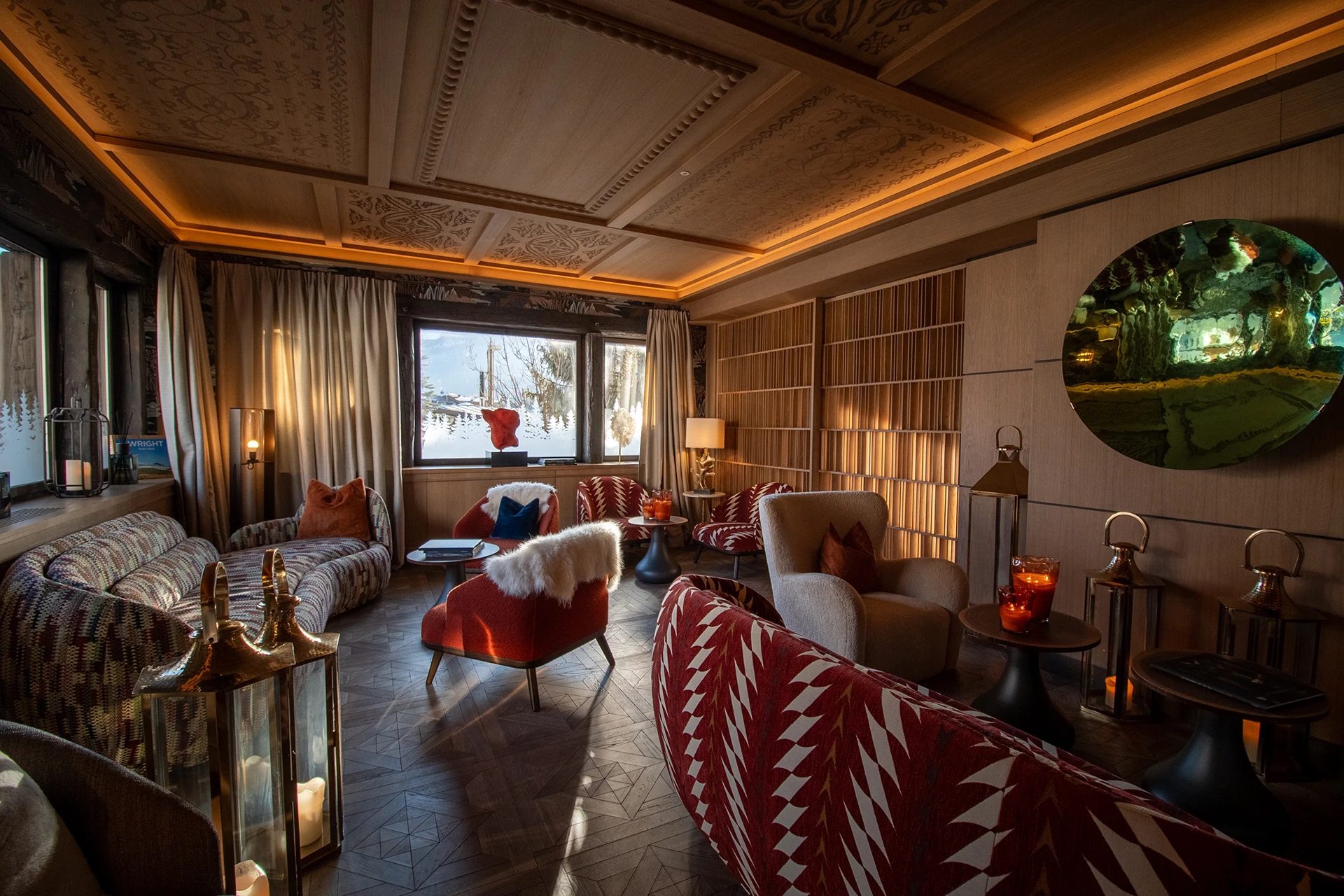
A changing of the guard and a shedding of skin for one of Cortina’s most storied addresses. The former Hotel Europa—until 2022 the jewel of Mauro Benetton—is reborn as Eight Cortina. Now at the helm is Solido Holding, a family-run group and veterans of boutique hospitality, who have chosen a path of sartorial luxury to redraw the map of hospitality in the historic center.
The intervention is radical, yet defined by subtraction. The opening move was drastic: reduce to amplify. “We went from 60 to 37 rooms—larger, more welcoming,” explains Fabrizia D’Avanzo. It is a contrarian choice that sacrifices density for vital space, transforming every room into a private retreat wrapped by the mountains. The design, curated internally by Eight Lab, eschews the anonymity of large international chains. The goal was to avoid the “non-place” effect: here, wood and stone are not mere decoration, but tangible links to the landscape, reinterpreted in a contemporary key featuring pieces by LAGO.
However, the true challenge lay in handling a local legend: the VIP Club. The iconic set of Vacanze di Natale—the venue where Jerry Calà’s Billo courted Stefania Sandrelli’s Ivana between songs—has been treated with reverence. No radical overhaul, just a skillful technical facelift. The piano remains exactly where it is, as does the legendary wooden floor reclaimed from an 18th-century Scottish castle. The formula remains intact, keeping alive the glamour that wrote the history of Cortina’s nights.
Helming the kitchen is Executive Chef Davide Alberti. Born in 1989, with a passport stamped from London to Ibiza and the Amazon, Alberti directs two distinct performances: at the Bistrot, solid tradition takes the stage; at the VIP Club, a cuisine of research and experimentation.
Service strives for invisibility and hyper-personalization, managed by a team of 70 professionals trained to anticipate desires, from monogrammed linens to the delivery of a preferred newspaper. With a strictly homemade breakfast facing the Dolomites and a spa with pool arriving soon, Eight Cortina does not seek to replicate the past, but to write its most exclusive sequel.
Lajadira Boutique Hotel & Spa Cortina
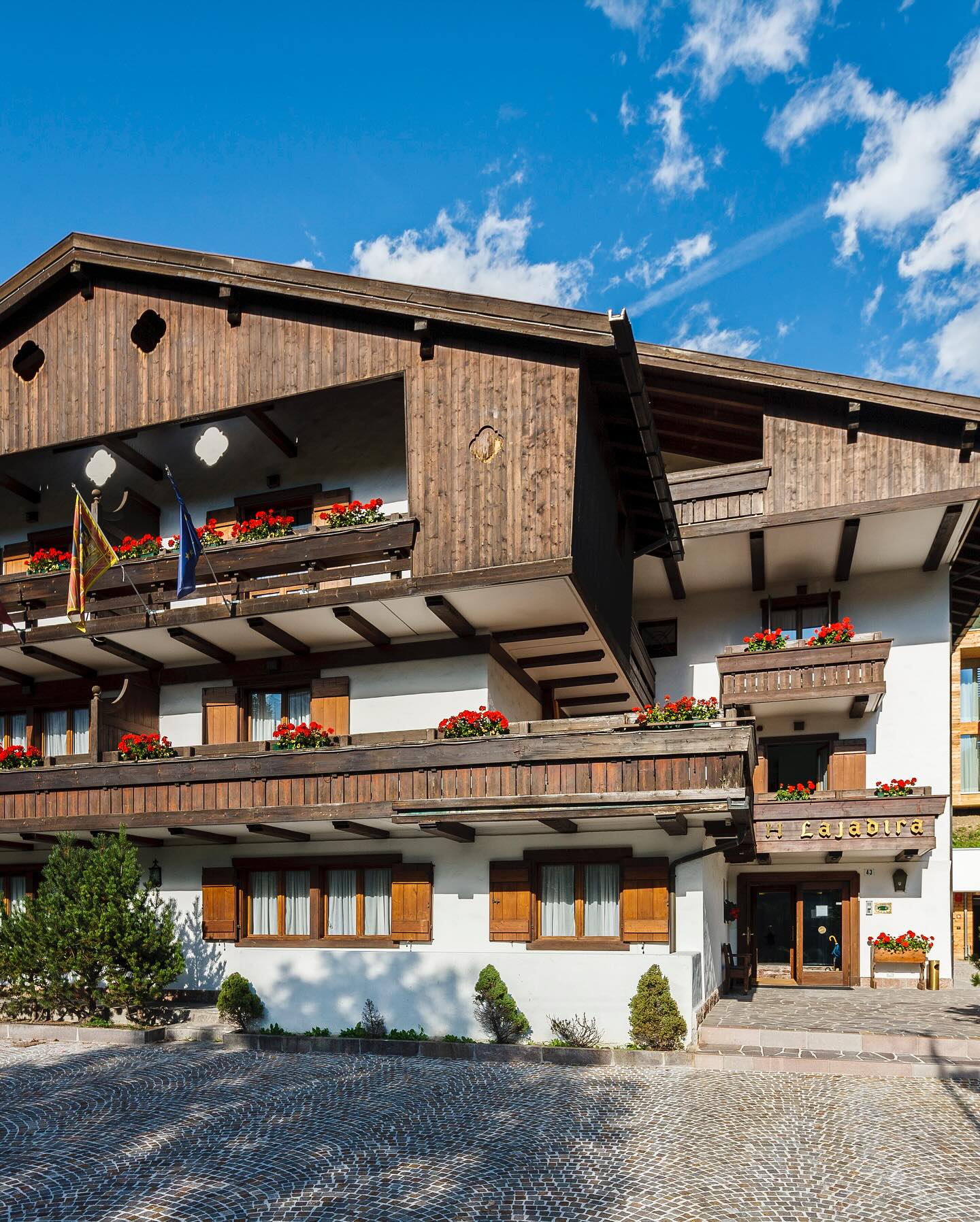
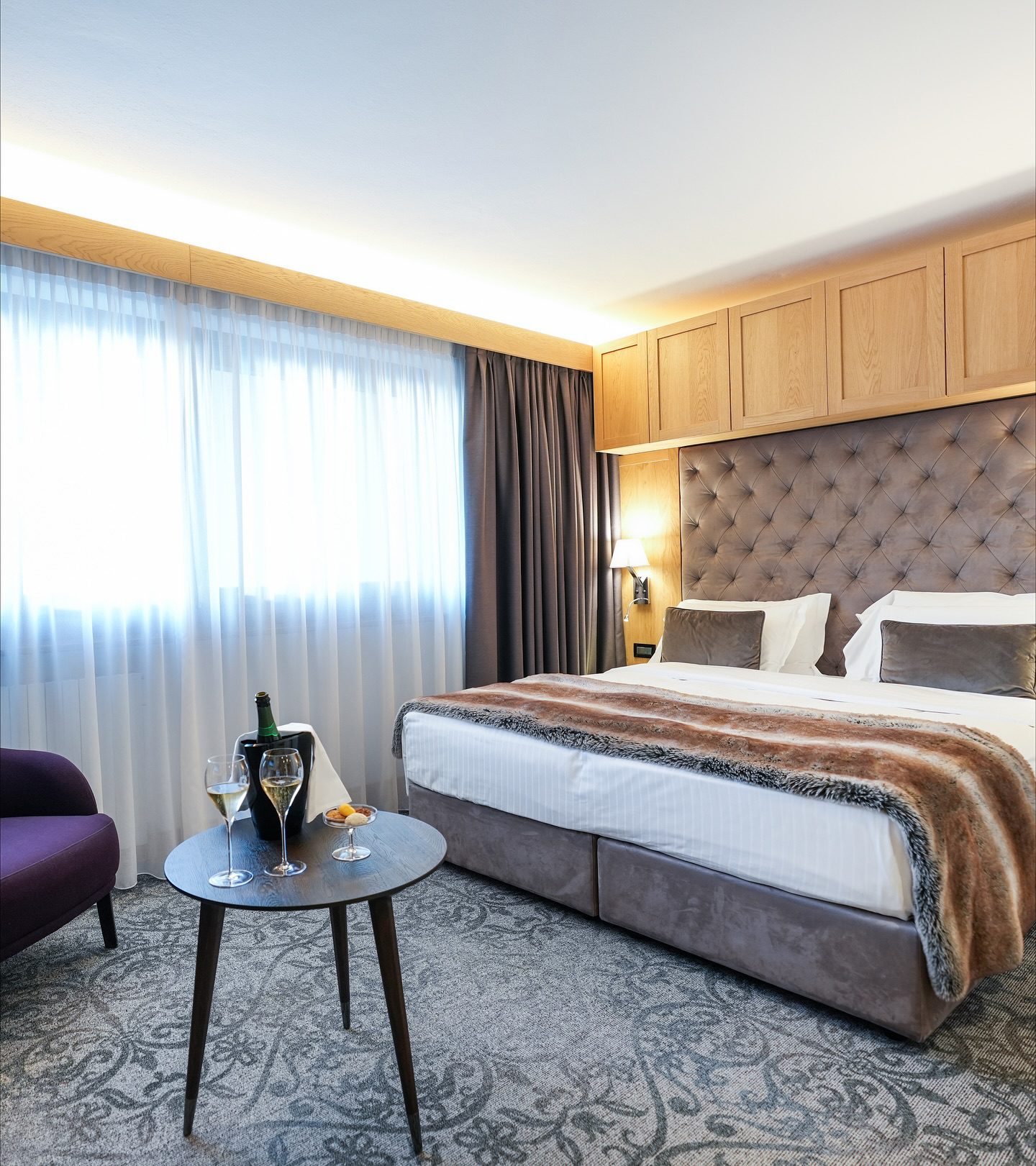
Luxury shifts its paradigm here, choosing subtraction: no excess, only understated elegance. Reopened in December 2025 under the DHOM Collection banner—the group led by Rosanna Conti—Lajadira Boutique Hotel & Spa redefines the coordinates of Alpine hospitality. Following a careful restyling that renews its spirit without eroding its identity, the term quiet luxury ceases to be a buzzword here, evolving instead into tangible architecture and service.
Just secluded enough in the residential district of La Riva, Lajadira is a retreat of quiet merely minutes from the social whirl of the center. The structure is a celebration of materiality: brushed larch wood and local stone are living elements that, flooded by light from large windows, converse constantly with the Cinque Torri. The “mountain modern” aesthetic strips tradition of folklore, focusing on essential lines and concrete sustainability, guaranteed by 100% renewable energy.
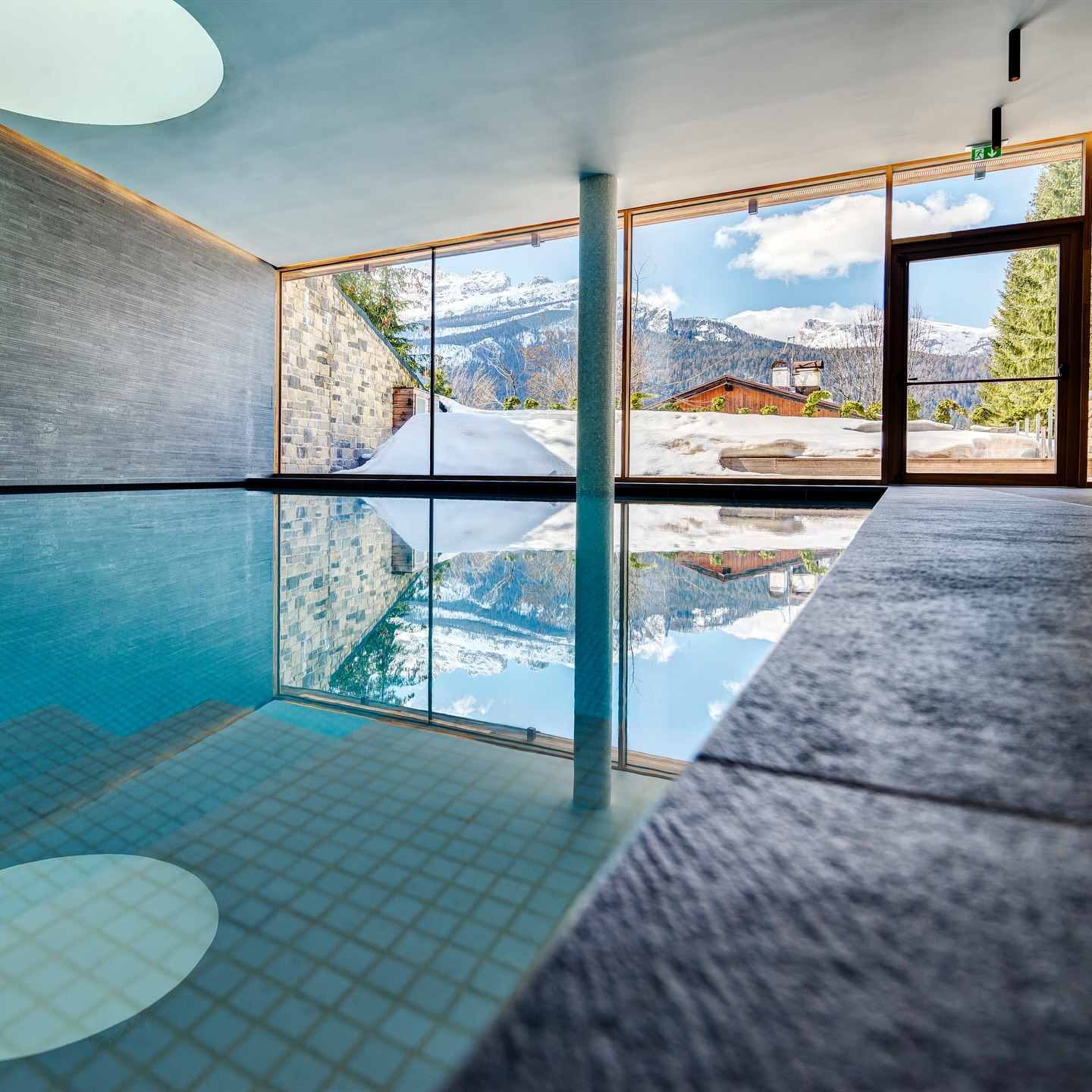
However, the true shift in pace occurs within the hospitality format. In the Private SPA Suites, wellness transcends the boundaries of the common Spa to become a private affair: Finnish sauna, Turkish bath, and Jacuzzi enter directly into the room for total sensory isolation. For those seeking the social dimension, the Lajadira SPA remains the temple: a heated pool with Dolomite views, an ice cascade, and tailored rituals compose a path of absolute regeneration.
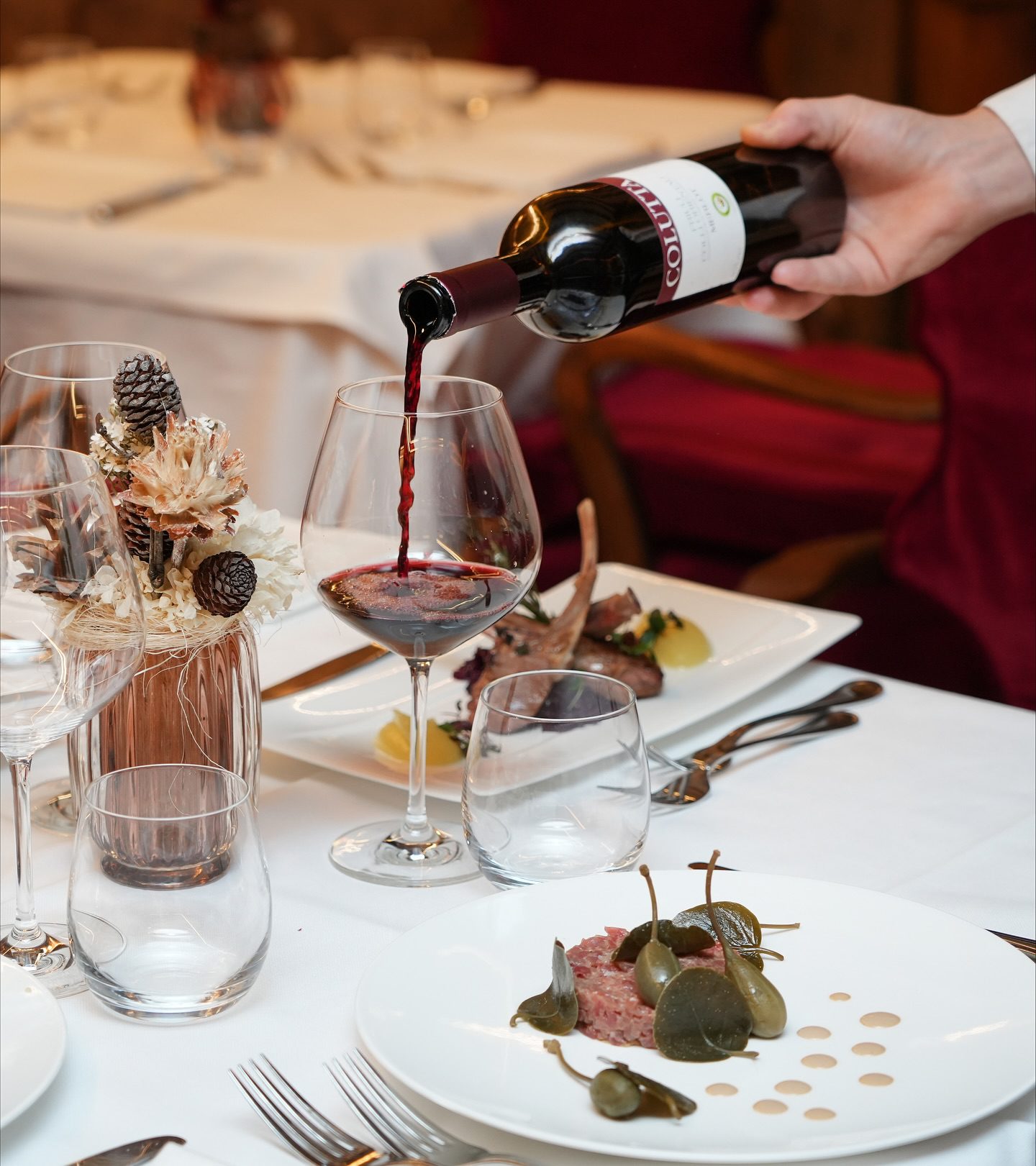
At the table, the rules change again. The restaurant La Taverna, realm of Chef Carmelo Librizzi, moves beyond the classic repertoire. The cuisine is a bold bridge between the Dolomites and the Mediterranean: here, beetroot Casunziei coexist with Mazara prawn tartare and Cacio e pepe tagliolini, in a culinary interplay that brings the sea to the peaks. And for moments when luxury coincides with informal freedom, the Pizza Palace service proposes gourmet pizzas to be enjoyed in-room or in the living area, for an experience untethered from schedules and labels.
Hotel Tofana Cortina
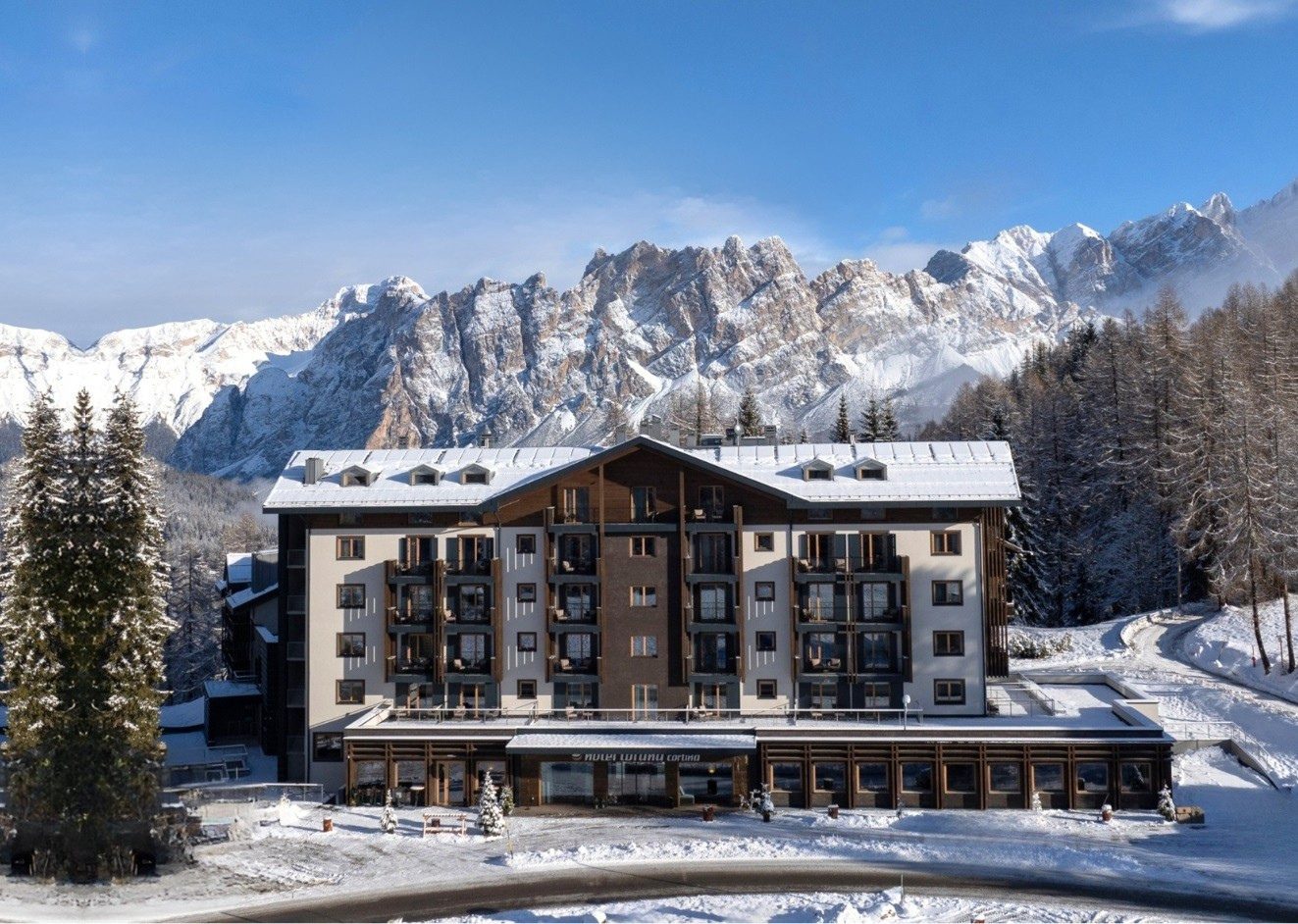
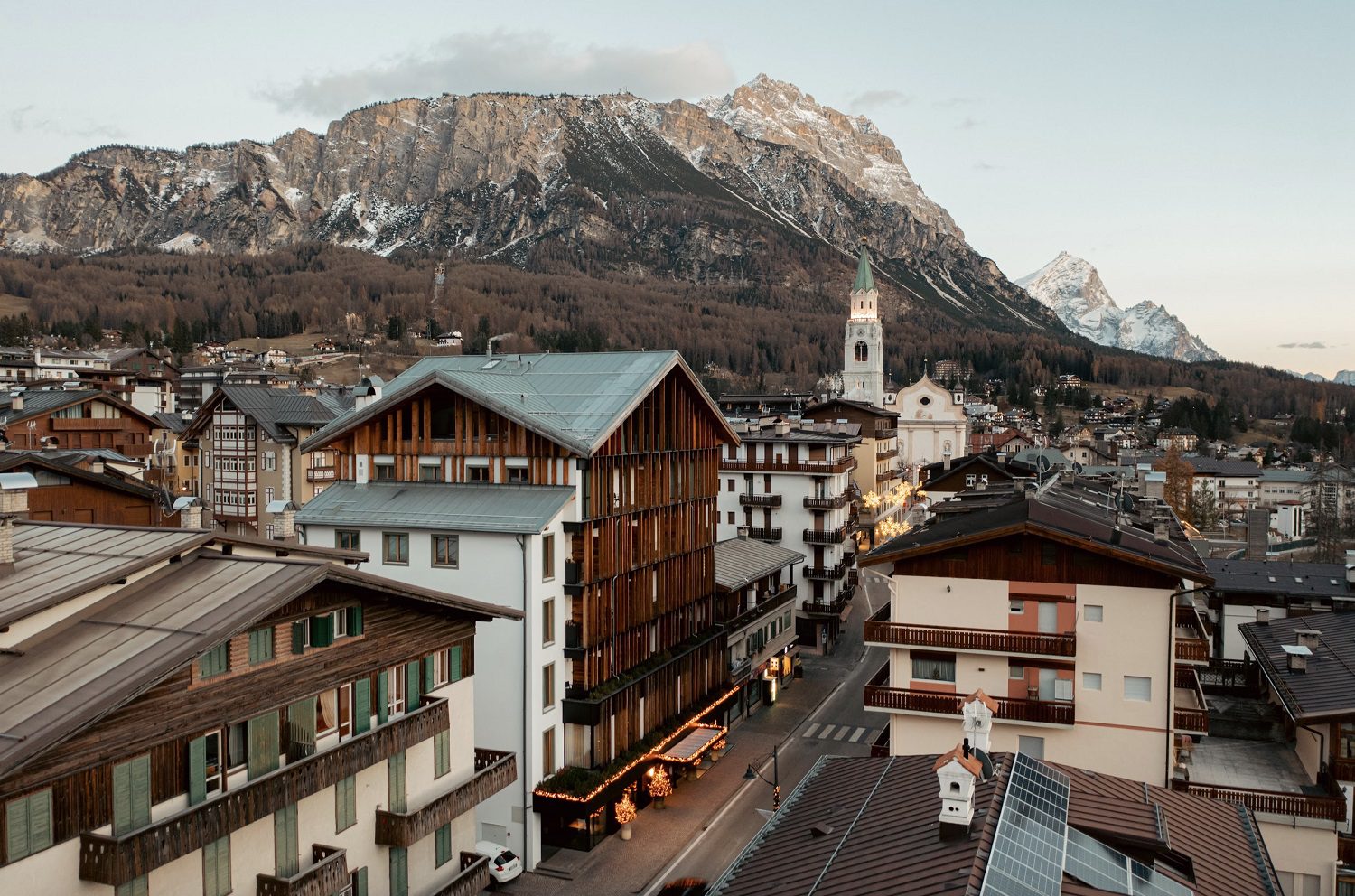
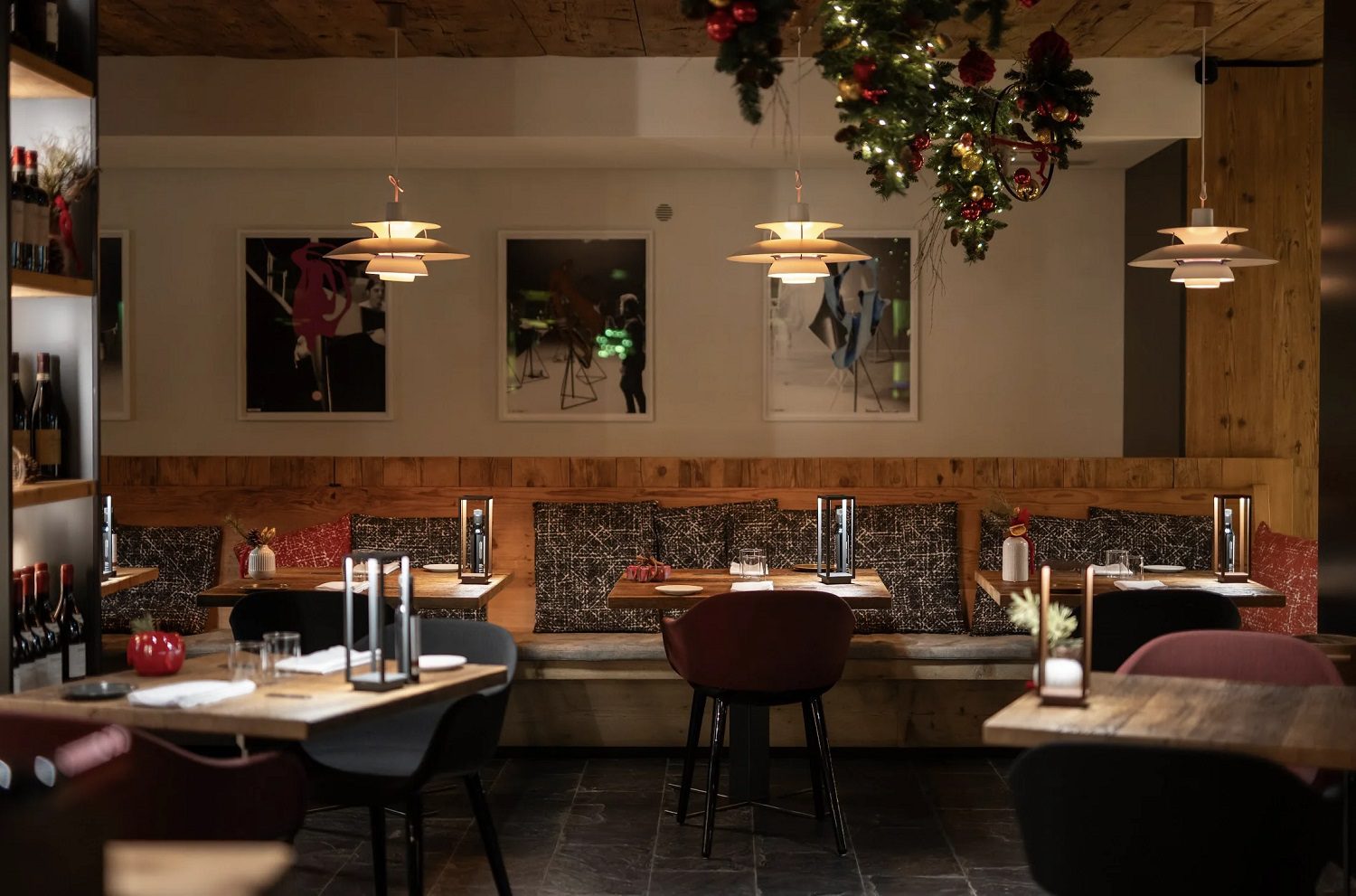
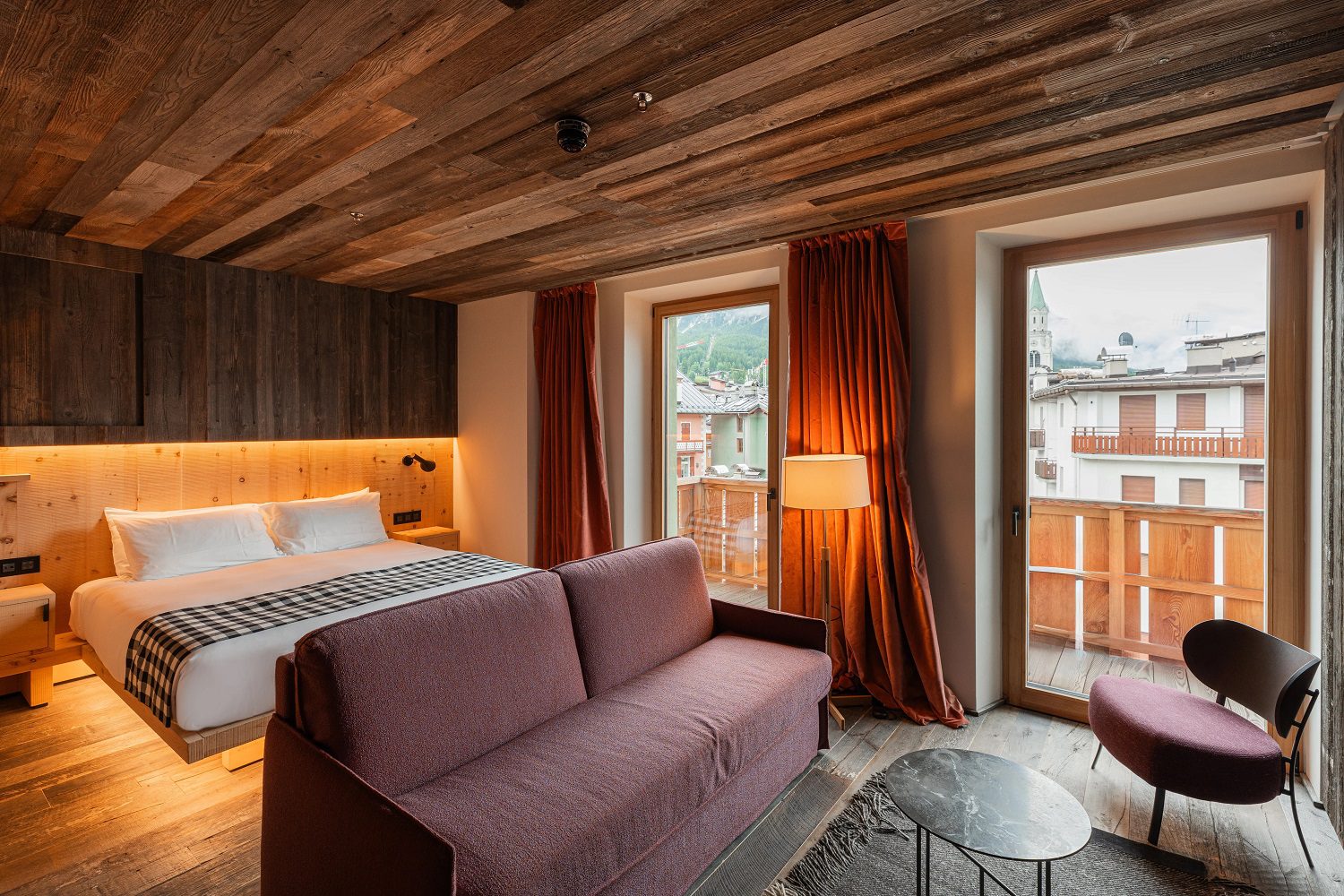
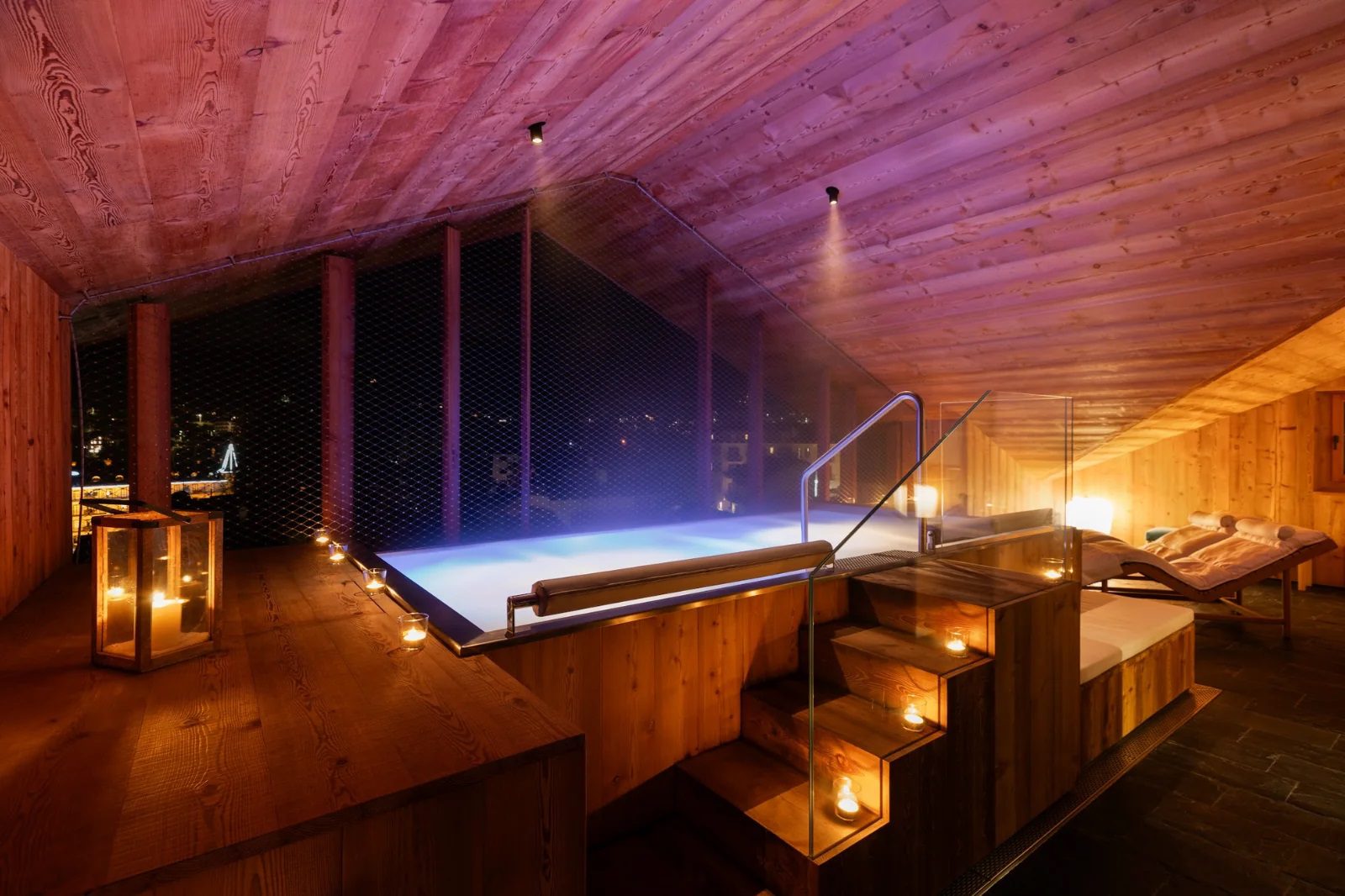
Shifting the center of gravity from the social buzz of the Corso towards the 1,527 meters of Pocol, Hotel Tofana rewrites the rules of Alpine luxury. Here, the defining asset is tangible: positioned directly on the Rosà n. 23 slope, the hotel is the epitome of true ski-in/ski-out. Seamlessly connected to the Skyline gondola and the Olimpia chairlift, it grants the skier the ultimate luxury: zero logistics, zero waiting. From breakfast to the first carve on the snow, the transition is frictionless.
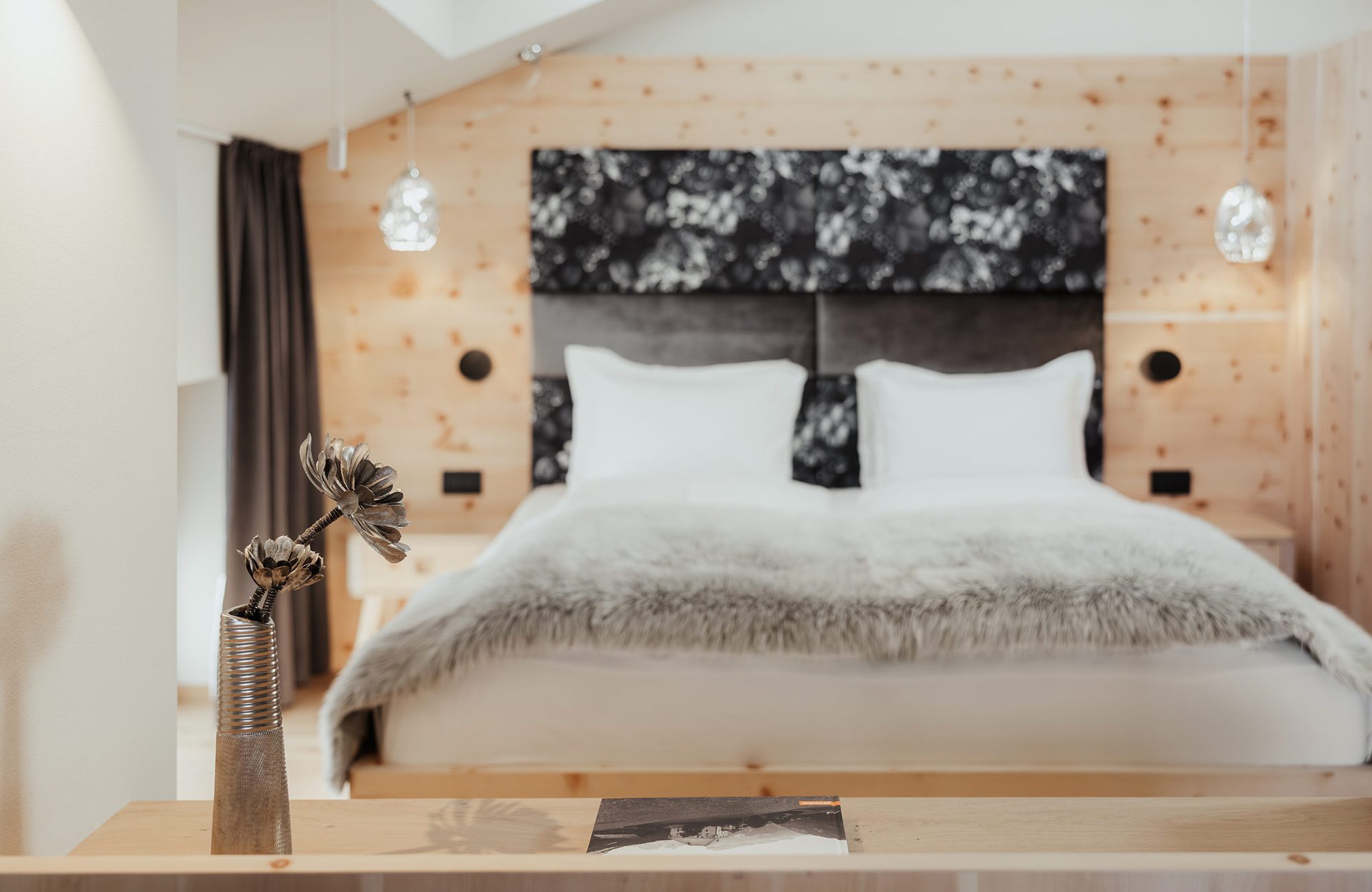
The internal architecture is a manifesto of “Alpine modern,” where design serves biophilic well-being. The extensive use of Swiss stone pine (cirmolo) and larch is not a mere aesthetic choice, but a functional instrument: known for their relaxing properties and proven ability to lower the heart rate, these materials transform rooms into cocoons of holistic recovery. This concept is amplified in suites like the Croda da Lago or the 5 Torri: true private micro-spas featuring infrared saunas and freestanding tubs facing the Dolomites, designed for those seeking absolute intimacy.
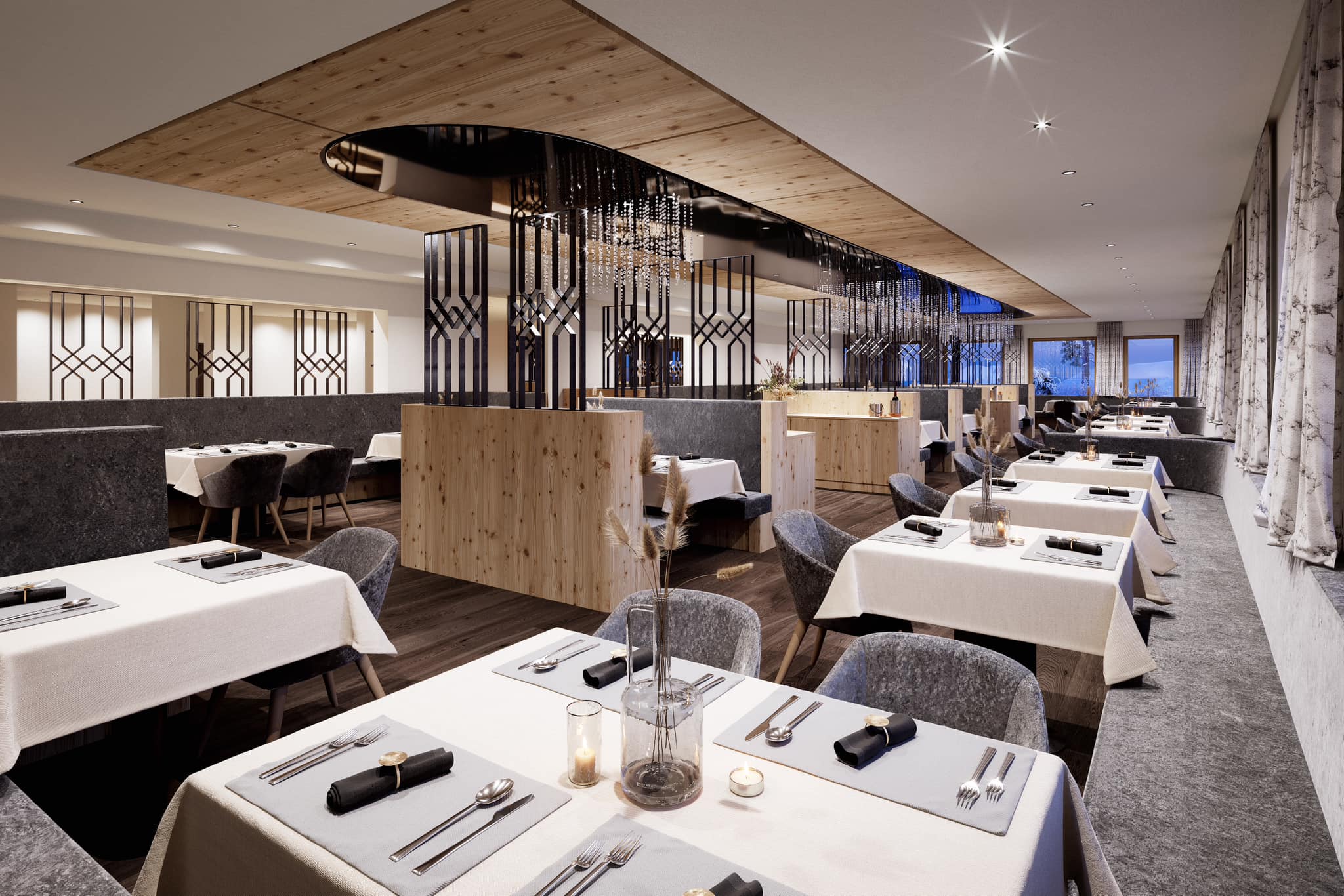
The rhythm of the day is dictated by the athlete’s needs. The dining formula—a sophisticated take on the 3/4 board—marks the perfect schedule: an energizing breakfast for the lift opening, a hearty afternoon tea upon return (a sacred après-ski ritual), and a four-course gourmet dinner. This high-profile all-inclusive philosophy absolves the skier of all logistical burdens, leaving room only for the mountain.
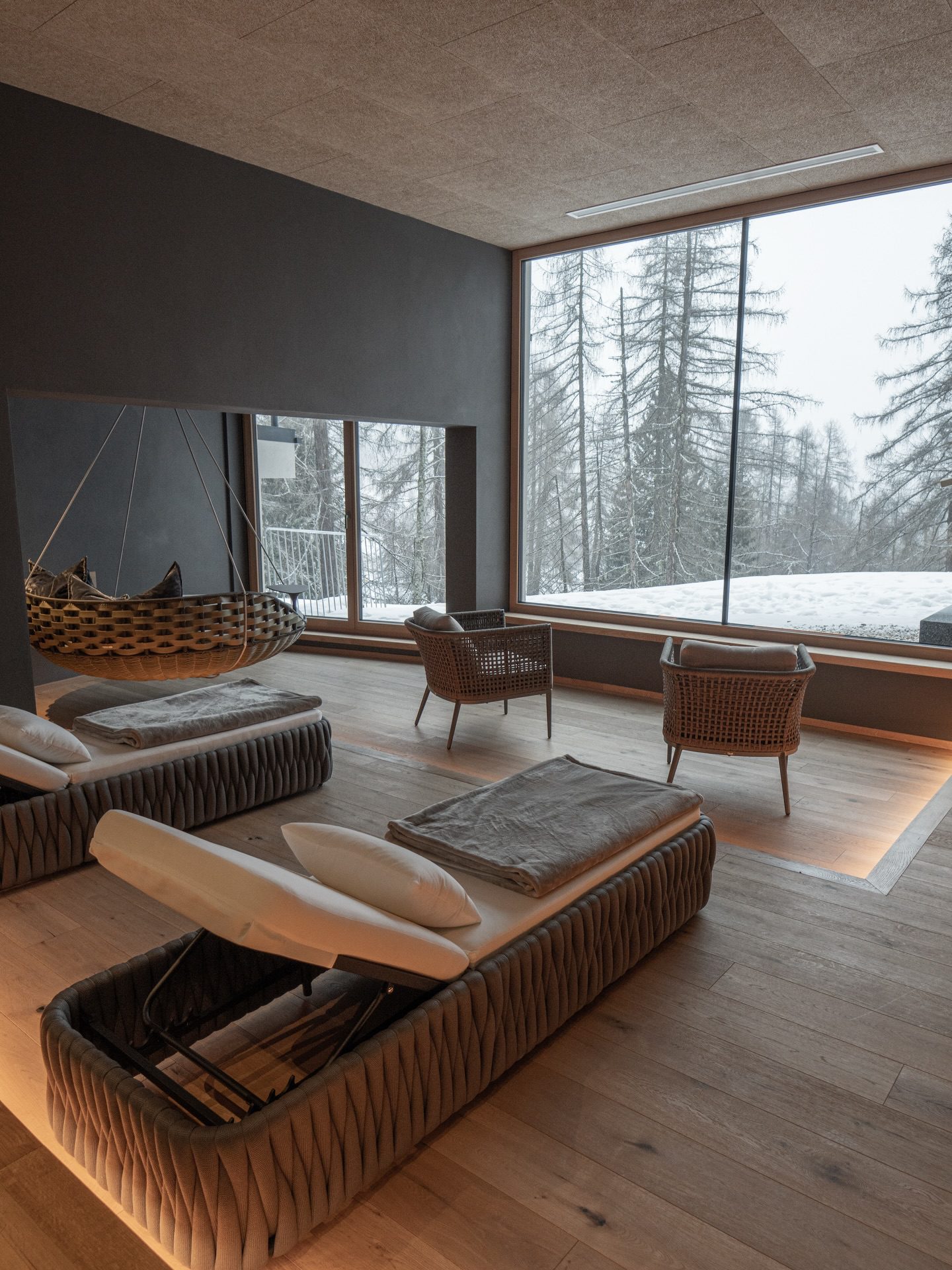
A dual soul exists in wellness too, balancing family dynamics with the need for adult quiet. On one side lies the 15-meter indoor pool, a social and playful hub; on the other, the adults-only zone, an area of strict silence featuring a 90° Finnish sauna, bio-sauna, and Kneipp path. Completing the cycle of muscular recovery are specific rituals, such as the massage with warm alpine herbal poultices: a technique that targets metabolism and dissolves tension, restoring energy to the body to tackle new peaks.
Hotel de Len Cortina
In the refined heart of Cortina, Hotel de Len marks a radical conceptual departure, visible at first glance. The project by studio GRIS+DAINESE rewrites Alpine aesthetics beginning with the structure itself: a balancing act of wood, glass, and steel that references the past to transcend it. The larch cladding, with its angled slats, evokes the memory of historic barns but accelerates the rhythm. Disrupting the material continuity, black steel frames and expansive windows dissolve boundaries, pulling the landscape deep into the architecture.
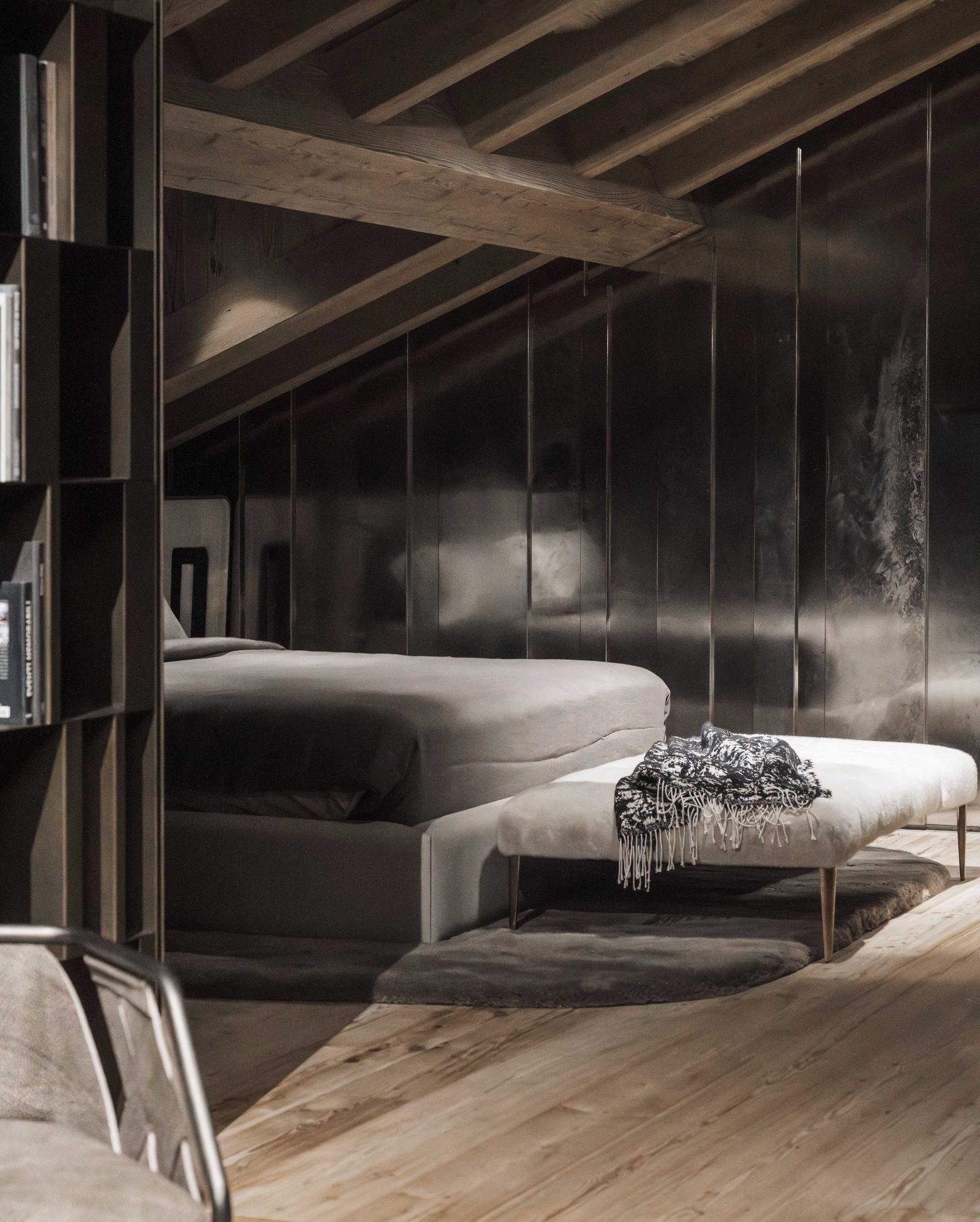
Behind the contemporary facade lies invisible technology. Thanks to a partnership with the Swiss company SOLS and the use of active materials like Magma13, the rooms are conceived as chambers of recovery: spaces shielded from electromagnetic pollution and energetically rebalanced. It is a bio-hacking approach, where the stay becomes a passive therapy to detox from modern hyper-connectivity.
The interior design pursues this same purity. There is no opulence, only a warm minimalism: the 22 rooms—each defined by a different timber variety, from ancient fir to Swiss stone pine—are tactile shells where natural light sculpts the volumes.
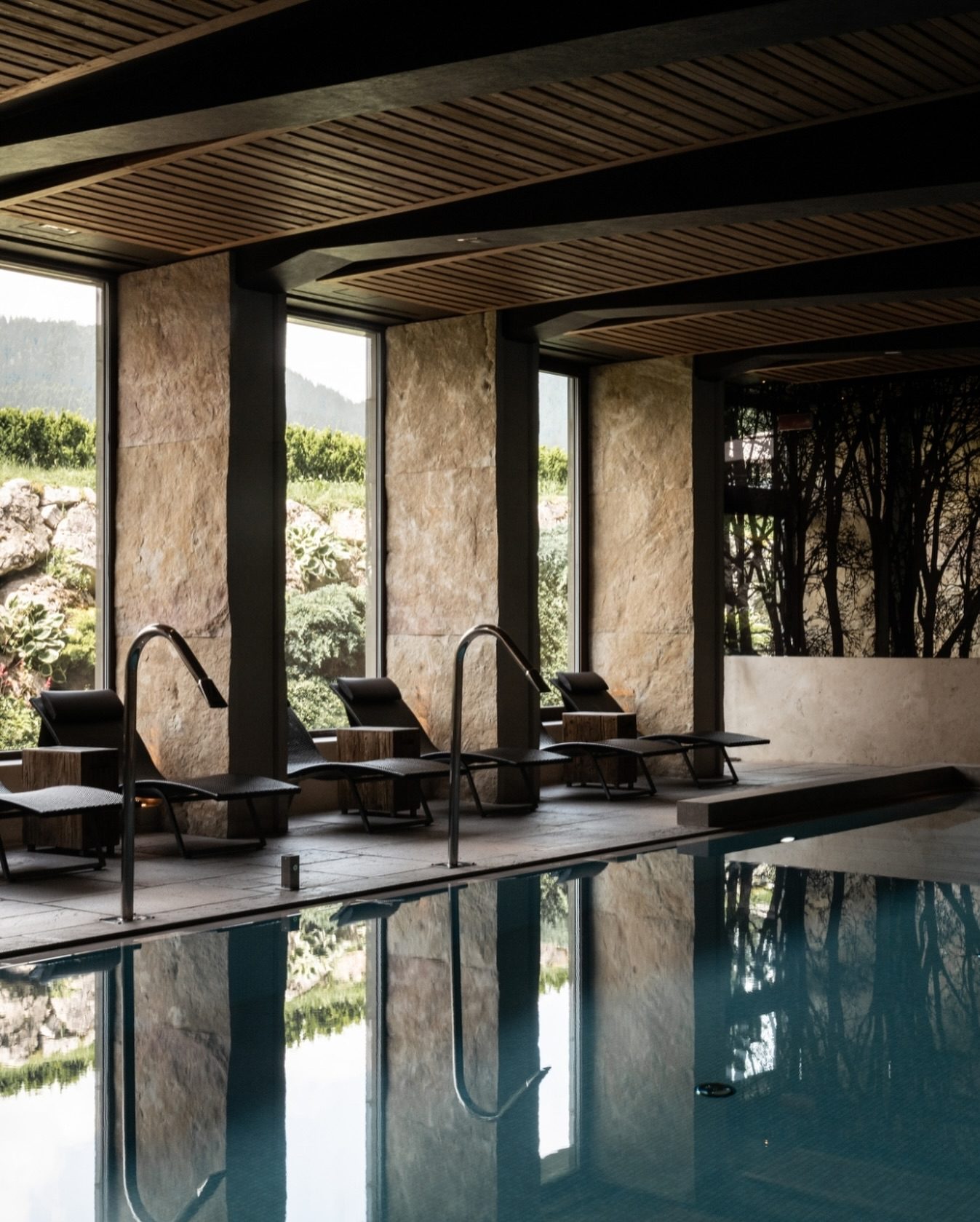
The ascent culminates on the top floor, precisely where the glazing opens up to the peaks. The panoramic Spa is a suspended refuge: between saunas, steam baths, and an open-air whirlpool facing Mount Faloria, the wellness journey becomes a private communion with the mountain. In fair weather, the rooftop transforms into an oasis for yoga and contemplation.
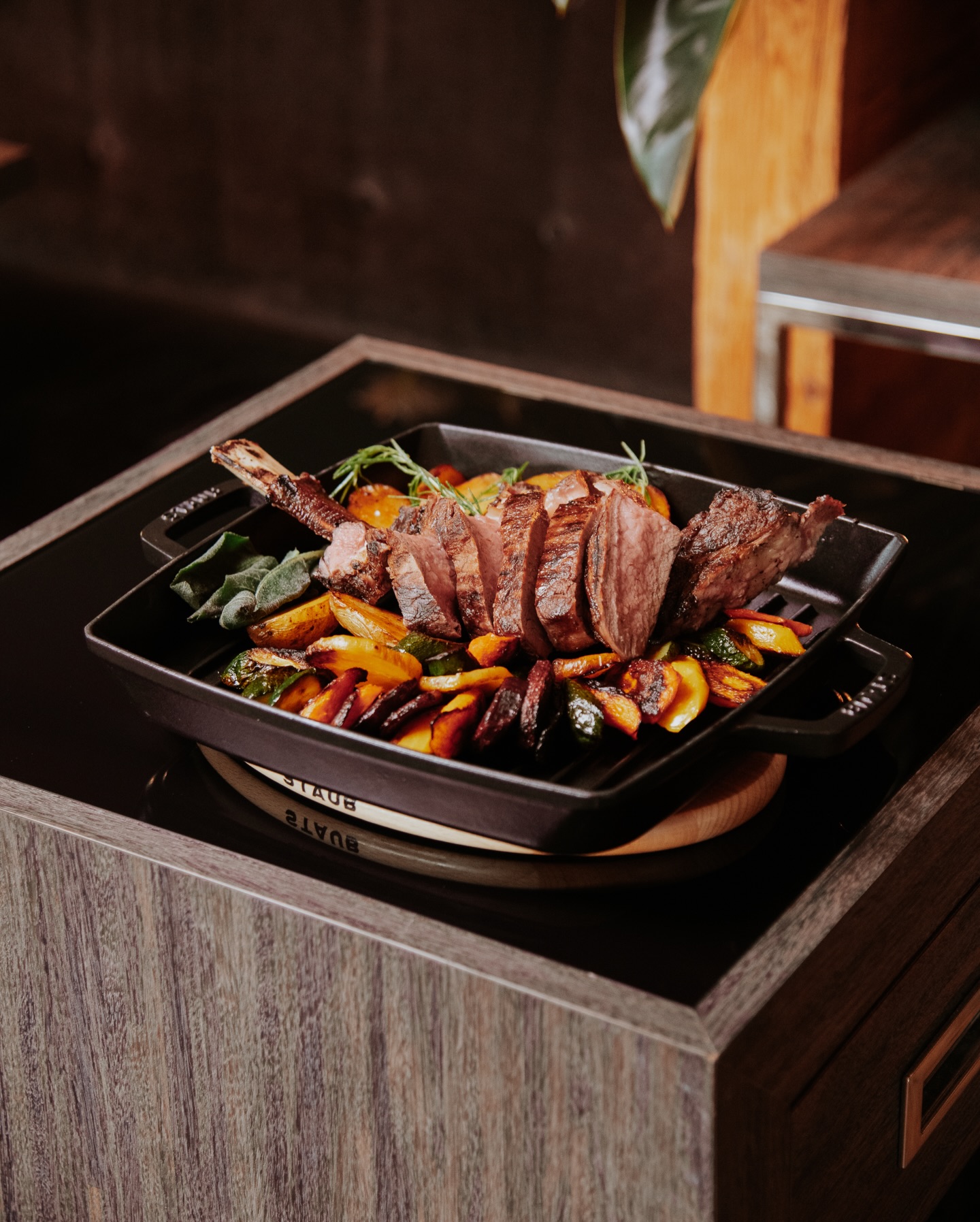
Completing the regenerative arc is the dining experience. The restaurant, helmed by Chef Andrea Ribaldone, brings the same philosophy to the plate: locally sourced ingredients, absolute respect for nature, and a contemporary touch that elevates Alpine flavors without betraying them.
Rosapetra Spa Resort Cortina
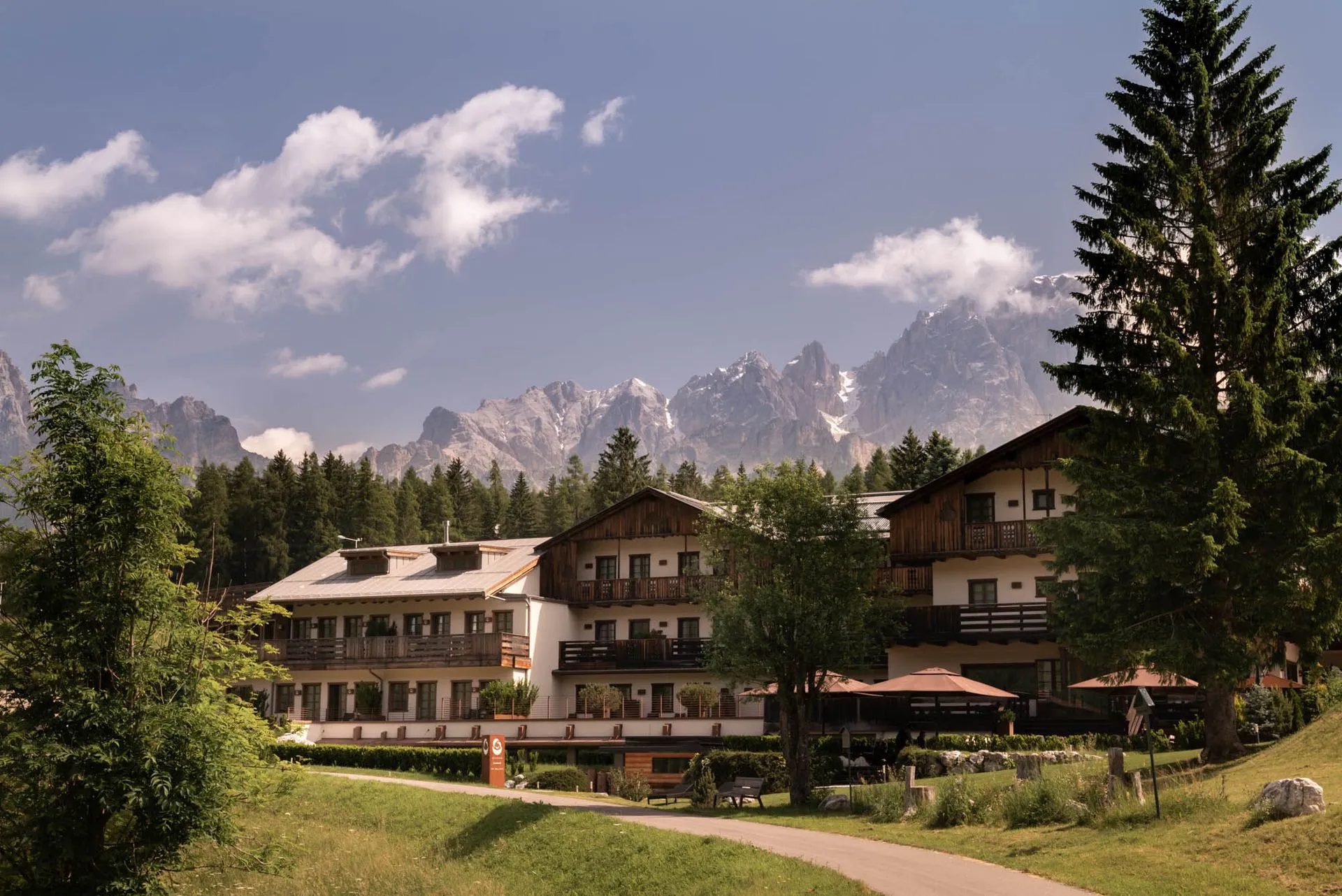
Secluded enough to ensure silence, yet connected enough to feel the pulse of the scene. Located in Zuel di Sopra, Rosapetra Spa Resort redefines the coordinates of the Ampezzo retreat. A member of Small Luxury Hotels of the World and a jewel of the Relegance collection, the resort bears a name that is a manifesto in itself: it celebrates the Enrosadira (Alpenglow) and the Petra (local stone)—elements that vernacular architecture draws indoors, stripping them of folklore to dress them in a warm, enveloping contemporary design.
The concept is clear: not just a hotel, but a refined residence. The space is elevated by curated collecting, where works by Enzo Fiore and Mario Arlati converse with fir wood and stone, creating a subtle equilibrium between art and nature in the common areas.
Such bespoke craftsmanship shapes the private dimension. The new Penthouse Suite, born from a collaboration with the design brand Henge, is a 90-square-meter showcase: featuring a vapor fireplace, private wellness facilities, and a 50-meter terrace overlooking the Tofane. Equally impressive are the Signature Suite, a sensory open space with a private Jacuzzi and tactile fabrics, and the Romantic Dolomites, iconic for its circular wooden tub on the mezzanine—a true nest for aesthetes.
Off the slopes, the focus shifts to recovery. The Spa is an enclave of regeneration, blending the Swiss scientific rigor of Valmont with the holistic philosophy of Herbal Touch. Here, nothing is left to chance: a Personal Spa Assistant curates bespoke journeys, moving between the panoramic pool at 30°C and massotherapy rituals like the exclusive Hatma. Fitness, too, looks to the future with the innovative Technogym Universe system.
As sunset inflames the peaks, the resort changes rhythm. Terrazza 26 becomes the open-air lounge for aperitifs featuring DJ sets and signature cocktails—the ideal prelude to dinner at the Vista Restaurant, where local tradition is rewritten with gourmet accents in an atmosphere of vibrant intimacy.
Faloria Mountain Spa Resort Cortina
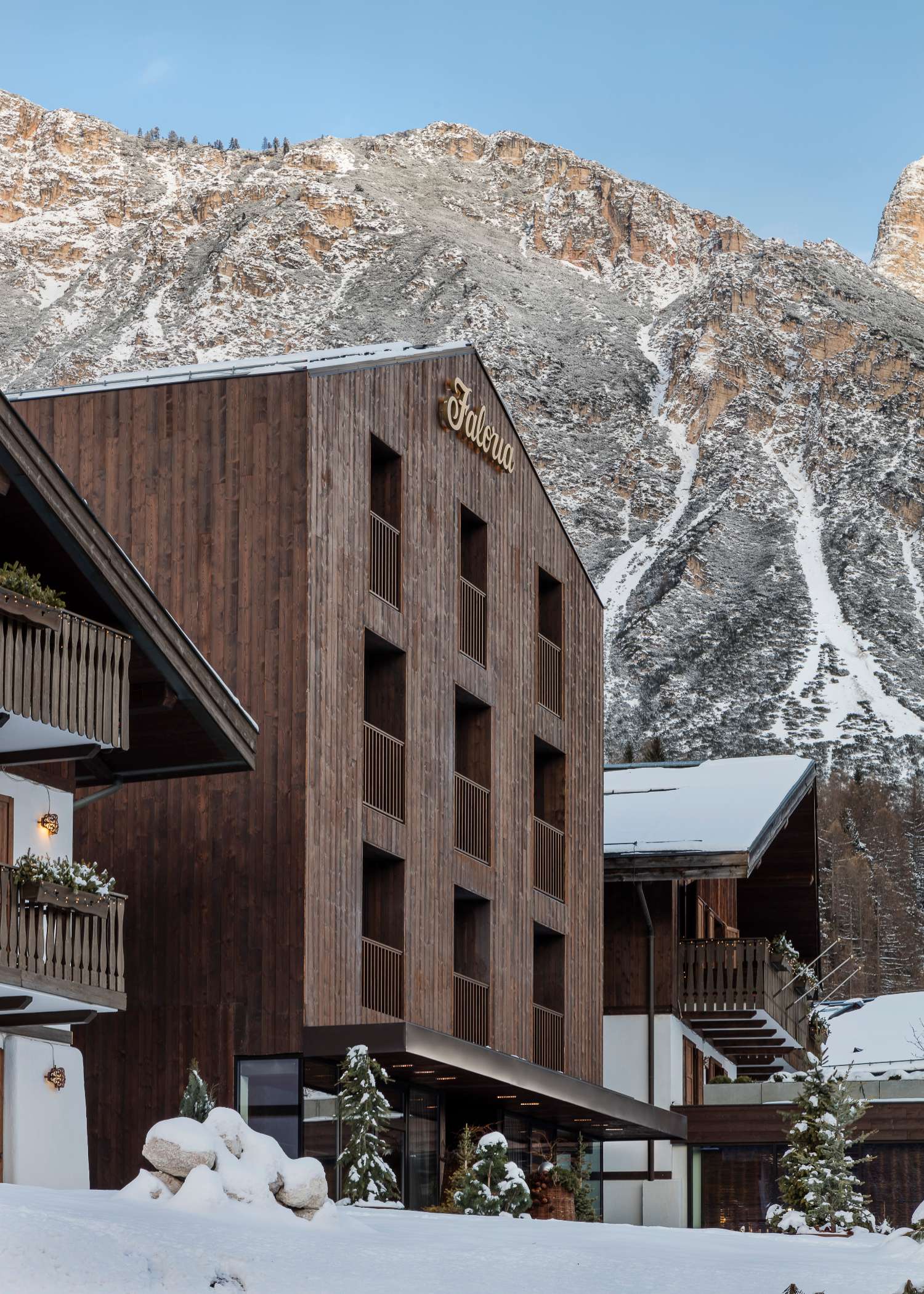
Faloria Mountain Spa Resort, a radical architectural gesture, transcends the rhetoric of the chalet to impose a new Alpine code. The expansion and renovation, designed by architect Flaviano Capriotti (2019), rejects mimicry to establish an equal dialogue with the Dolomites. Dolomite stone and brushed larch emerge from the earth as sharp volumes defined by formal rigor, creating an aesthetic that strips tradition of ornament to restore its pure geometric power.
The project harbors an intellectual soul. Capriotti has transformed the interiors into a botanical narrative: the headboards reproduce ten native flowers selected from the 18th-century atlas Florae Austriacae by Nikolaus von Jacquin. It is a detail that unites botany and visual culture, transforming the 65 rooms into private natural galleries. The narrative culminates in the new Tofane Suites and the Penthouse Suite, overlooking the historic Olympic ski jump: here, double-height ceilings and wall-to-wall windows frame the mountains like living works of art.
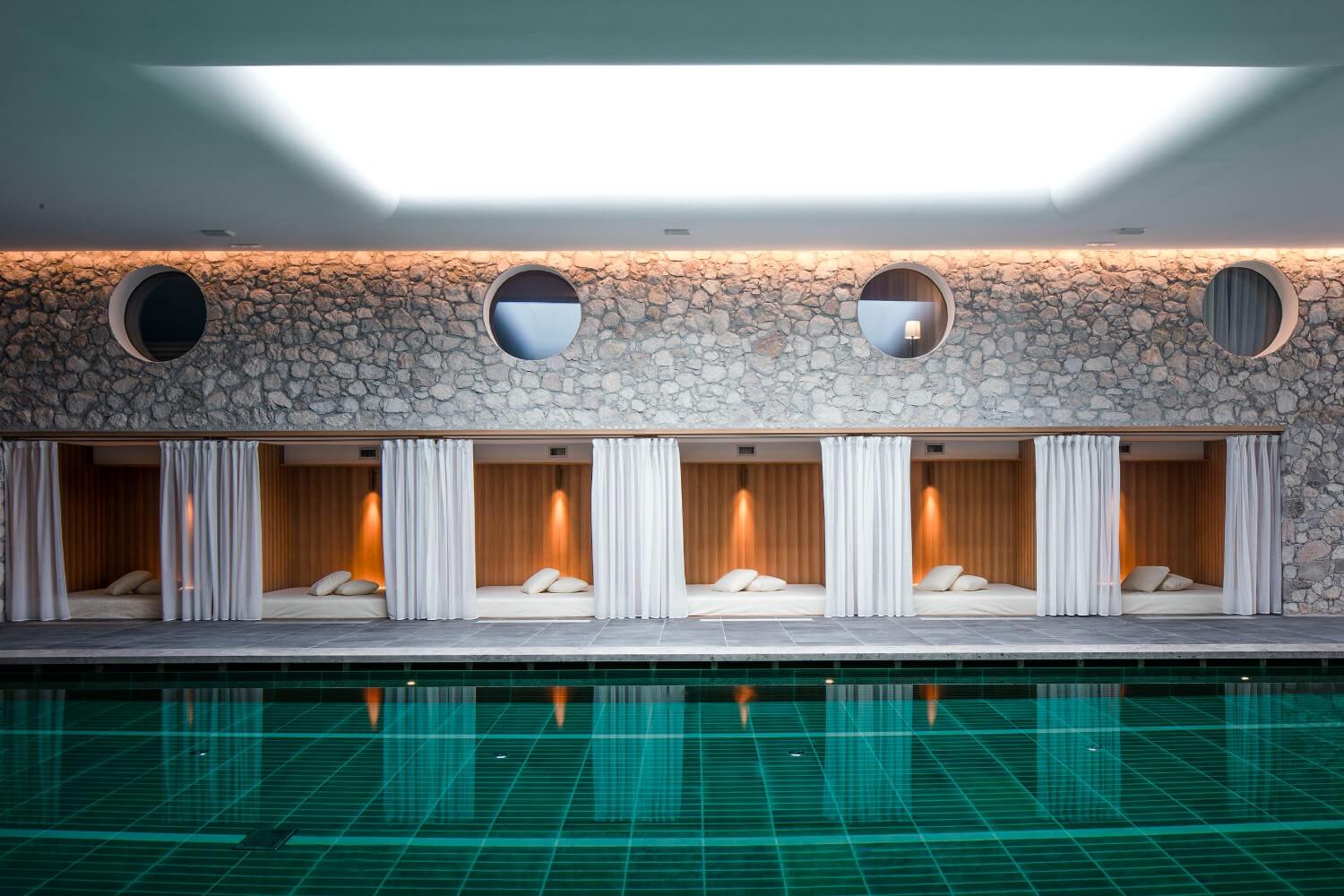
The Faloria Spa is, in scale and conception, one of the most impressive in the Alps. 1,000 square meters of pure wellness. The semi-Olympic three-lane pool, clad in Murano glass tiles, imbues the water with a deep lake-green hue, while the Vitality Pool projects outwards, guiding the gaze to Mount Faloria in a seamless visual continuum. A sauna, ice fountain, and treatment rooms complete the circuit, ensuring functional recovery of the highest level.
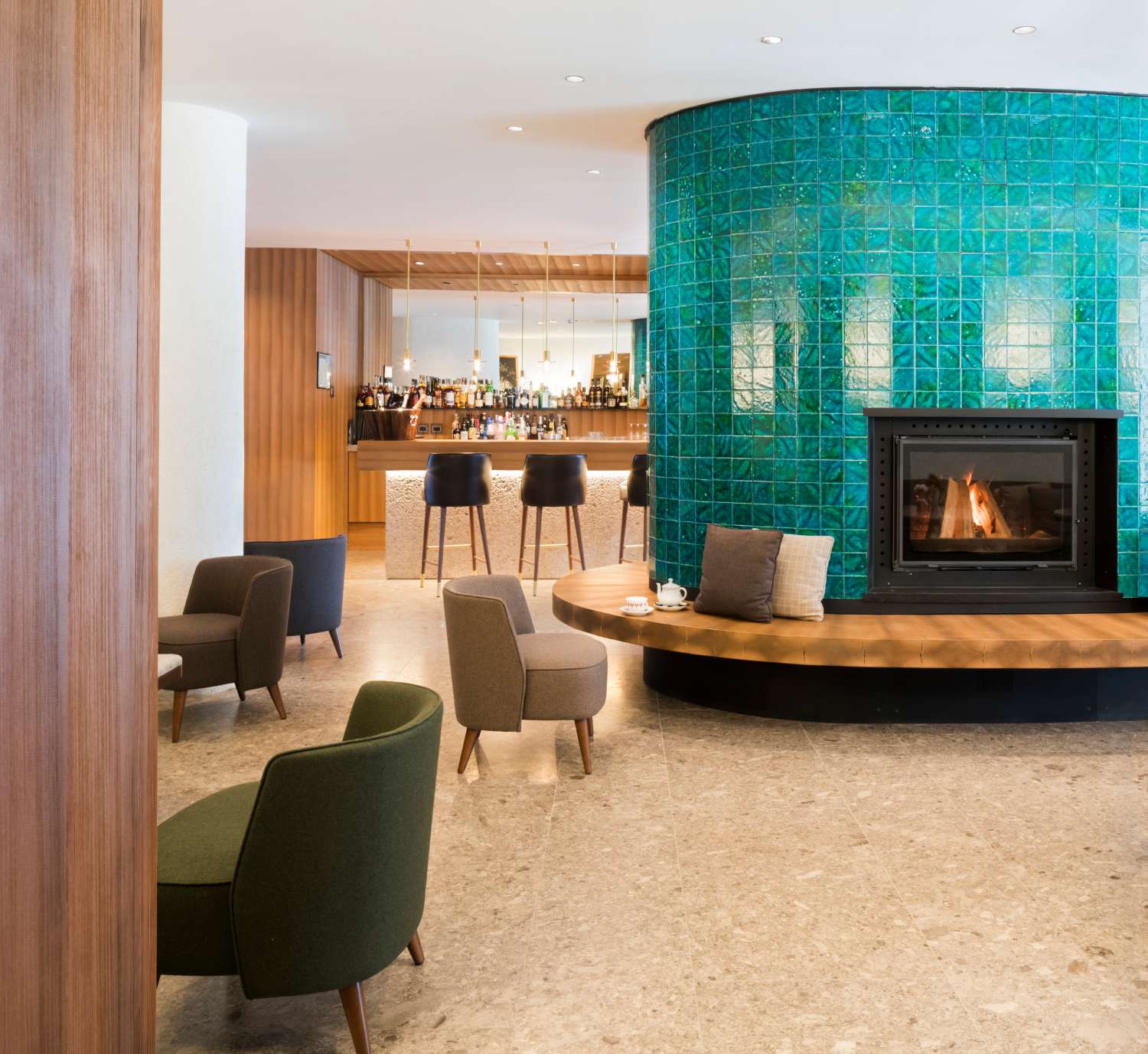
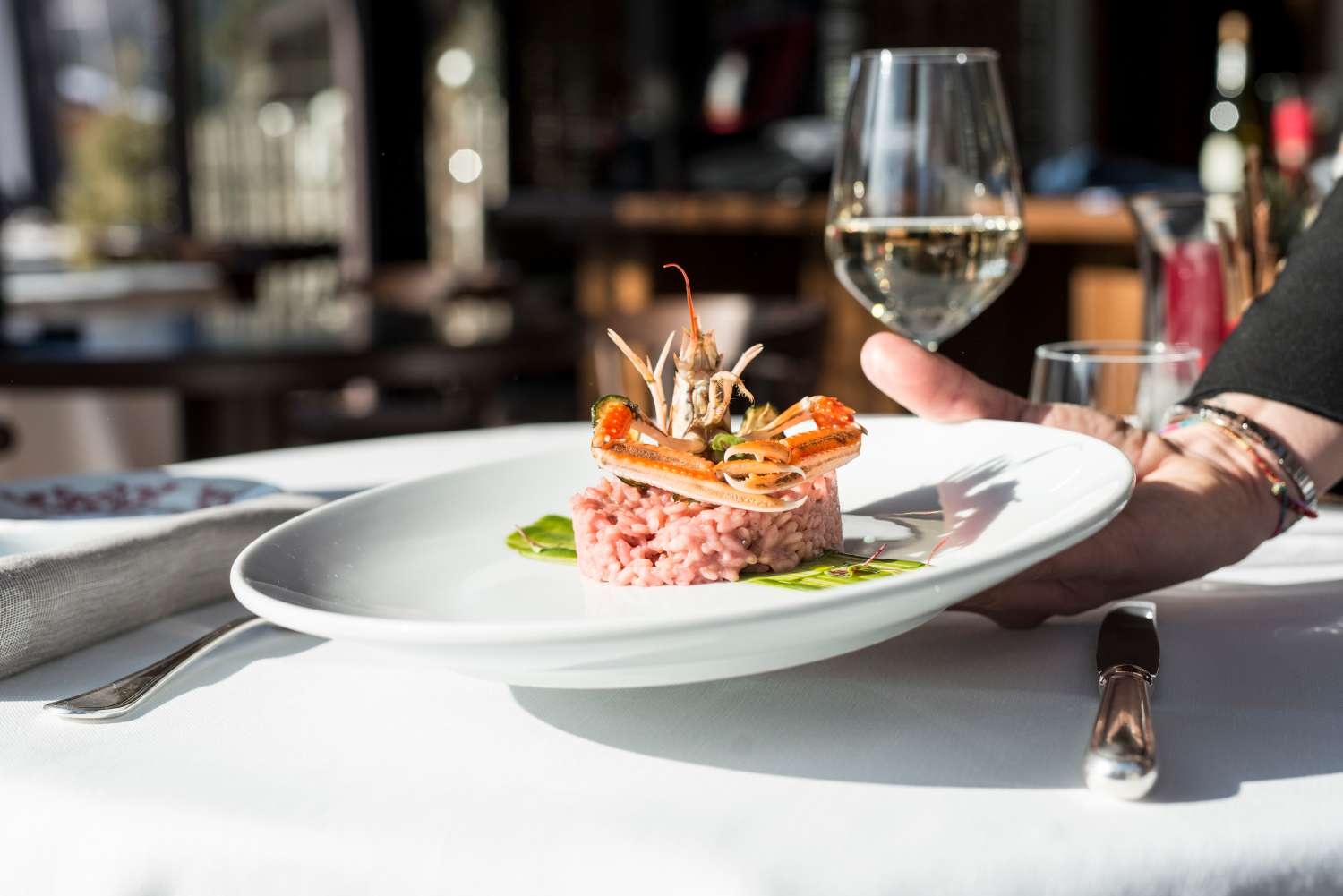
Common spaces celebrate refined conviviality around the fire. The large majolica stove, a sophisticated homage to Ampezzo homes, dominates the lounge, warming the atmosphere post-ski. At the table, the scene is helmed by Chef Giovanni Gagliardo. His cuisine is a geographical bridge bringing locally sourced produce and Mediterranean accents to the heart of the Alps, served in a glass-enclosed restaurant separated from the bistro by a dramatic split-stone wall in opus incertum.
Casa Guargnè Cortina
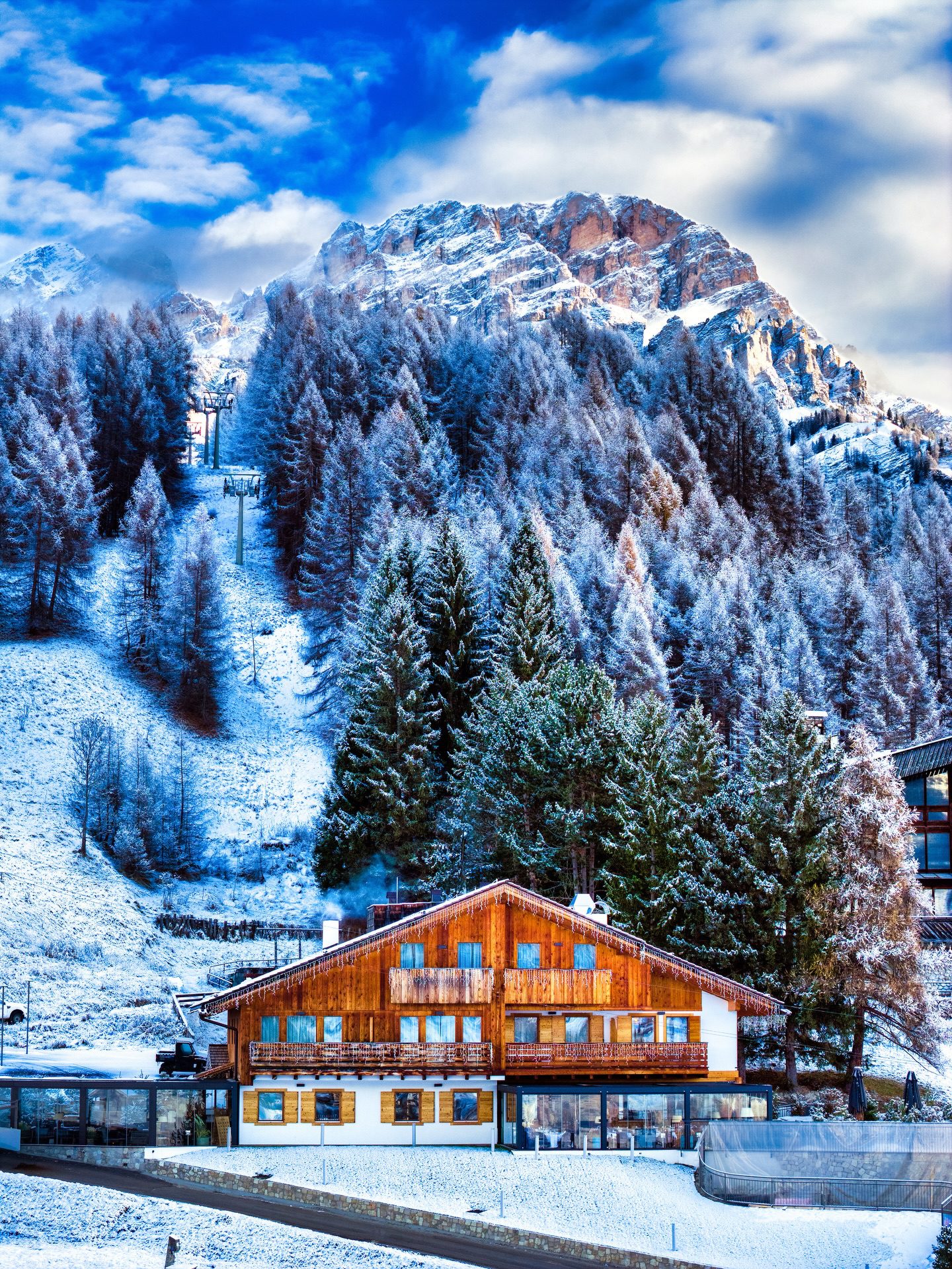
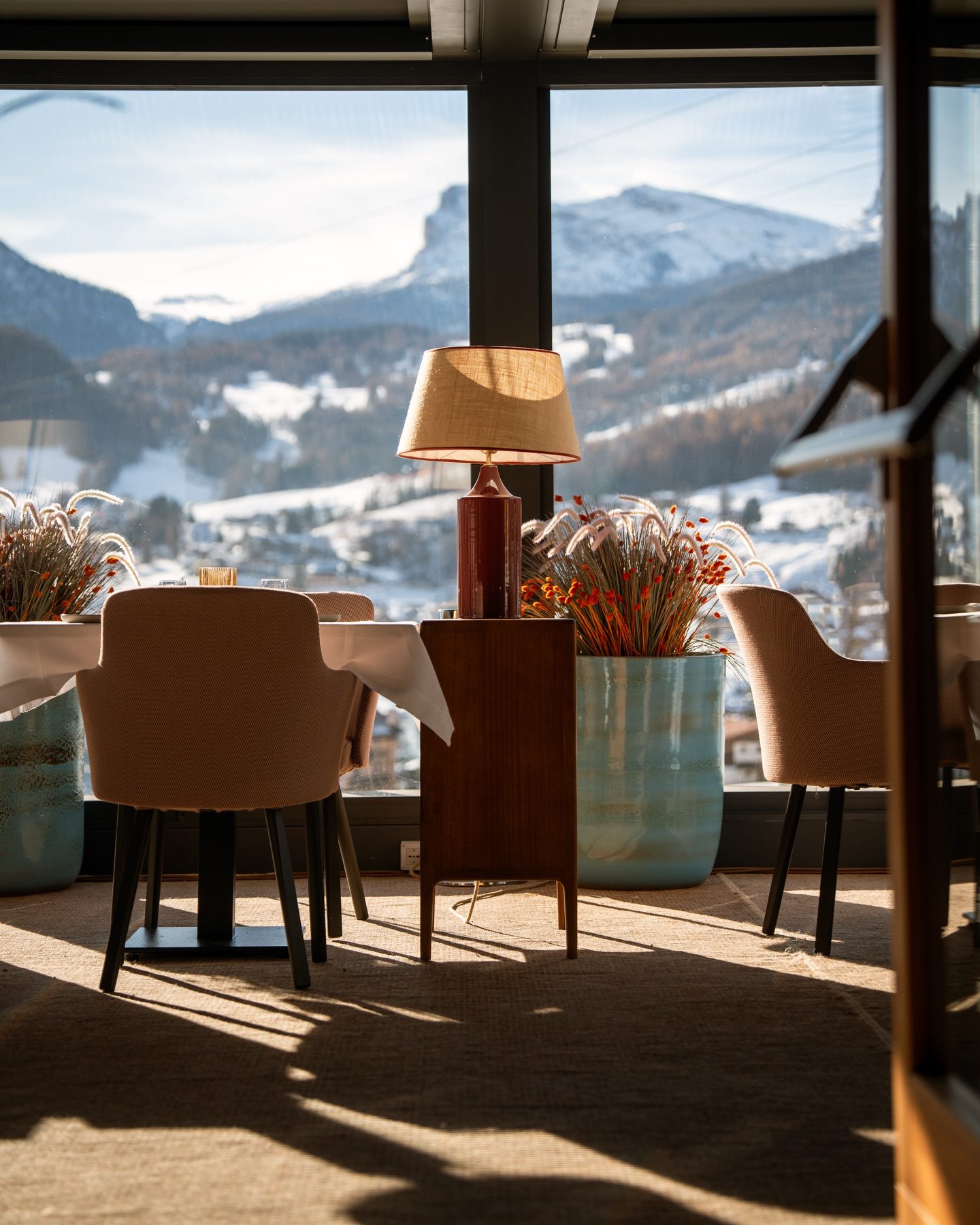
Amidst the wave of grand Ampezzo transformations, Casa Guargnè plays a different game—almost a counter-move. Far from the glare of the major luxury hubs, this property chooses the path of the pure boutique hotel, anchoring itself in the quiet residential enclave of Verocai. Here, the concept of home is an operational philosophy: a welcome calibrated on human connection, where service is defined by empathy and proactive intuition.
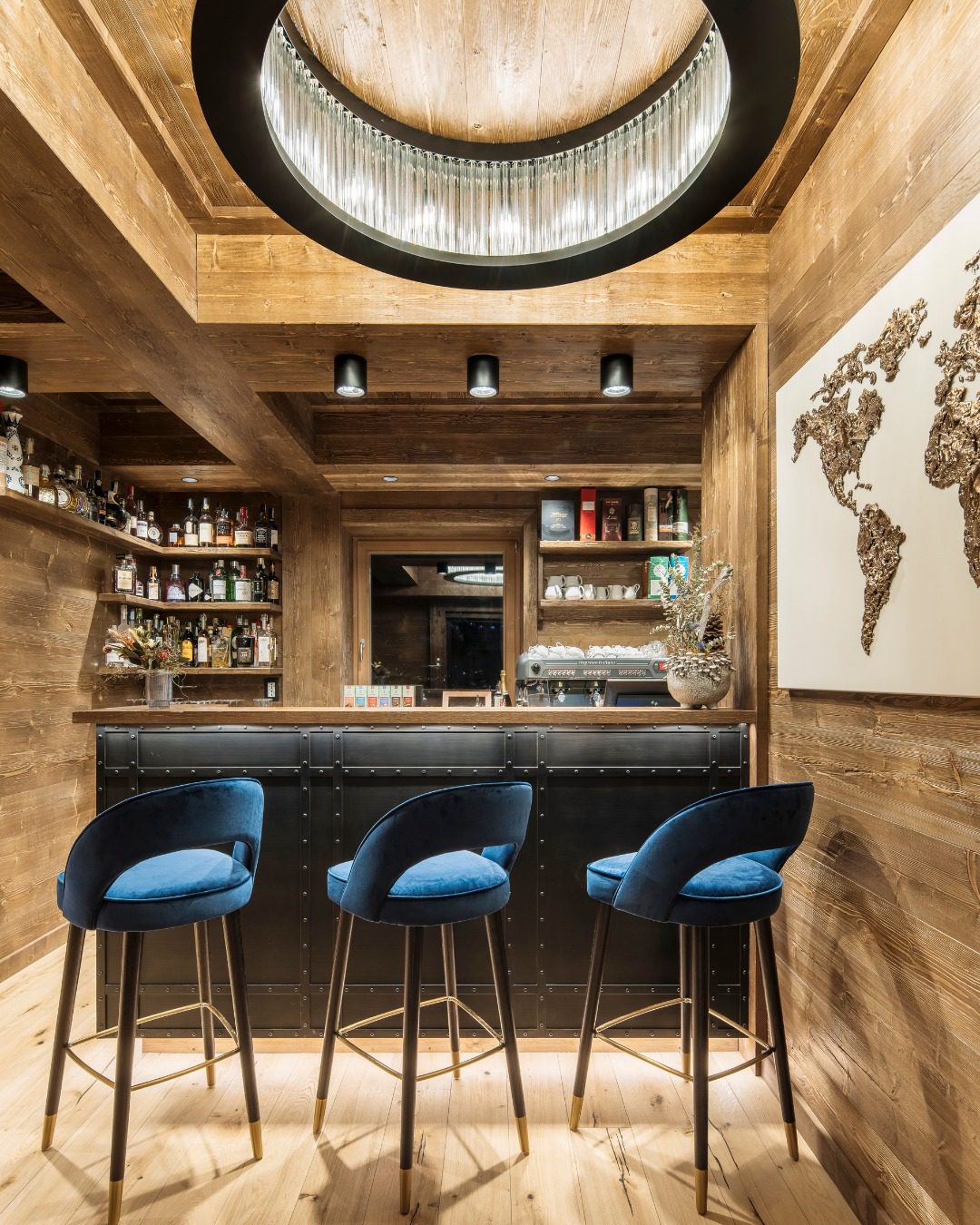
The aesthetic adheres to a mountain modern code: a style that strips the rustic of excess to leave room for clean lines and contemporary comfort, without ever compromising the atmosphere’s warmth. In the rooms, functionality marries contemplation. Balconies serve as privileged vantage points over the local wildlife, and the provision of binoculars is the detail that makes the difference: a silent invitation to transform the window into a private observatory, scanning the woods in search of deer and roe deer.
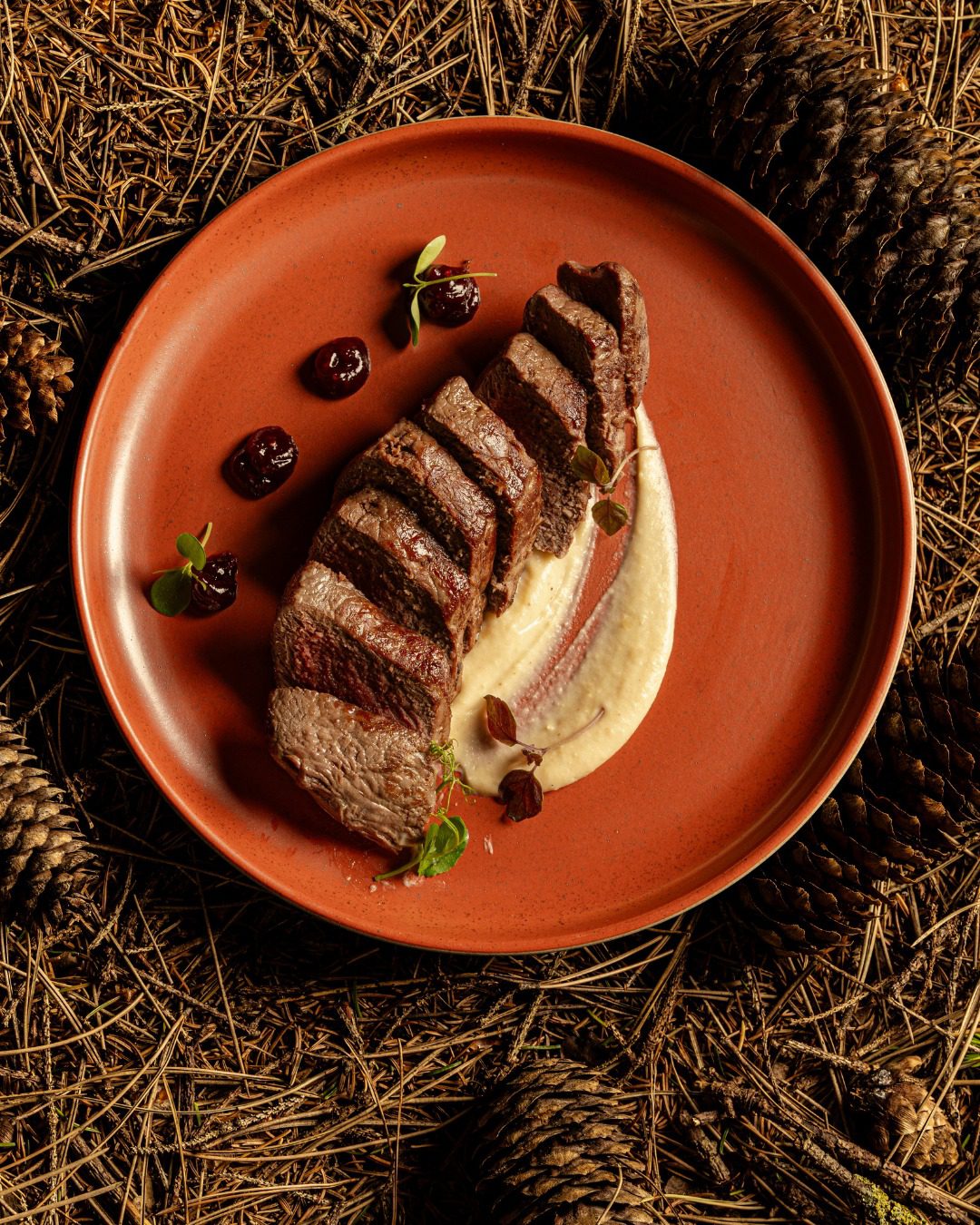
Its intimate scale imposes no sacrifices; rather, it concentrates the experience. The restaurant traces Mediterranean routes in a cozy setting, while the solarium terrace expands the spatial perception, transforming into an open-air living room as soon as the weather allows.