Architecture, compositional precision, and material grafting define a table and seating system built on legible structural logic: component clarity and joint design determine its identity.
With Abaco, B&B Italia turns the act of building into a formal language. The table and seating project marks Ronan Bouroullec’s debut with the company, at the invitation of Piero Gandini, taking its cue from the architectural rigor of the Brianza headquarters designed by Renzo Piano and Richard Rogers, as the designer recounts:
“I often drove along the road bordering the extraordinary building designed by Renzo Piano and Richard Rogers. I used to visit various manufacturers in Brianza, a distinct area on the outskirts of Milan. The building belongs to B&B Italia, a company whose history, early utopian vision, and milestone design pieces I deeply admire. When Piero Gandini, with his unmatched energy and vision, asked me to develop a project for the company, I was delighted to finally discover the site and become part of its history.”
A dialogue with space and the brand’s industrial memory shapes the core of Abaco, as the designer adds: “Perhaps unconsciously, the table and armchair project speaks of architecture, construction, and connection. In an era where everything seems built with little regard for legibility or precision, the design reveals itself here, drawing its singularity and sensibility from visible components and the way they interlock. Concrete, wood, lacquer, and saddle leather grip and rest upon one another to form structures suited for eating, reading, making love, and contemplating.”
The Structural Logic of Abaco by B&B Italia
Many contemporary products conceal their structural logic; Abaco reverses the perspective, making component clarity, proportion, and joinery the defining signature of the entire system.
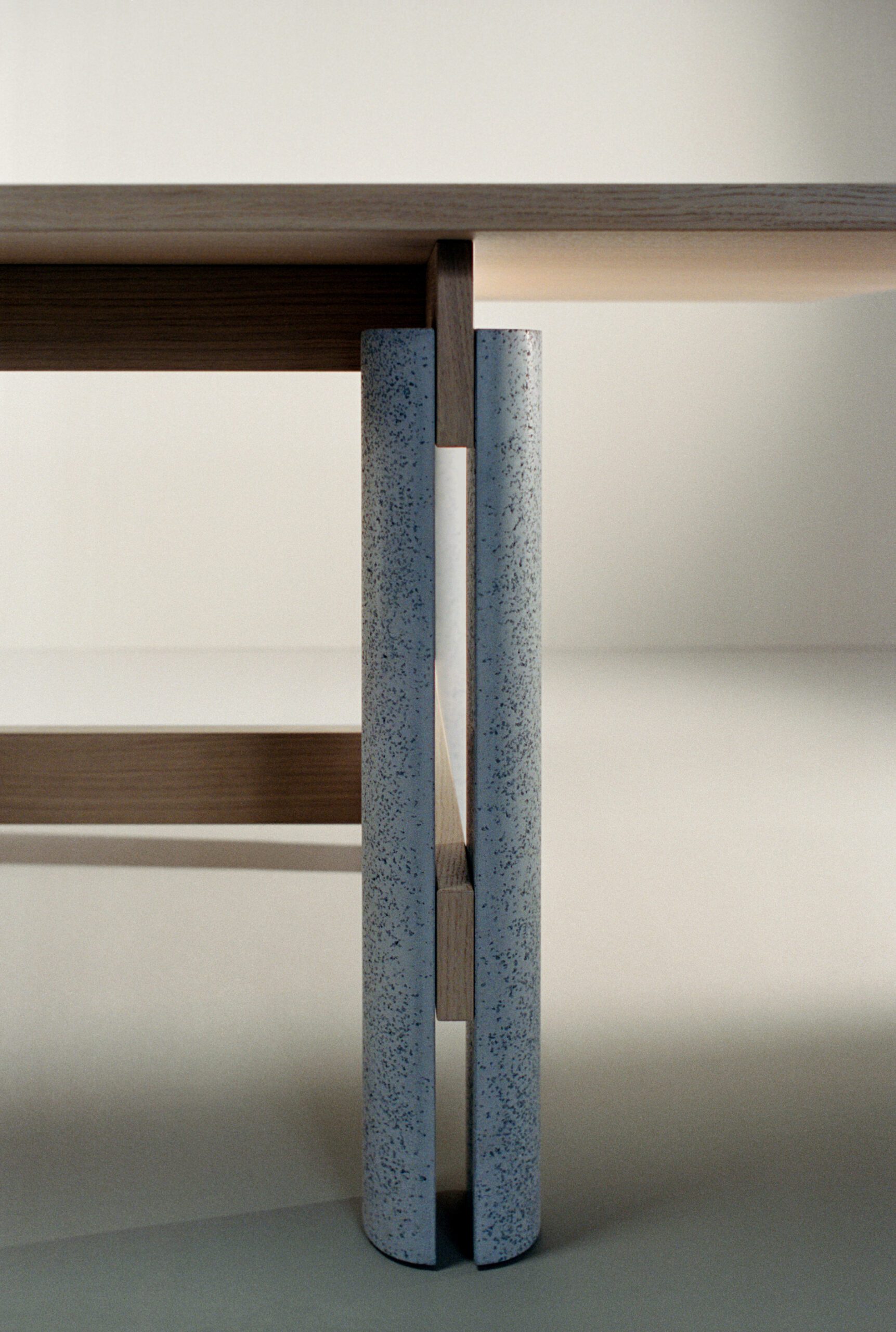
Wood, lacquer, concrete, smoked glass, and saddle leather never act as mere surface finishes; instead, they operate as structural elements that mutually support and enhance one another. Precise joinery, exposed parts, and material tactility translate function into daily experience, shaping domestic architectures conceived to inhabit space naturally.
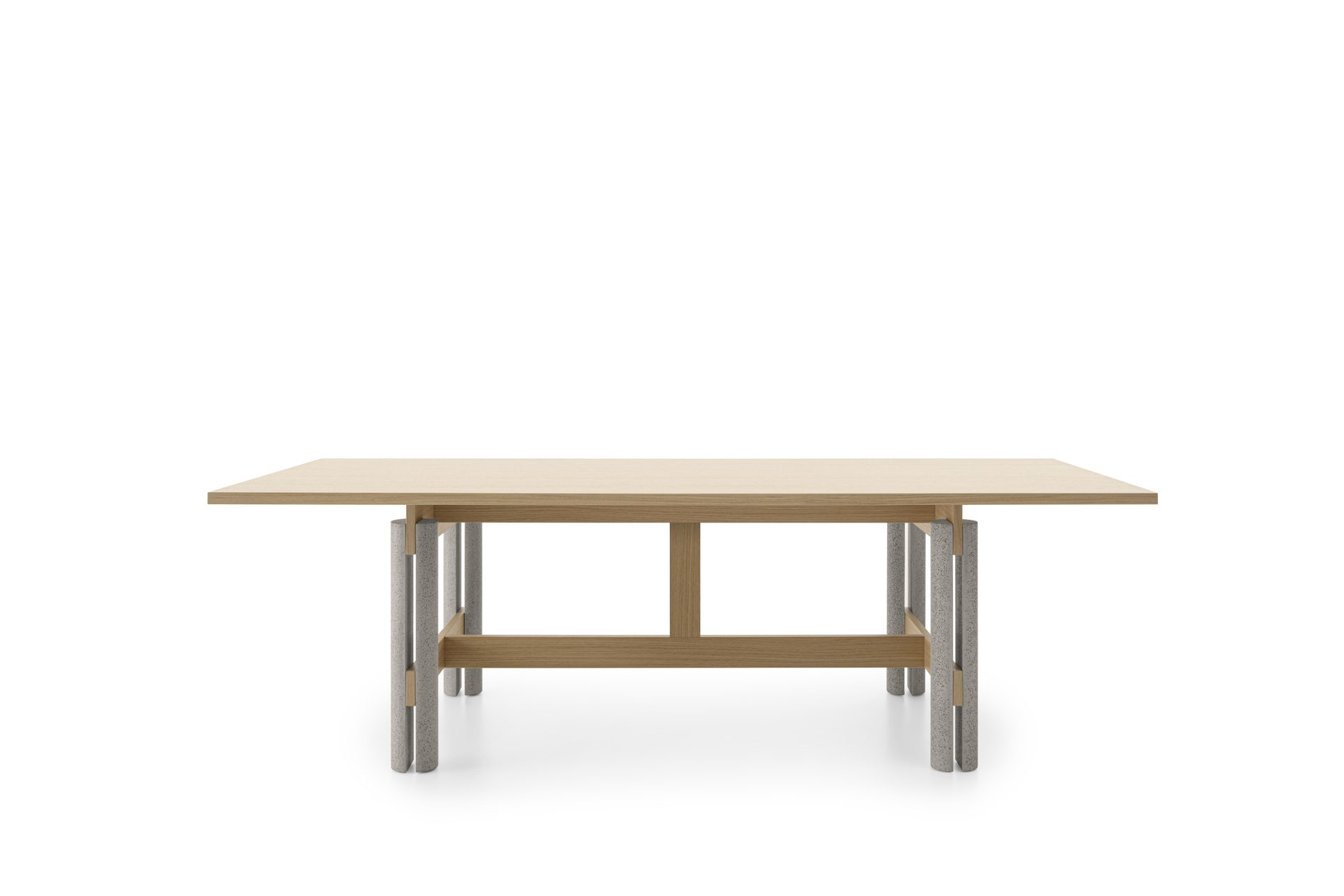
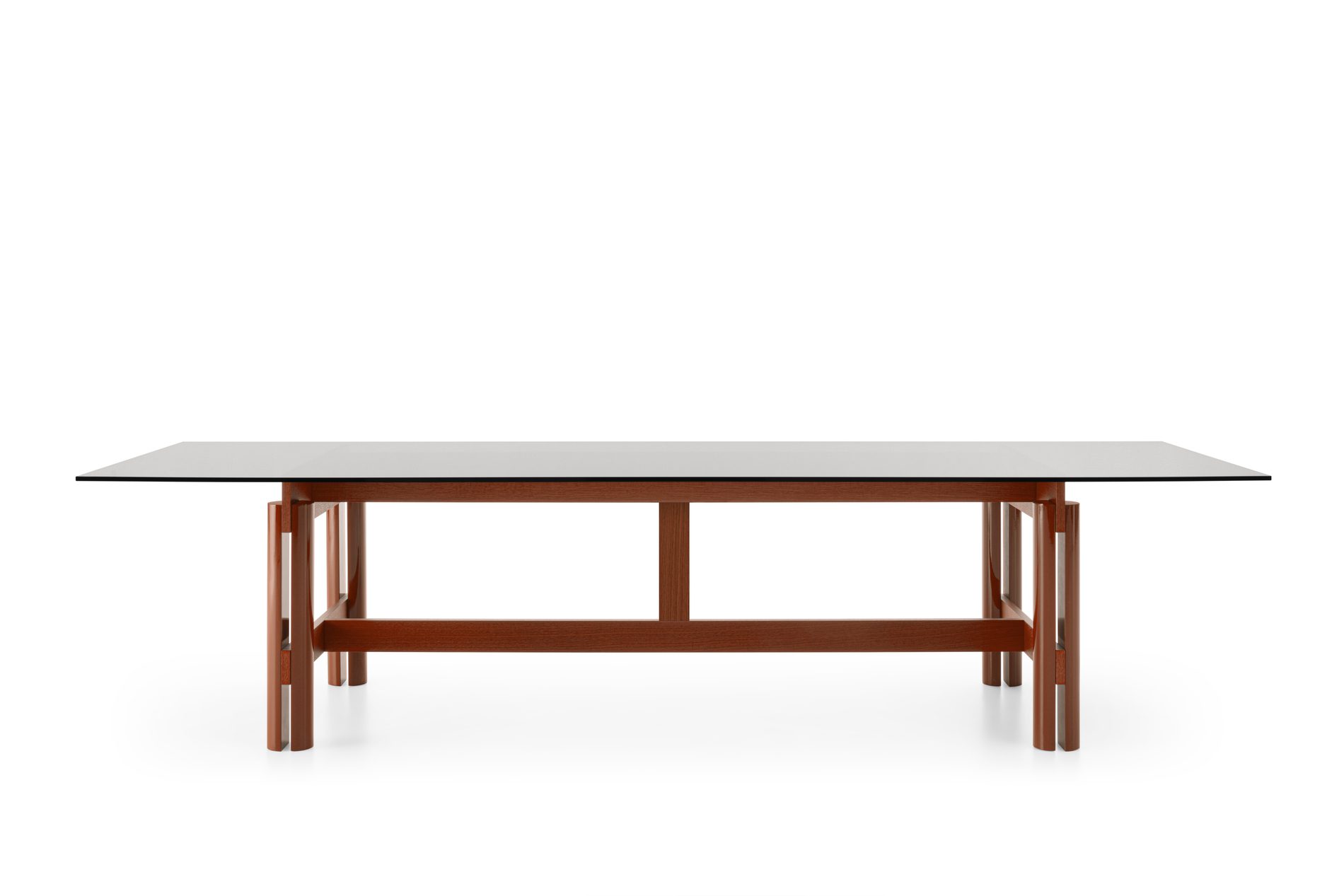
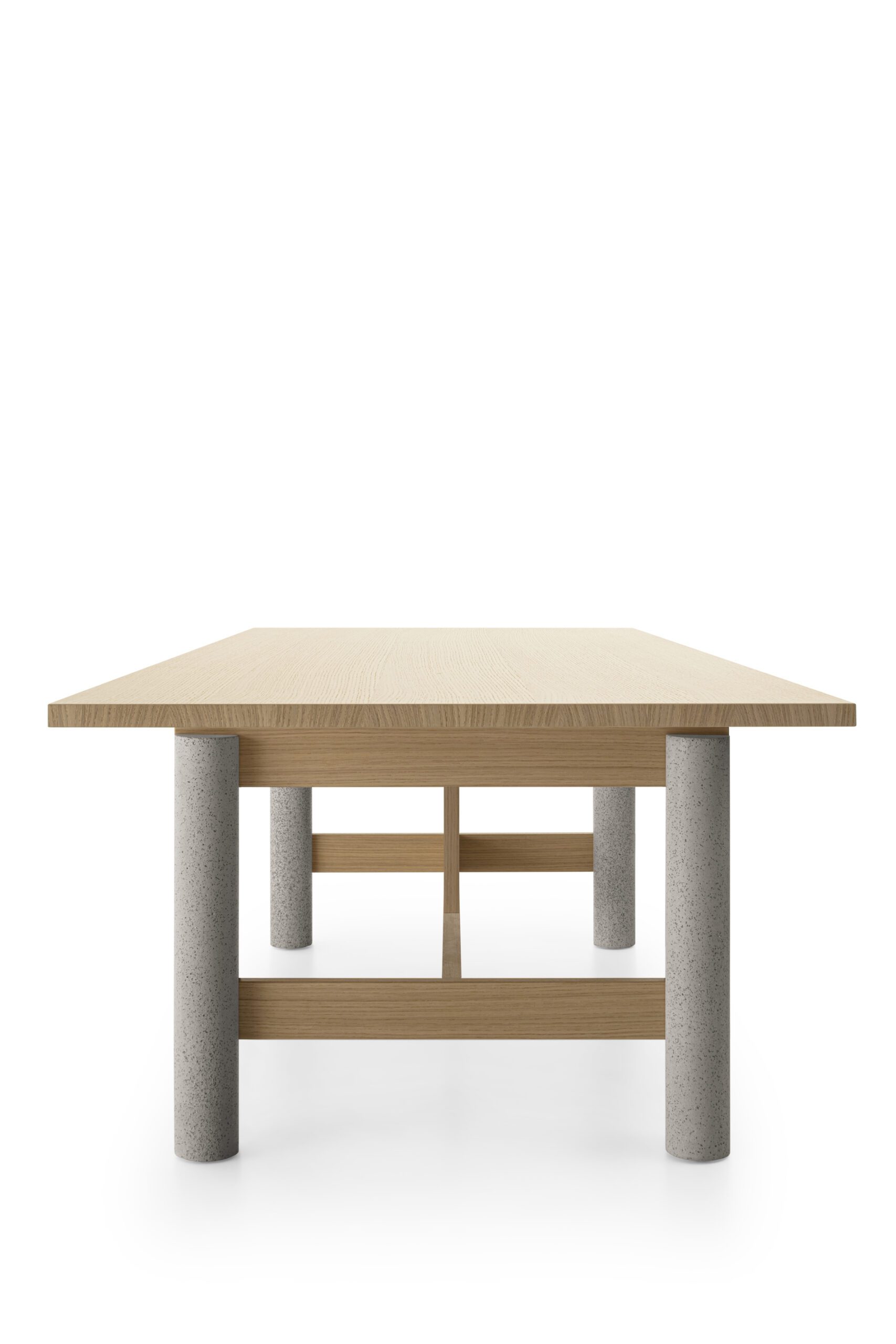
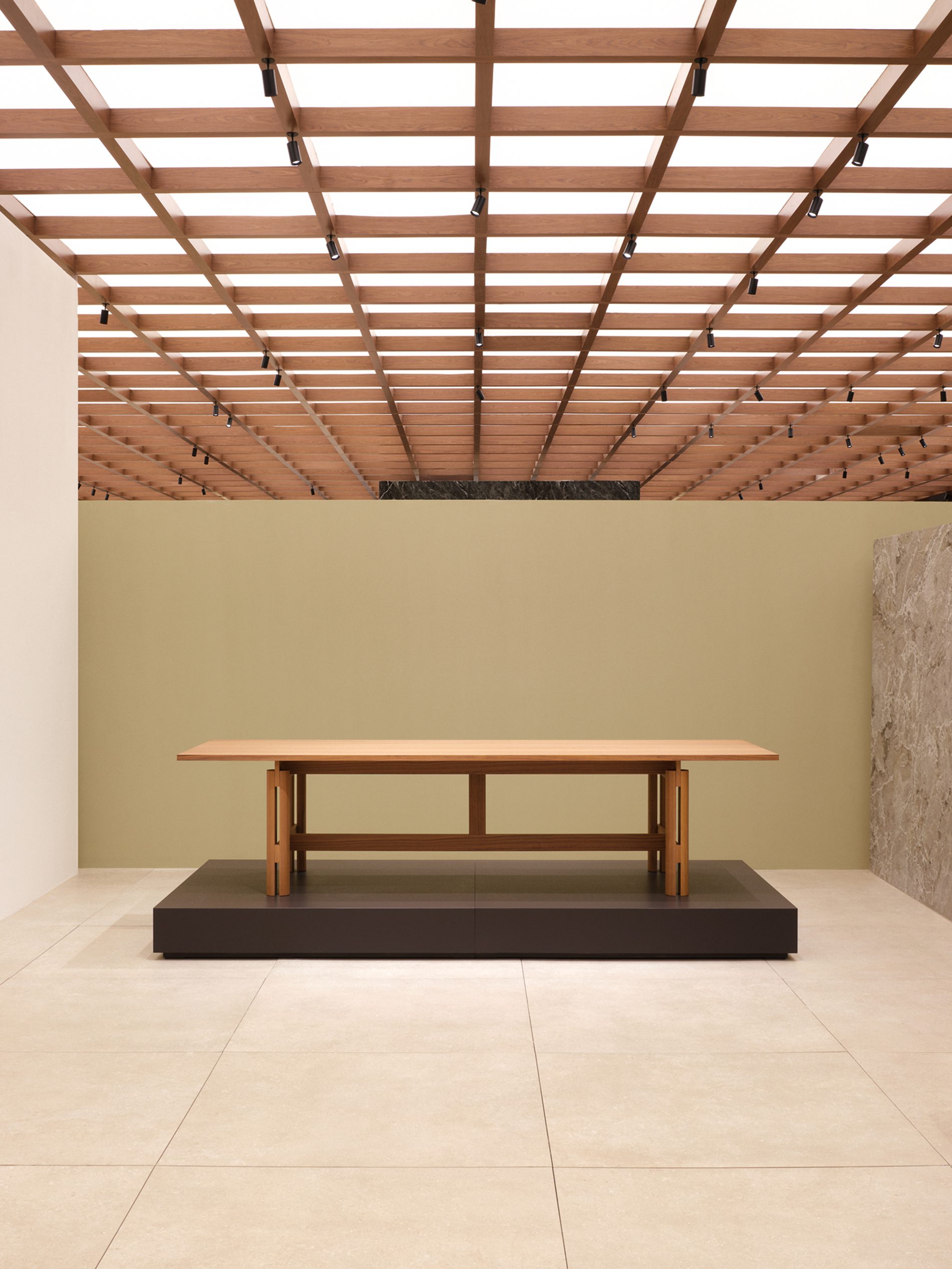
Abaco Table by B&B Italia: Interlocking Geometry Between Material Density and Transparency
In the table, the design syntax translates into a crisp interplay between top, crossbars, and legs, articulated across diverse material combinations. Alongside all-wood versions—in brushed light oak, brushed black oak, and Canaletto walnut—the system alternates configurations featuring lacquered or light grey concrete legs, culminating in a glass-top variant.
The crossbars pair the three wood species with a brick-red stained oak option, while the legs introduce the depth of glossy brick-red lacquer or the textured density of light grey concrete. A smoked glass top completes the system: a transparent surface revealing the geometry of the underlying joints while visually lightening the composition without compromising its architectural strength. The table maintains a constant one-meter width across four lengths: 2.40, 3.05, 3.70, and 5 meters.
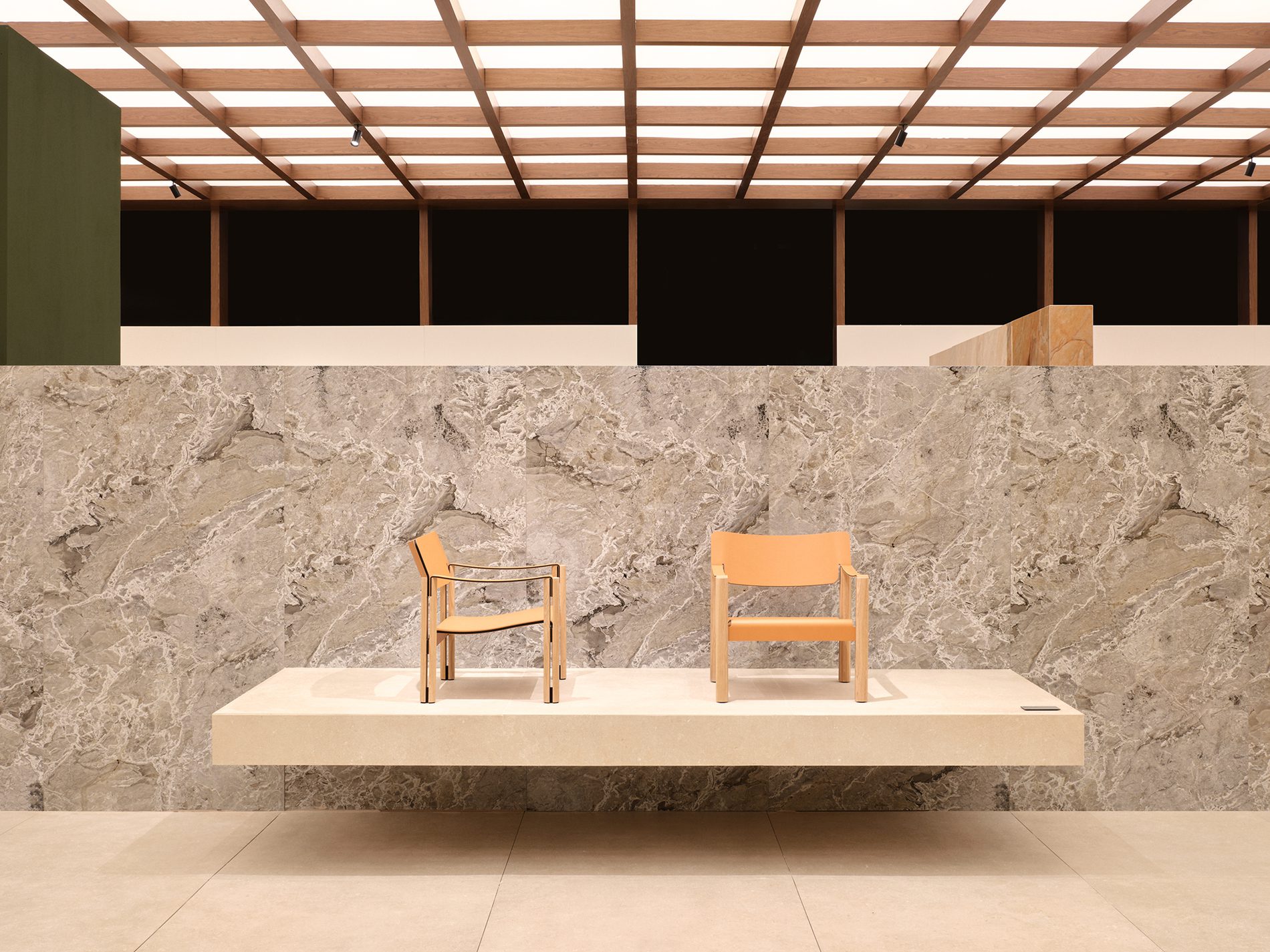

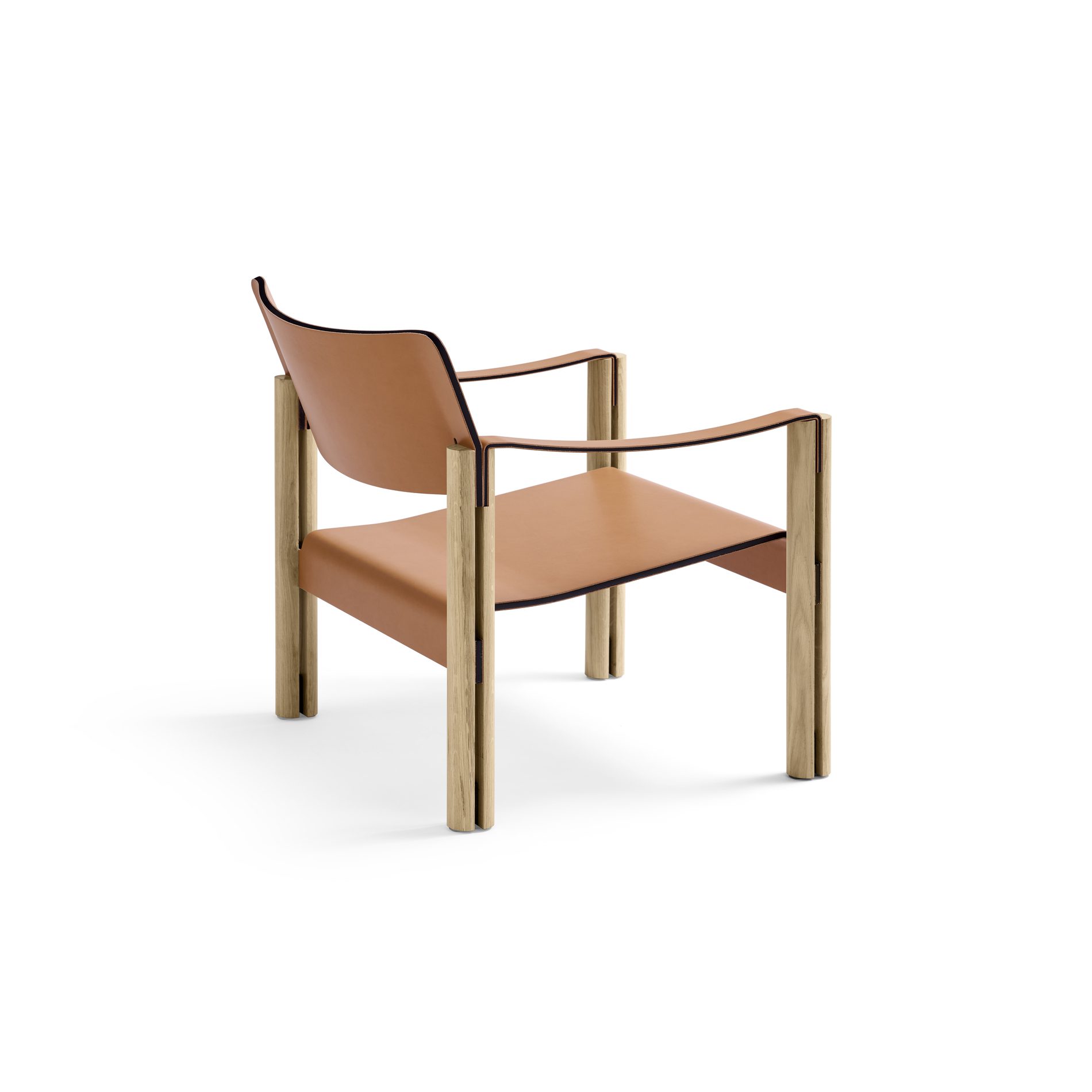
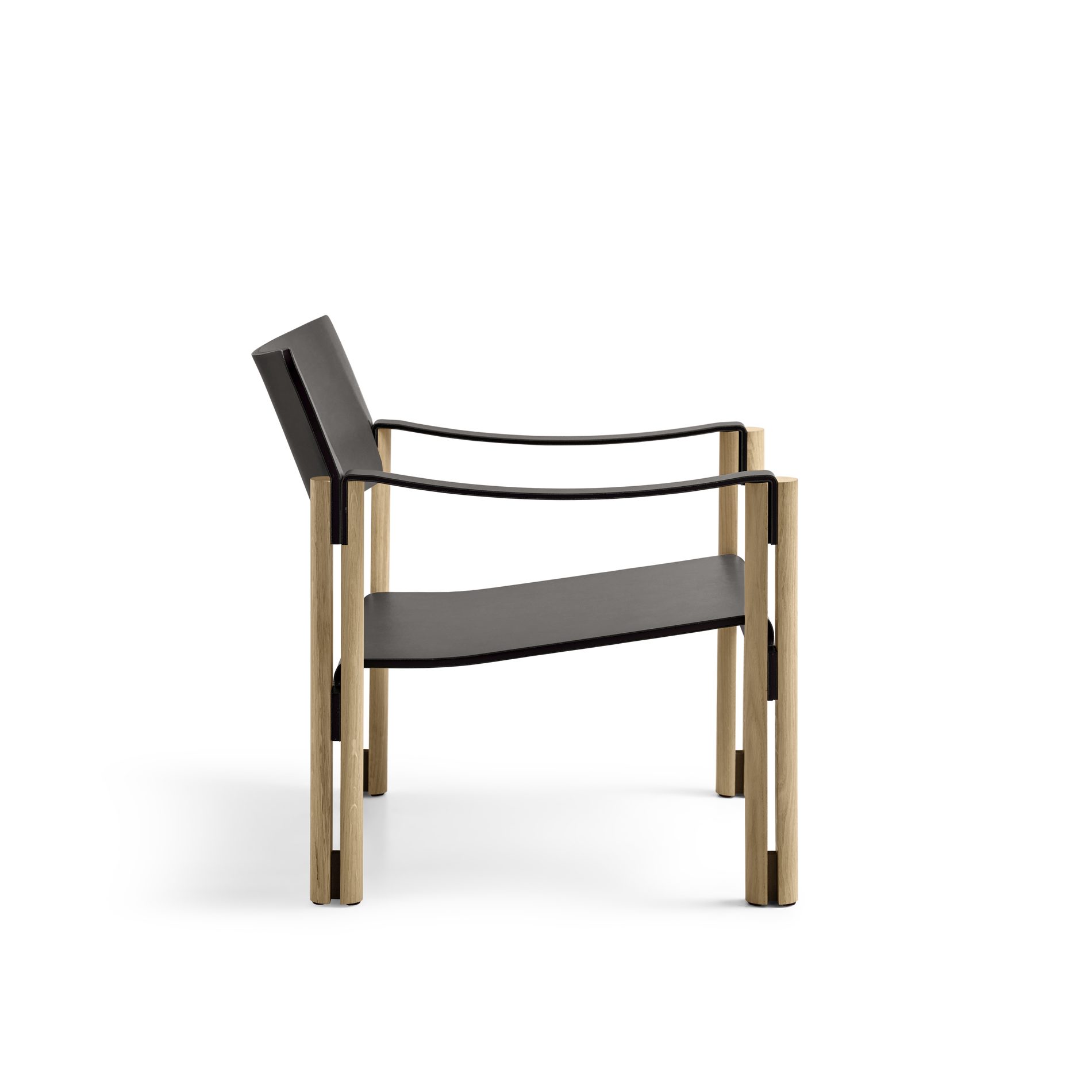
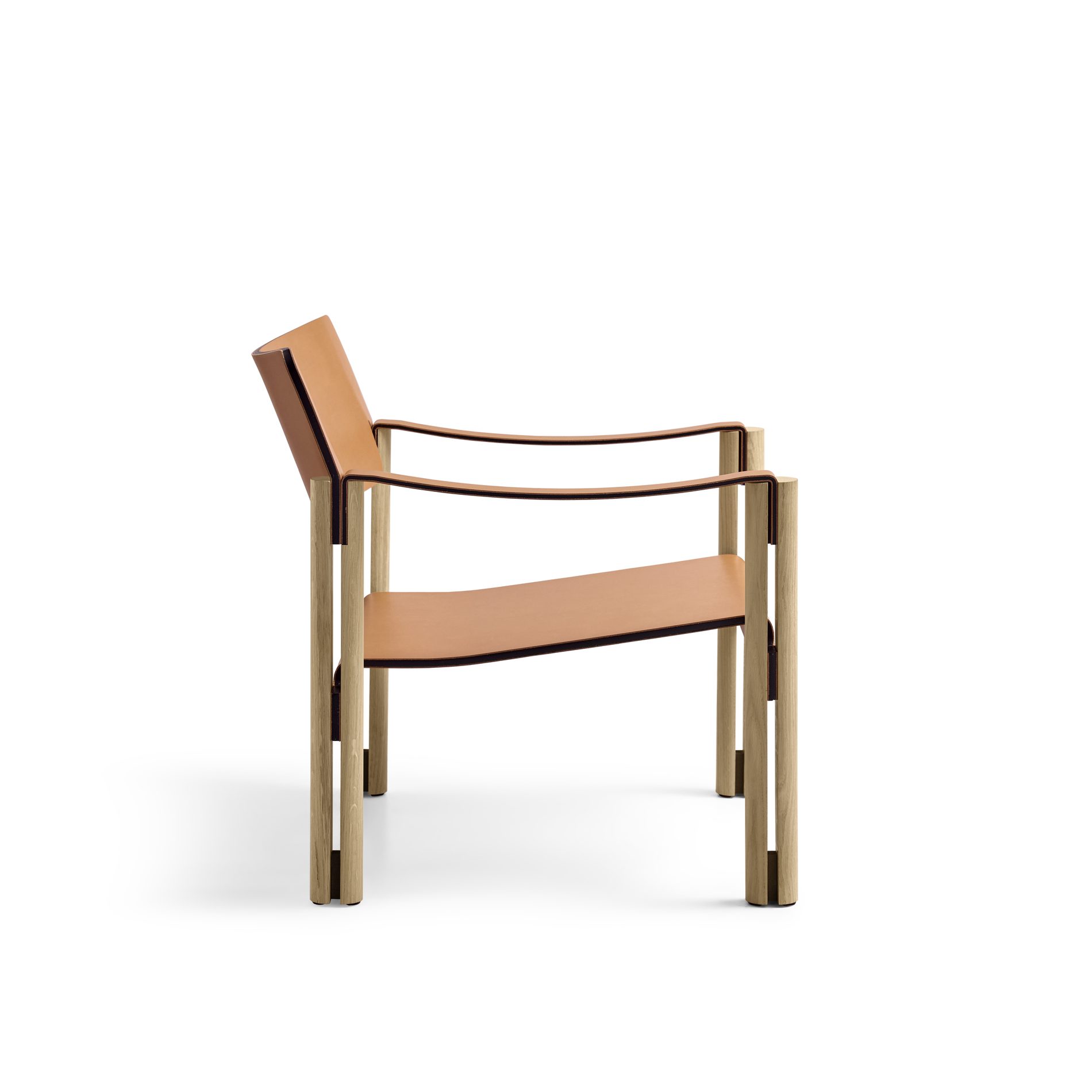
Abaco Armchair: Synthesis of Comfort and Rigor
The armchair condenses the same research into a profile of calibrated proportions, essential yet welcoming. The leg design—in brushed light oak, brushed black oak, or Canaletto walnut—meets the seamless continuity of the seat, backrest, and armrests upholstered in saddle leather. The tactile quality of the hide defines the chair’s character across six colorways: natural, taupe, dark brown, black, green, and lobster.
B&B ItaliaPhoto Credit: Samuel Kirszenbaum