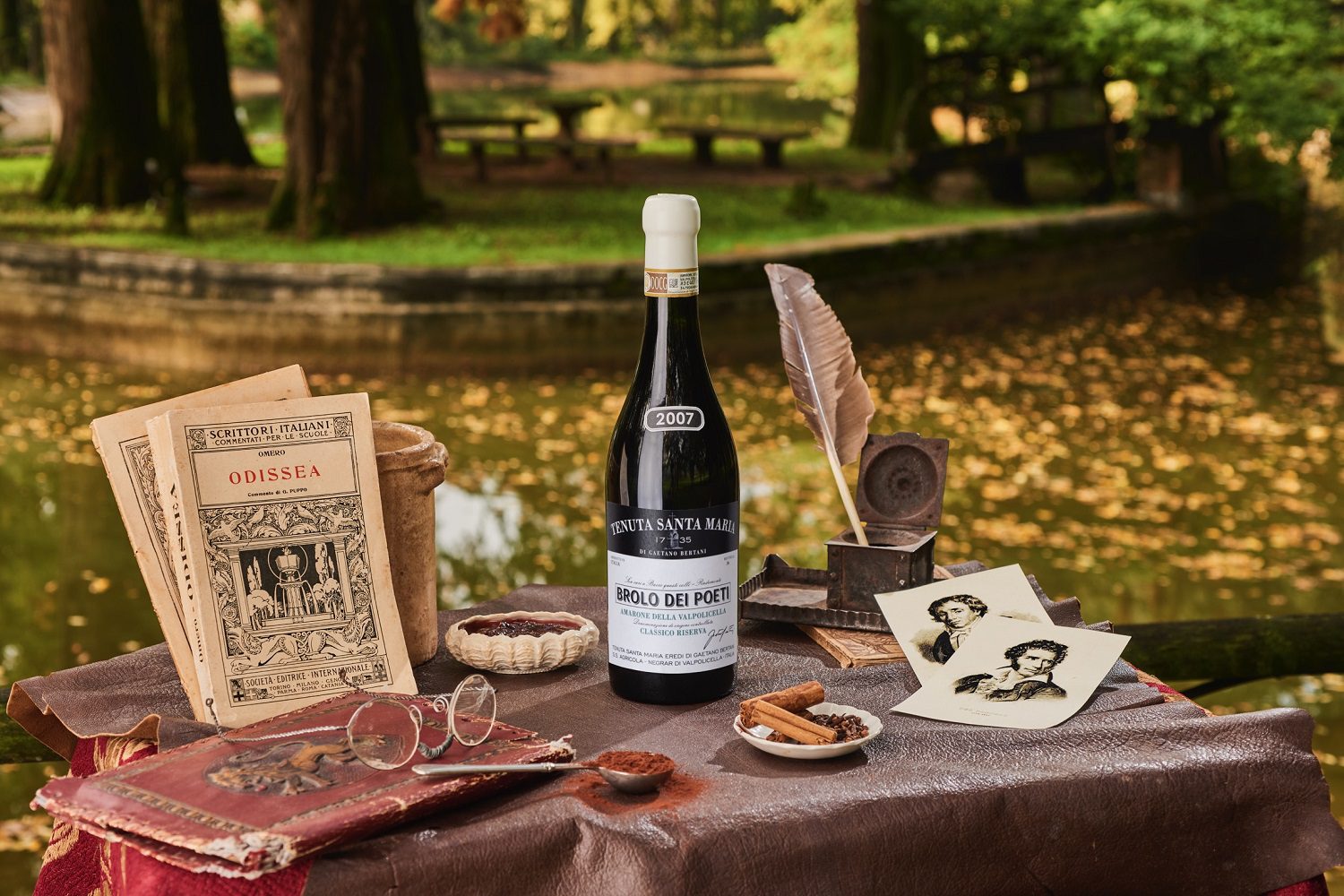
Bottled exclusively in stellar vintages, a 16th-century walled clos—shaped by historic woodlands and ancient Roman springs—dictates the 14-year maturation of a landmark Amarone Riserva.
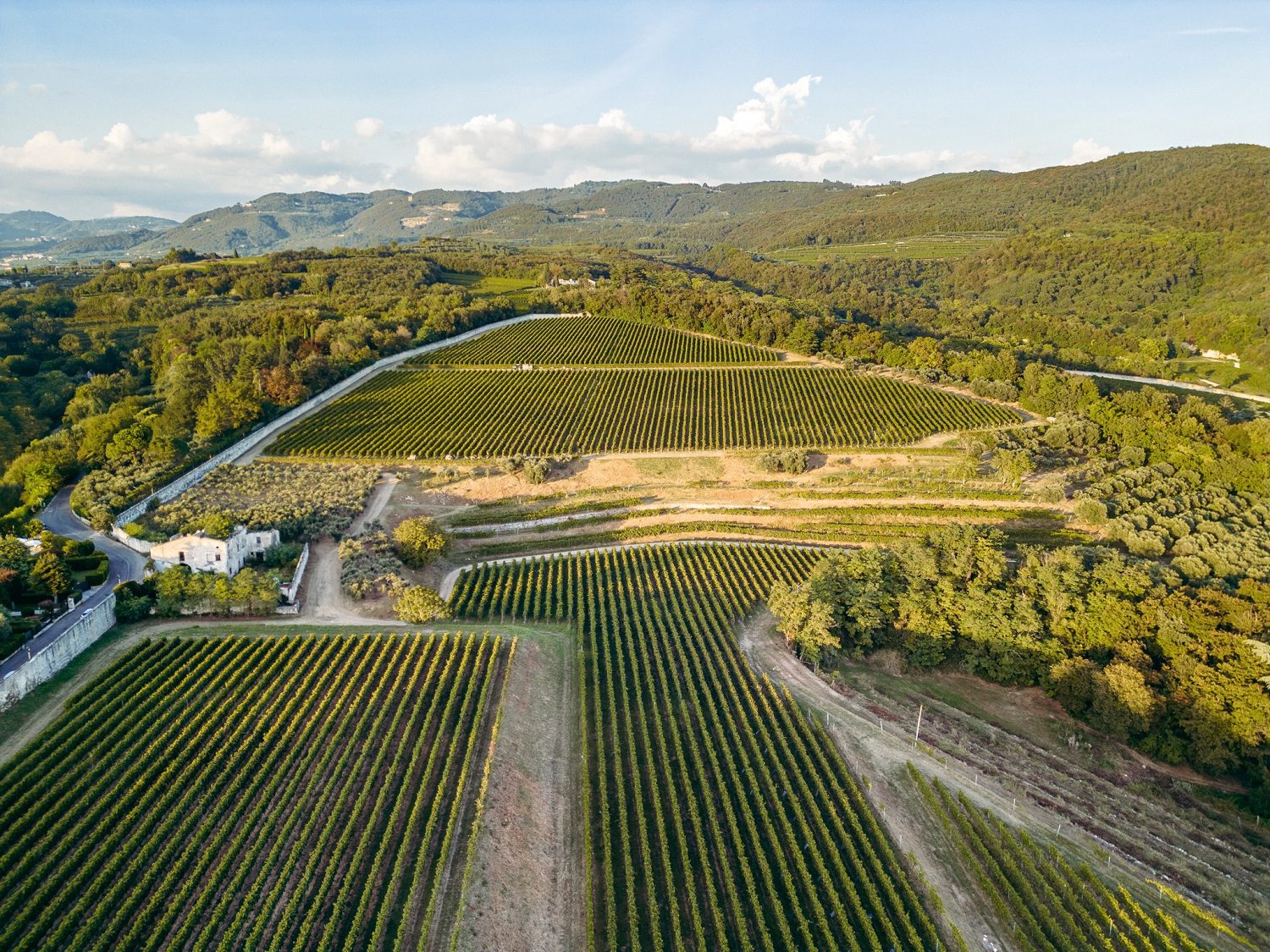
The 3.5-kilometer stone wall flanking Arbizzano di Negrar seals a self-sustaining Renaissance matrix. Here, contiguous woodland, a lacustrine basin, and three active Roman springs buffer the vines during severe hydric stress. Operating enologically as an Italian analogue to the Burgundian clos, Tenuta Santa Maria’s Brolo dei Poeti single-cru functions as a protected ecosystem.
Under the current stewardship of the Bertani brothers, the estate operates on the precise calibration of agronomic research and deliberate, extended chronologies, moving far beyond regional conventions. The marly-limestone soils—strictly south-east exposed with senior vines exceeding 35 years of age—represent an early regional adoption of high-density viticulture. Historical documentation by the Accademia di Scienze e Agricoltura di Verona from 1874, illustrated by photographer Moritz Lotze, confirms a pioneering conversion to the Guyot training system at 5,900 vines per hectare.
The Ampelographic Capital of the Clos
A proprietary massal selection of Corvina, propagated exclusively from the estate’s oldest biotypes, forms the defining genetic capital of the clos. Phenotypically, the selection diverges from the expansive, cherry-dominated profiles ubiquitous to modern Valpolicella clones, yielding instead a sharp analytical signature driven by taut small red fruits like wild strawberry and raspberry. Traditional companion cultivars—Rondinella, Oseleta, and ancestral indigenous varieties—complete the blend. The surrounding woodland acts as a natural climate shield, fostering a localized environmental equilibrium where viticulture resists regional standardization.
Agronomic Protocols and Structural Metamorphosis
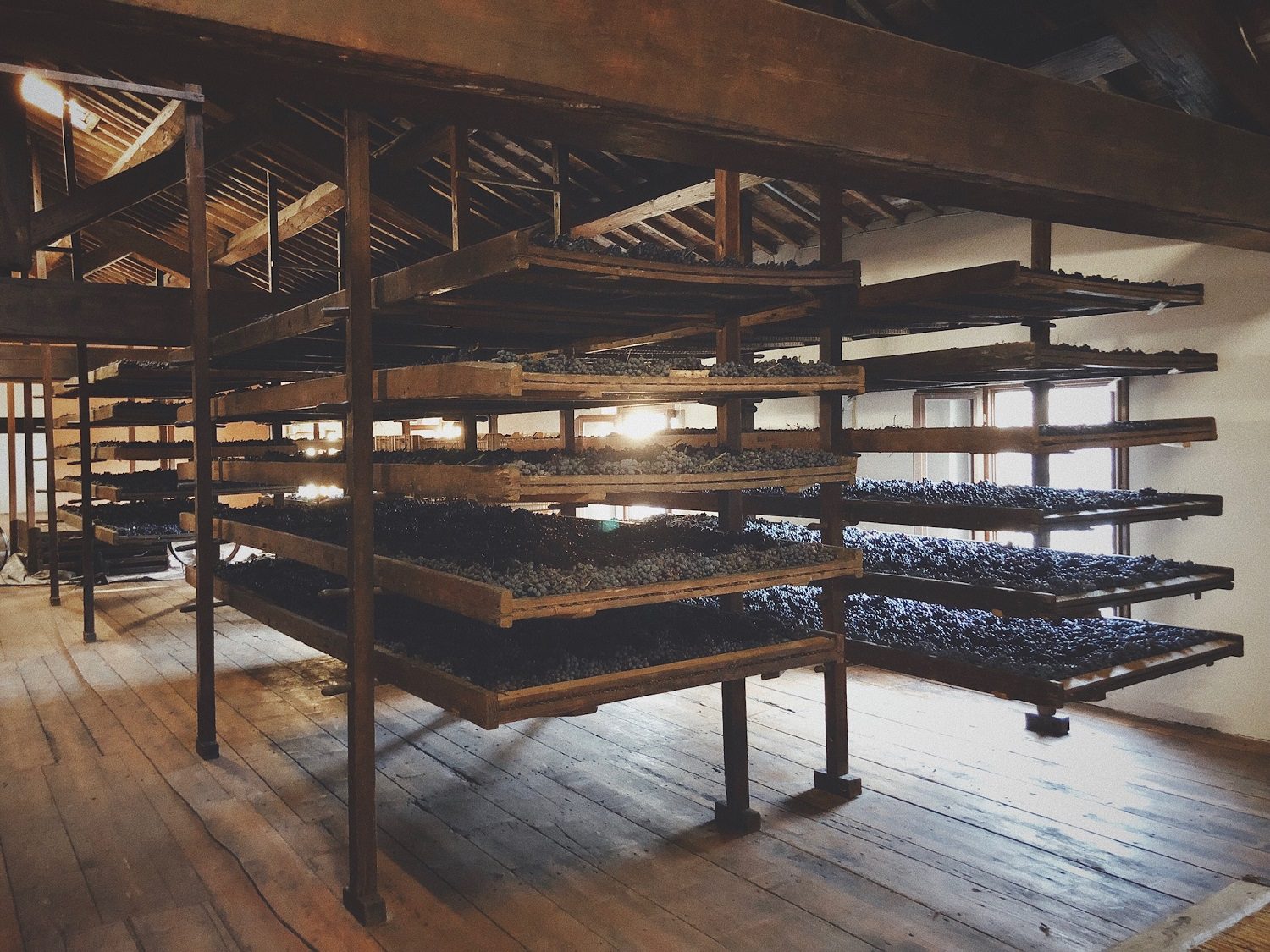
Production of the Amarone Classico Riserva DOCG Brolo dei Poeti remains restricted to exceptional macroclimatic vintages and executed in minute, numbered quantities. An intentionally early manual harvest initiates the technical trajectory, locking in high total acidity and lower potential alcohol to establish a structural chassis characterized by mineral tension rather than jammy opulence. The bunches undergo appassimento for approximately three months within the estate’s historic fruttaio, dehydrating via natural ambient ventilation on traditional cane mats (arelle). Avoiding forced thermodynamic dehydration ensures a gradual, damage-free concentration of sugars and organic acids, preserving the grapes’ structural integrity.
An extreme maturation regime defines Brolo dei Poeti: fourteen years in large-format Slavonian oak casks. “Fourteen years in cask alter the matrix in a manner that no alternative technical protocol can replicate,” notes Giovanni Bertani. “It is an absolute requirement dictated by the fruit of the Brolo. The duration manifests in the glass through aromatic depth and an evolutionary trajectory that expands without losing structural equilibrium.”
Echoing the technical trajectory, Guglielmo Bertani outlines the chemical metamorphosis: “Such protracted wood contact allows a seamless integration of the structural matter. Slow, passive oxidation allows the tannins to resolve naturally while the volatile compounds fuse with geometric precision. It demands constant analytical monitoring and patience, but it yields an Amarone defined by proportion and clarity, built on structural definition rather than mere sugar-driven concentration.
Organoleptic Profile and Historical Continuity
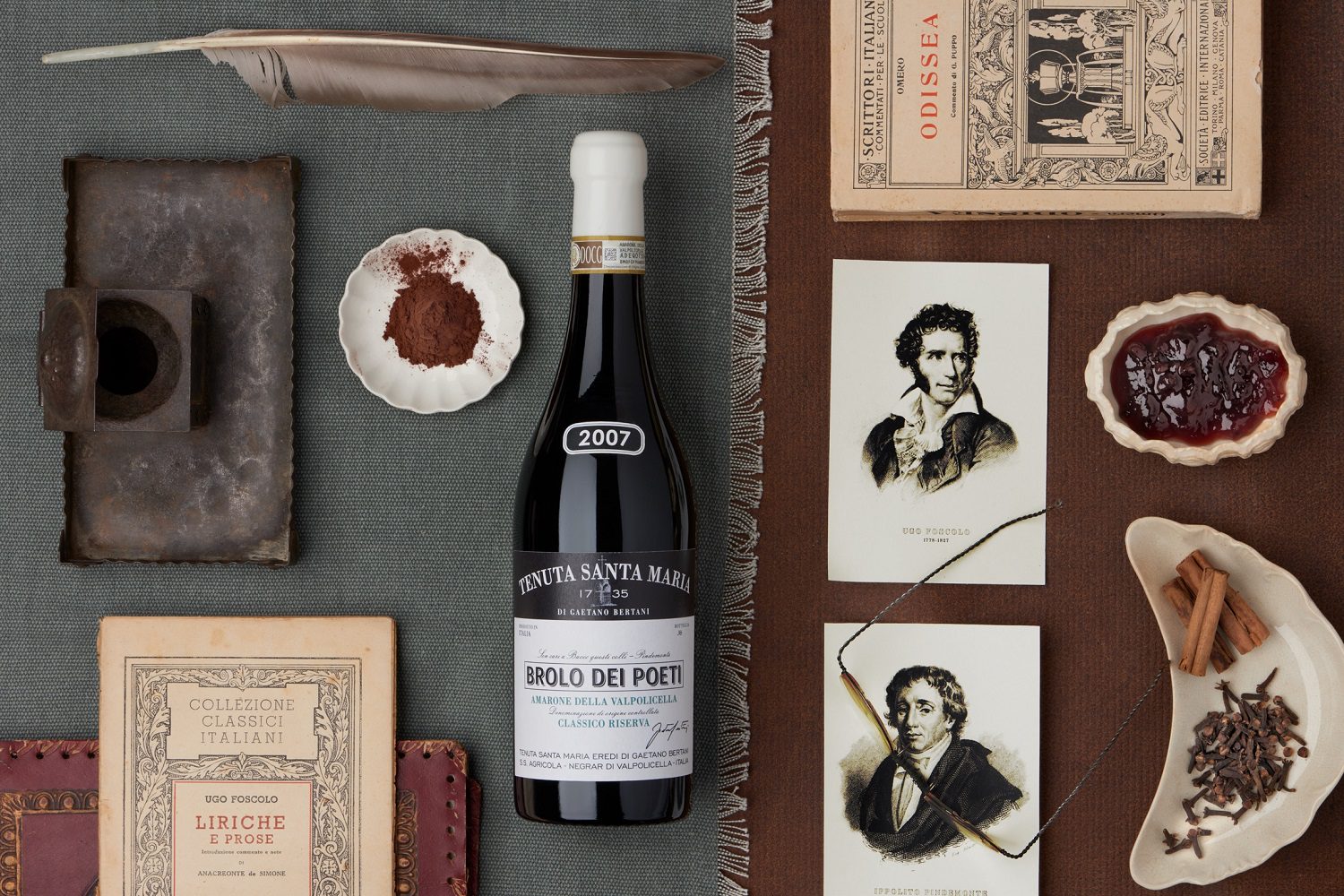
An impenetrable garnet in the glass, the wine rejects residual fermentation sweetness, unfolding via primary herbaceous and mineral notes before revealing complex tertiary layers of warm spices, unsweetened cacao, and cured tobacco. On the palate, a linear, vertical entry relies on a robust acid profile to drive the sapid-mineral core toward a bone-dry, precise finish framed by fully resolved, velvety tannins.
Initially commercialized with the 2007 vintage and followed by the 2010 millésime, Brolo dei Poeti represents an elite tier within the region: the Riserva category accounts for a mere 3% of total Valpolicella Amarone production. By maintaining a bone-dry profile and structural tautness, Tenuta Santa Maria consciously mirrors the historic, paradigm-setting Amarones of the 1960s—prioritizing acid tension and structural longevity over the late-harvest sweetness and heavy extraction that characterized the turn of the millennium.