A Contemporary Vision of the Roman Jewish Artichoke: Chef Danilo Mancini’s ‘Giudea’ at Masa Rooftop”
The Heritage of the Ghetto: A 500-Year Odyssey
While many ingredients travelled the world during the Jewish Diaspora, none represents the Judeo-Roman identity as uniquely as the humble artichoke. Originally a staple of the ancient Roman diet, the artichoke lost popularity until the Middle Ages, when it was reintroduced via Spain and Sicily.
The turning point came in 1555, when Pope Paul IV established the Roman Ghetto. Among the Sephardic Jews arriving from Sicily—who had already mastered the “thistle flower”—the artichoke found its true home. Restricted by papal bulls and forced into a life of limited “luxuries,” the community transformed the seasonal mammole into a masterpiece. Between 1555 and 1870, the artichoke became the protagonist of Ghetto street food. Since dairy and meat could not be mixed under Kashrut laws, frying in olive oil instead of butter became the gold standard, giving birth to the first true Roman “street food.”
The “Kosher” Controversy and the Romanesco Variety
Even today, the dish sparks debate. In 2018, the Israeli Chief Rabbinate declared the Carciofo alla Giudia non-kosher, fearing insects might hide within the leaves. The Roman Jewish community stood firm: the local Romanesco variety (also known as cimaroli or mammole) grows so densely and compactly that it is impenetrable to insects. These “craters of taste,” cultivated between Ladispoli and Civitavecchia, are spineless and fiber-free, making them the only variety suited for the traditional “flower” opening.
The Ritual of “Capare”: From Street to Plate
Preparing a Carciofo alla Giudia is a performance. In the Ghetto, masters like Giuseppe—the legendary “artichoke trimmer”—still demonstrate the “capare” technique: a precise spiral cut with a “bird’s beak” knife, similar to peeling an apple. This specific geometry allows the leaves to bloom like petals when they hit the hot oil. Traditionally, this requires a double-fry: a first pass to cook the heart, and a second, high-heat flash to create the signature glass-like crunch.
“Giudea”: Danilo Mancini’s Technical Evolution
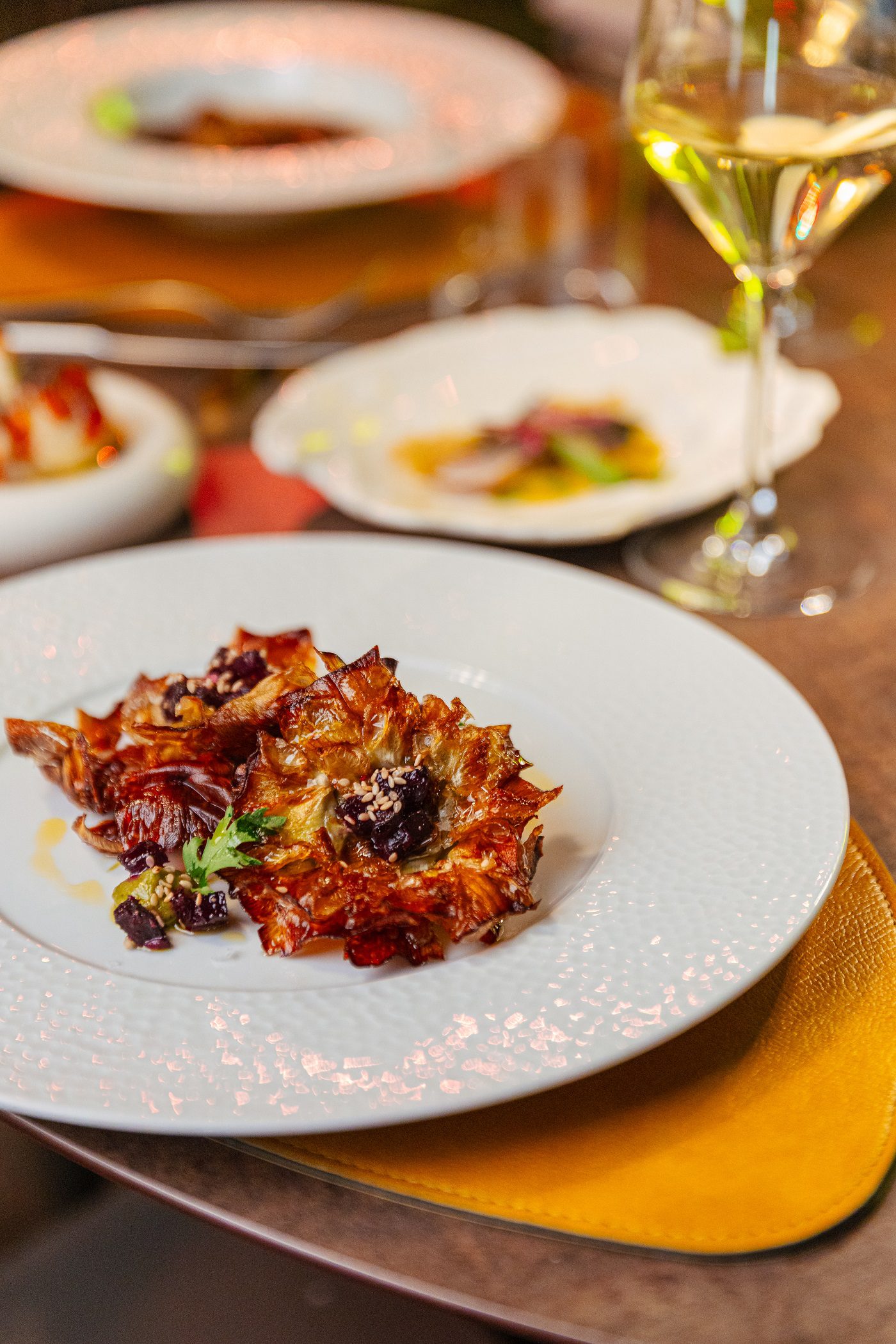
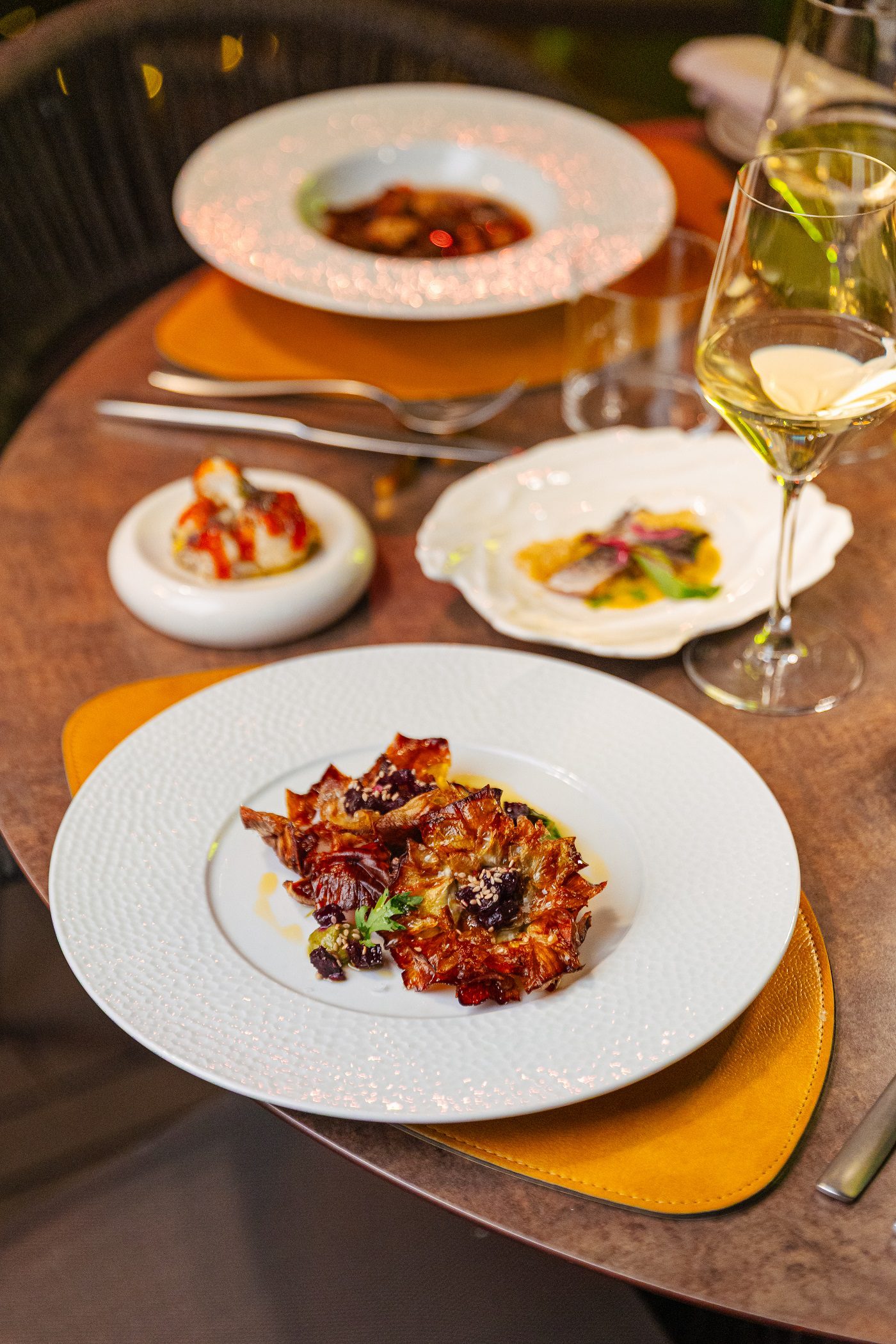
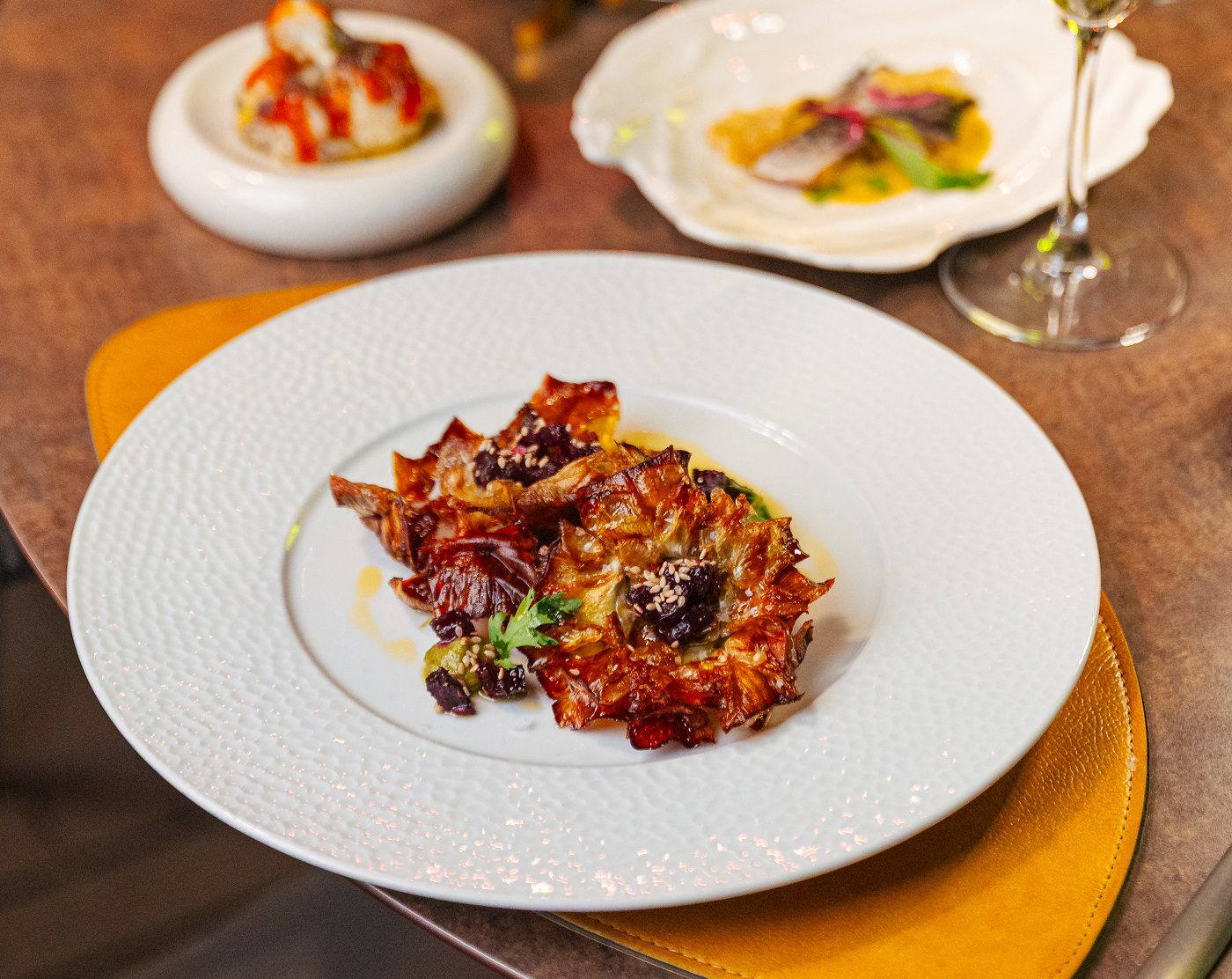
At Masa Rooftop, Chef Danilo Mancini pays homage to the secular legacy with his signature dish, Giudea. It is a sophisticated reinterpretation that bridges the flavors of the Lazio countryside with subtle Middle Eastern echoes, reflecting the artichoke’s ancestral journey from North Africa to Rome.
In Mancini’s vision, the artichoke is deconstructed and elevated: the stems, traditionally kept for broths, are transformed into a silky Carciofo alla Romana cream. A brunoise of beetroot—a root vegetable deeply rooted in Levantine culinary culture—introduces an elegant play of earthy sweetness and bitter contrasts, marinating in soy sauce and lemon zest.
The technical ingenuity of Giudea lies in its departure from tradition to achieve a modern lightness. By employing a precise initial poaching followed by a 150°C oven-drying phase, Mancini eliminates residual moisture before the final fry. The resulting dehydration allows him to achieve a glass-like crunch without the traditional double-frying, significantly reducing oil absorption. The result is a lighter, contemporary guilty pleasure that preserves the original taste while projecting it into the future of Roman fine dining.
Giudea: The Recipe by Chef Danilo Mancini
A Contemporary Tribute to the Roman-Jewish Tradition
Method
Preparing the Artichoke “Rose”
Clean the artichokes by removing the tough outer leaves until reaching the pale, tender heart. Set the stems aside for later use. Trim the tips evenly to create the elegant shape of a blossoming rose.
The Acidulated Blanching
Blanch the artichokes for 2–3 minutes in lightly salted water with the white wine vinegar. Immediately plunge the vegetables into an ice bath to halt the cooking process and fix the vibrant color.
The Dehydration Secret
Dry the artichokes perfectly and arrange them on a baking sheet. Place them in a preheated oven at 150°C for approximately 18 minutes. Such a technical passage eliminates residual internal moisture and begins a gentle browning of the leaves.
The Golden Fry
Heat the peanut oil to 160-170°C. Submerge the artichokes head-down, pressing lightly against the bottom of the pot to encourage the leaves to open like petals. Fry for about 4 minutes until they achieve a deep golden hue and a glass-like crunch.
The Stem Cream
Create a flavorful base by sautéing the chopped stems with the stale bread and the mix of garlic, parsley, and Roman mint. Once tender, incorporate the grainy mustard and blend everything into a silky, smooth cream.
Beetroot Marination
Parboil the beetroot in water with a pinch of sugar. Once cooled, dice the root into a fine brunoise. Marinate the cubes in the soy sauce and lemon zest to develop a savory, earthy contrast.
Final Assembly
To plate, pour a generous spoonful of the warm stem cream on the base of a flat dish. Gently place the fried artichoke in the center, crowning it with the beetroot brunoise. Complete the presentation with a sprinkle of toasted sesame seeds, fresh mentuccia, and a crack of green pepper.