Nearly a century of business history, €105 million in revenue, and an expansion strategy moving from the table to the entire domestic space. As Villa d’Este Home Tivoli celebrates its 30th anniversary, Galileo S.p.A.—backed by a doubled logistics footprint—launches the Satur franchising project, planning 100 new openings over five years alongside direct retail growth and international expansion.
€105 million in revenue (+11% in the 2022–2024 two-year period), 242 employees, a 65,000-square-meter logistics platform, and an industrial plan targeting 100 new franchise stores over the next five years, paired with organic growth of 10 direct stores a year. Behind the numbers stands Galileo S.p.A.—a solid, fourth-generation, wholly family-owned industrial group headquartered in Tivoli—celebrating the 30th anniversary of its flagship brand, Villa d’Este Home Tivoli 1996, in 2026.
Named for three consecutive years (2018–2021) by the London Stock Exchange Group among Europe’s 1,000 most dynamic companies, and by Borsa Italiana among the 500 leading enterprises in the up-to-€120 million bracket, the parent company exemplifies an economic model built without outside investors. The group self-finances vertical supply chain integration, category expansion into total living, and retail network growth.
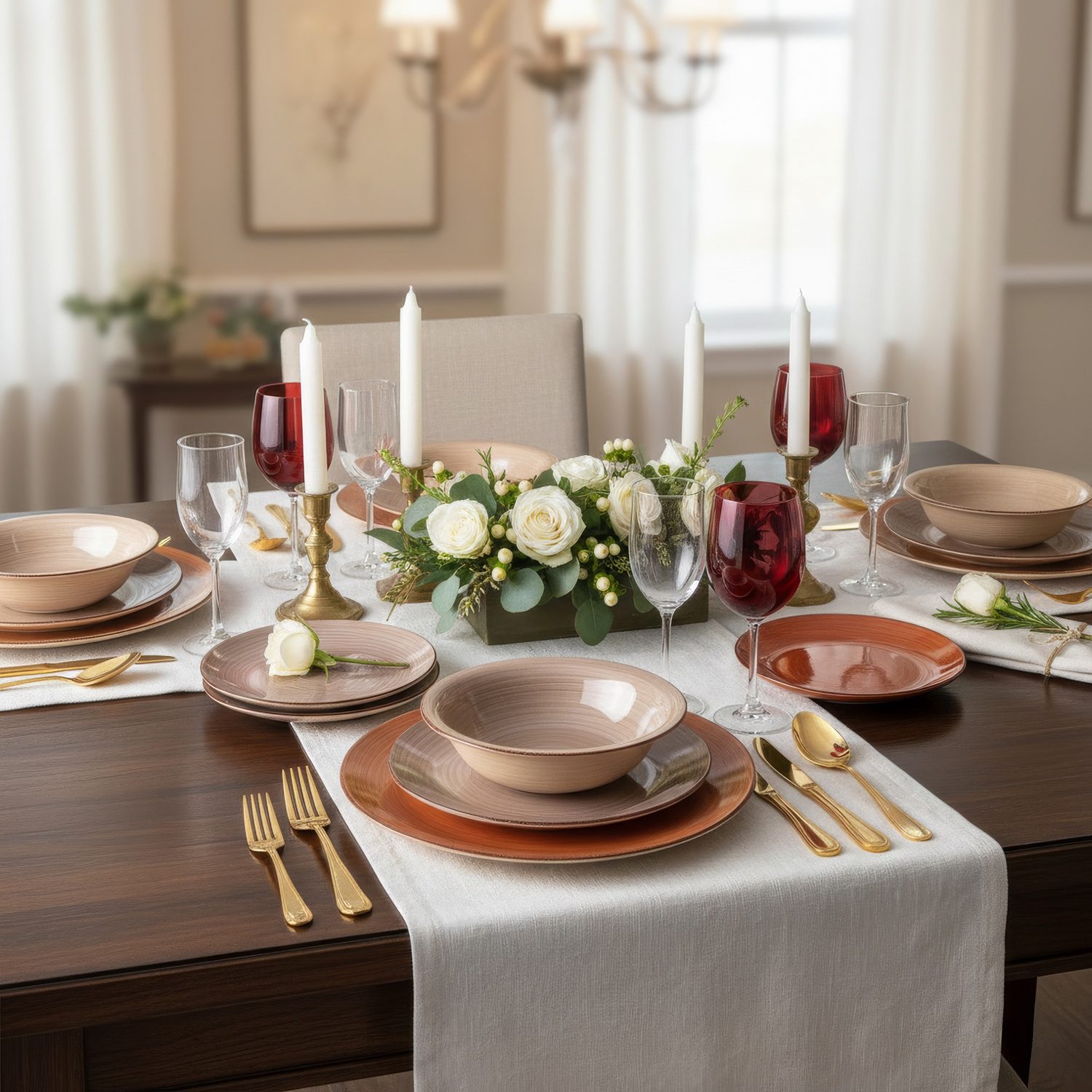
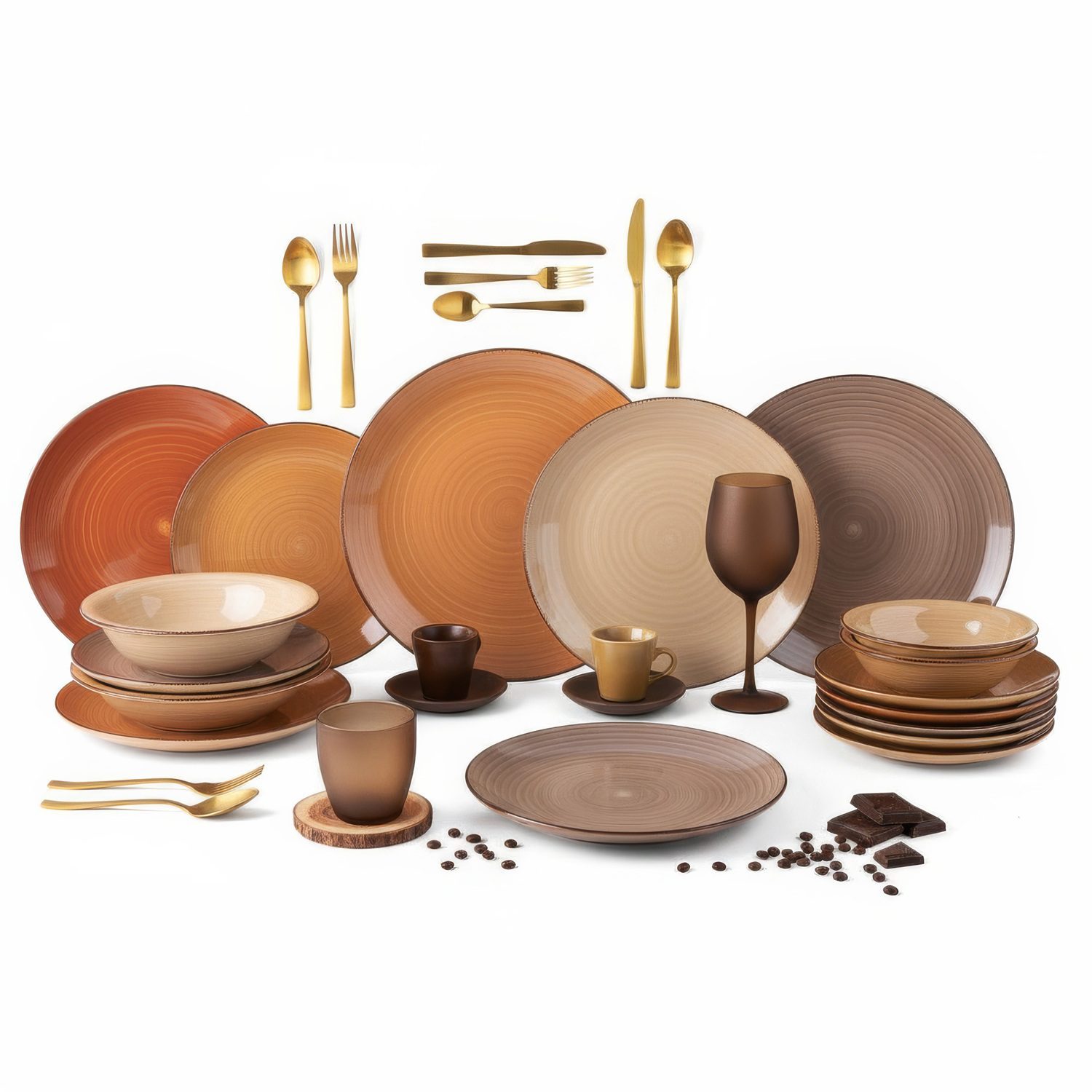
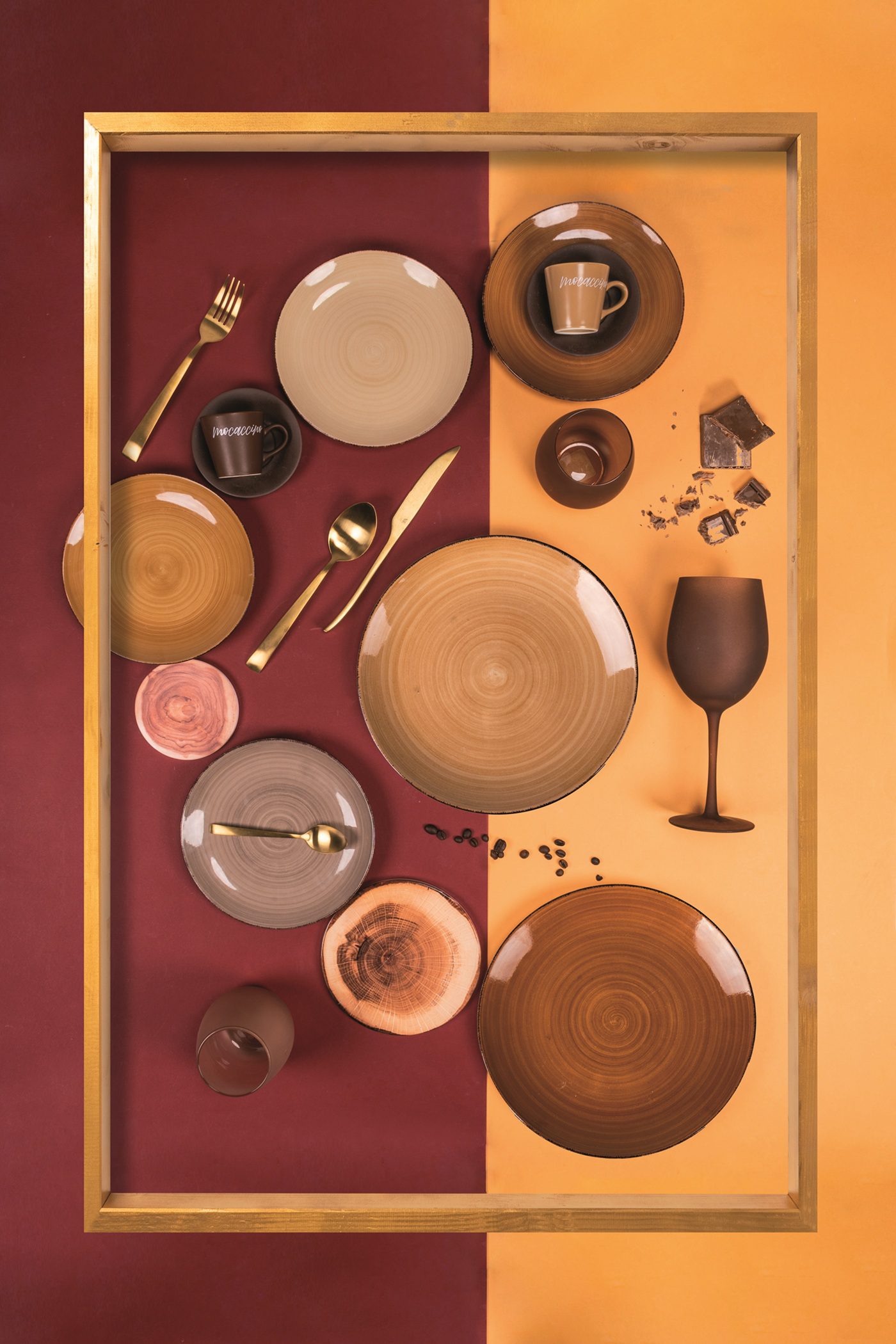
From 1929 Roots to 30 Years of Villa d’Este Home Tivoli 1996
Powering the industrial scale of Galileo S.p.A. is a nearly century-old family story. Launched on the outskirts of Naples during the Great Depression of 1929 by Felice Sais and his wife Giuseppina Cilento as a small housewares shop, the business grew during post-war reconstruction before putting down roots in Tivoli, a short distance from the UNESCO World Heritage sites of Hadrian’s Villa and Villa d’Este.
The shift from local retail and wholesale trade to the industrial structure of Galileo S.p.A. took shape in the 1990s under the third generation. CEO Felice Turco spotted the manufacturing potential of the Far East early on, building a direct network of high-speed, high-standard production partnerships in China. Focusing on long-term continuity, the fourth generation now shares the same vision: young Edoardo and Gabriele Turco, on board for several years, are training across operational committees and integrated commercial management spanning purchasing and sales.
Alongside the expanding Asian supply chain, the group’s identity took a decisive turn between 1995 and 1996. The arrival of Barbara Vitale—Brand & Creative Director—led to the founding of Villa d’Este Home Tivoli 1996, named in tribute to the top-floor wholesale showroom originally reserved for German porcelain and Bohemian crystal.
The brand initially debuted on the market as Collezione Villa d’Este, featuring a logo designed by an architecture firm and inspired by Tivoli’s Fontana dell’Ovato. Proving impractical for industrial backstamping, the mark was progressively stylized into the acronym VDE paired with Home—a nod to the Milanese trends of the era, though the founder now notes the stronger identity the Italian word Casa would have conveyed abroad—before evolving into the current VdE Tivoli 1996 identity.
Barbara Vitale’s vision emerged during a deep shift in the Italian tableware sector. In the mid-1990s, as traditional wedding registries and formal porcelain sets began to slow—while specialty shops and mass retail remained anchored to sober, neutral tones and classic geometric patterns—the executive spotted an open market space: decorated, colorful, practical, and accessible collections designed for changing domestic habits.
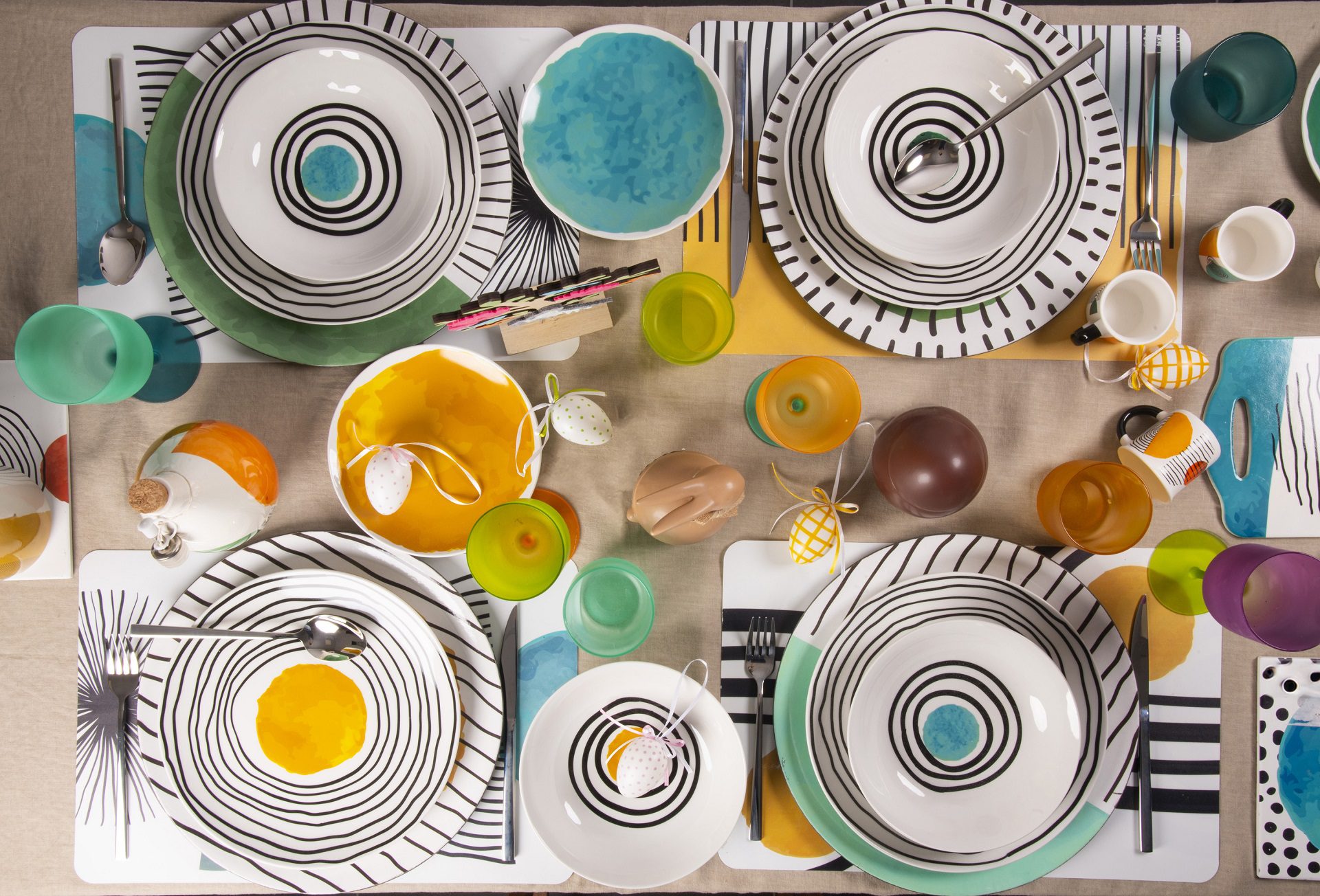
The strategy brought a free, personal approach to the table, analyzing trends to cover every season, holiday, and occasion with creativity, from Christmas and Easter to spring and summer. Democratic beauty took shape in the agile 18-piece set formula (six dinner plates, six soup plates, and six fruit plates), conceived to put table makeovers within everyone’s reach.
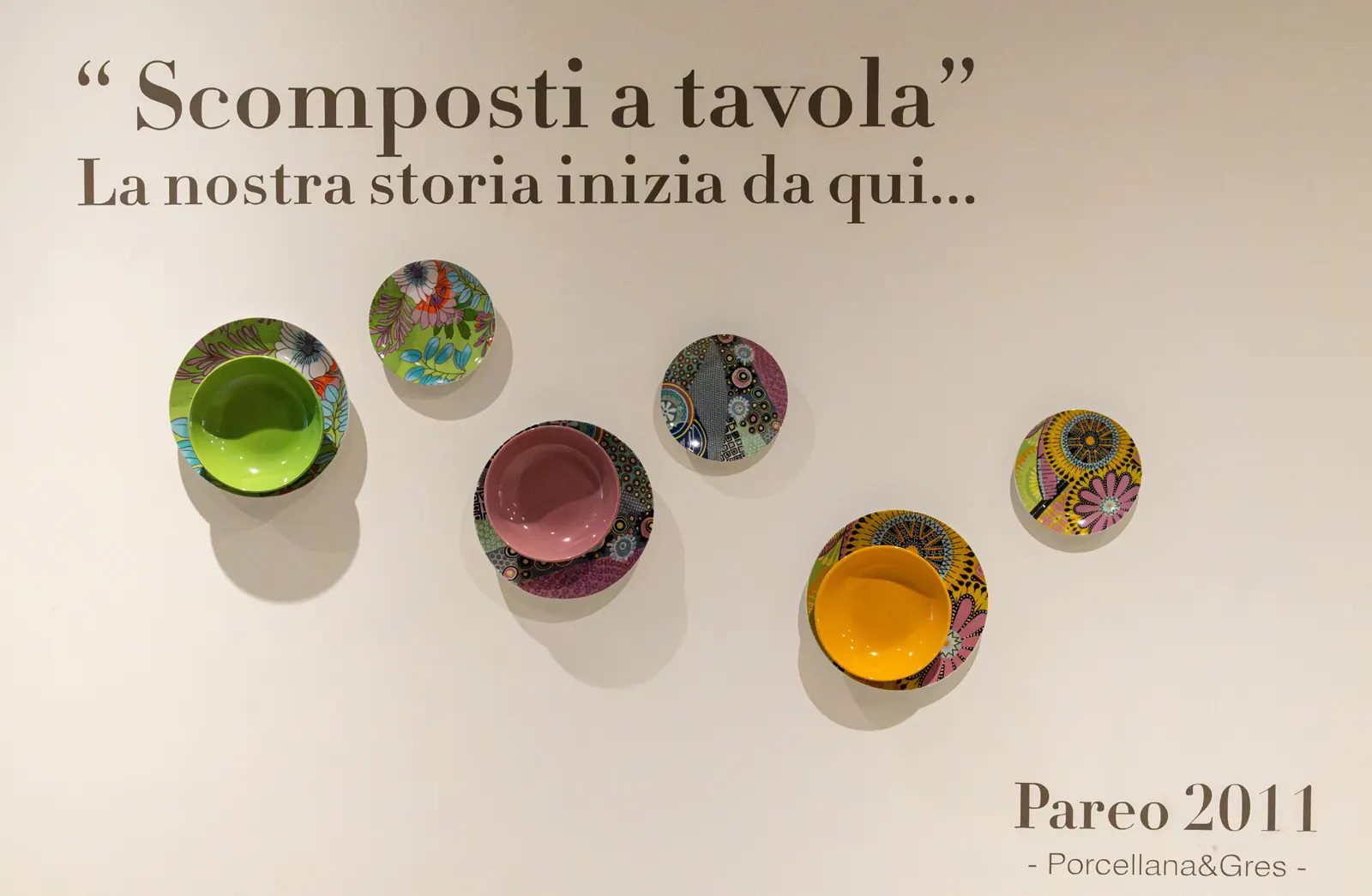
The market debut arrived in 1996 with the Anni 70 set, inspired by the optical graphics and solid color blocks typical of 1970s design. In the years that followed, the same design logic generated one of the brand’s most recognizable signatures: mix-and-match table settings (scomposti a tavola), where plates differing in shape, palette, and texture interact within the same mise en place, breaking past the uniformity of traditional sets.
Sustaining an average pace of 30 new launches a year over three decades—with peaks reaching 80—the same design dynamism now fuels an active catalog of 760 collections and an annual distribution of 190,000 sets, managed by a staff of 242.
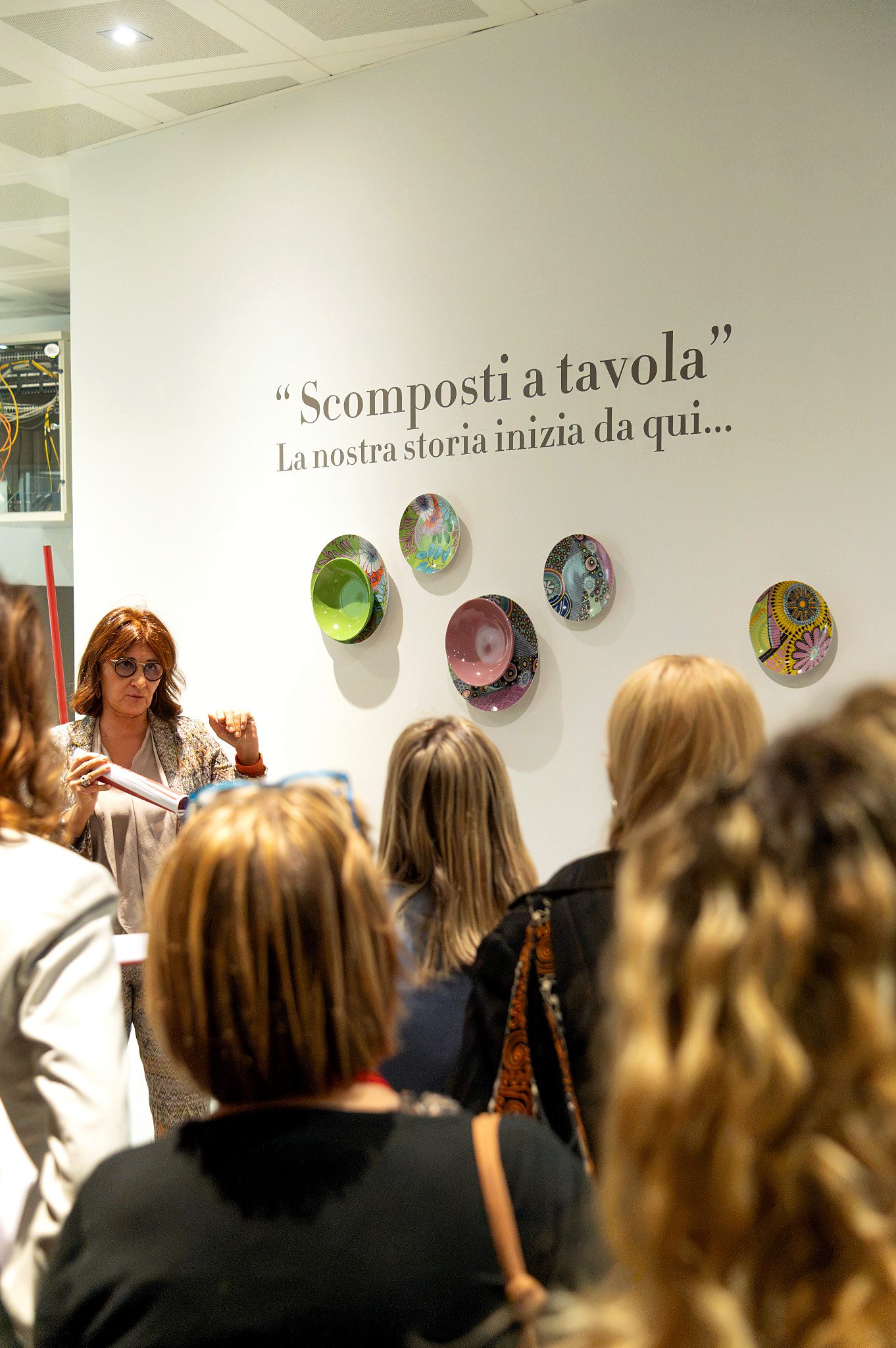
Ongoing stylistic research and evolution are documented inside the Museo del Piatto (Plate Museum), an exhibition space conceived to trace thirty years of the brand in person and safeguard its creative DNA. The permanent gallery displays original plates made from 1996 to the present, charting a visual and tactile progression from early colored-ground decors to current collections, guided from the outset by founder Barbara Vitale’s philosophy:
“I wanted plates, glasses, and household objects to be more than mere functional items; I wanted them to become expressions of personality, capable of bringing color, joy, and irony into everyday life,” says Barbara Vitale. “Over thirty years, I have gathered inspirations and lifestyles, turning them collection after collection into a recognizable identity. Our claim, VdE – Vivi di Emozioni (Live on Emotions), captures the journey: making even the simplest daily gestures special, because the home and the table are the places where emotions take shape and are shared.”
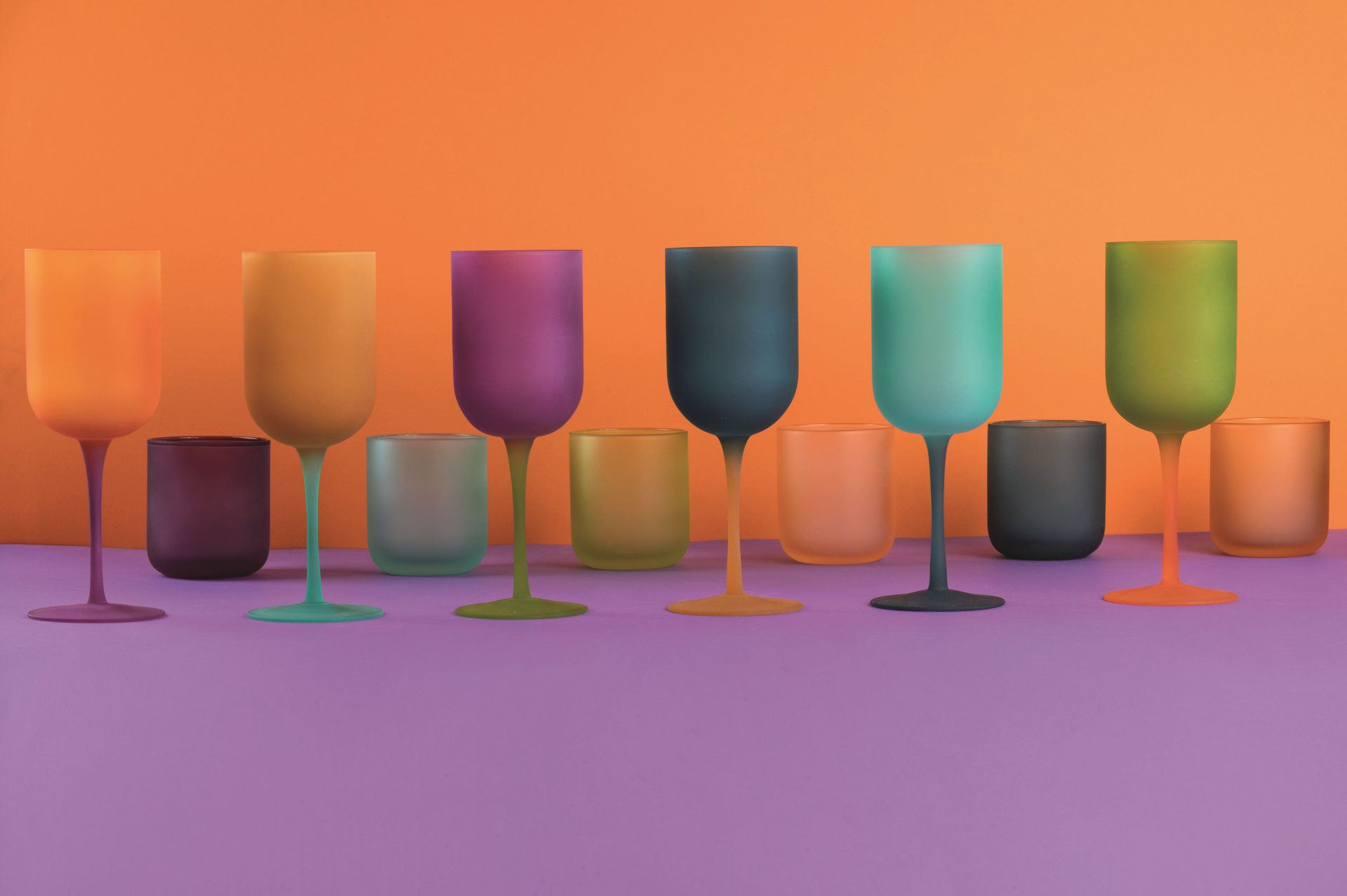
Expanding into Total Italian Home Living: The VDE Studio Lab
While tableware remains the brand’s core identity and commercial driver—generating 48% of sales, followed by kitchenware (14.8%) and Christmas collections (13.4%)—entry into new categories is advancing step by step, with the course toward total living now firmly set. Market appreciation sparked the natural evolution, as Barbara Vitale points out: “If the public has grown fond of our style made of color, irony, and personality, why not bring the same design language into other product categories?”
Recent developments have widened the brand’s merchandise perimeter: from kitchen preparation and freestanding major appliances to upholstery, textiles, and outdoor furniture, right through to home organization, wellness, pet accessories, and kids’ lines. The expanded range now counts roughly 17,000 SKUs in the catalog—over 12,000 displayed in the Tivoli sample showroom—confirmed by VDE line revenues, which climbed from €16 million in 2023 to €18 million in 2024, reaching €19 million in 2025 (+18.7% over the three-year period).
Behind the expansion works VDE Studio, the in-house design department where twenty designers and graphic artists move past the single-collection mindset to create a portfolio of registered brands capable of living independently across multiple home categories.
The trajectory began in 2017, when the written word and irony joined color research for the launch of Victionary—the humorous dictionary printed on tableware and textiles, now exported in bilingual editions. The series continued with the wordplay of Le Travisate (2022), the international lettering of Big Is More (2024), and the ironic-romantic vein of Grandi Amori (2025), right up to tributes to Italian pop culture with S.P.Q.eRe (2020) and Uè Uè (2026), bringing the theatricality of Roman slang and Neapolitan dialect onto everyday objects.
Alongside the typographic line, the studio has developed vertical collections dedicated to specific uses and material and chromatic research: from the children’s world of Les Petites (2023) to Radici (2024), a technical collection of cookware and enameled cast iron for natural cooking, up to the seven tonal variations of Shades of VDE and the monochromatic rigor of Unico (2025).
From the Horeca Channel to VDE Villages
Moving from domestic spaces to the professional sphere, the Horeca and Hospitality division debuted in 2024 to bring the philosophy of the home into restaurants and hotels. Breaking away from standard professional whiteware, the plate becomes a narrative element conversing with the cuisine, paired with tableware collections and furnishing accessories designed to define the character of dining venues and hospitality properties.
On the retail front, the brand anchors the sales floor through Villaggi VDE (VDE Villages) inside the Satur network: exhibition spaces designed to guide shoppers through materials, color palettes, and table settings. The format currently counts 25 active villages spanning 5,500 square meters in total, 220 specialized staff, and a curated selection of 1,100 SKUs.
The Operational Model: Collaboration, Transparency, and Ethics
How do you govern a flow of thousands of new SKUs a year without losing speed and coherence? In Tivoli, the answer lies in two counter-trend choices: zero outsourcing and zero remote working. No external design studios and no working from home, because an object for the table or the home cannot be designed through a screen. Products take shape through physical debate around the worktable: teams touch surfaces, adjust Pantone shades under natural light, and place prototypes side by side. Ongoing, shoulder-to-shoulder exchange among Barbara Vitale, designers, buyers, and management sets the pace for the collections.
With the same hands-on approach, the company manages all strategic stages on-site: from trend analysis to collection design and packaging graphics (produced on FSC-certified paper), from strict compliance testing on samples to photography and video content shot on internal sets to feed the sales network and media channels in real time.
The same candor governs the manufacturing supply chain. For specific lines like pizza plates, the group relies on historic Italian manufacturers such as Saturnia, but for massive volumes, the national ceramic district no longer holds adequate industrial capacity. “When a single mass-retail operation requires 61,000 Marea sets on a tight deadline, where in Italy do you find plants capable of sustaining such volumes?” observes Barbara Vitale.
Manufacturing in Asia then becomes a necessary choice, which Galileo S.p.A. addresses with complete transparency. Rejecting vague labels common on the market—from “Made in Extra EU” to “Made in PRC”—Villa d’Este openly declares the foreign origin of manufacture on its packaging, while certifying entirely Italian design and direct supply chain management.
No blind delegation: a team of twenty foreign-office specialists flying simultaneously oversees Asian manufacturing districts six to eight times a year to monitor factory production lines, working closely with the in-house testing laboratory and leading European certification bodies to guarantee total food-contact safety.
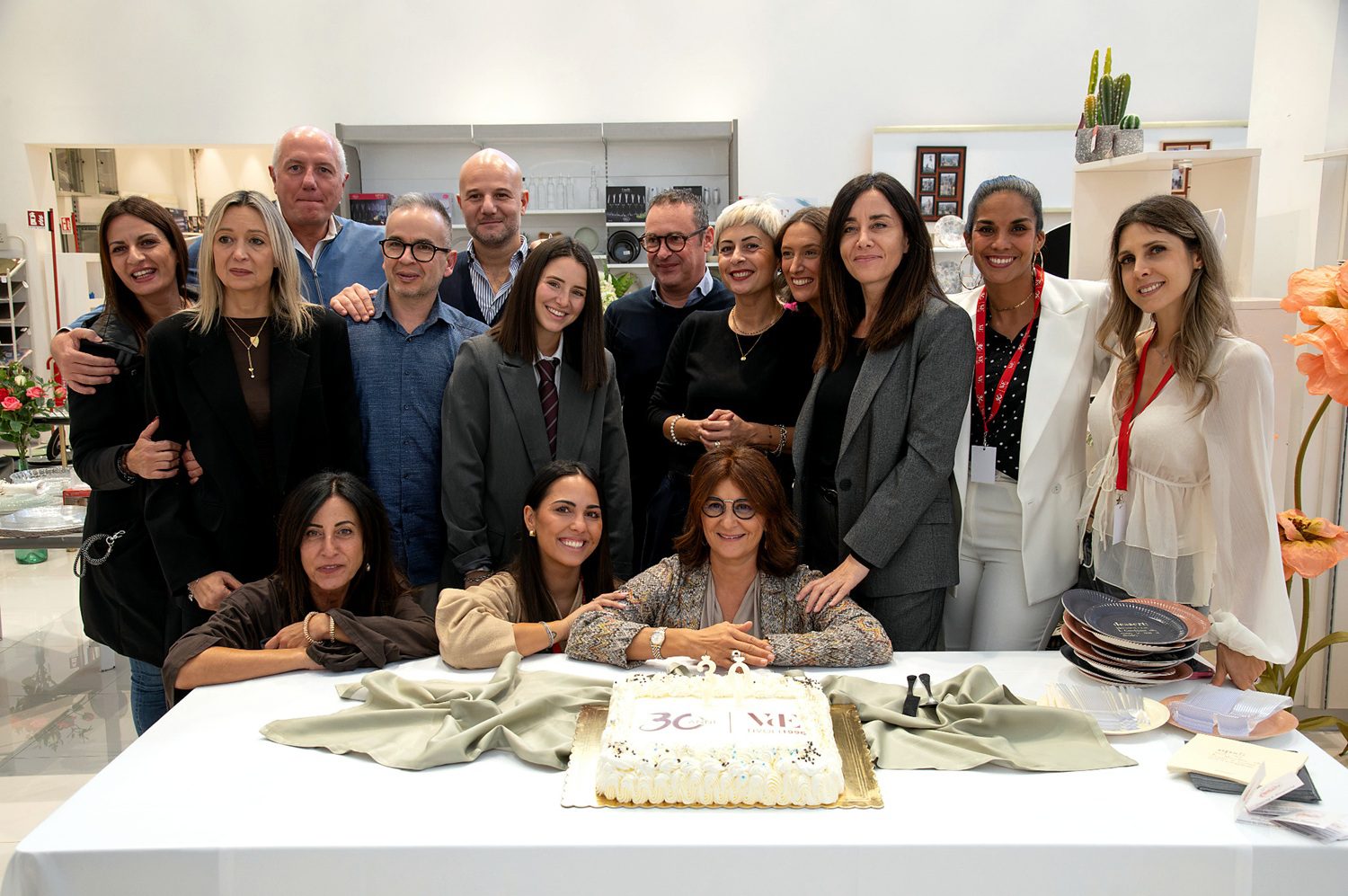
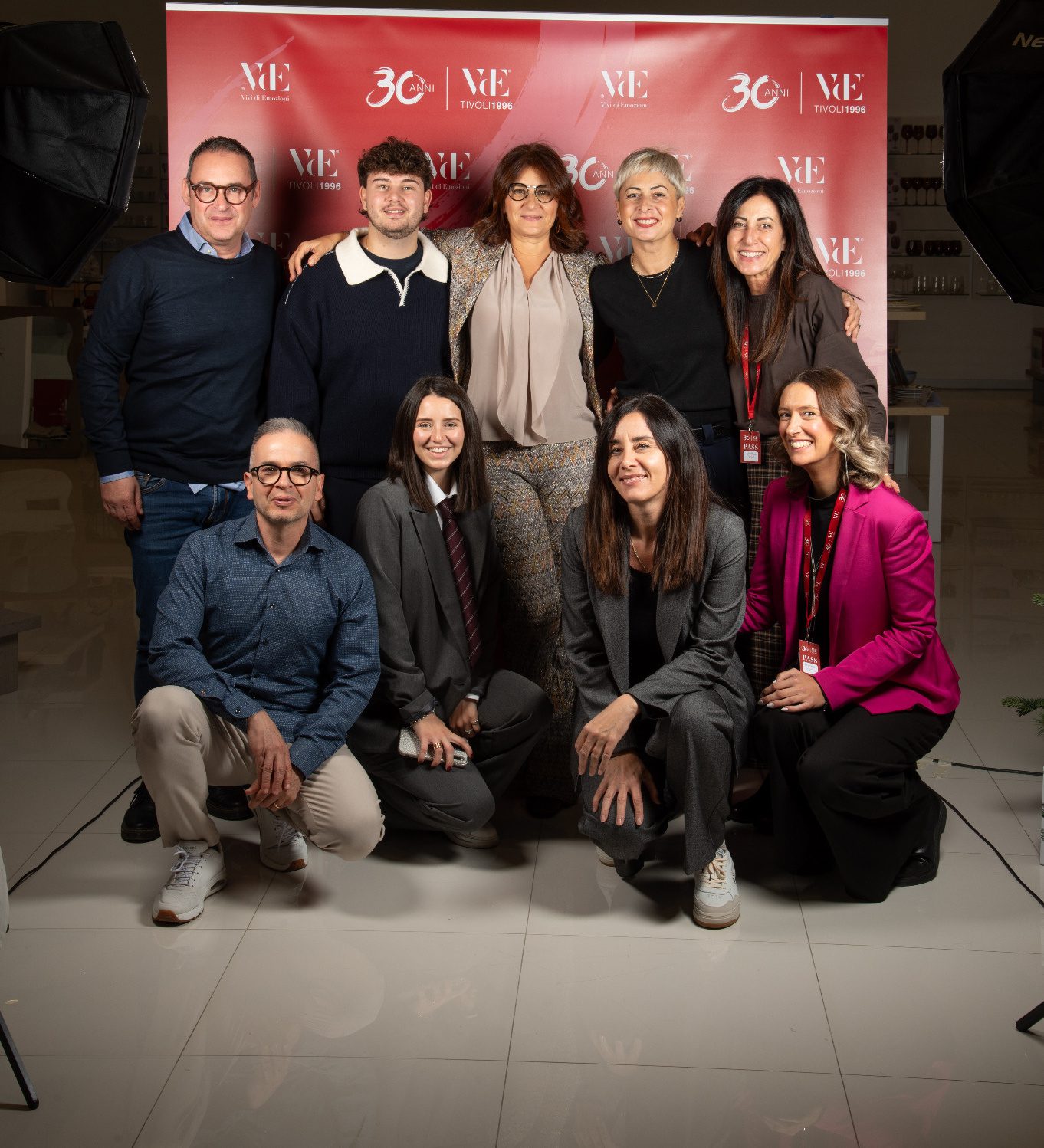
Investments, Export to 30 Countries, and the 100-Store Satur Franchising Plan
During the most uncertain two years of the Covid-19 pandemic, amid severe market disruption, the Galileo group invested in logistics with a new 30,000-square-meter hub, reaching the current 65,000 square meters—operated by 160–170 staff across 8 loading docks. A counter-cyclical bet that turned into the group’s true competitive advantage: capable of handling up to 2,000 containers a year, the facility absorbed exploding demand smoothly and guaranteed uninterrupted deliveries.
Driving the distribution machine is an omnichannel ecosystem spanning mass retail, direct stores, online marketplaces, and active exports to 30 countries. Alongside an established footprint in Eastern European markets—drawn to the brand’s rich palettes over Scandinavian minimalism—international expansion now looks to North America following recent VDE trademark filings in the US and Canada, a UK collaboration with style icon Alice Naylor-Leyland, and ties with Japan sparked by an original twinning with the Japanese cookie manufacturer Tivoli.
On the domestic front, meanwhile, the group is strengthening its footprint with new representative offices in central Rome and a strategic pop-up store at the Valmontone Outlet.
A core growth driver for the next five years is Satur – Passione Casa, the group’s retail banner founded alongside Villa d’Este and backed by 118 stores across 14 Italian regions (where Barbara Vitale personally oversees staff training). While the Italian Home Living sector undergoes a deep shake-up—marked by OVS pulling back from Kasanova and players like Maisons du Monde, Perdormire, and Bricocenter entering franchising—Galileo S.p.A. is launching the Satur Franchising project in 2026.
Presented at the Salone del Franchising and Forum Retail 2026, the plan—led by Retail Development Manager Roberto De Lellis with strategic consulting from Reting and CEO Enrico Tosco—projects 30 new stores in the first three years and 100 franchise locations within five years, alongside 10 annual direct openings, with the first ribbon-cuttings already scheduled for 2027.
Flexible in store size—ranging from 250 to 900 square meters to cover urban centers, retail parks, and shopping malls without overlap—the format calls on established local entrepreneurs, multi-unit operators, and mass-retail players seeking diversification. No consignment stock: the formula relies on direct purchasing across an assortment of over 12,000 SKUs, combining Galileo’s catalog depth with Villa d’Este’s signature style. The result? A guaranteed year-end margin and an economic model calibrated to pay back the investment within three years.