The Sicilian Sparkling Wine Network Manifesto was launched by IRVO to map wine tourism itineraries designed to highlight premier sparkling wine territories.
The sparkling side of Sicily forms a wine-growing continent to traverse slowly, where distinct production areas mark key milestones across volcanic landscapes, inland hills, wind-sculpted islands, and Mediterranean coastlines. Mapping this heritage weaves native grape varieties directly into the surrounding landscape—linking ancient archaeological sites and historic villages with nature reserves and gastronomy.
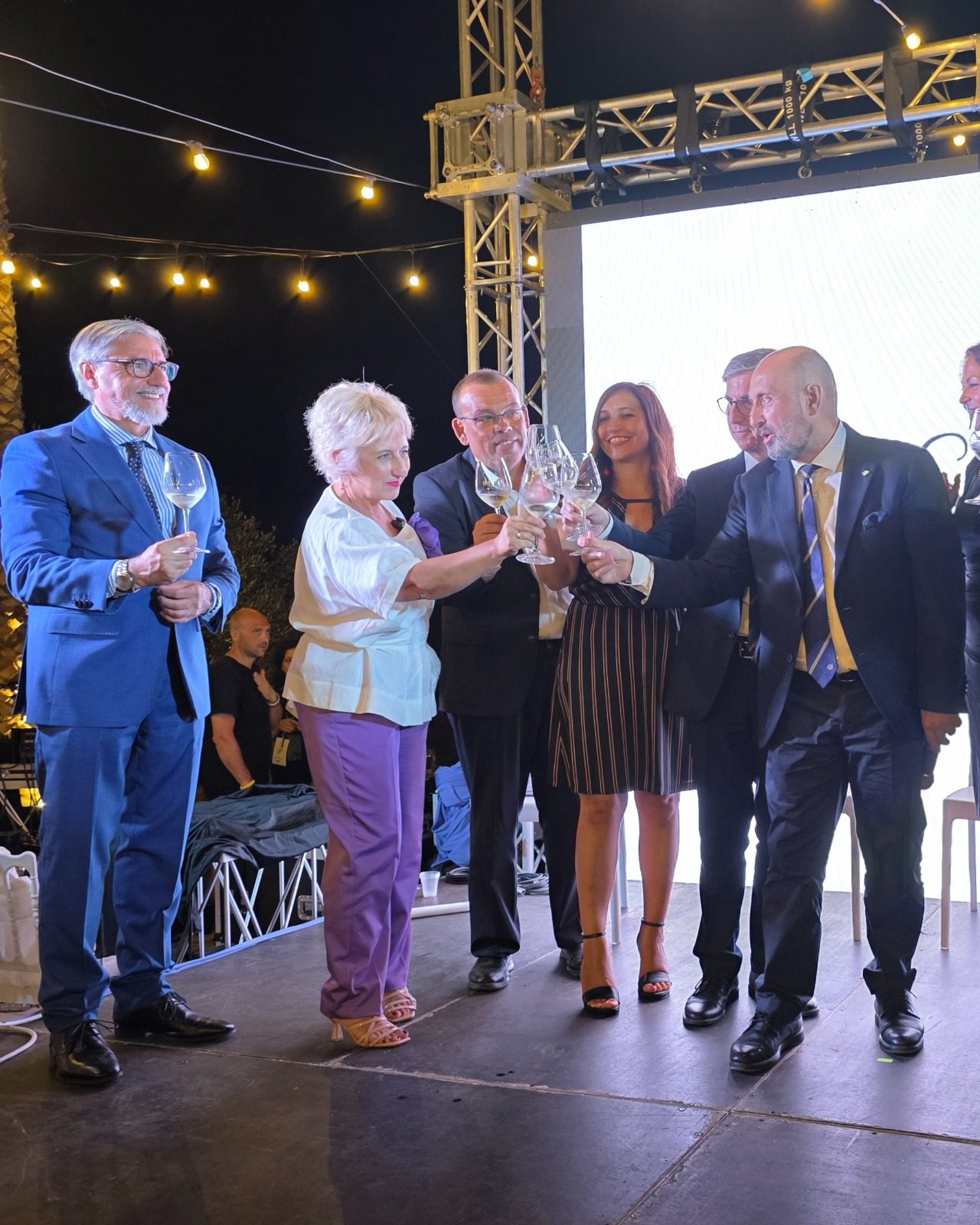
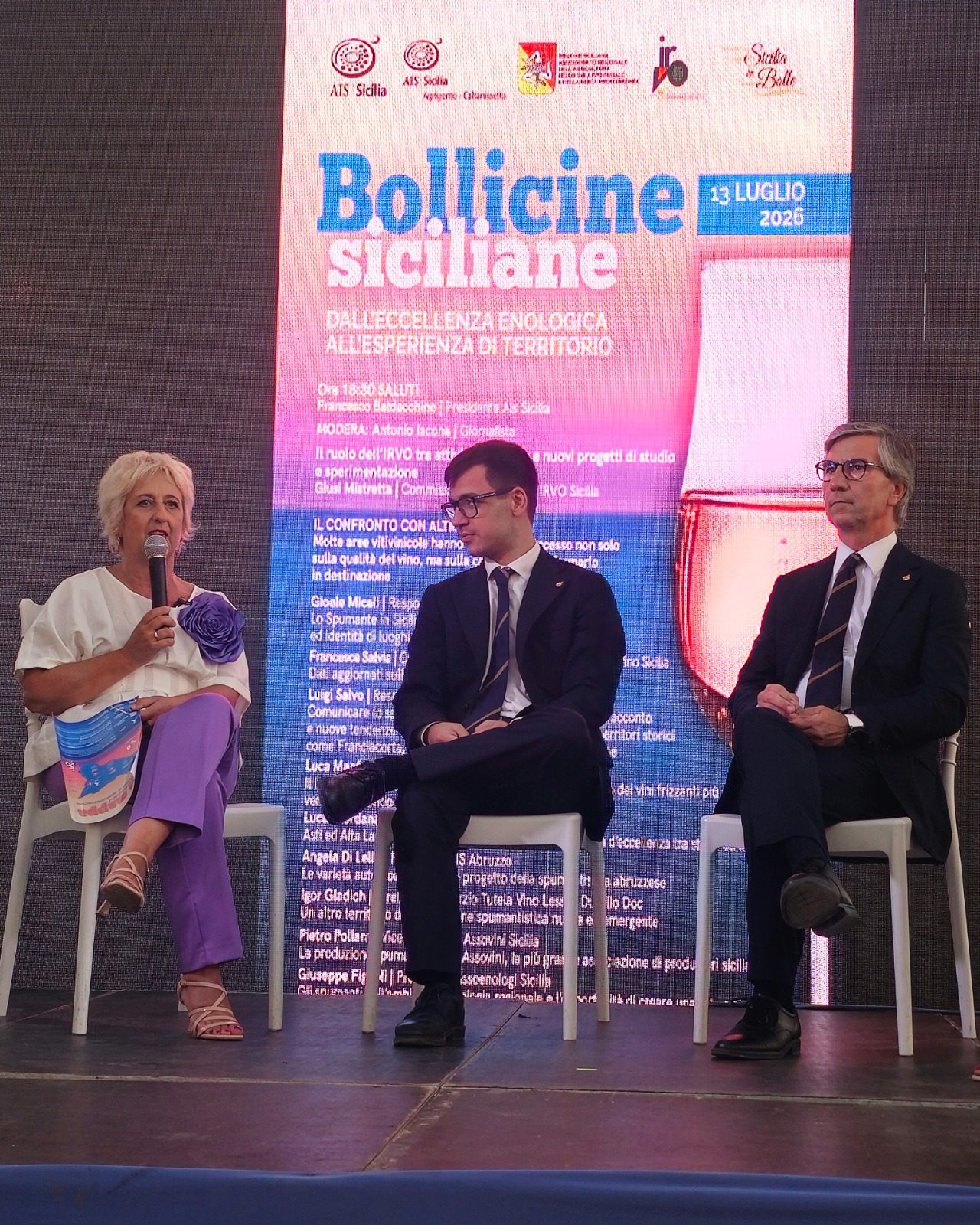
Reflecting this vision, the recent conference Sicilian Sparkling Wines: From Oenological Excellence to Territorial Experience took place at Madison in Realmonte during Sicilia in Bolle, organized by AIS Agrigento and Caltanissetta.
Jointly driven by the Regional Institute of Wine and Oil (IRVO) and the Sicilian branch of the Italian Sommelier Association, the conference set the Sicilian Sparkling Wine Network into motion. The initiative establishes a declaration of intent uniting producers, institutions, and consortia, positioning Sicilian sparkling wine as the gateway to a new generation of wine tourism itineraries.
«In recent years, Sicilian sparkling wines have forged a distinct identity,» stated Giusi Mistretta, IRVO Extraordinary Commissioner. «They reflect unique territories, native and international grape varieties interpreted with expertise, and visionary producers committed to quality, innovation, and sustainability. Today, this sector merits a structured approach to establish a strong, unified, and recognizable image.»
Aligned with the development strategies of the Regional Department of Agriculture, Rural Development, and Mediterranean Fisheries, IRVO works to create the conditions for the Sicilian wine sector to grow cohesively and competitively across national and international markets.
«Along these lines, IRVO launched the Manifesto to create a Sicilian Sparkling Wine Network,» Mistretta continued. «It is a collective, open, and participatory project designed to establish Sicilian sparkling wines as a credible, authoritative category through coordinated, high-level wine tourism itineraries. Competitiveness relies on collaboration and a shared identity. To achieve this, IRVO is driving a collaborative platform among key sector leaders—including consortia and producer associations—introducing a Declaration of Intent to advance a unified vision and strengthen the region’s sparkling identity.»
Recent data from the IRVO Observatory (2025), presented by Francesca Salvia during the conference, highlights 140 Sicilian wineries currently produce sparkling wines across DOC, IGT, and varietal designations, with 330 labels distributed on national and international markets. Production is split between the Charmat Method (54%) and the Traditional Method (46%). By designation, IGT Terre Siciliane accounts for 49.1% of output, followed by DOC Sicilia at 29.3% and DOC Etna at 20.4%. White sparkling wines dominate at 86%, while rosé accounts for 14%. Notably, DOC Etna recorded the strongest growth—expanding its market share from 9.8% in 2018 to 20.4% in 2025, led primarily by Etna Spumante Bianco.
«The Sicilian Sparkling Wine Network Manifesto,» explained AIS Sicilia President Francesco Baldacchino, «exemplifies how dialogue and collaboration can shape a shared vision for the future of Sicilian wine. The path forged by IRVO reflects a commitment to uniting expertise, identity, and strategic planning to elevate an oenological heritage that authentically expresses our land. At AIS Sicilia, we believe building a network means fostering culture, deepening connections with the territory, and giving Sicilian sparkling wines a unified, authoritative voice.»
Sicilian sparkling wine production remains niche yet highly valuable, representing just 1% of the island’s total bottled wine. However, more wineries are entering the segment each year—some already securing prestigious international accolades, others ambitiously targeting the growing demand for crisp, refreshing wines. The focus now turns to mapping these producers within an innovative network, shaping dedicated wine itineraries through a territory rich in UNESCO World Heritage sites and landmark destinations: from Mount Etna—Europe’s highest active volcano—to the Zingaro and Vendicari reserves, the Valley of the Temples, ancient Segesta and Selinunte, Syracuse, and the Baroque towns of the Val di Noto.

A Map of Production Areas Integrated with Sicilian Treasures
On Mount Etna, a UNESCO World Heritage site, viticulture meets the raw power of the volcano. Here, Nerello Mascalese—vinified as white or rosé—takes center stage in DOC Etna Traditional Method sparkling wines, aged on fine lees for at least 18 months. Carricante, Chardonnay, and Pinot Noir complete a singular viticultural landscape defined by distinct microclimates and volcanic soils. Black stone villages, ancient woodlands, and dramatic volcanic topography set the stage for a journey through Mount Etna Regional Park, Valle del Bove, and Catania, stretching toward the Alcantara Gorges, Taormina, Naxos, Randazzo, Castiglione di Sicilia, and the historic castles of Aci Castello and Calatabiano.
In Western Sicily, across Trapani, Marsala, Menfi, and Agrigento, routes trace open coastal landscapes as Charmat and Traditional Methods elevate a wide array of grape varieties: Grillo, Catarratto, Inzolia, Zibibbo, Grecanico, Chardonnay, and Chenin Blanc, alongside Nero d’Avola, Pinot Noir, and Pinot Grigio.
A rich viticultural mosaic reflecting a deep Mediterranean identity, where native grapes continue to gain global acclaim. Here, wine tastings seamlessly connect with iconic landmarks: the Stagnone Islands of Marsala, the salt pans of Trapani and Paceco, the Zingaro and Torre Salsa nature reserves, Mozia, Erice, Sciacca, the Belìce villages, and the majestic archaeological sites of Segesta, Selinunte, Scala dei Turchi, and the Valley of the Temples.
In the heart of Sicily, across Caltanissetta, Enna, and the Agrigento hinterland, rolling vineyard hills define a rural landscape shaped by Traditional and Charmat Method sparkling wines—crafted from Nero d’Avola, Pinot Noir, Grillo, Catarratto, Inzolia, and Chardonnay. Marked by the UNESCO-listed Villa Romana del Casale, this high-altitude territory features Lake Pergusa and the Erei Mountains, punctuated by historic sites like Morgantina, Sabucina, Lombardia Castle, Mussomeli, Mazzarino, and Sperlinga.
In Southeastern Sicily, spanning Ragusa, Syracuse, and Noto, Moscato Bianco expresses aromatic distinction, while Nero d’Avola transforms into refined rosé expressions, alongside expanding Traditional Method production across the region. Here, viticultural journeys weave through Baroque architecture, limestone canyons, and ancient Greek heritage. UNESCO World Heritage landmarks define the landscape—from Syracuse with Ortygia, the Temple of Apollo, the Cathedral built over the Temple of Athena, the Neapolis Archaeological Park, and the Necropolis of Pantalica, to the late-Baroque towns of Val di Noto—intertwined with protected natural areas such as Vendicari, Cavagrande del Cassibile, and the Irminio River mouth.
A crucial destination along the route remains Pantelleria, a rugged island protected by a national park, guarding intangible UNESCO heritage: traditional head-trained bush vine cultivation (alberello). On an island of dammusi dwellings and walled gardens, pure Zibibbo captures sun, wind, and wild nature through sparkling wines produced primarily via the Charmat Method.
The Sicilian Sparkling Wine Network spans these territories, fostering exploration where wine tourism unveils varied landscapes, grape varieties, production traditions, and cultural treasures. Every glass serves as a starting point to experience the biological, agricultural, and cultural richness of a land dedicated to hospitality.
Featured Photo: Pexels, photo by Ilo Frey
Photos: Courtesy of I Press / IRVO