In a converted Brianza schoolhouse, bespoke luminaires dissolve into raw earth, mineral textures, and architectural fissures.
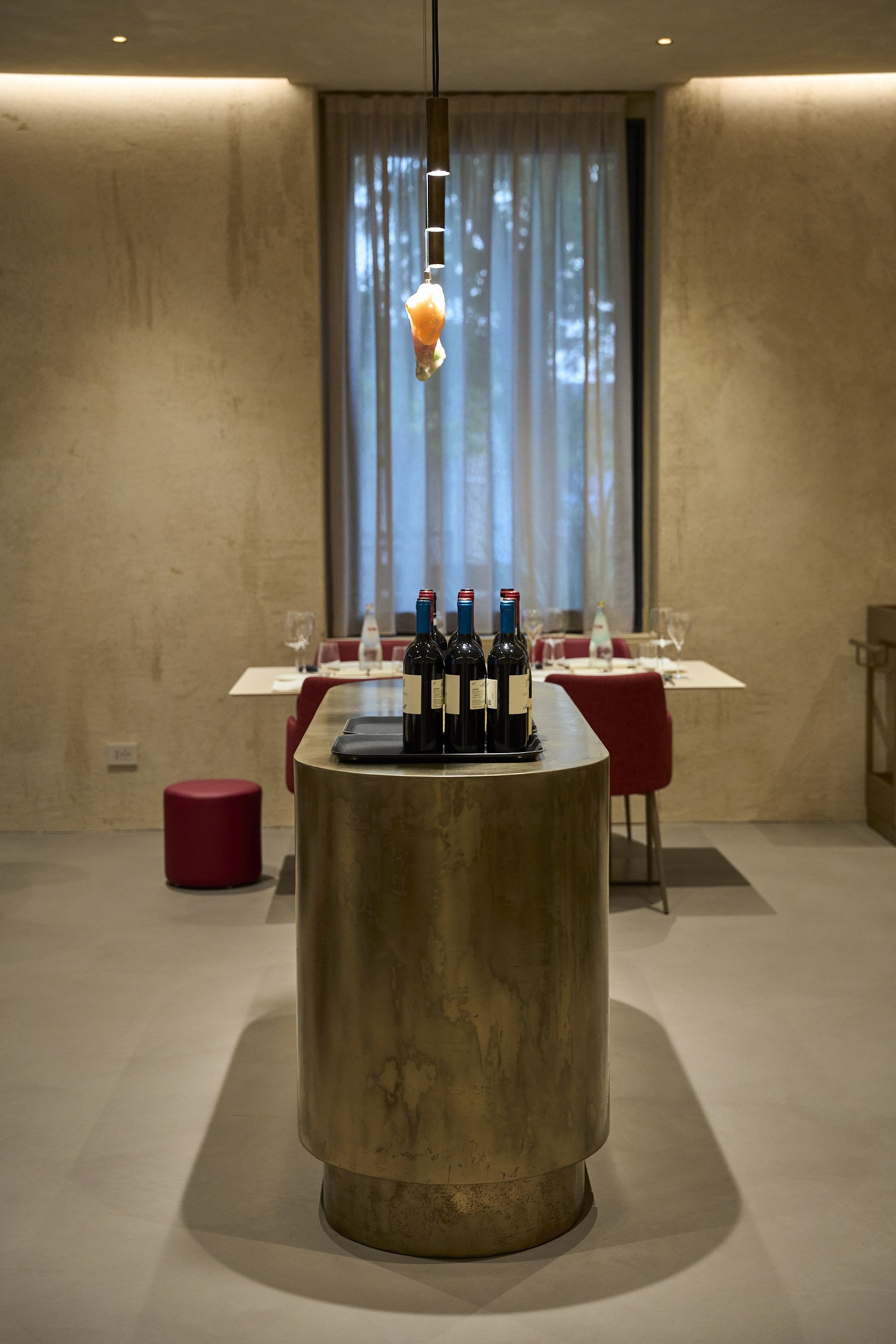
Inside FATA in Triuggio, architect Simone Riva and Turin lighting atelier Rimani redefine restaurant lighting as raw spatial infrastructure. Refusing superficial cosmetic layering, the scheme actively sculpts volume, pulls relief from coarse textures, and orchestrates the dining room’s sensory tempo.
The Spatial Concept: Elemental Materiality
Set inside a former elementary school—once home to the historic restaurant La Zuccona—FATA reinterprets a building steeped in local memory. The design draws directly on the four classical elements: Fire, Air, Earth, and Water, translating natural energy into a tactile, monastic interior.
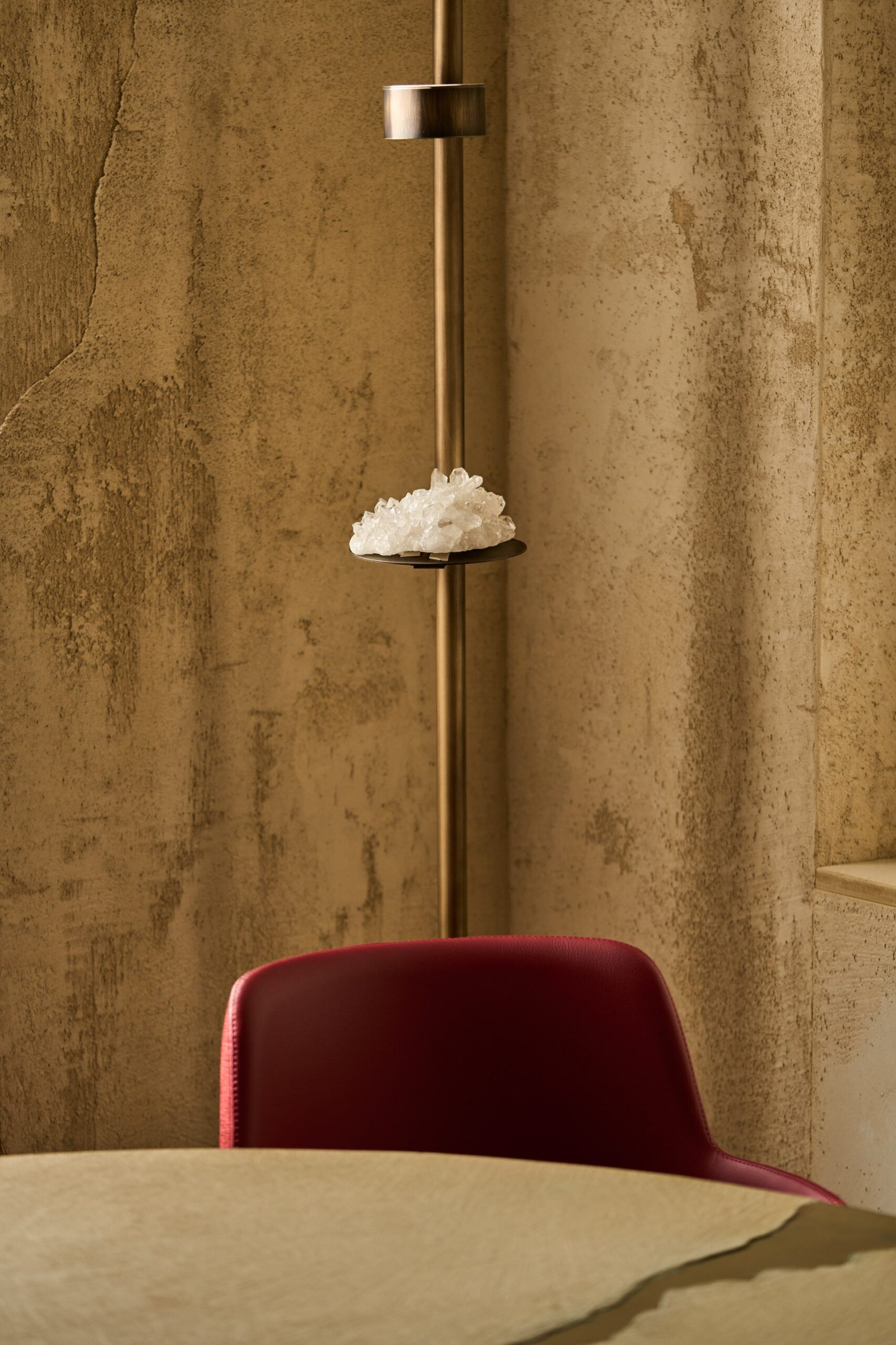
Continuous resin floors run up vertical surfaces into coarse, sand-like plaster, while deep tectonic fractures expose underlying mineral and metallic veins. The resulting dining space is an exercise in tactile minimalism: pure volumes, hand-finished surfaces, and an uncompromising focus on raw geological substances. Spatial boundaries soften, yielding an interior sculpted by honest craftsmanship and elemental storytelling.
A Quiet Extension: Restaurant Lighting as Architecture
Rimani’s concept operates in close dialogue with a mineral-driven architectural vocabulary. Rather than acting as visual noise, hardware remains largely invisible, yielding entirely to the atmosphere created by luminous control. Through strategic beam placement, linear washes skim tactile plaster, pulling relief from wall fissures and glinting off metallic inclusions.
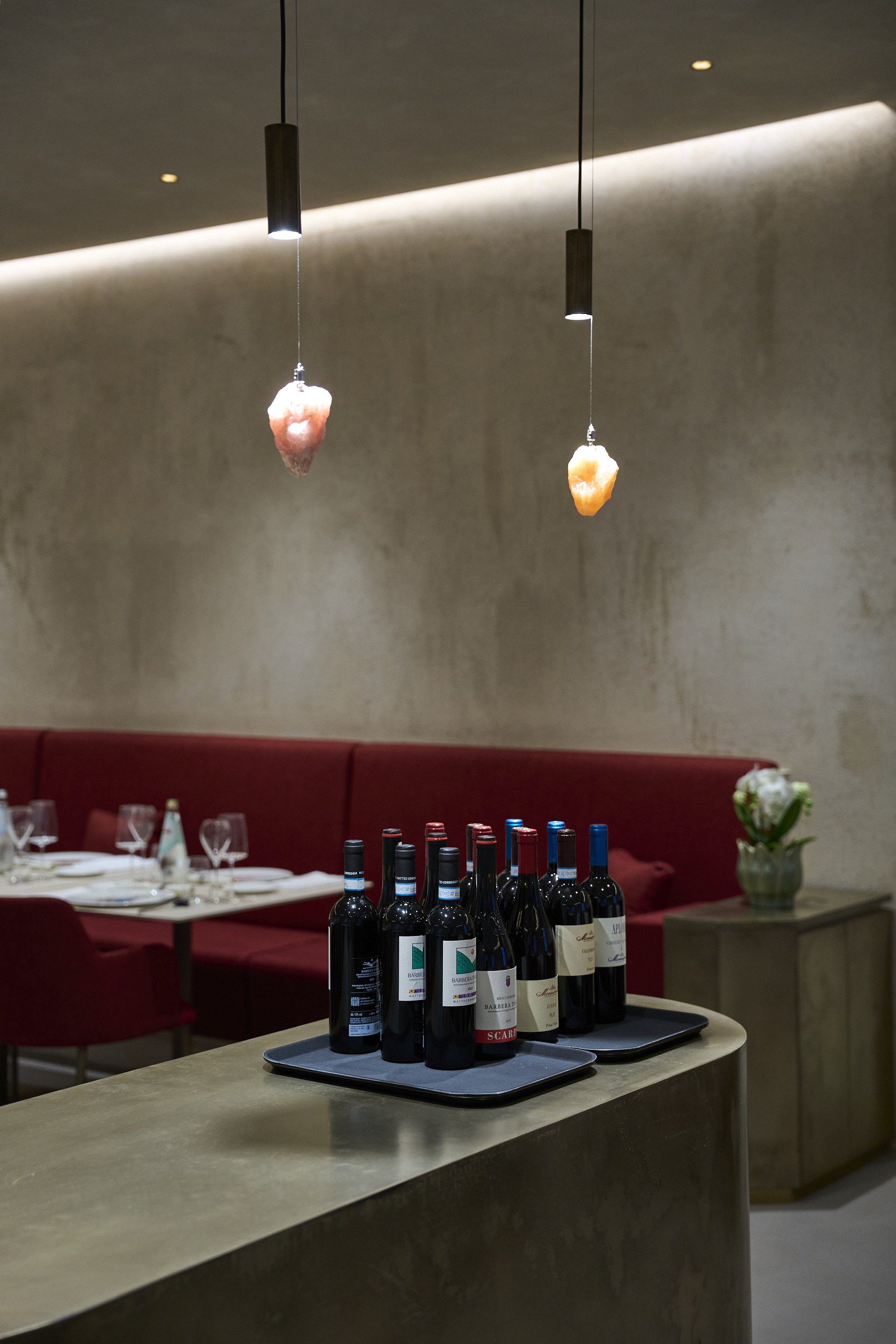
By balancing subtle ambient illumination with pinpoint accentuation, the installation achieves low-glare visual comfort suited to fine dining. In contemporary culinary architecture, atmospheric nuance hinges on chromatic precision: warm color temperatures flatter table presentations while preserving intimacy across individual settings. Suspended mineral fixtures and glowing vertical columns act as sculptural focal points throughout the rooms. Bridging industrial precision and geological form, the installations turn raw substance into ambient works of art. The restaurant lighting eschews scenography; illumination grounds every volume with quiet, architectural restraint.
Precision Tools: Polaris, Longitudinal, and Custom Modules
Calibrated to the interior’s nuanced geometries and photometric demands, Rimani pairs engineered serial systems with site-specific fabrications. Overhead, recessed Polaris luminaires dissolve flush into textured ceilings; configured in custom trimless finishes, luminaires deliver quiet ambient washes and calibrated accents without disturbing the overhead plane.
Along the perimeter, Longitudinal—an ultra-slim, 20 mm linear profile with high color rendering (CRI 95+)—casts an exacting grazing light, pulling tactile depth and shadow from fissures in hand-applied plaster. Such chromatic fidelity ensures culinary textures and interior finishes emerge in absolute visual authenticity, an essential requirement for contemporary hospitality architecture.
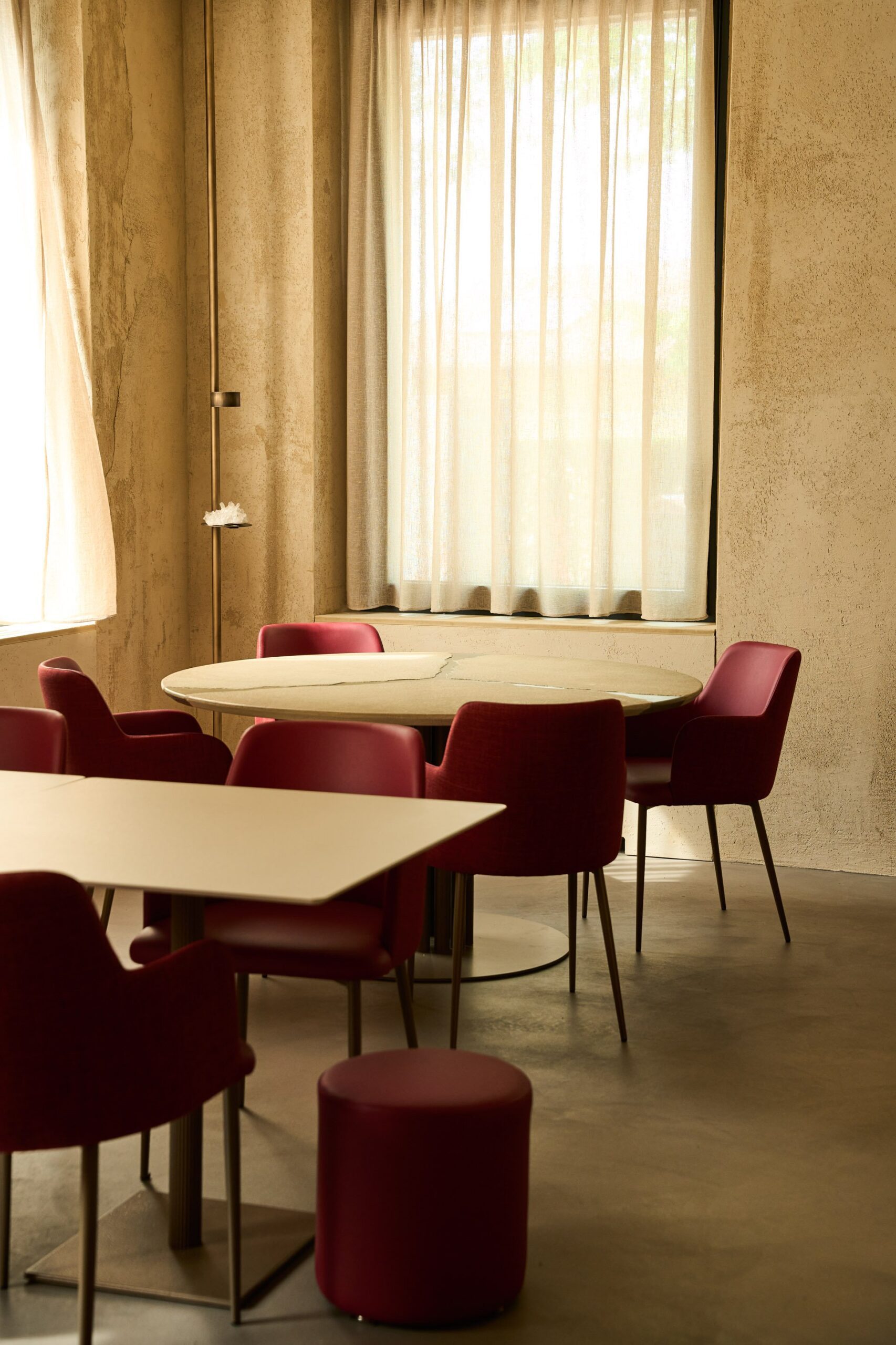
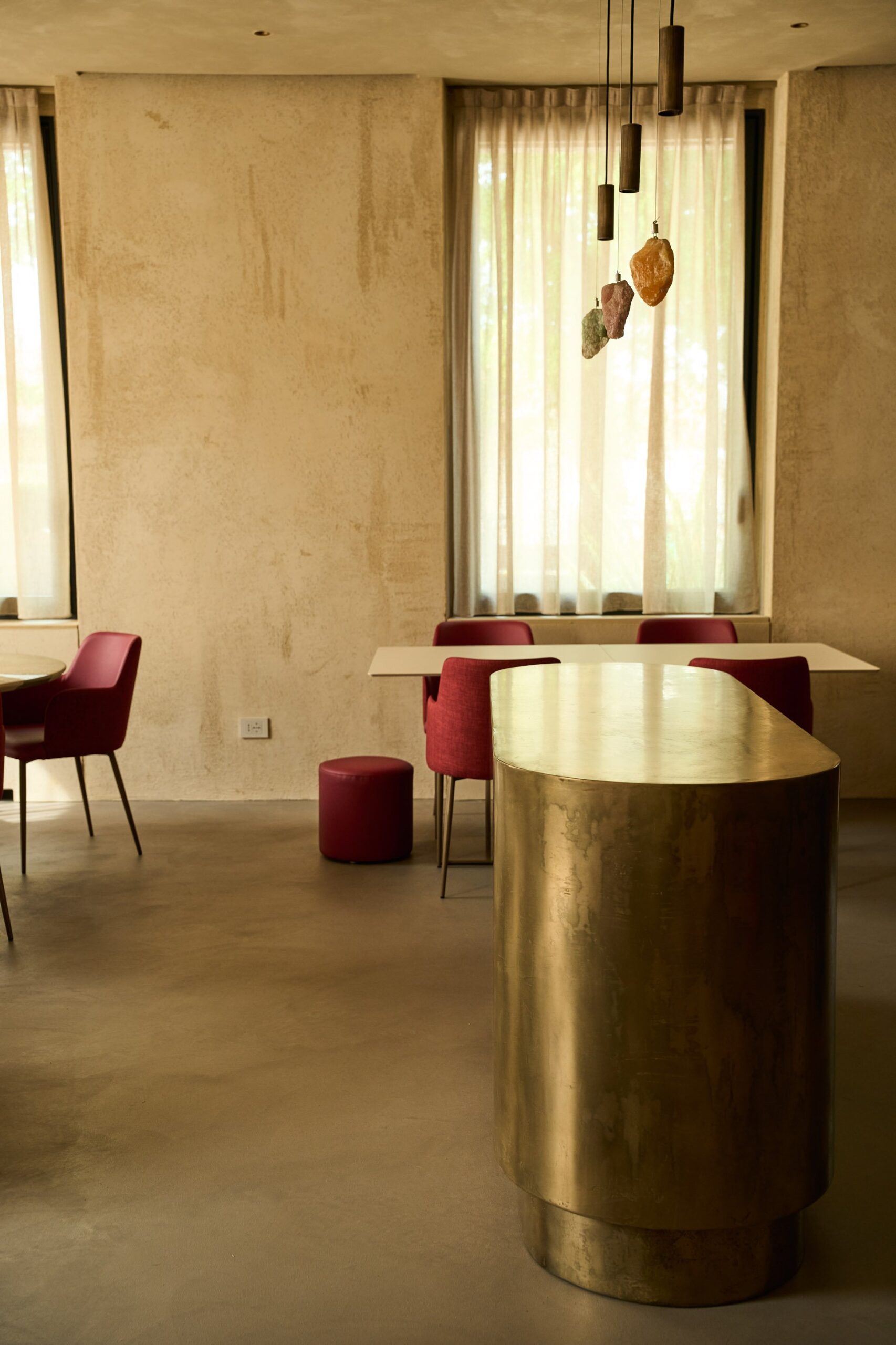
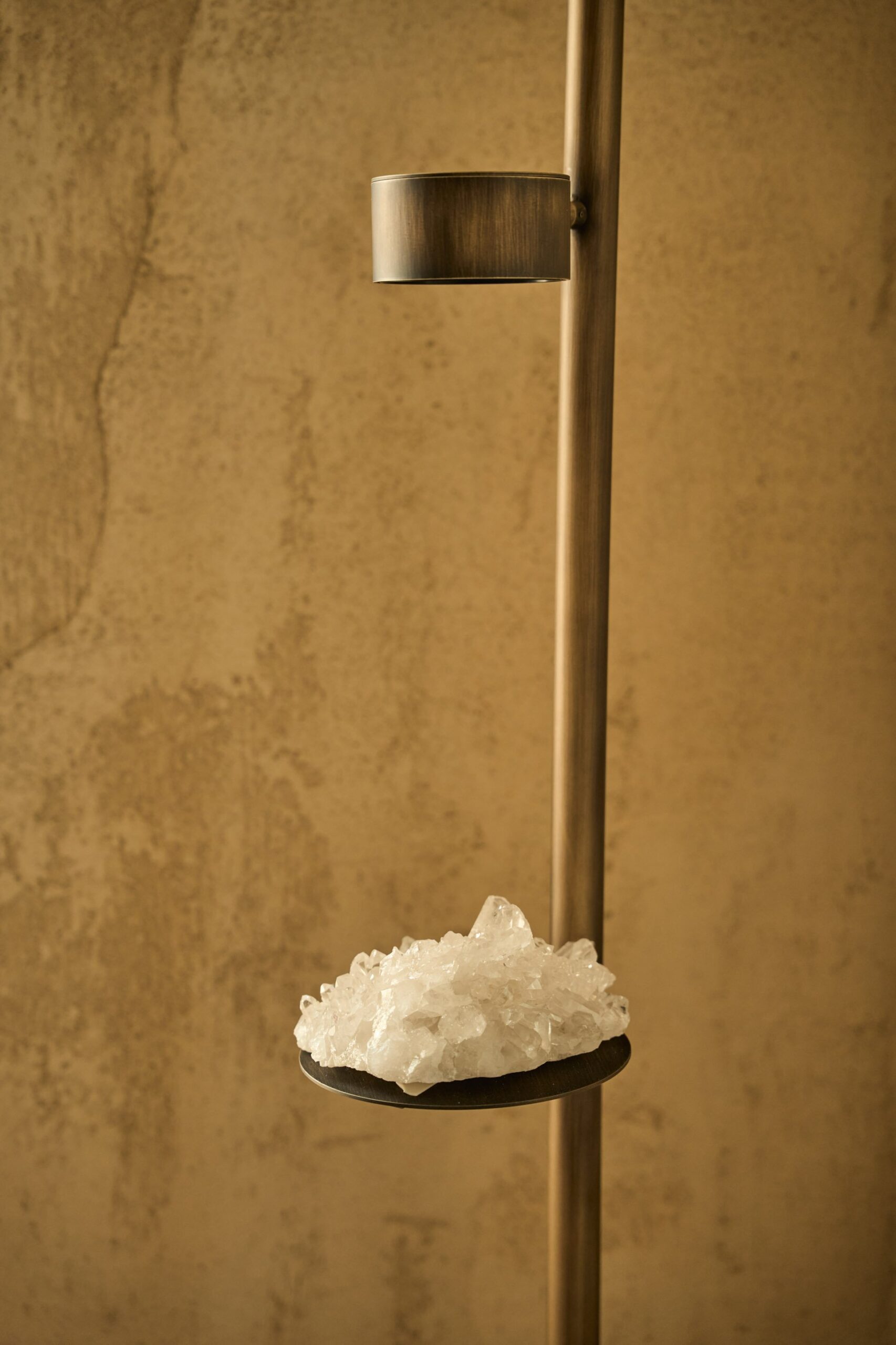
The technical framework culminates in two bespoke sculptural installations: a suspended crystal fixture powered by an integrated Solar 40 module, and an illuminated floor-to-ceiling totem driven by a Solar 100 engine. Both fixtures share a proprietary finish matched directly to the Polaris hardware, locking the entire scheme into an unbroken material dialogue.
In Triuggio, the intervention decisively rejects decorative grandstanding. Prioritizing disciplined optical control and material warmth, the scheme demonstrates how bespoke restaurant lighting allows illumination and raw architecture to operate as a single, indivisible medium.
About Rimani
Founded in 2015 and built on over forty years of industrial expertise led by Carlo Albano, Rimani conceives and engineers high-performance lighting systems in Turin. The name Rimani reflects an ethos of human craft and continuous renewal (ri-mani). Rimani develops custom architectural illumination across four core divisions: creative spatial lighting, marine interiors, healthcare environments, and specialized horticulture.