Raw marble, industrial steel, and three new mineral lacquers: Arclinea expands the material lexicon of Thea, the handleless system designed by Antonio Citterio.
Kitchen design operates at the intersection of technical precision and domestic ritual. Conceived by Antonio Citterio in 2021, Thea distills Arclinea’s ethos into a rigorous yet versatile geometry, adapting seamlessly to diverse layouts and lifestyles. Today, the collection expands its expressive reach with the introduction of three matte lacquer finishes: Artico, Borgogna, and Tundra.
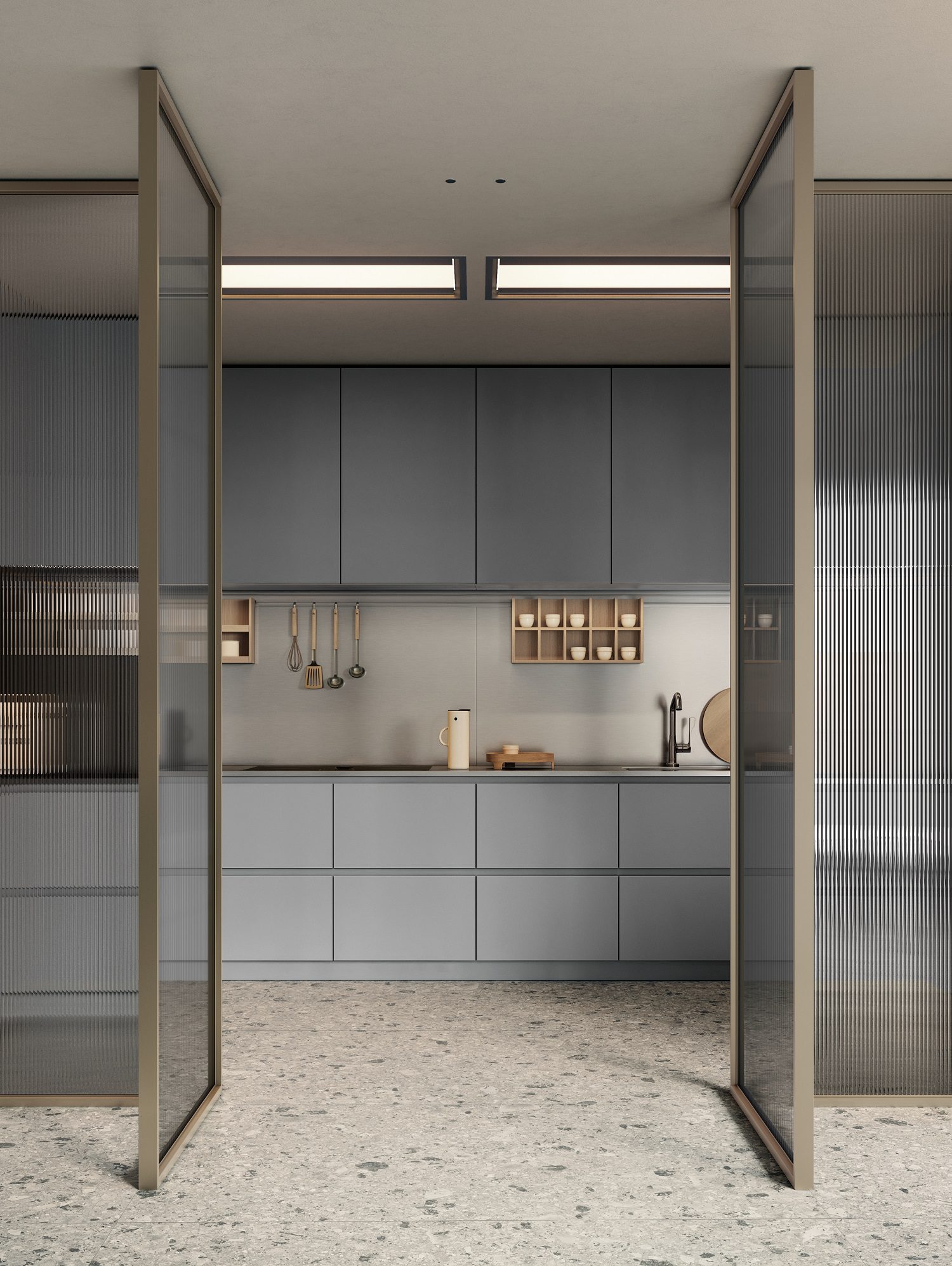
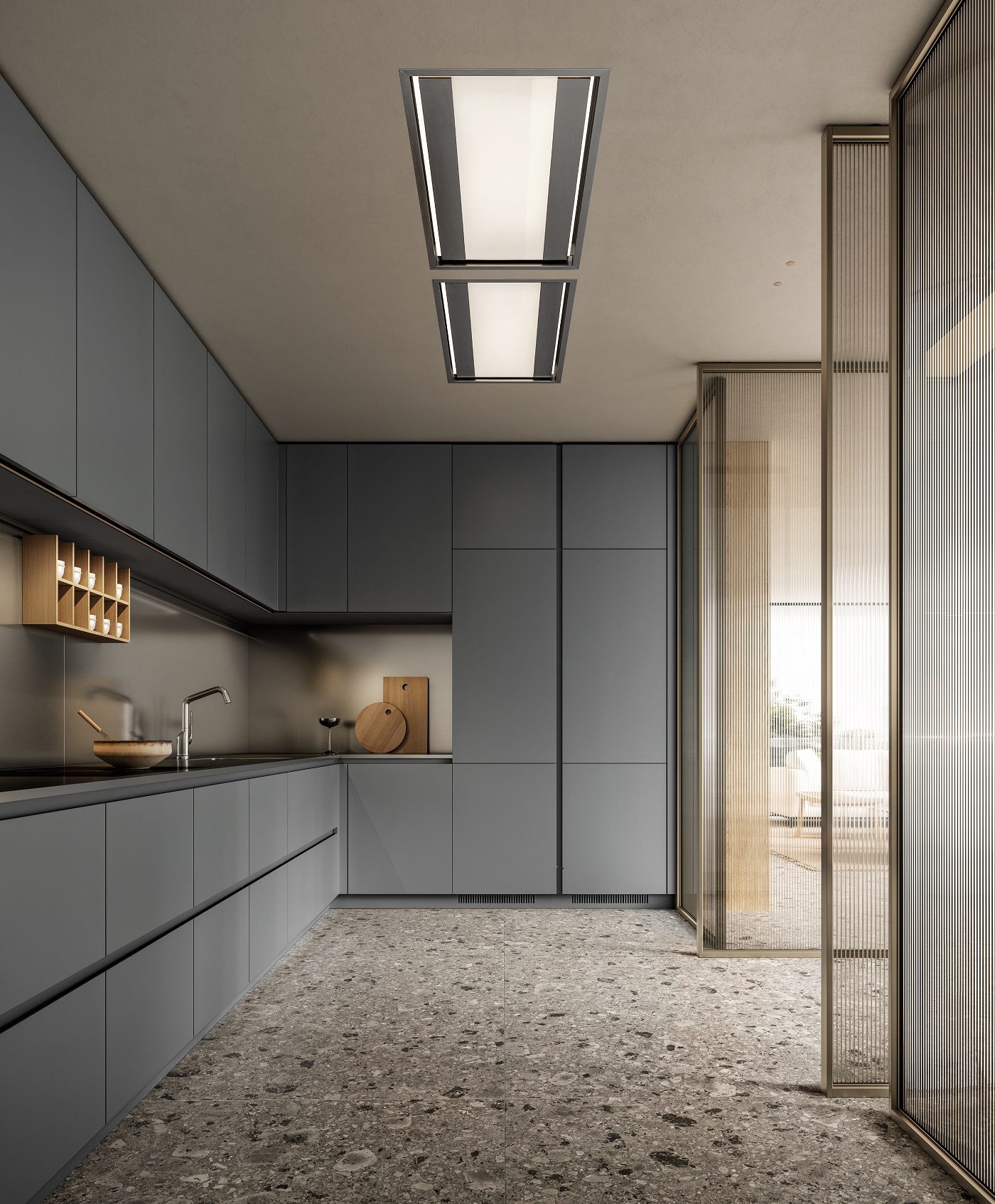
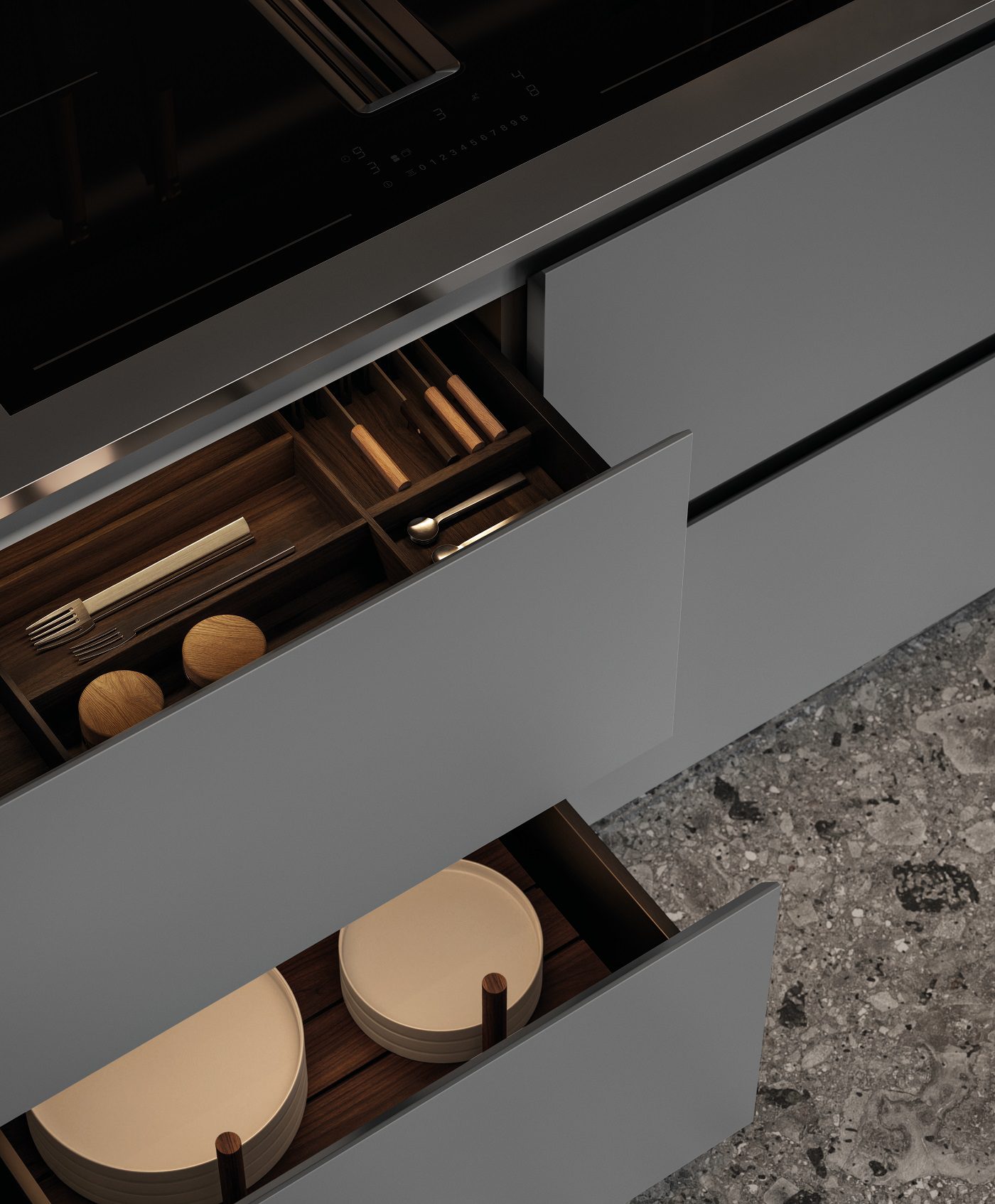
A rich material lexicon and rigorous modular framework grant the collection rare structural fluidity, allowing tailored configurations that evolve across varied spatial scales without compromising formal equilibrium. Thea consolidates its place as a benchmark in Antonio Citterio luxury kitchen design, using mineral nuance to dissolve utilitarian volume into unbroken surfaces—a quiet synthesis of technical precision and calibrated restraint.
Spatial Symmetry and Architectural Rhythm
Beyond the graphic incision of an integrated Gola profile—which preserves flush, unadorned surfaces across cabinets and deep drawers—Thea asserts a distinctly architectural presence. A rigorously symmetrical C-shaped layout anchors the interior, actively drawing walls, work surfaces, and flooring into a continuous domestic envelope.
Equipped wall modules calibrate the space through an alternating cadence of closed volumes and open niches, orchestrating functional separation while sustaining an uninterrupted visual dialogue with the surrounding living area. By extending chromatic continuity across every plane, the architecture eliminates traditional domestic thresholds, merging culinary preparation and dining into a single, cohesive domestic continuum.
Three Material Narratives
Three distinct chromatic identities reinterpret Thea, articulating a rigorous equilibrium between matte lacquer, natural stone, industrial steel, and tactile timber.
Inspired by the pale, diffused light of Nordic interiors, Artico presents a light, ethereal hue that amplifies the perception of space and formal purity. The matte lacquer wraps base units, wall storage, and integrated Gola profiles, engaging in a clinical dialogue with the surgical rigor of stainless steel selected for the worktops and equipped backsplash with accessory rail. Light oak accents introduce a warm, organic counterpoint to the composition.
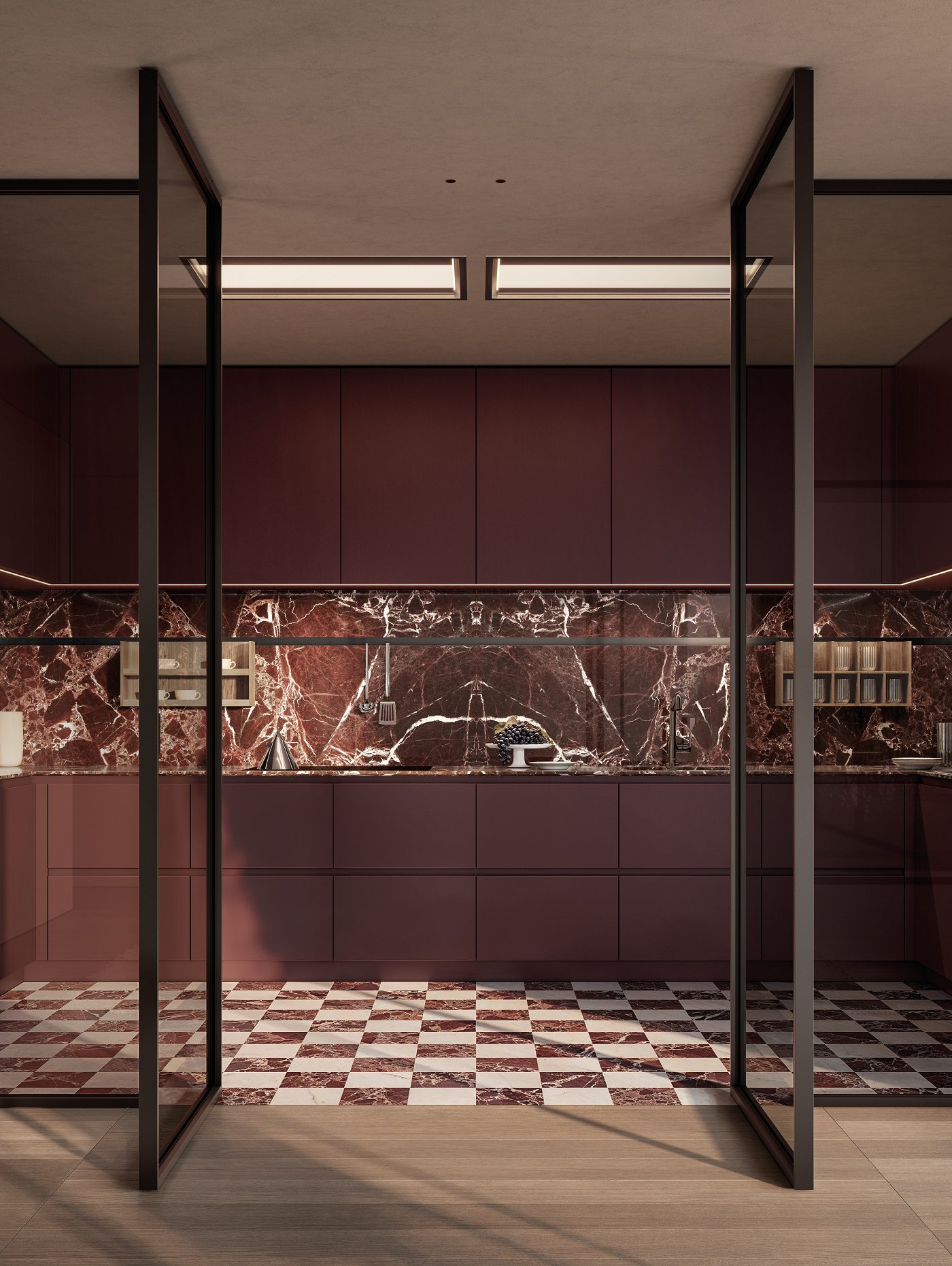
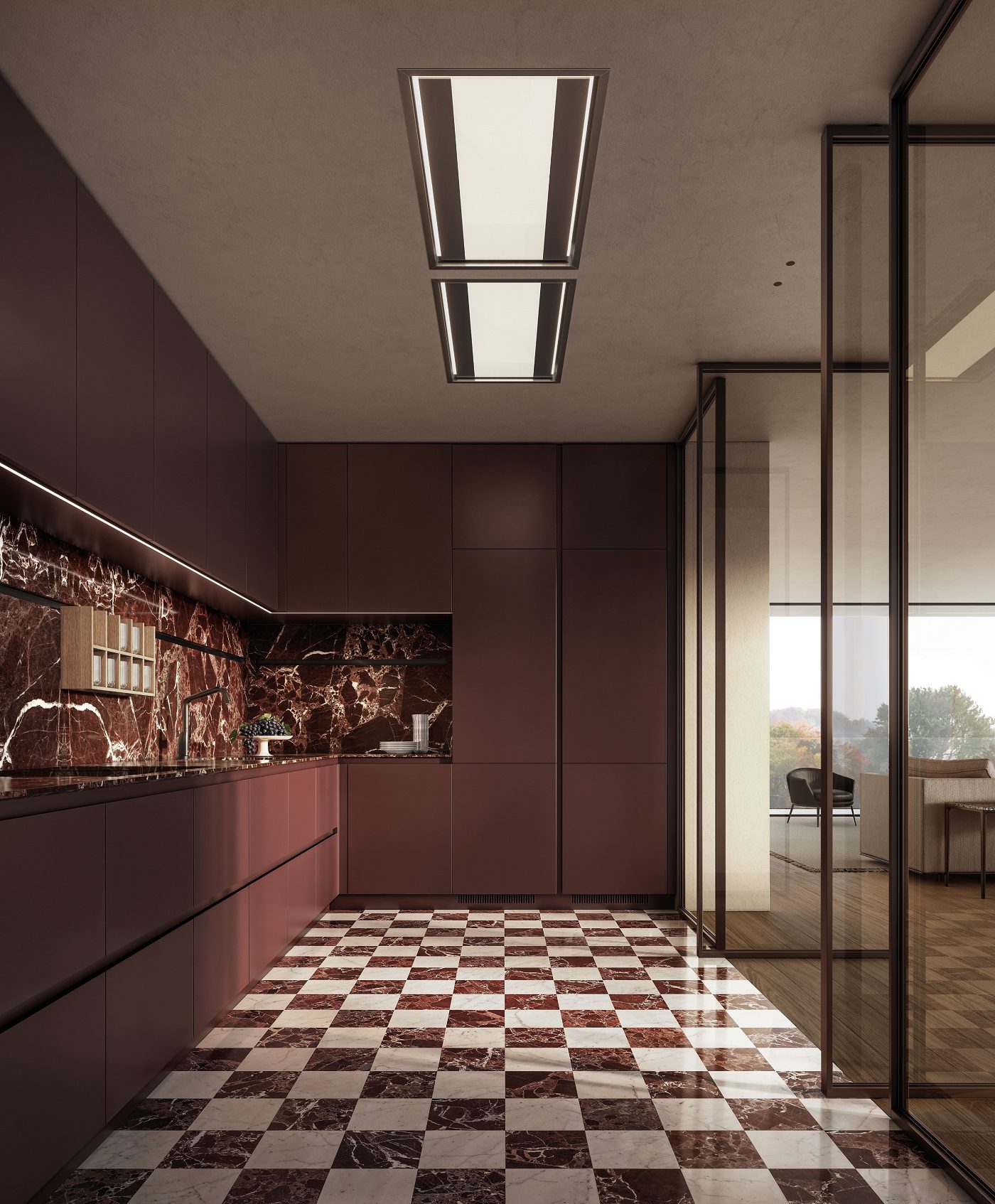
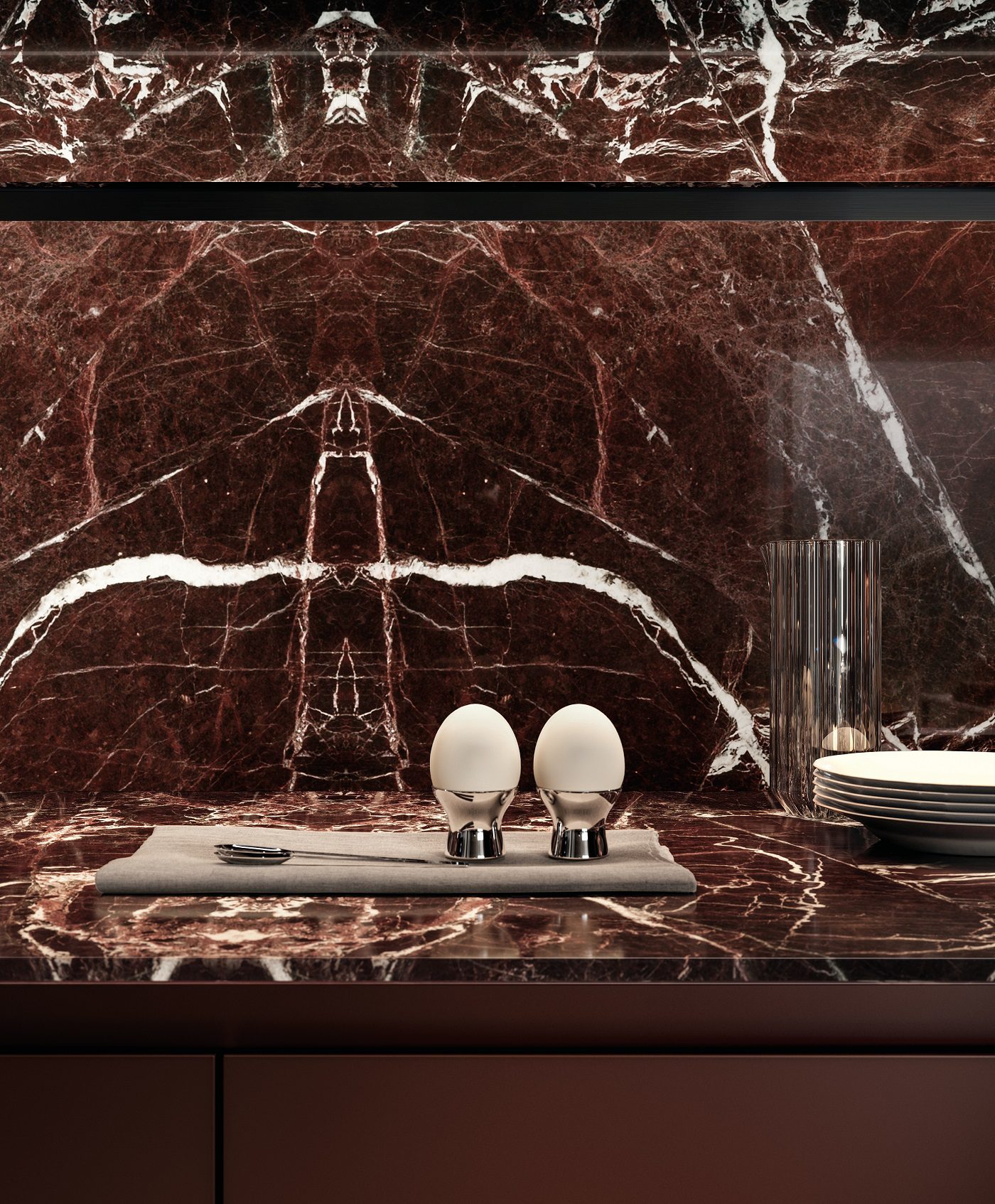
Deep wine and earthy nuances define this theatrical scheme, conceived for convivial, statement-making interiors. Borgogna matte lacquer blankets the cabinetry and Gola channels, yielding visual precedence to polished Rosso Lepanto marble across the worktop and backsplash. Marked by intense red grounds fractured by white and grey veining, the stone anchors the architectural volume. A Plus Black PVD steel accessory rail introduces discreet utility, while a chequered floor reinforces the room’s graphic identity. Full-height glazed doors open the kitchen directly onto the adjoining living space, allowing natural light and continuous sightlines to flow between environments.
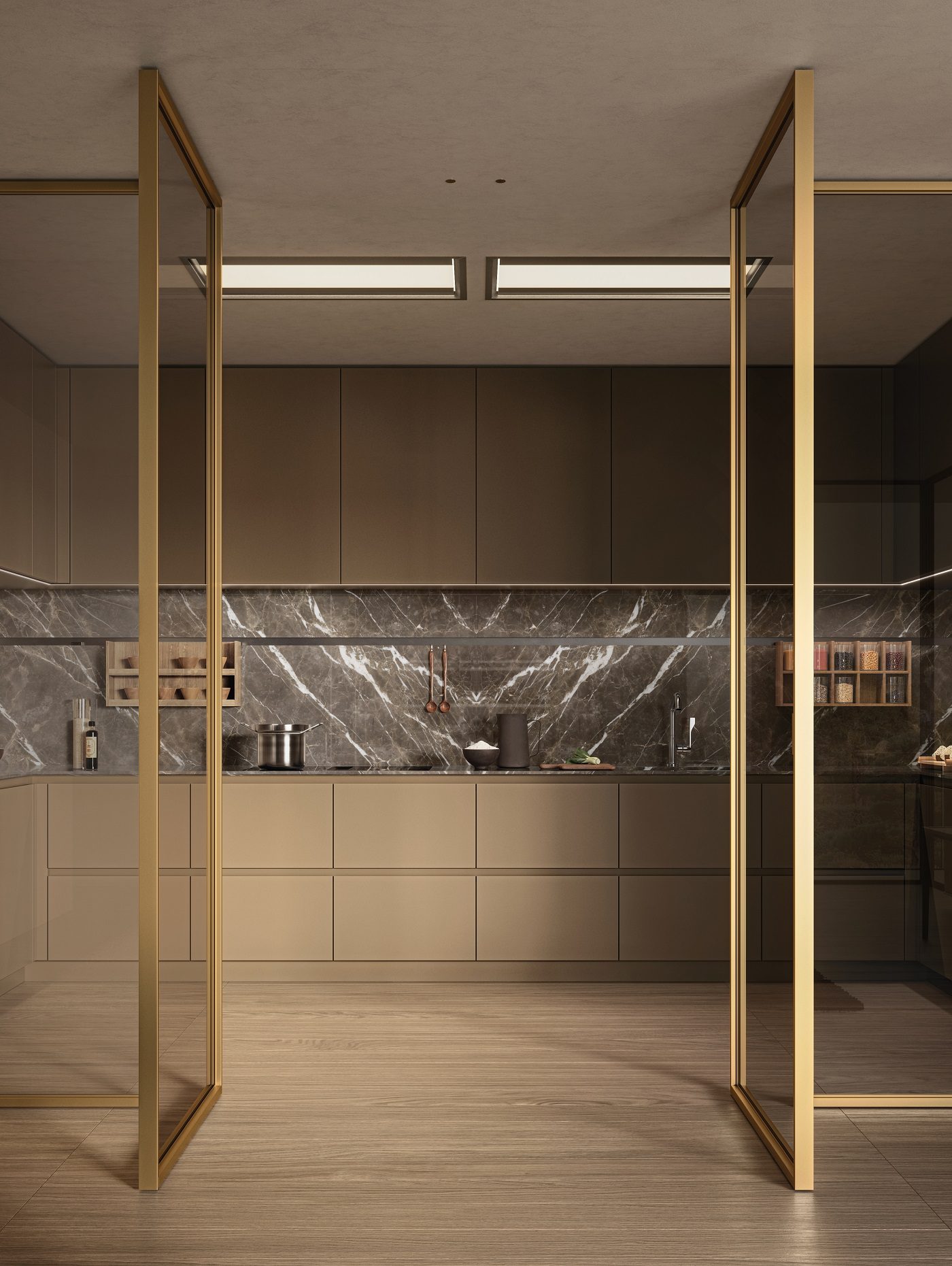
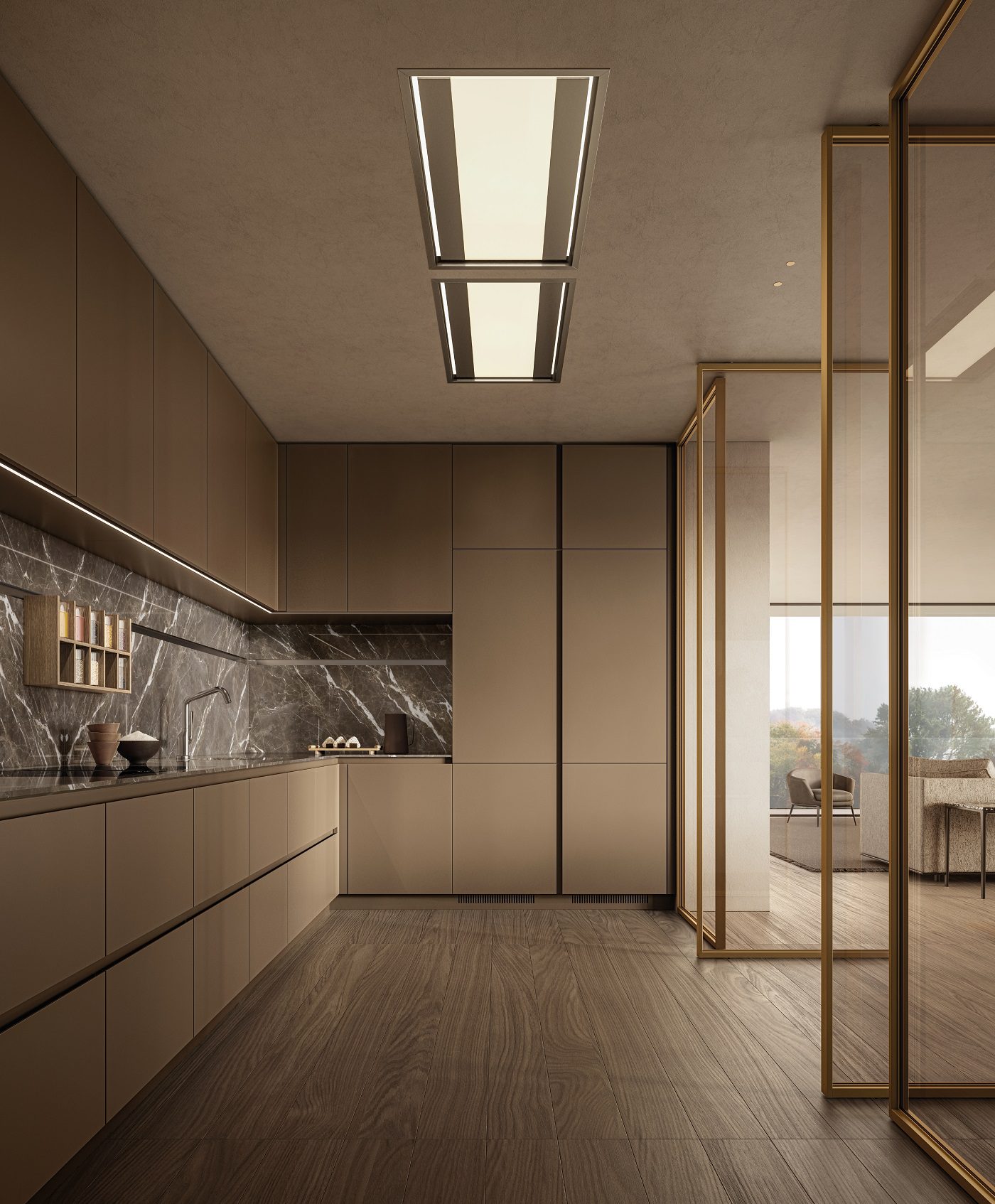
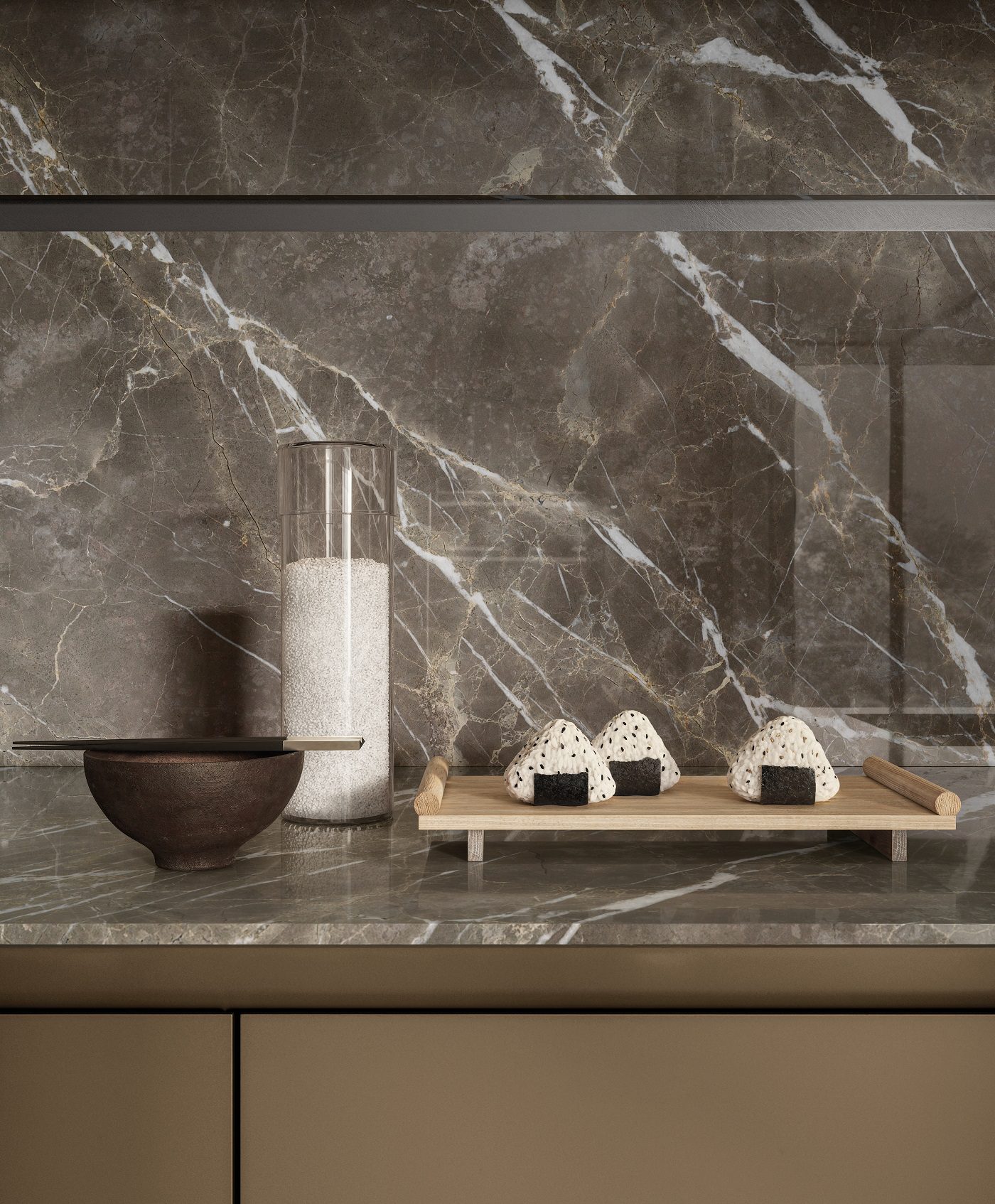
Grounded in quiet, tactile landscapes, the muted green-grey Tundra matte lacquer covers base and wall modules alongside the recessed channel. Polished Grigio Collemandina marble defines the horizontal work surfaces and equipped backsplash, offset by a Vintage Plus steel accessory rail that provides a muted metallic highlight. Accessories in Fossil Oak NTF complete the composition with organic, textured warmth.
Across all three expressions, color operates as a narrative plane—dialoguing with light, physical volume, and raw matter to establish three distinct spatial atmospheres bound by the same architectural discipline.
Century-Old Craftsmanship
The architectural maturity of Thea mirrors a century-long dialogue with evolving social rituals and cultural change. Established in 1925 by Silvio Fortuna Senior—carrying forward an artisanal woodworking heritage tracing back to 1816—Arclinea pivoted toward specialized kitchen furniture in 1960. In 1963, the company anticipated modern domestic ergonomics with Claudia, the first Italian kitchen designed with fully built-in electrical appliances.
A deliberate shift toward external design partnerships in the early 1980s solidified during the late 1990s into an enduring collaboration with Antonio Citterio as principal designer. Combining technical precision with spatial innovation, this partnership elevated the kitchen from functional utility to expansive living architecture. Following a strategic alliance with B&B Italia in 2016, Arclinea joined Flos B&B Italia Group in 2018, aligning alongside heritage Maisons including FLOS, B&B Italia, Maxalto, Azucena, Audo Copenhagen, and Lumens.
Today, as an international ambassador of Made in Italy across residential, hospitality, and marine sectors, Arclinea channels its entire trajectory into Thea: a space where culinary function, emotional ritual, and material culture converge into a single domestic vision.