On the eve of the Milano-Cortina 2026 Olympics, a new geography of taste emerges. To experience the Queen of the Dolomites is to navigate 14 essential stops: high-altitude refuges, historic farmsteads, and gourmet salons.
The air—electric, sharp, altered. With the Olympic flame moments from ignition, the Ampezzo Valley pulses in full ferment. Driven by the momentum of 2026, the hospitality sector has accelerated vertically, transmuting the valley into a vibrant culinary laboratory.
To dine in Cortina is to undertake a cultural voyage through bold fermentations, the reclamation of ancestral ingredients, and service merging mountain warmth with managerial precision. Palates ready: the race for gold plays out not merely on snow-clad slopes, but at the tip of a fork, in a Cortina more shimmering and future-forward than ever. Herewith, our selection of the 14 addresses rewriting the history—and the menu—of the Olympic year.
The Best Restaurants in Cortina: A Curated Selection by Cucine d’Italia
SANBRITE: THE RAW, POETIC SOUL OF THE DOLOMITES
In the hamlet of Alverà, Riccardo Gaspari and Ludovica Rubbini guard a secret forged of timber and silence. Eschewing appearance, they seek a profound, unfiltered connection with the wild.
Left behind, the glittering storefronts of Corso Italia. To ascend toward SanBrite is to mute the noise, tuning instead to an ancient frequency. Stepping from the car, one is greeted by the pungent scent of burning wood and the breath of larch trees. No special effects required: the entry is an old barn, its soul intact, the result of a conservative restoration that refused to betray history for the sake of trends.
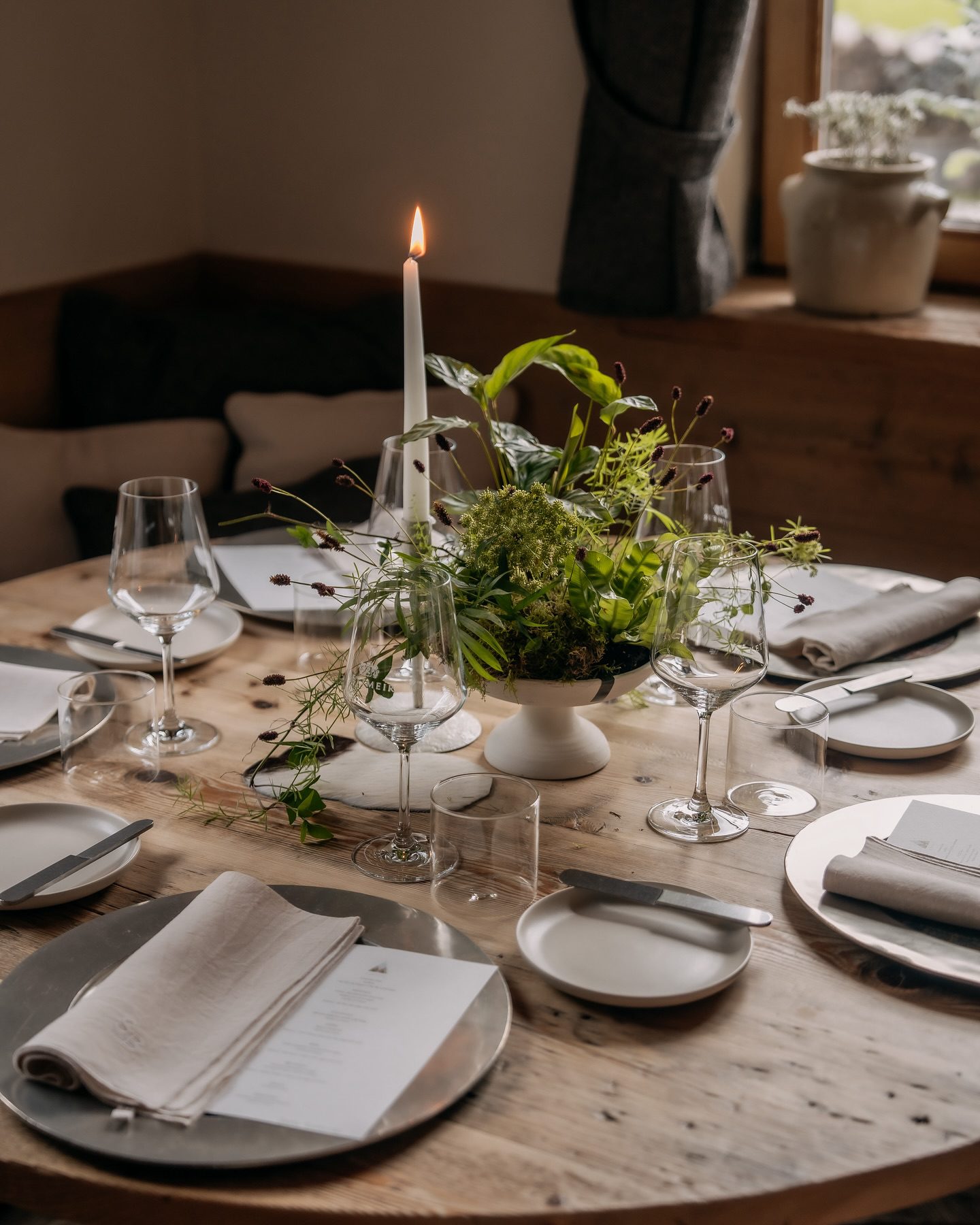
Inside, the atmosphere—warm, enveloping, profoundly serene. Reclaimed wood, left raw, skins the walls and ceilings to create a protective shell where time decelerates. Large glass panes act not as design flourishes, but as essential portals through which the Tofane peaks and the snowfall join the meal. Gone is the rigid etiquette; tables crafted by local artisans stand naked, tablecloths absent. One eats in contact with living matter, atop ceramics with imperfect surfaces and using cutlery that evokes peasant handiwork. It is a lean, essential elegance that strikes directly at the core.
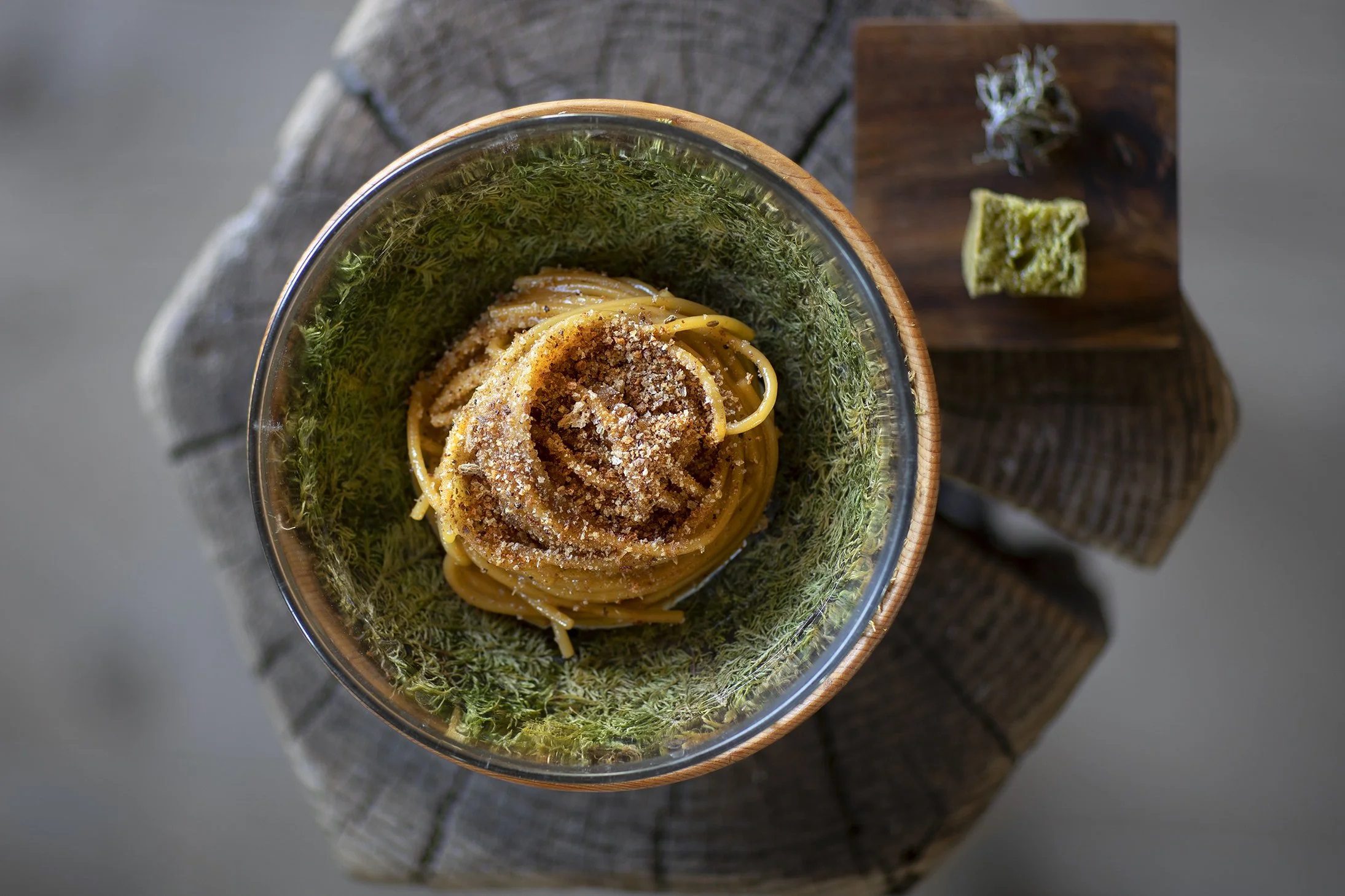
In the kitchen, Riccardo Gaspari—breeder turned Michelin-starred chef—presents his truth. His “agri-cuisine” is a study in labor and respect: nearly everything served originates from the family farm, the “Brite,” or the surrounding woods. The 2026 menu serves as a sincere narrative of the territory, stripped of superstructure. Dishes such as the mugo pine spaghetti—balsamic, resinous, bound by house-churned mountain butter—or the old cow tartare served with bark broth, represent not exercises in style, but mouthfuls of landscape.
Orchestrating the room, Ludovica Rubbini leads a service that is attentive yet never stiff, recounting the ultra-short supply chain of every ingredient, from the morning’s milking to the wild-foraged herbs. SanBrite is precisely this: a site of authenticity where the primordial taste of the mountain is rediscovered.
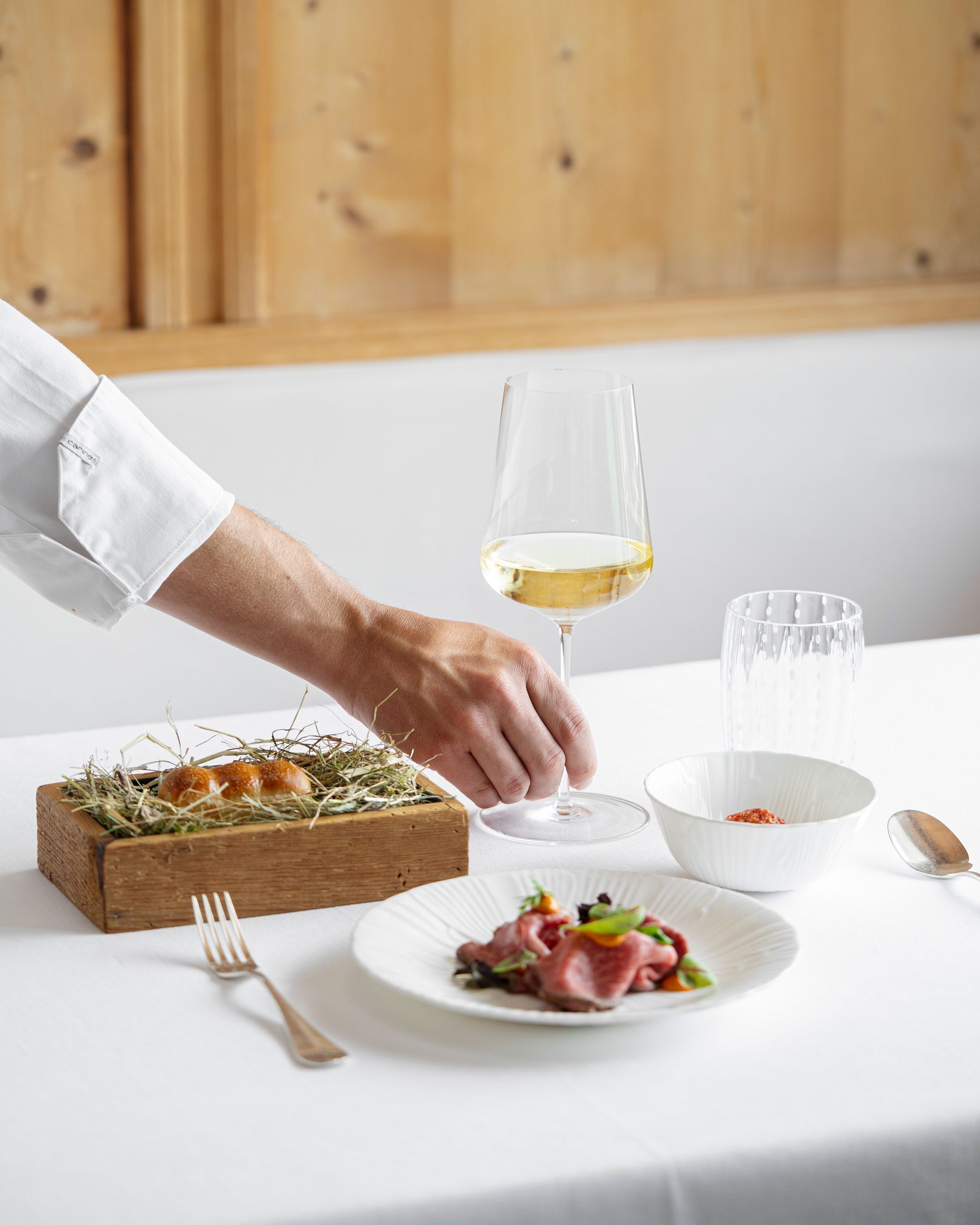
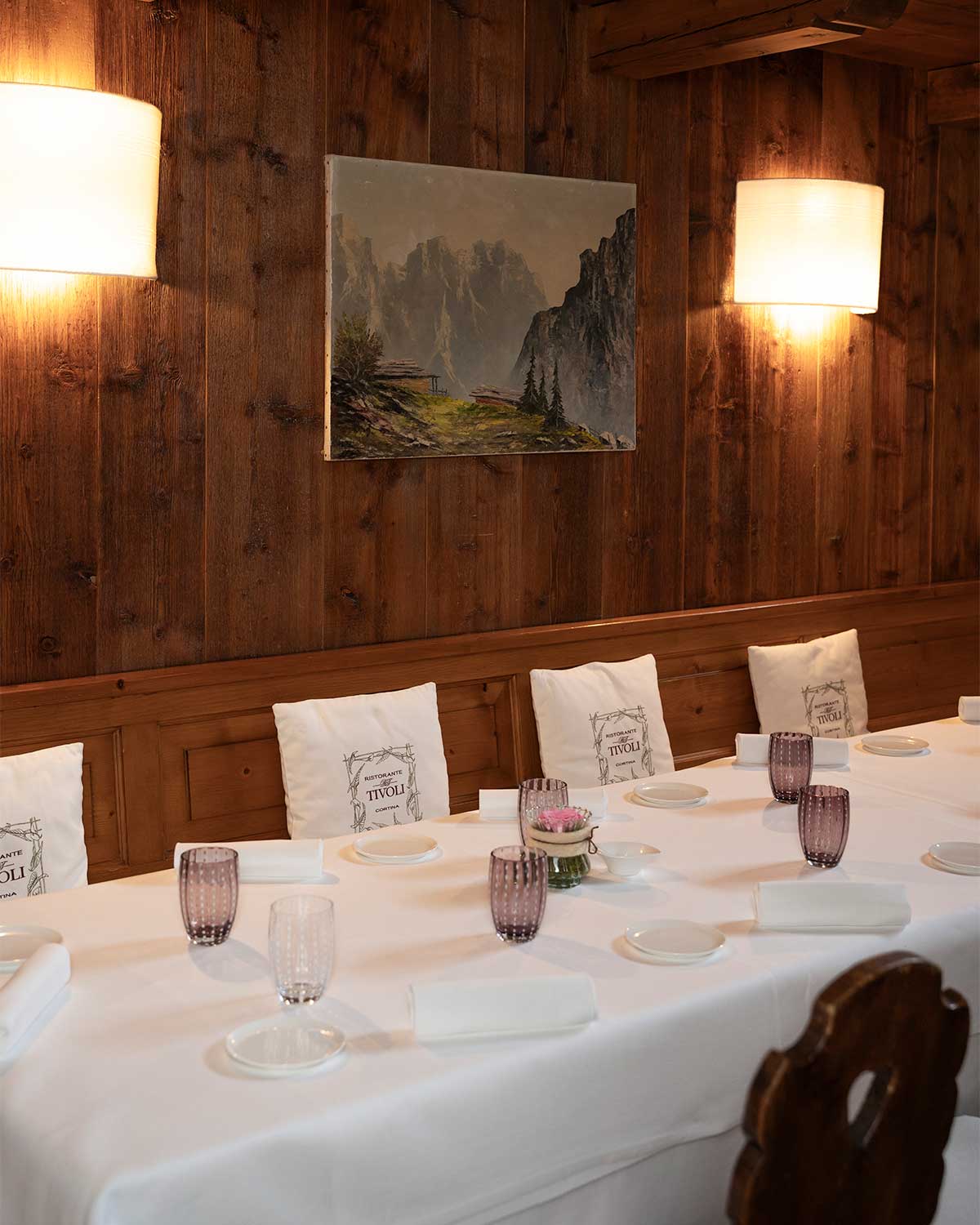
RISTORANTE TIVOLI: A HANGING SALON BETWEEN LAGOON AND PEAKS
Ascending toward Falzarego, one encounters Graziano Prest’s bastion of culinary solidity. Here, raw materials arrive unmediated; here, the kitchen ignores the caprices of the moment.
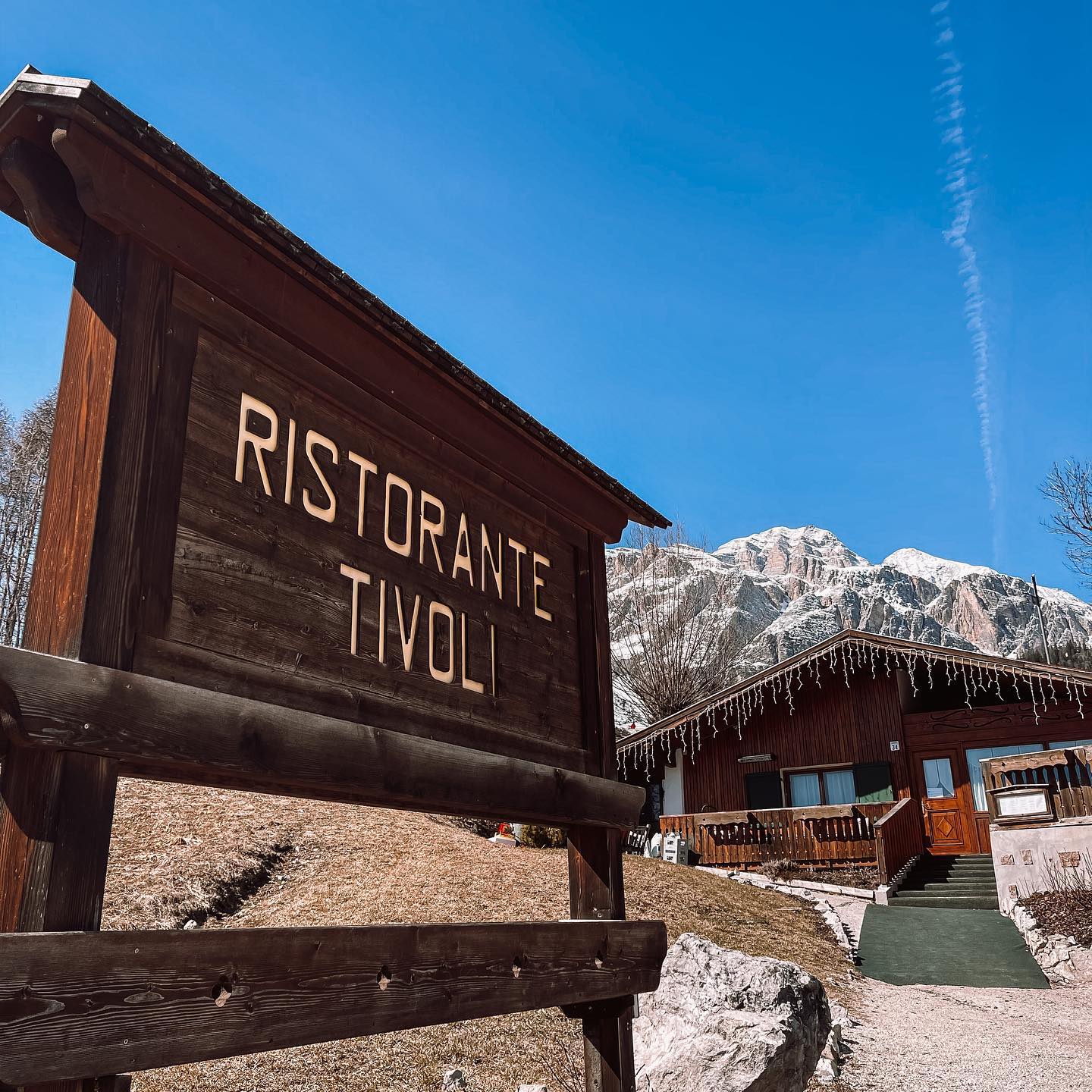
To grasp the Tivoli, one must climb. Winding toward Lacedel, on the road flanking the Socrepes slopes, the valley floor is left behind. Awaiting is a robust Ampezzo house, its roof heavy with snow and dark timber balconies promising sanctuary.
Inside, the atmosphere of a private salon—one that has witnessed decades without aging. No excesses: only the warmth of an environment that feels like home. Pale wood paneling, tactile fabrics, and a soft light that insulates against the external frost. The mise en place suggests a grand occasion—immaculate linen, crystal—yet remains devoid of ostentation. Through the windows, the illuminated basin of Cortina unfolds as a silent spectacle, a backdrop accompanying the meal without ever upstaging the plate.
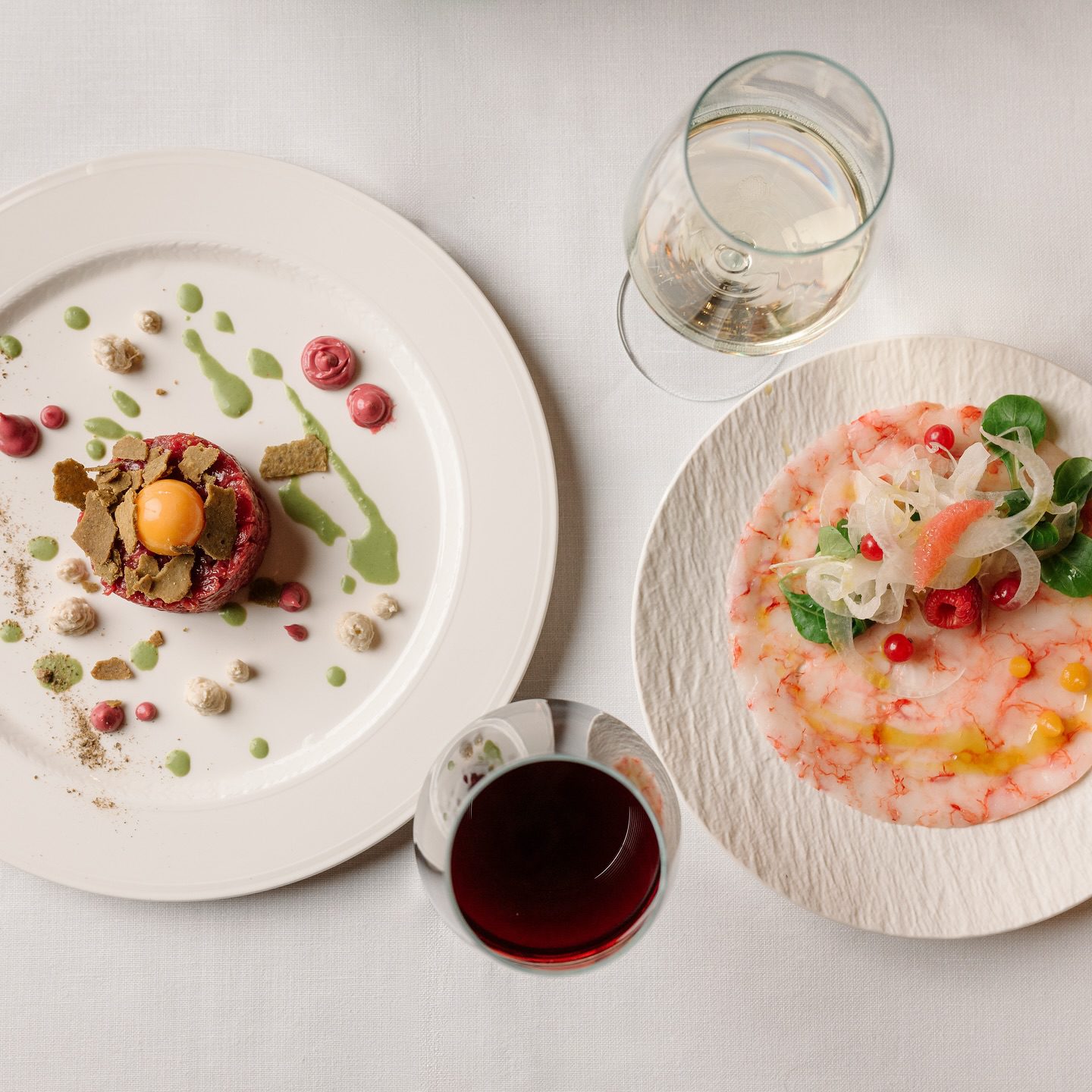
The cuisine of Graziano Prest: authentic, respectful. His is a steady, mature hand that for years has bridged two seemingly distant souls—rock and salt water. The gamble, won daily, involves transporting to 1,200 meters seafood still scented of the Adriatic, arriving directly from the markets of Chioggia and Venice to engage in a peer-to-peer dialogue with local game and forest floor ingredients.
Not fusion, but an expanded territory. On the plate, the scallop speaks the same language as the porcino; the Alpago lamb reveals a cooking technique of millimetric precision. Prest’s 2026 culinary vision aims straight for the essential: absolute concentration of flavor and a clean aesthetic. The risottos—creamed all’onda according to seasonal rhythms—remain a mandatory passage to understanding the chef’s philosophy. Supporting the narrative is a deep, encyclopedic cellar, managed with the expertise of those who unearth the precise label, from the great French reds to the hidden pearls of South Tyrolean vineyards.
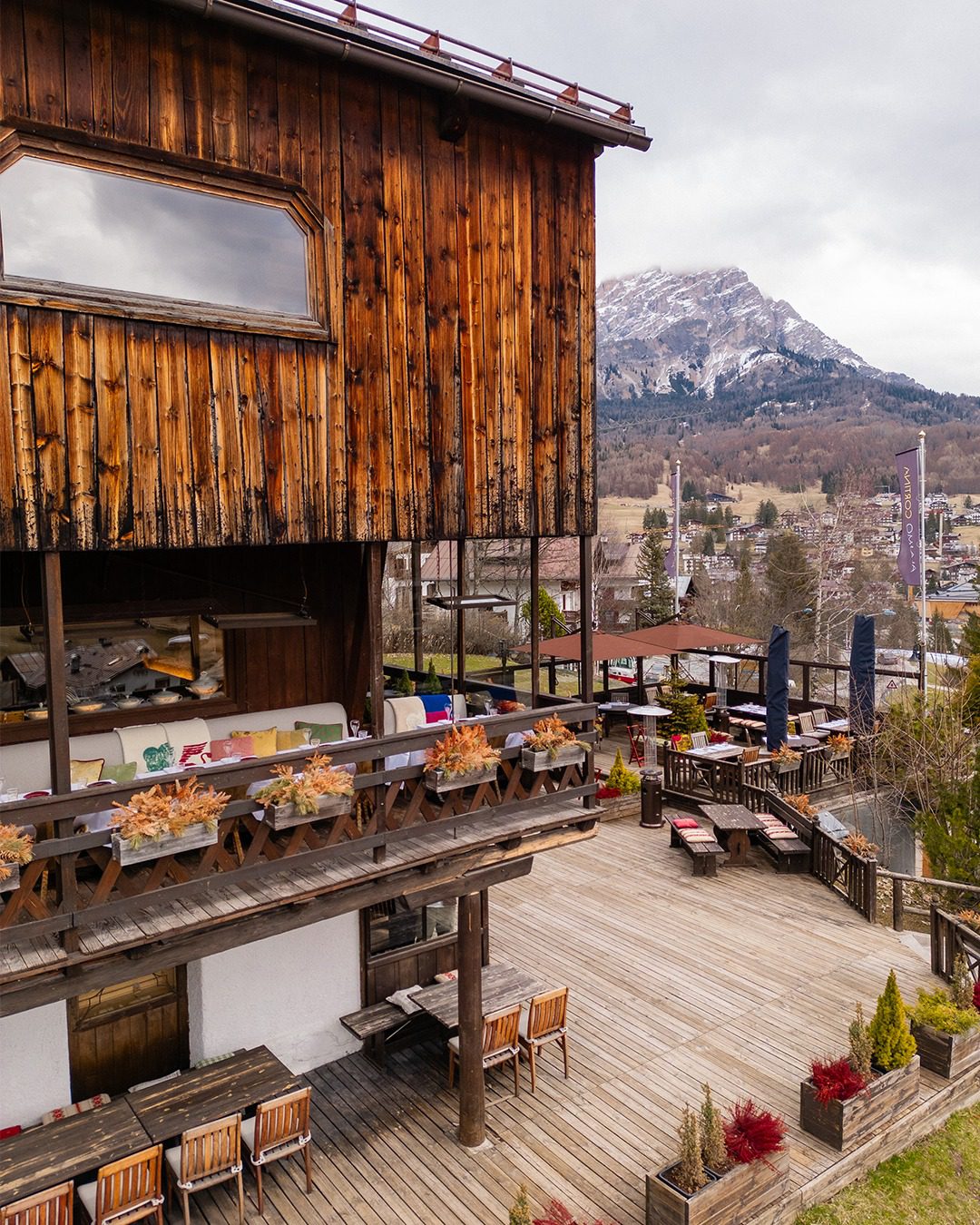
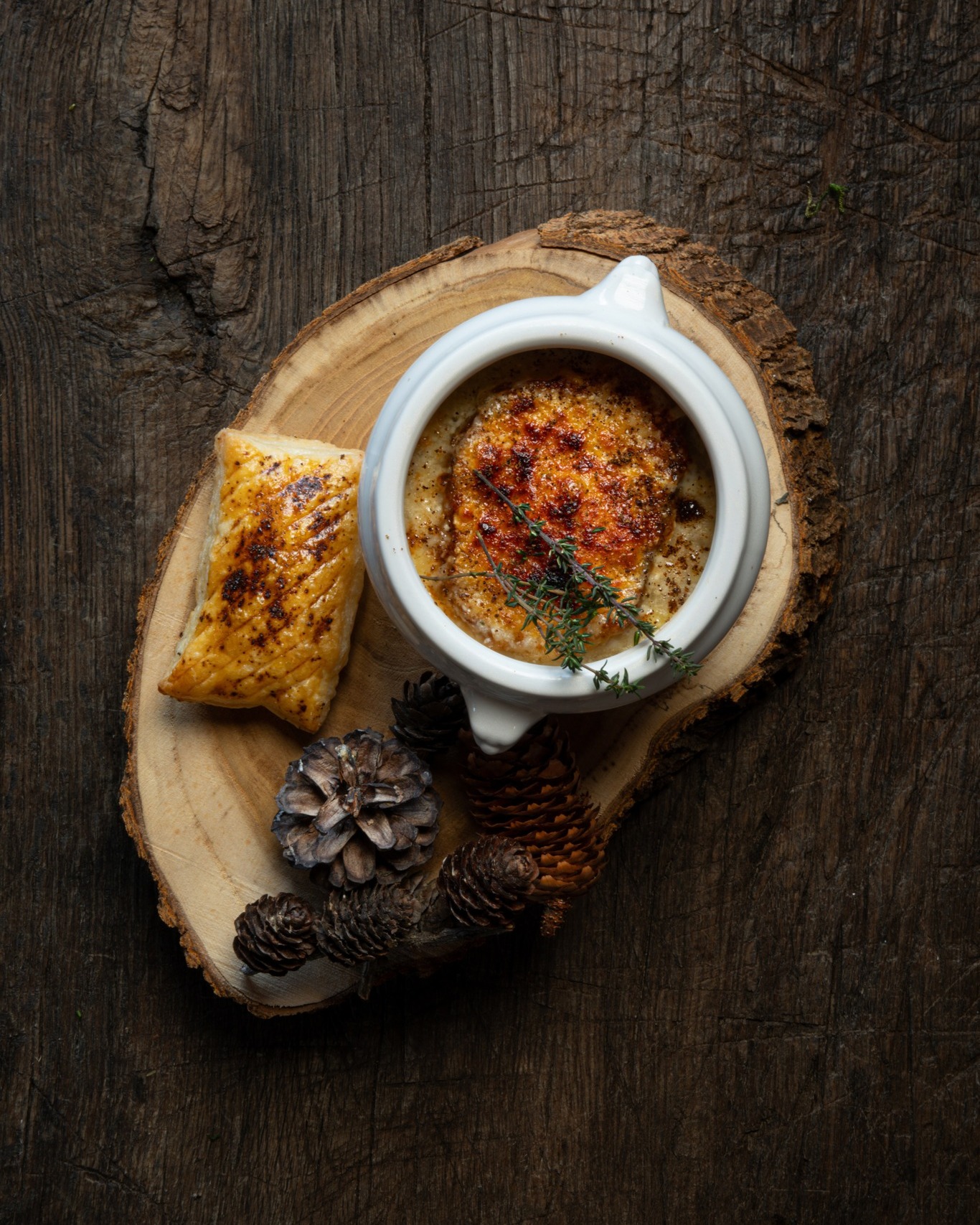
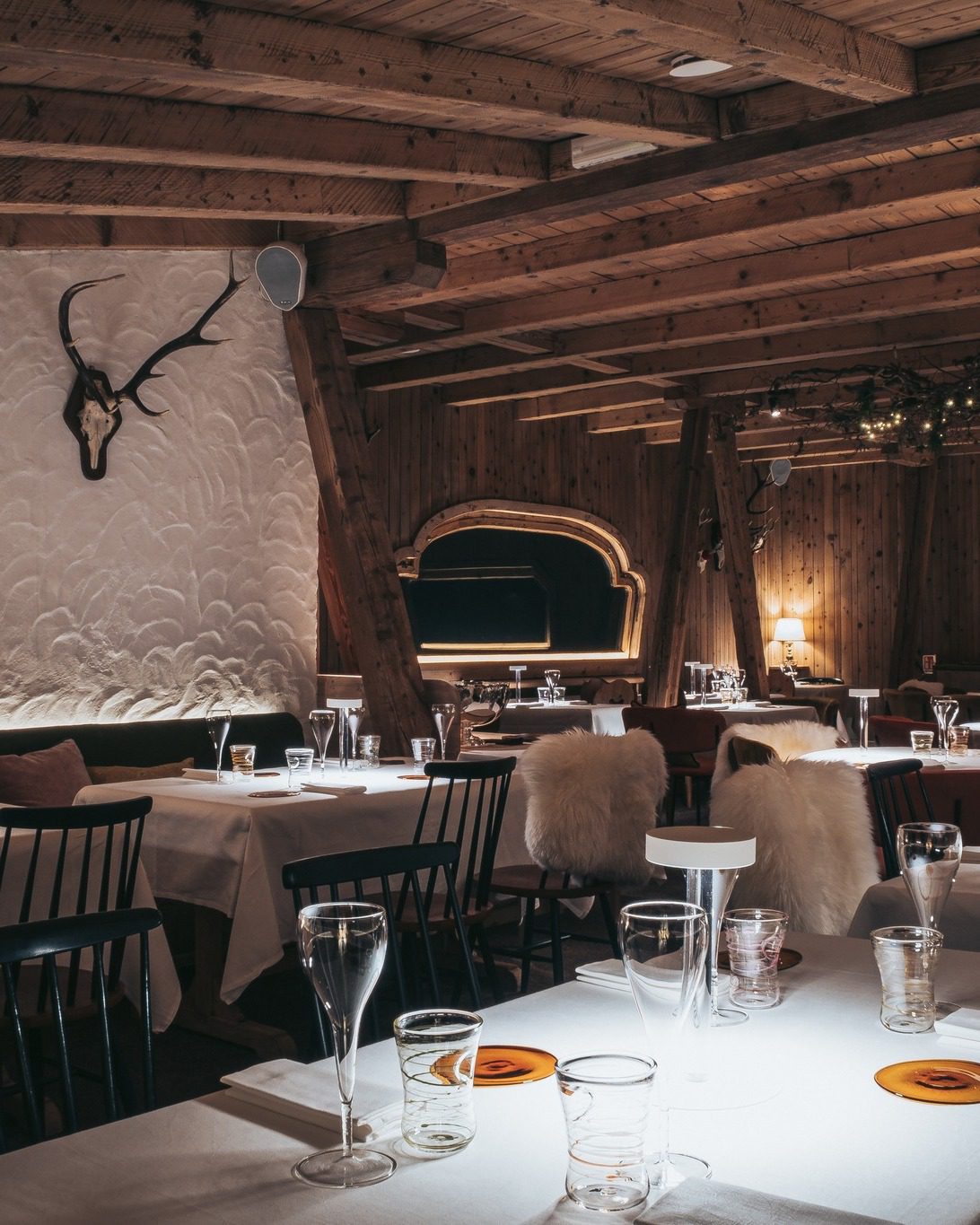
ALAJMO CORTINA: THE SALON OF CORSO ITALIA
Occupying the spaces once belonging to the legendary El Toulà, the Alajmo brothers rewrite the rules of engagement. Dispensing with stiff ceremonial, they favor instead high culinary craft and a shared sense of place.
Marking a pivot for local gastronomic society is the arrival of Massimiliano and Raffaele Alajmo—the three-starred minds behind Le Calandre—in the heart of Cortina. Inheriting the storied footprint of the former El Toulà within Hotel Ancora, the duo transmutes a “dolce vita” landmark into an outpost for their distinct philosophy. In an intelligent nod to history, the design preserves the retro charm of dark wood paneling and velvets, revitalized through the ironical, contemporary lens synonymous with the Alajmo style.
On the ground floor, Bar Alfredo has rapidly coalesced into the valley’s most coveted aperitivo hub—a vibrant space where design flirts with surrealist elements and the atmosphere mimics that of an exclusive, yet loosened, club. Expanding across two levels, the restaurant finds its crescendo on the upper floor. Overlooking both the pedestrian pulse of Corso Italia and the surrounding crags, the dining room bridges the luxury-domestic divide, dissolving formal rigidity to prioritize conviviality.
ROSAPETRA: TOFANE ON DISPLAY AND ALPINE MIXOLOGY
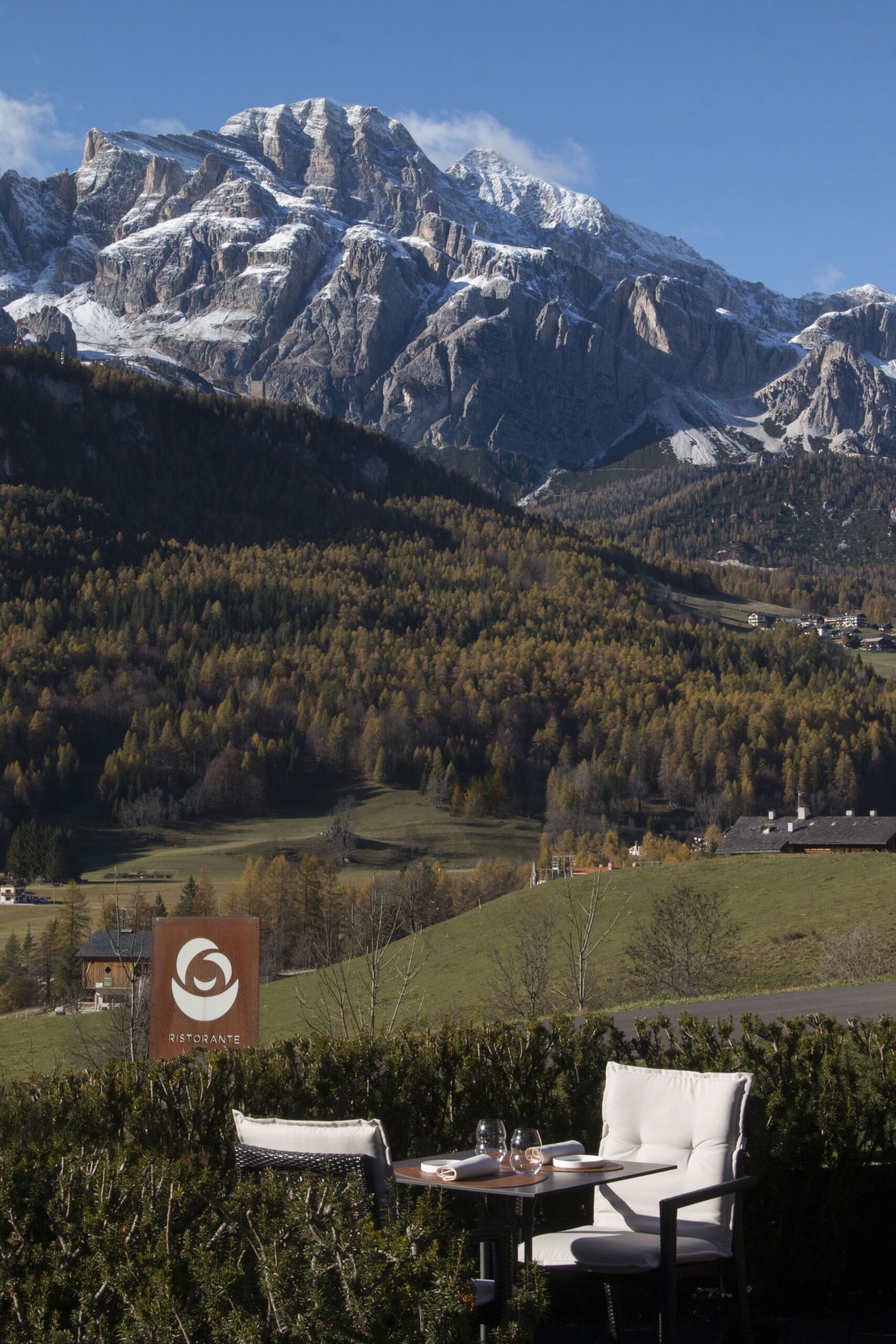
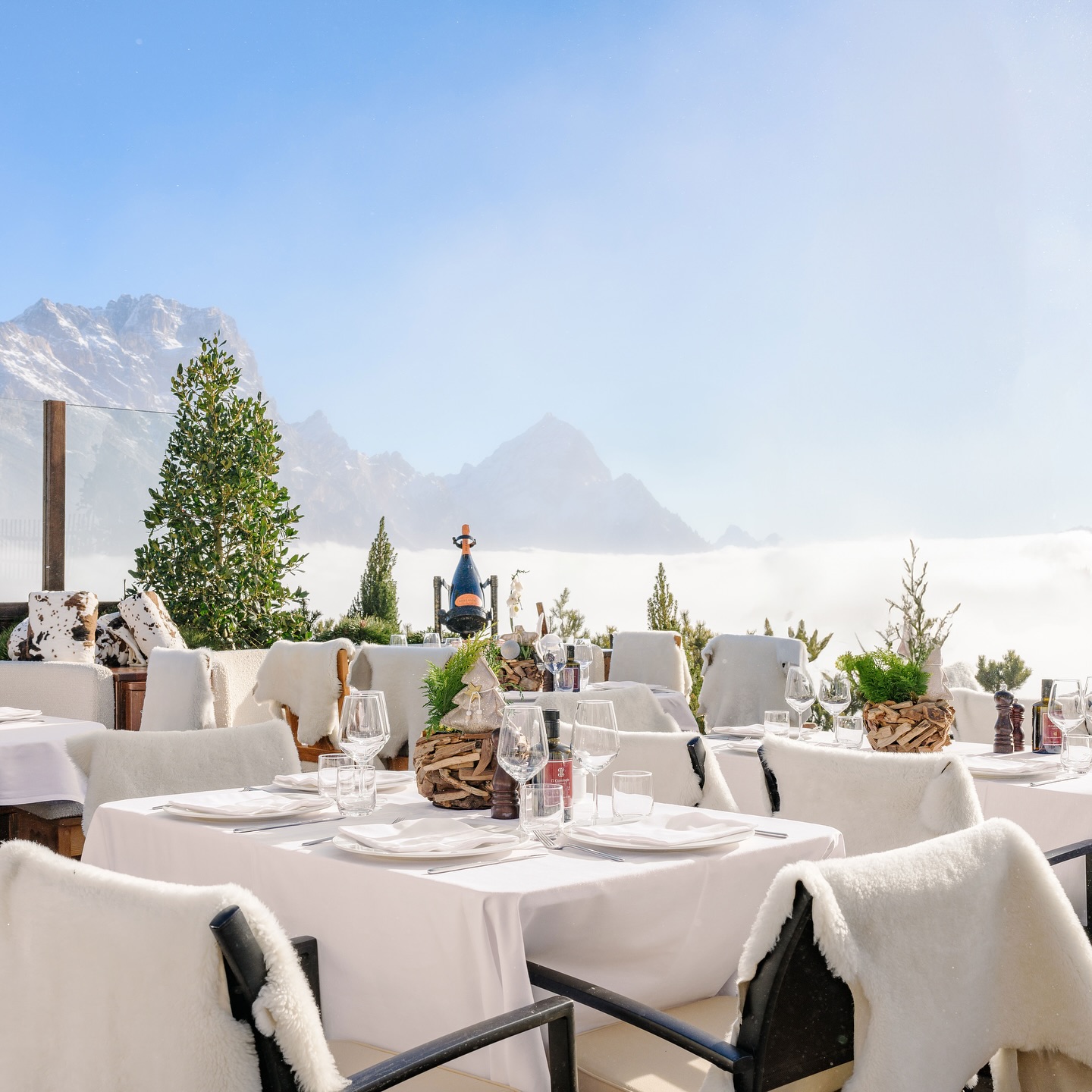
At Zuel di Sopra, the concept of a view is no metaphor. Glass walls, tectonic cuisine, and a challenge to the glass: here, the plates engage in a dialogue with signature cocktails.
Approaching from the south at Zuel di Sopra, Rosapetra plays its strongest card with a disarming frankness. The restaurant, aptly renamed Vista, functions as a gastronomic observatory where architecture recedes to yield the stage to the mountain. Immense glass panes act as the primary structural element, framing the Tofane massif until it becomes a physical presence within the room—shifting from the bruised blue of dawn to the fiery ignition of the enrosadira.
Inside, the space serves as an exercise in subtraction and raw matter. Stone-pine timber, split local stone, boiled wool, and natural hides coalesce to form an interior that is intimate, thermal, and profoundly decelerated.
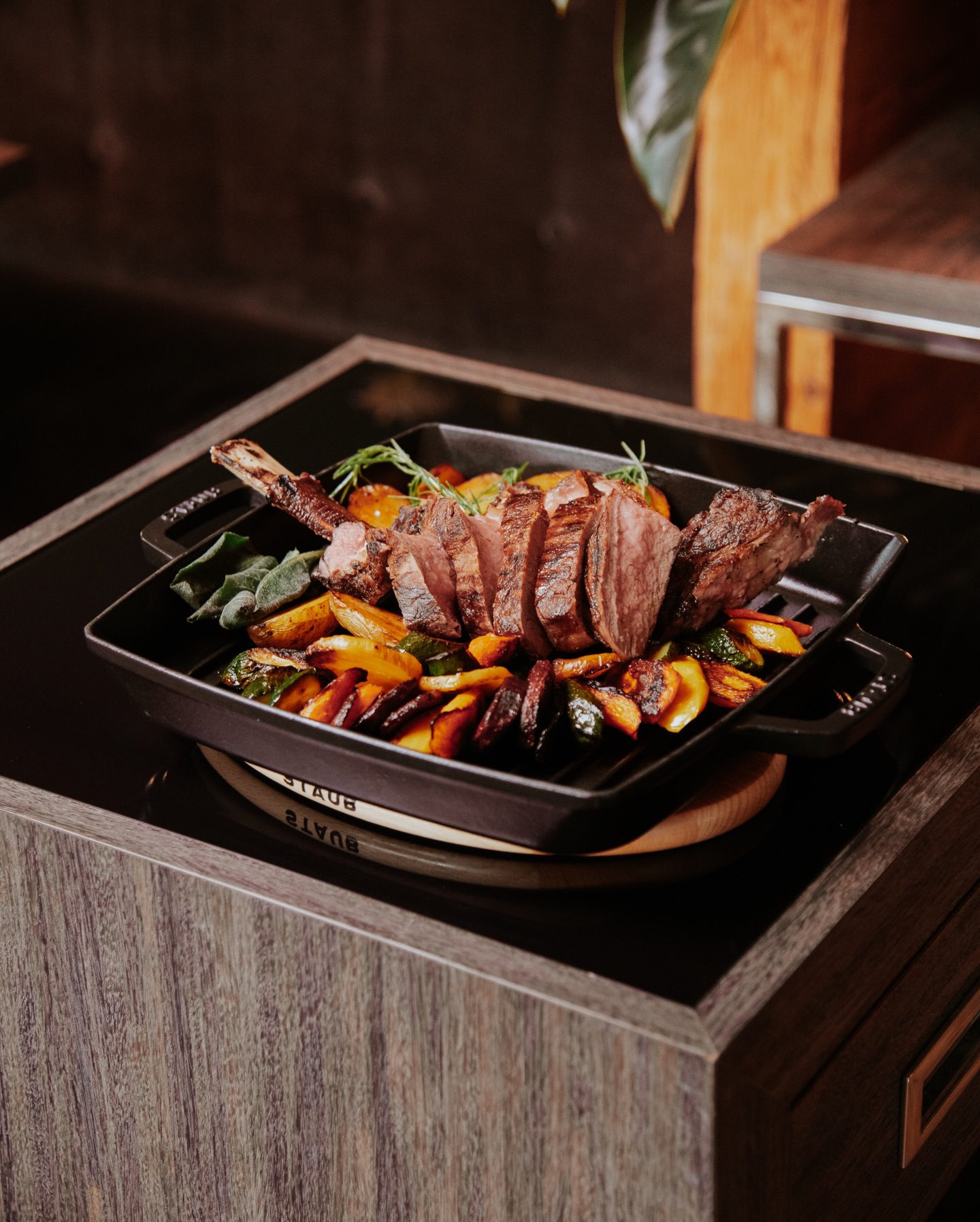
At the helm, Executive Chef Fabio Manni orchestrates a kitchen that bypasses virtuosity in favor of substance. Classic Italian identity meets Bellunese roots through an intelligent calibration of time: agile at midday, structured and layered by evening. Here, the raw material requires no mask; reserve hams and high-tier meats arrive on the plate with an absolute, formal clarity.
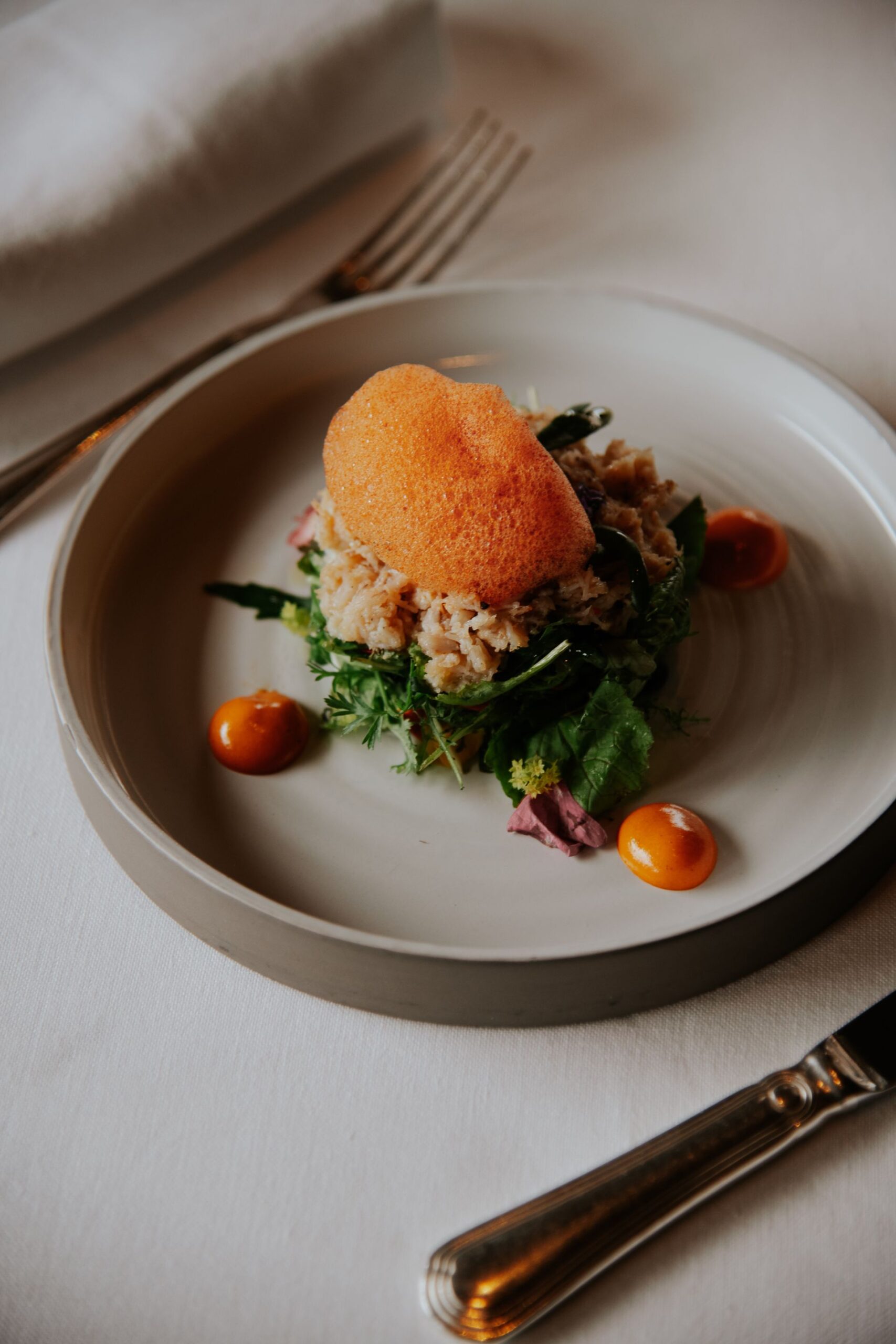
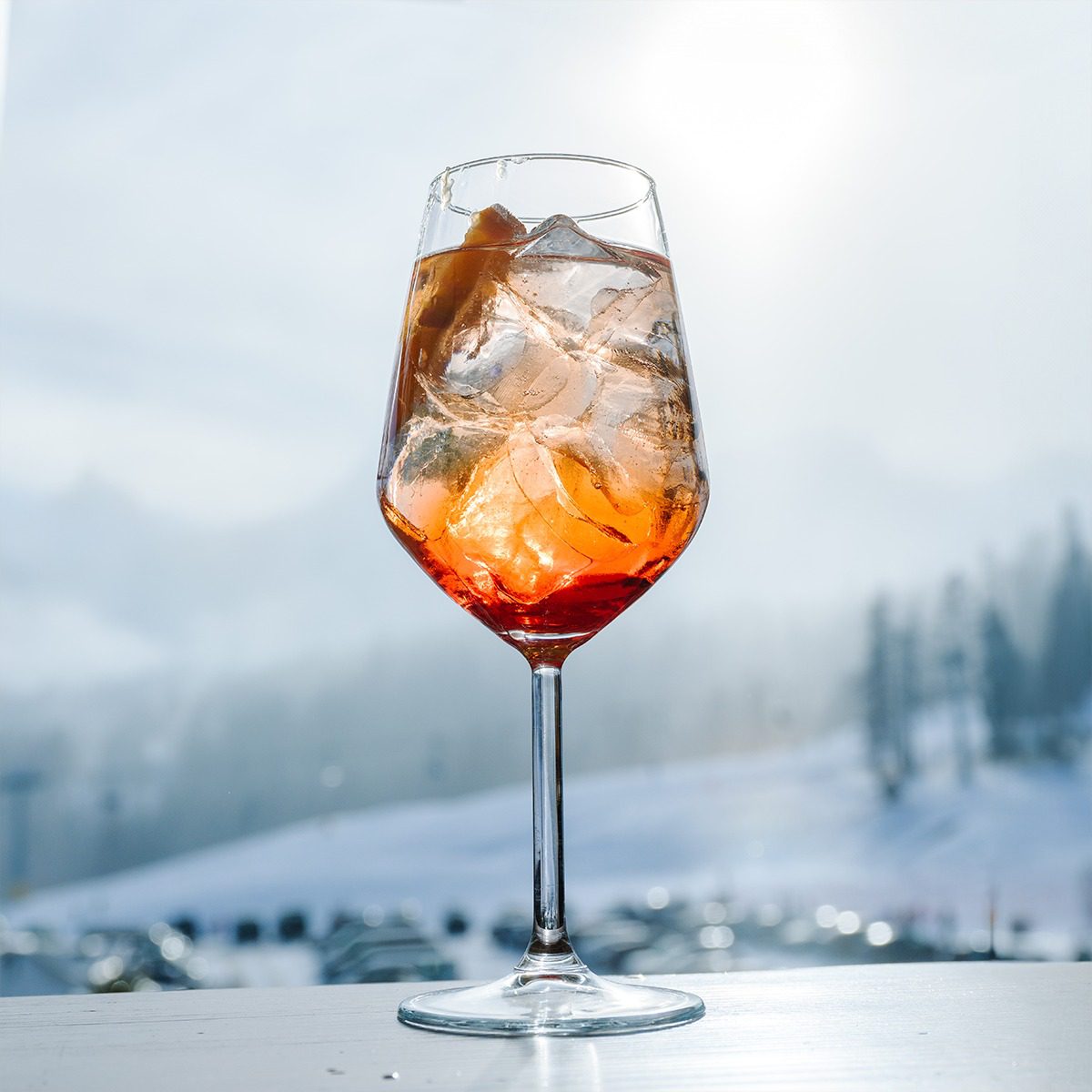
Propelling the 2026 experience forward, however, is the glass. Rosapetra ventures beyond the traditional wine list, pivoting toward an audacious pairing with signature cocktails. Alpine herb infusions, artisanal gins, and house-made syrups are deployed to cut through richness or heighten aromatics, forging unexpected harmonies between the drink’s botanicals and the architecture of the dish.
SAVOY AND 1224 RESTAURANT: THE GRAND HOTEL’S GASTRONOMIC AXIS
A threshold of honor within the Ampezzo salon, this historic landmark plays the card of dualism. On one side, the classical rite of the Savoy; on the other, the technical freshness of the 1224.
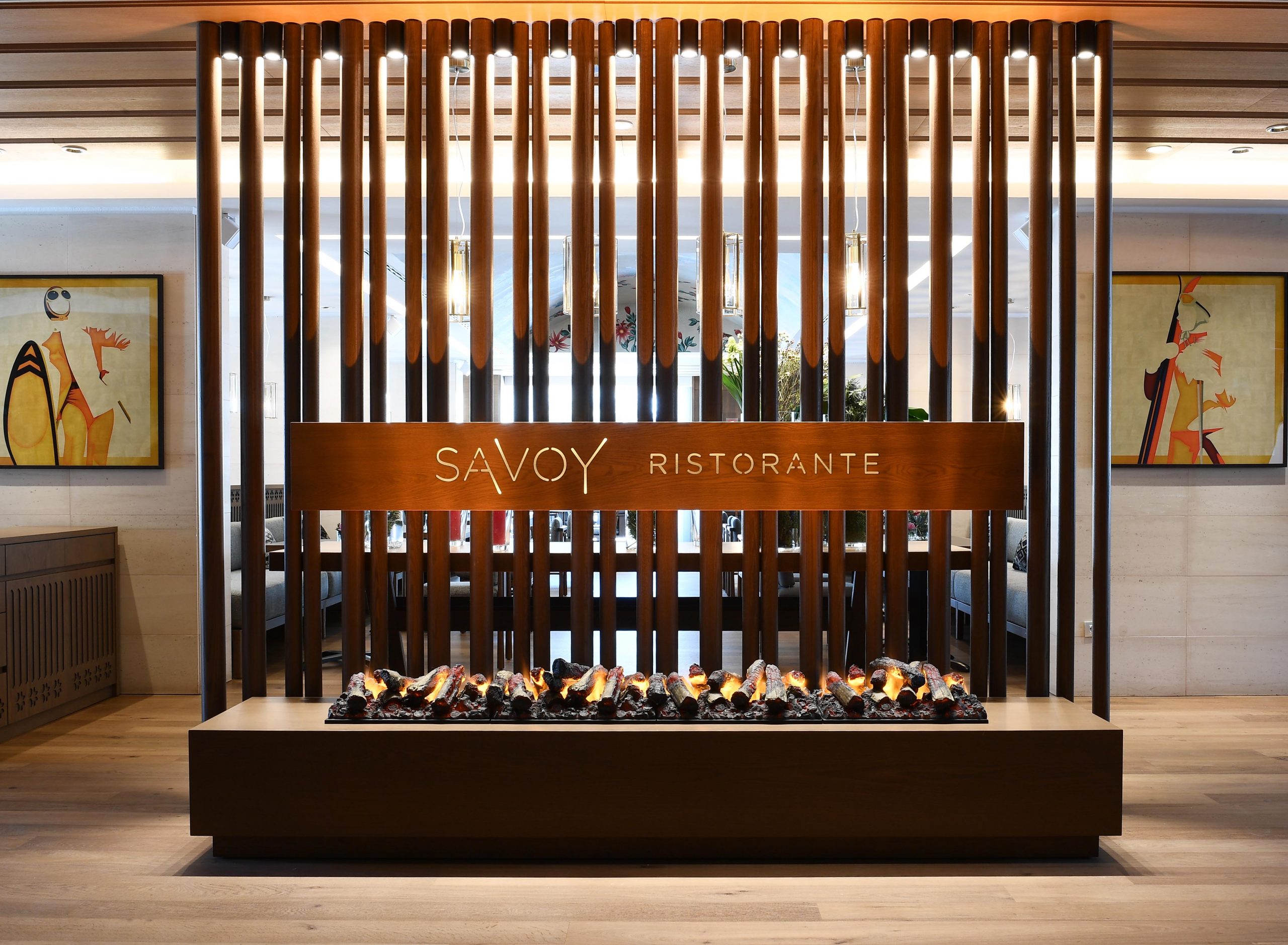
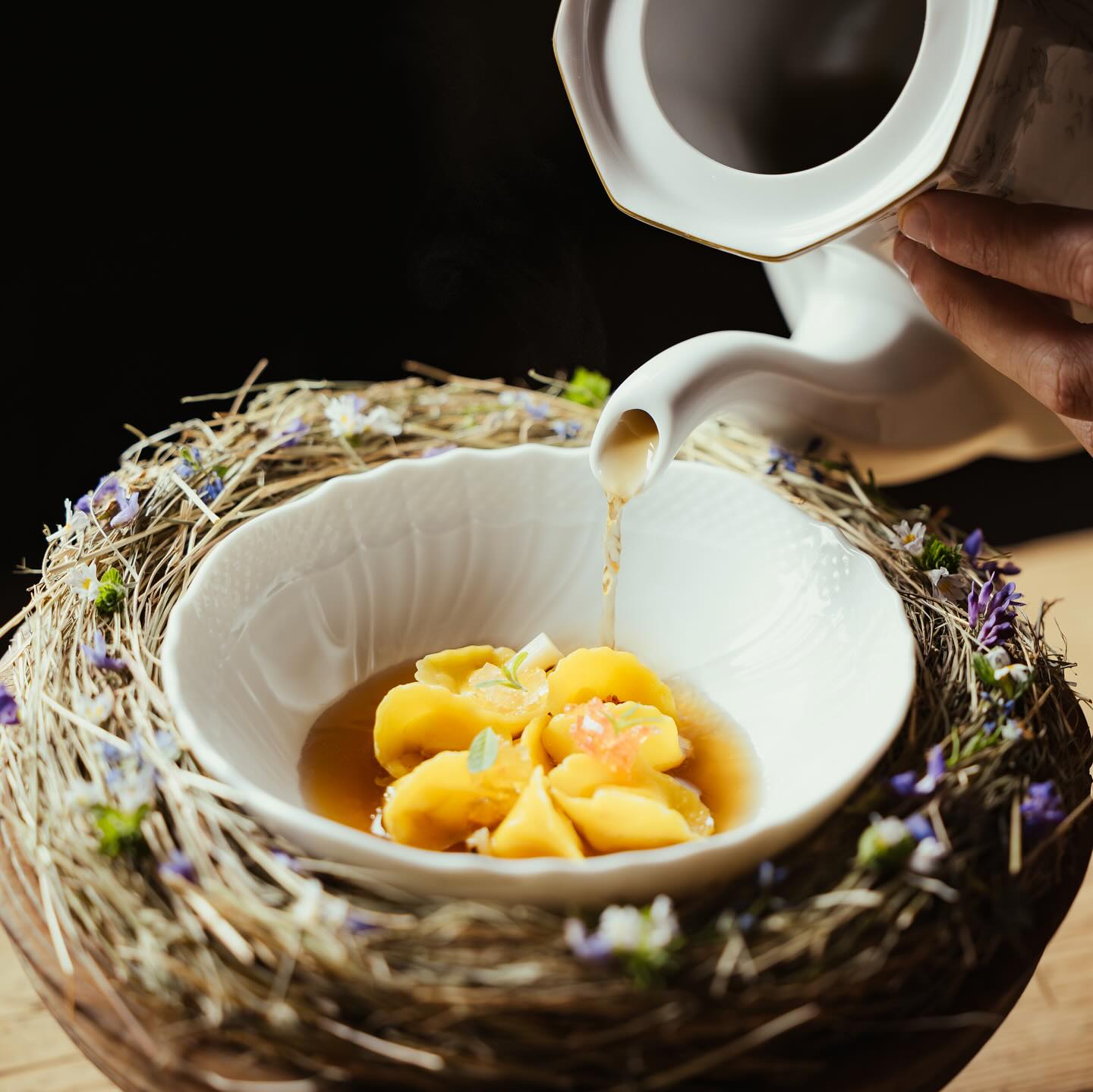
Transcending its strategic location, the Grand Hotel Savoia has evolved by 2026 into a dual-velocity gastronomic hub. The first is the slow, solemn pace of the Savoy Restaurant. Here, beneath high ceilings and crystal chandeliers, the ritual of grand European hôtellerie unfolds—formal yet inviting. Executive Chef Luigi Sarsano directs a room where white-glove service exists not as a flourish, but as core substance. The cuisine acts as a pendulum swinging between international archetypes—Tournedos Rossini, Sole Meunière—and a philological Ampezzo rigor, with red casunziei executed as a commandment. A safe harbor for those seeking the certainty of tradition.
The shift in cadence arrives with the 1224 Restaurant, the definitive protagonist of the Olympic season. Conceived to house the team from Baita Piè Tofana (currently under restyling), it represents a contemporary graft onto the hotel’s historic body. Here, the design shifts registers: lines sharpen, the atmosphere turns intimate. In the kitchen, Federico Rovacchi—a hand refined in the schools of Bartolini and Niederkofler—brings his “refined alpine” vision to the valley floor. Anticipating his return to higher altitudes, Rovacchi works with precision between the solidity of meat and the delicacy of fish, lightening each composition with herbs and fermentations. Low-temperature game with intense jus and winter roots find an unprecedented urban showcase here.
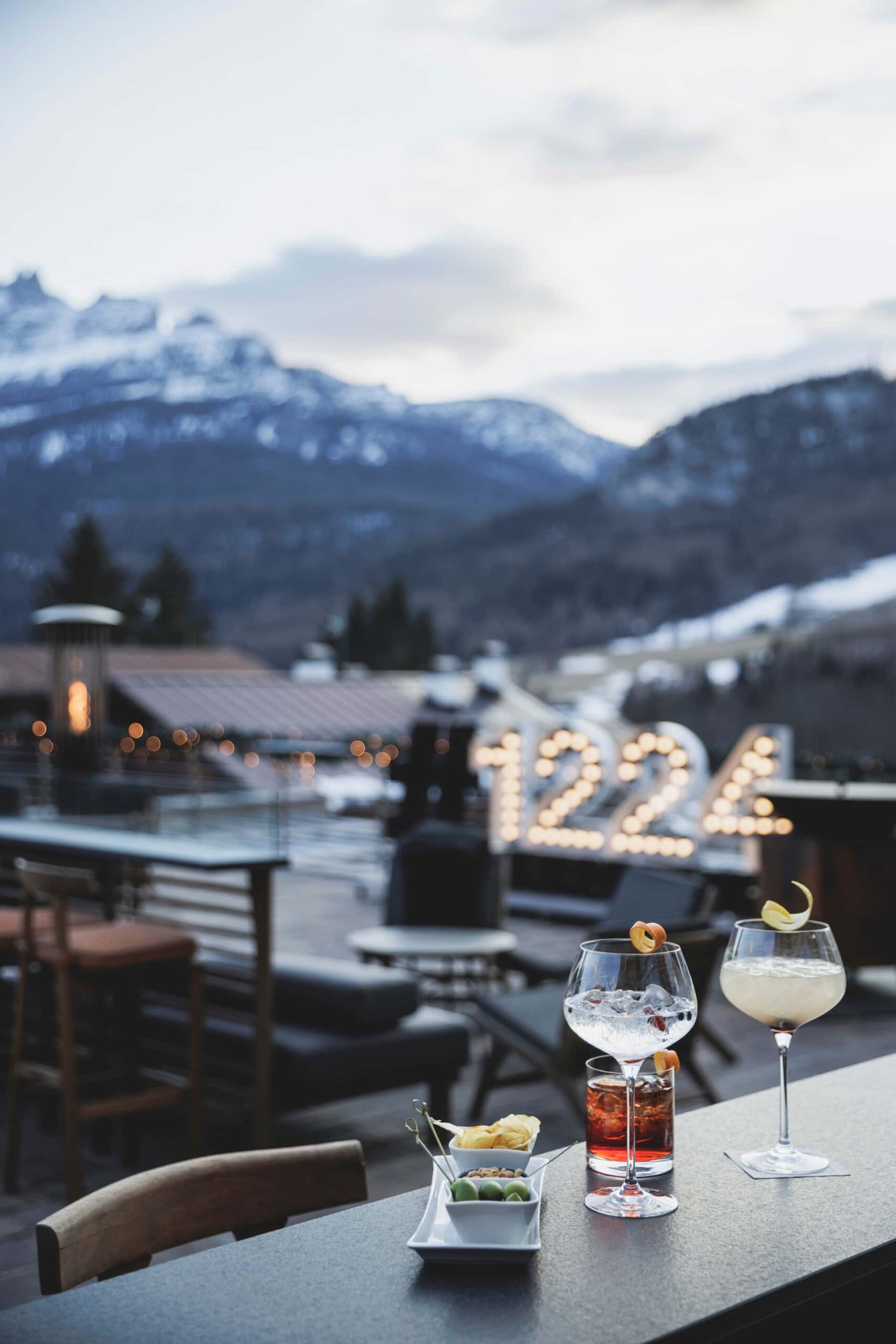
The final seal belongs to the 1224 Terrace and Bar Lounge. Facing the Dolomites head-on, it serves as the definitive après-ski reference point, where cocktails are crafted with the same sartorial care reserved for the menu.
BAITA FRAINA: THE GUARDIAN OF AMPEZZO IDENTITY
On the slopes of Faloria, the Menardi family preserves an authentic alpine soul. Concrete cuisine, service rivaling urban giants, and a 600-label cellar: a rarity at these altitudes.
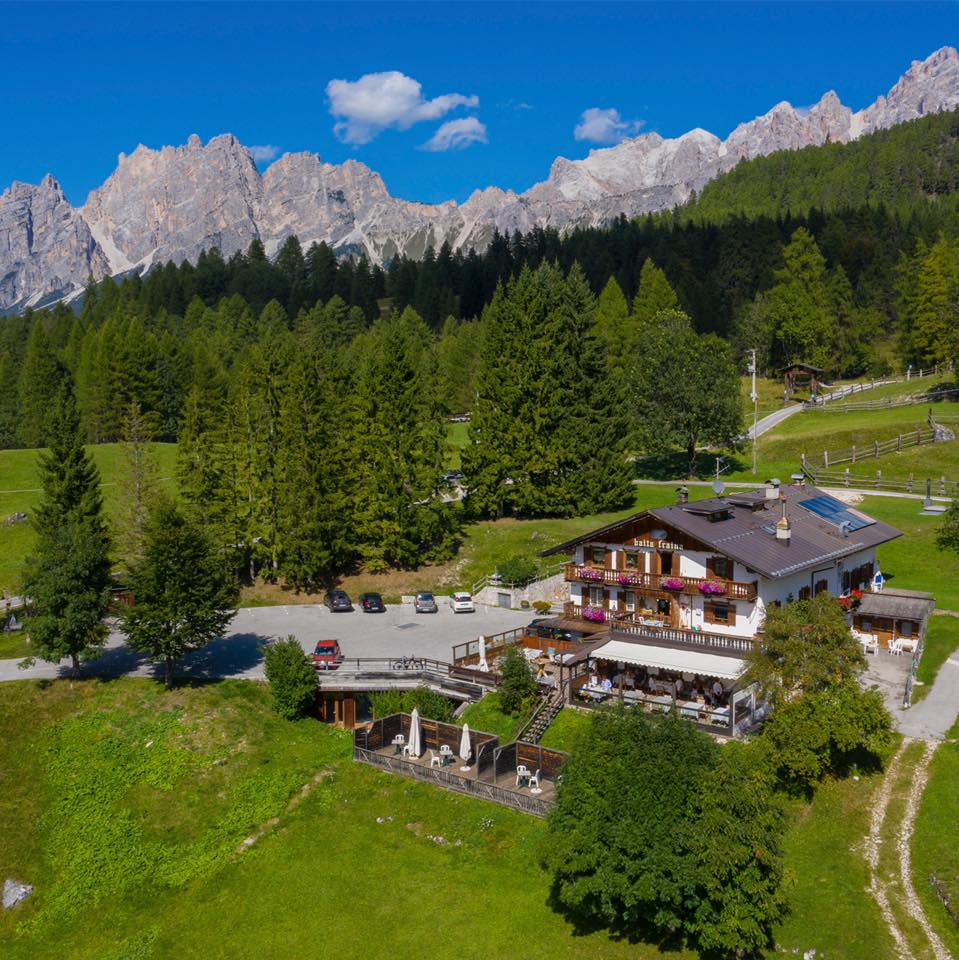
Tucked away among the larches, just four kilometers from Cortina, Baita Fraina guards a rigorous, authentic alpine identity. Under the guidance of the Menardi family for nearly fifty years, this address embodies the essence of Ampezzo architecture—distilled and stripped of superfluous ornament. It stands as a bastion of continuity in a Cortina that often moves too fast.
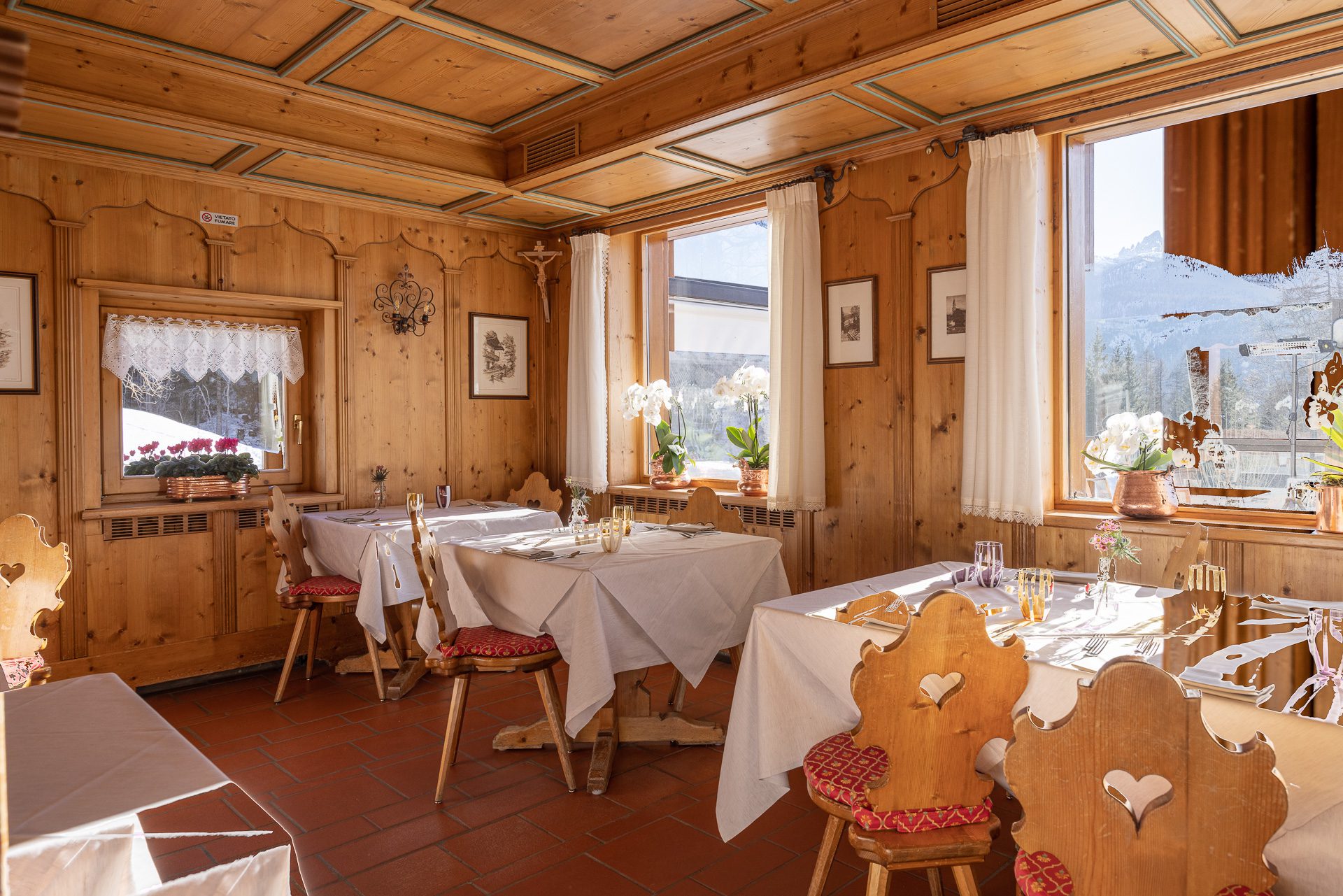
Inside, an intimate sequence of stone-pine stube unfolds, warmed by the thermal mass of majolica muss stoves and curated with antan objects, while the terrace yields to the towering peaks of Faloria. In the dining room, service moves with discretion—professional, attentive, calibrated. One returns here to rediscover a domestic dimension and a hospitality that has achieved legendary status.
Under the direction of Luca Menardi—the family’s third generation—the kitchen undergoes an evolution marked by continuity. Eschewing disruption, Menardi offers a contemporary reading of tradition through modern cooking techniques and a rigorous selection of raw materials.
The dishes belong to the collective Ampezzo memory, yet are executed with a newfound lightness and aesthetic precision. Signature compositions, such as the suckling pig stracotto ravioli with chanterelles and roasting jus, encapsulate this philosophy: intense flavors, perfected textures, elegant presentation. Game—deer, roe deer, chamois—is treated with reverential respect, prepared in cuts that preserve succulence and paired invariably with sponcio corn polenta and local fungi.
Equally sophisticated is the oenological offering, bolstered by the family’s management of Enoteca Cortina in the town center; the cellar boasts over 600 labels, ranging from significant vintages to the great classics.
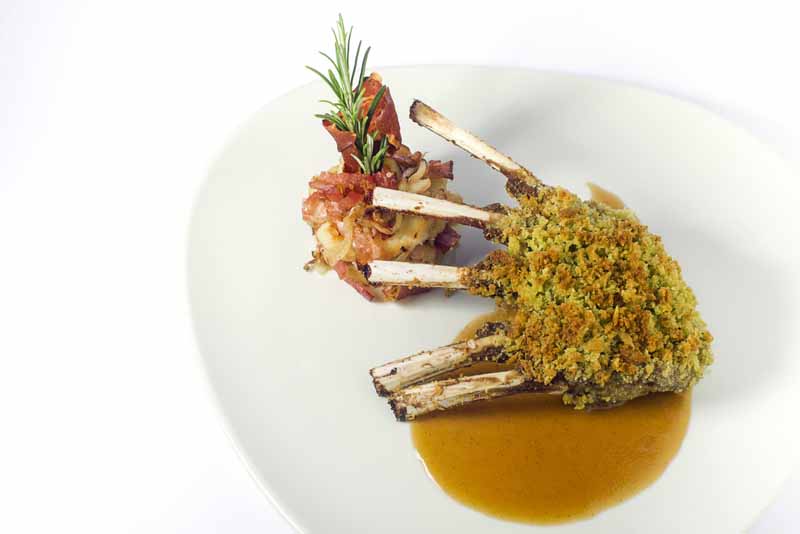
AL CAMIN: SUBSTANCE DEFINED BY THE HEARTH’S GLOW
Unvarnished hospitality meets a cuisine of pure substance: the gourmet domain of Fabio Pompanin.
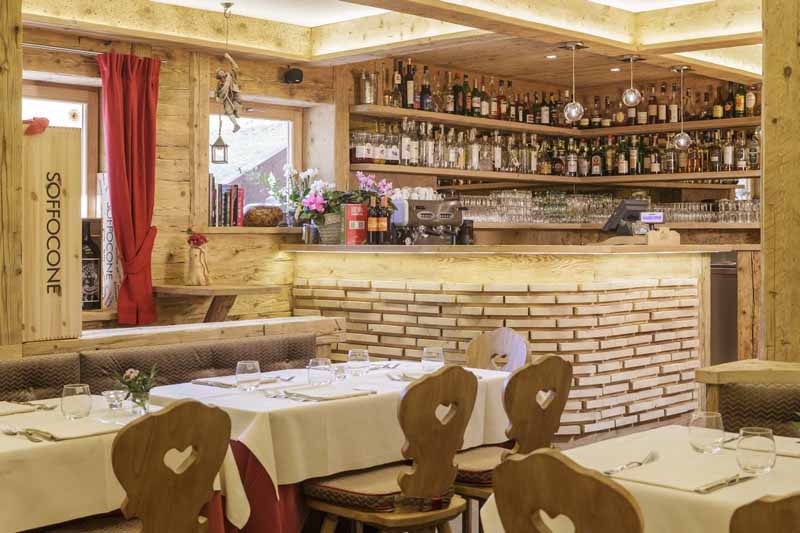
Tracing the Alemagna road through Alverà, Al Camin asserts itself as a bastion for those seeking concrete flavors within a taut, intimate envelope. Modern alpine furnishings and expansive glazing delineate a relaxed interior, where the service—orchestrated by Pompanin’s wife, Lorena—greets the guest with a quintessentially Ampezzo frankness, dissolving the distance between stranger and home.
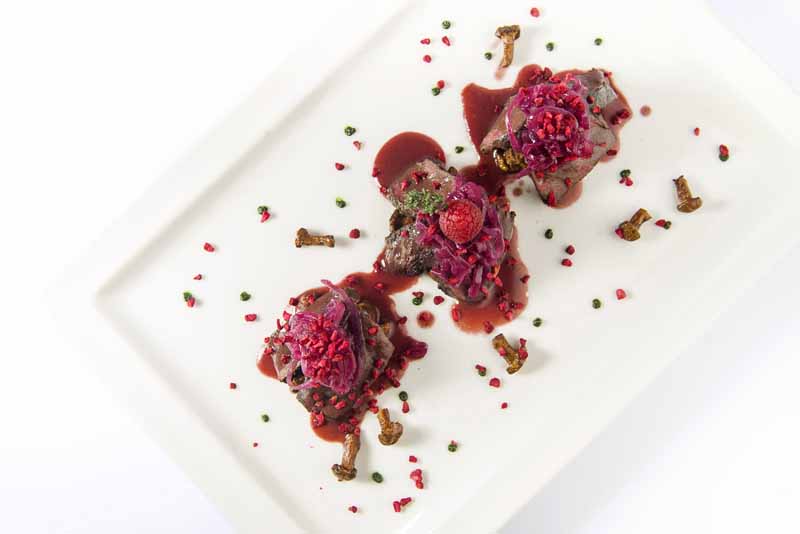
In the kitchen, chef-patron Fabio Pompanin articulates a vision that mirrors his own persona: generous, direct, and technically flawless, stripped of superfluous intellectualism. The menu navigates the territory with decisive strokes, allowing for the occasional, calibrated exotic detour. Attesting to a profound sensitivity for game is the warm pheasant salad with crisp vegetables, while the first courses—ranging from wild herb gnocchi to porcini tagliatelle—strike directly at the core of flavor. Among the mains, the venison tagliata with raspberries remains an immovable classic: the primal iron of rare meat balanced by the fruit’s sharp acidity.
Rounding out the experience is the cellar, a personal construction by the chef—himself a devoted sommelier—who prioritizes labels capable of engaging in a peer-to-peer dialogue with a cuisine of such unapologetic substance.
EL BRITE DE LARIETO: GROUND ZERO OF THE AMPEZZO SUPPLY CHAIN
From stable to plate without mediation: the “agri-kitchen” and Piccolo Brite creamery define the Gaspari family’s circular system at 1,700 meters.
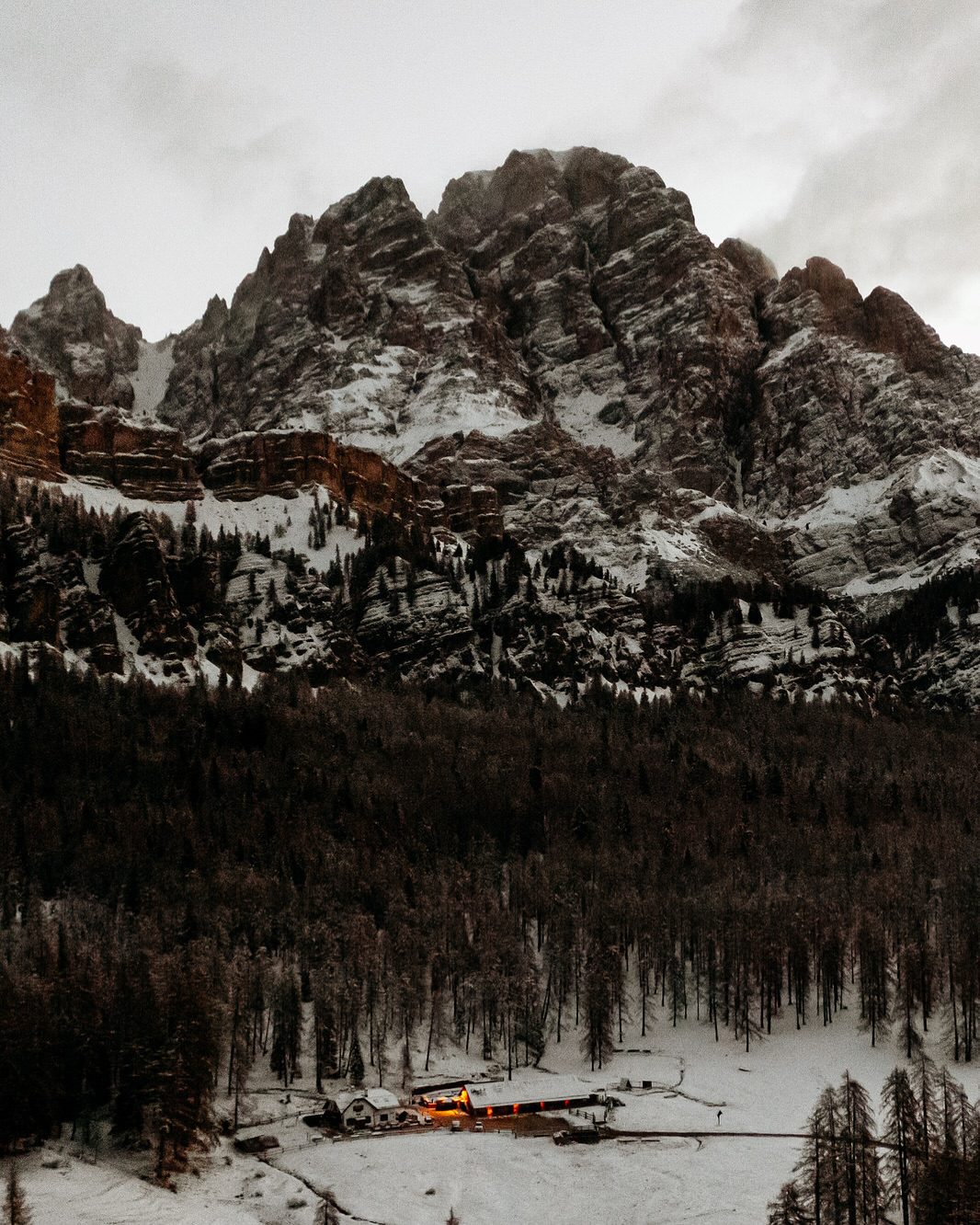
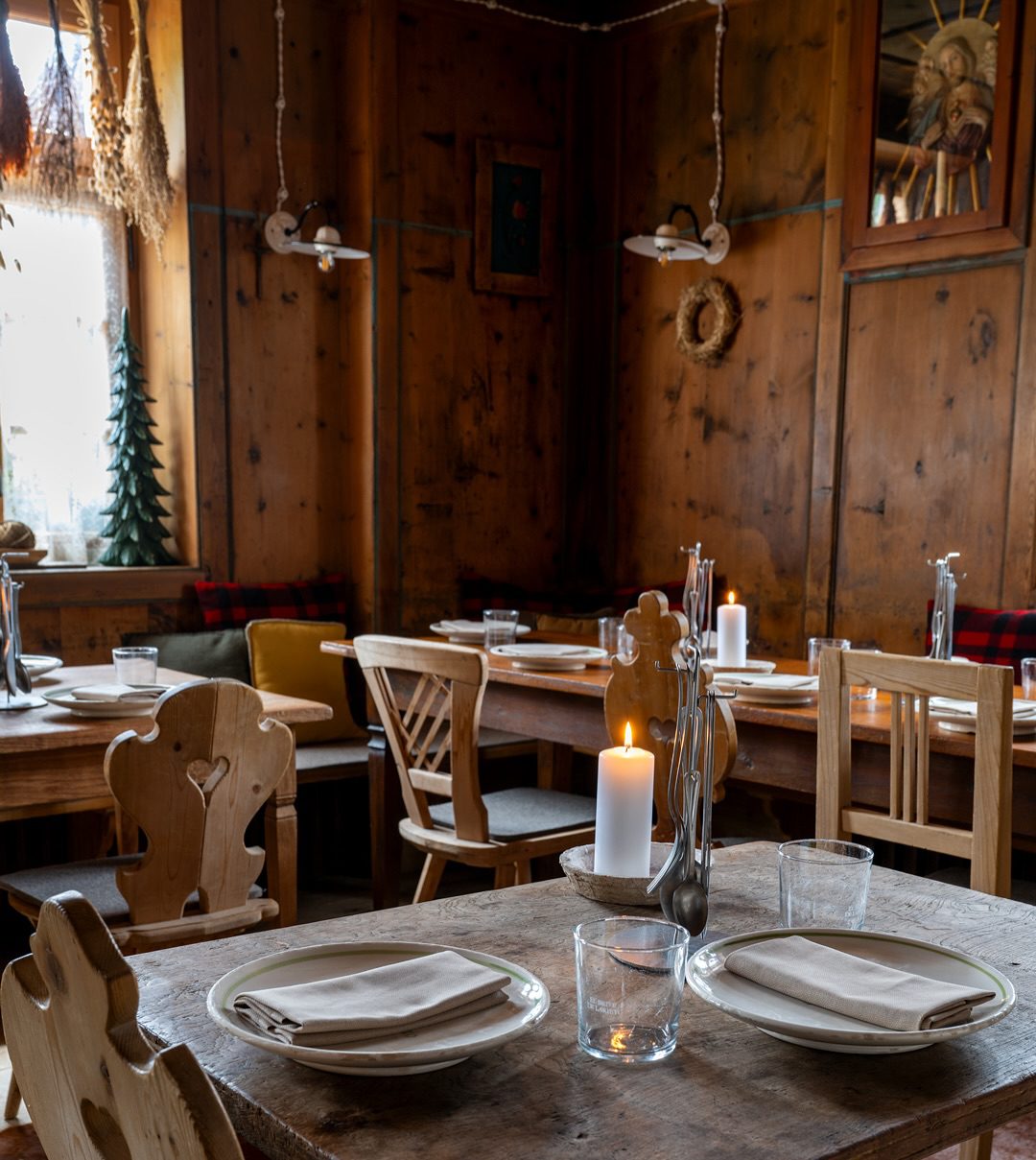
Located at Larieto, along the ascent toward Passo Tre Croci, El Brite de Larieto marks the operational genesis of the Gaspari family—the primordial nucleus predating the conceptual evolution of SanBrite. Emerging from the restoration of a 1930s barn and a decommissioned stable, the structure sits within a larch forest dominated by Monte Cristallo. Inside, the functional traits of local rural architecture endure: timber floors, massive benches, and wood-burning stoves delineate rooms where rusticity remains a structural element, never a decorative one. Outside, the terrace spills directly onto the pastures—a natural extension of the interior during the warmer months.
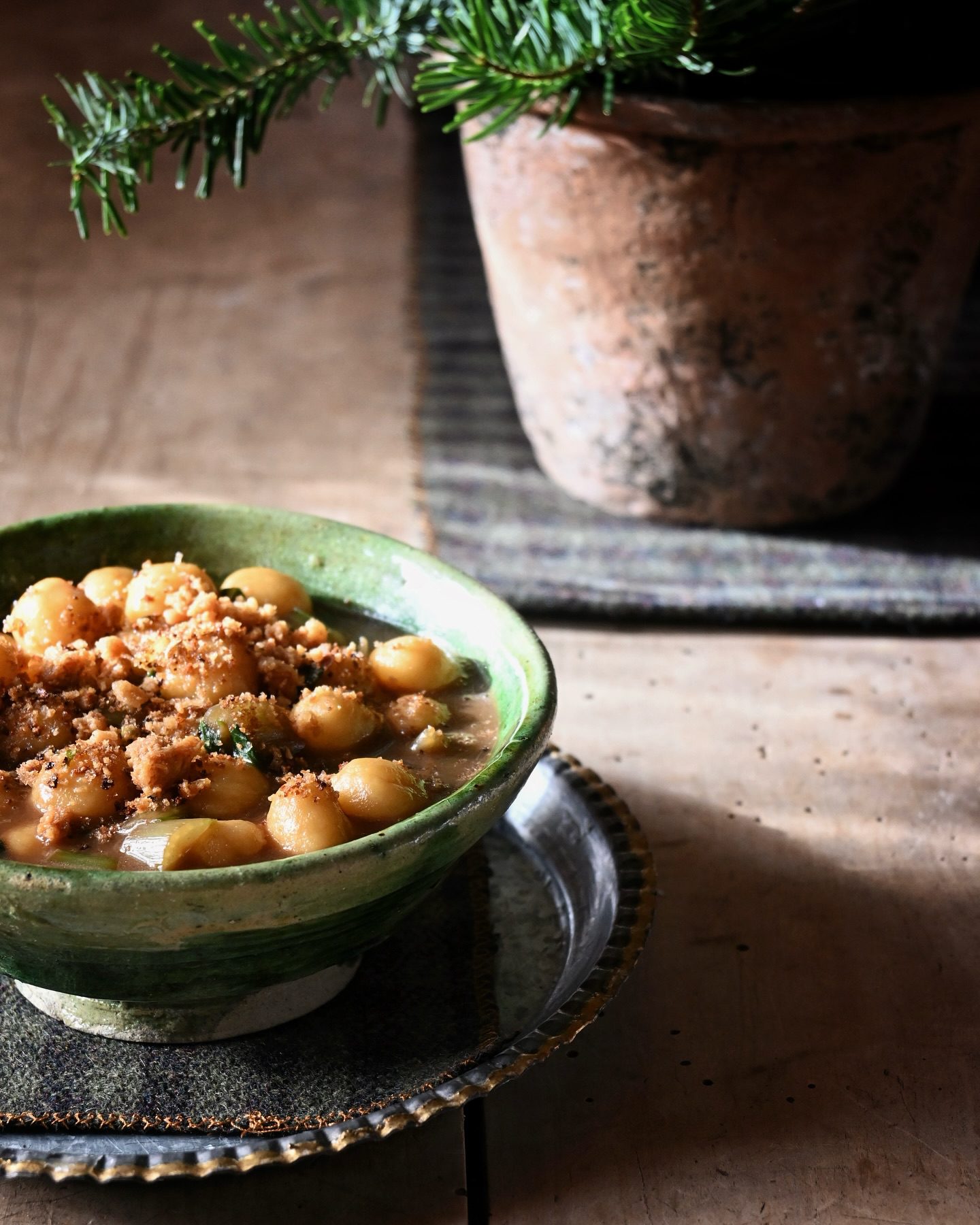
The cuisine of El Brite de Larieto represents the absolute zero of the short supply chain: everything reaching the table is self-produced, from cheeses and charcuterie to meats and vegetables. Whipped mountain butter, served as a welcoming gesture with warm house-made bread, anticipates platters of speck and aged cheeses—Latteria, Fermentino, and Dolcevita—that synthesize local husbandry history on the plate. Riccardo Gaspari articulates this raw matter by drawing from timeless Ampezzo recipes: pressed canederli, casunziei, and sponcio corn polenta accompany the pork and beef—Pezzata Rossa and Grigio Alpina breeds—born and raised on-site.
Adjacent to the restaurant operates Piccolo Brite, the creamery and workshop serving as the productive engine for the entire chain. Here, milk drawn from the neighboring stables undergoes daily transformation into raw-milk products, yogurt, and butter, while the cellars house the curing of meats. The speck, juniper-smoked, follows aging cycles ranging from six months to a year, flanked by coppa and pancetta. Piccolo Brite functions not merely as the restaurant’s larder, but as an autonomous boutique, rendering the tangible results of stable work accessible to the public.
Governing the complex is the synergy between Riccardo Gaspari and Ludovica Rubbini. While Gaspari supervises the agro-technical and culinary sectors—ensuring continuity between livestock and dish—Rubbini coordinates the dining room and cellar, applying a managerial approach that prioritizes human resources and service precision without formality.
EL CAMINETO: THE NEW ERA OF “MELONCINO”
At the base of the Tofane, the Majestas group’s management refreshes the environment while anchoring the experience in the expertise of Chef Riccardo Rasina and his iconic onion spaghetti.
Commanding a panoramic perch along the ascent toward Passo Giau, El Camineto stands as a structural chronicle of Dolomite dining. Founded in 1968 and governed for decades by the Melon family—a tenure earning it the historic moniker “Meloncino”—the restaurant has recently transitioned into the orbit of Flavio Briatore’s Majestas group. This acquisition has introduced a stylistic realignment and an international managerial cadence, distilling the interiors without eroding the building’s essential identity. Timber and active hearths remain the protagonists of a space that bridges high-tier exclusivity with the raw, immediate atmosphere of the après-ski return.
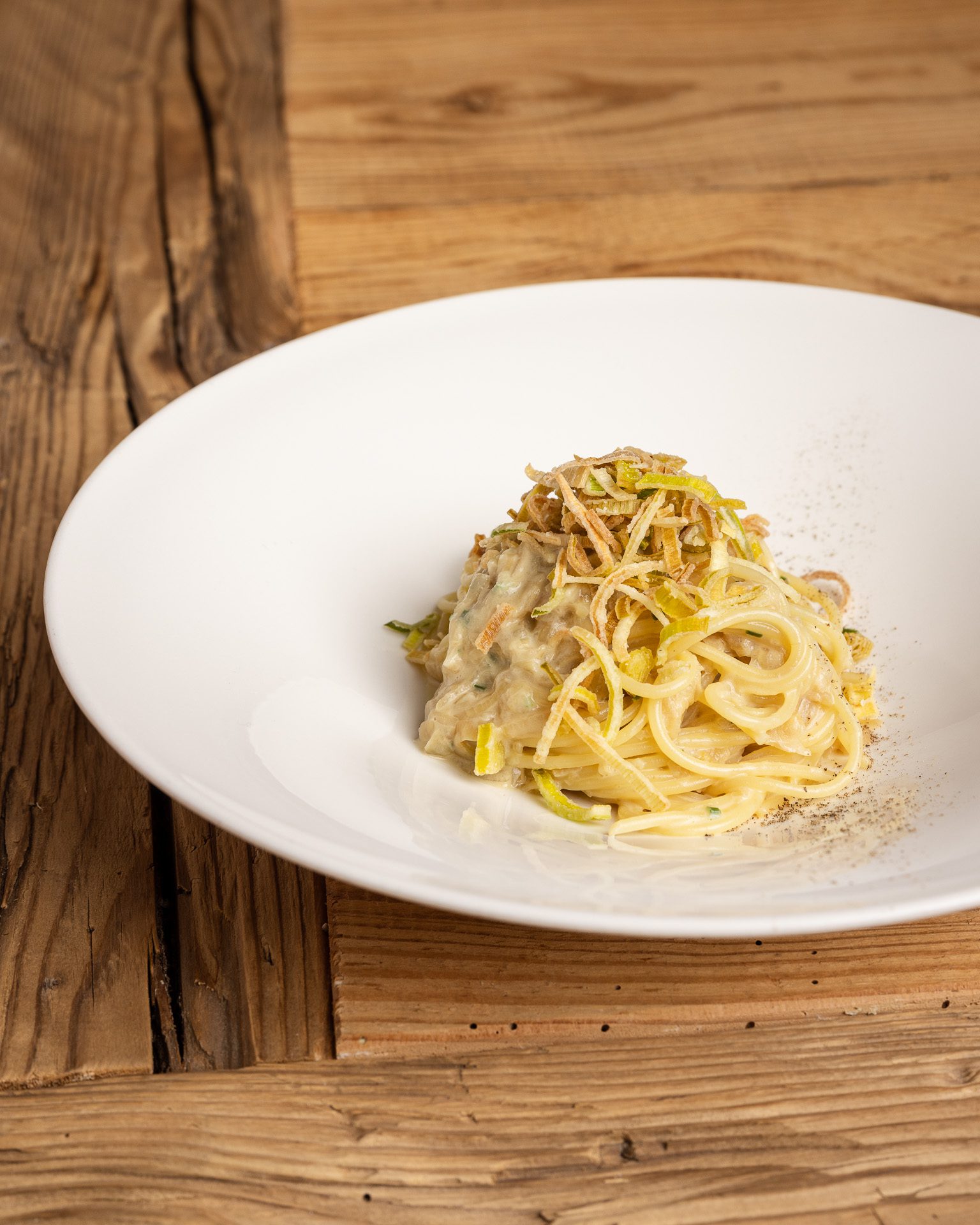
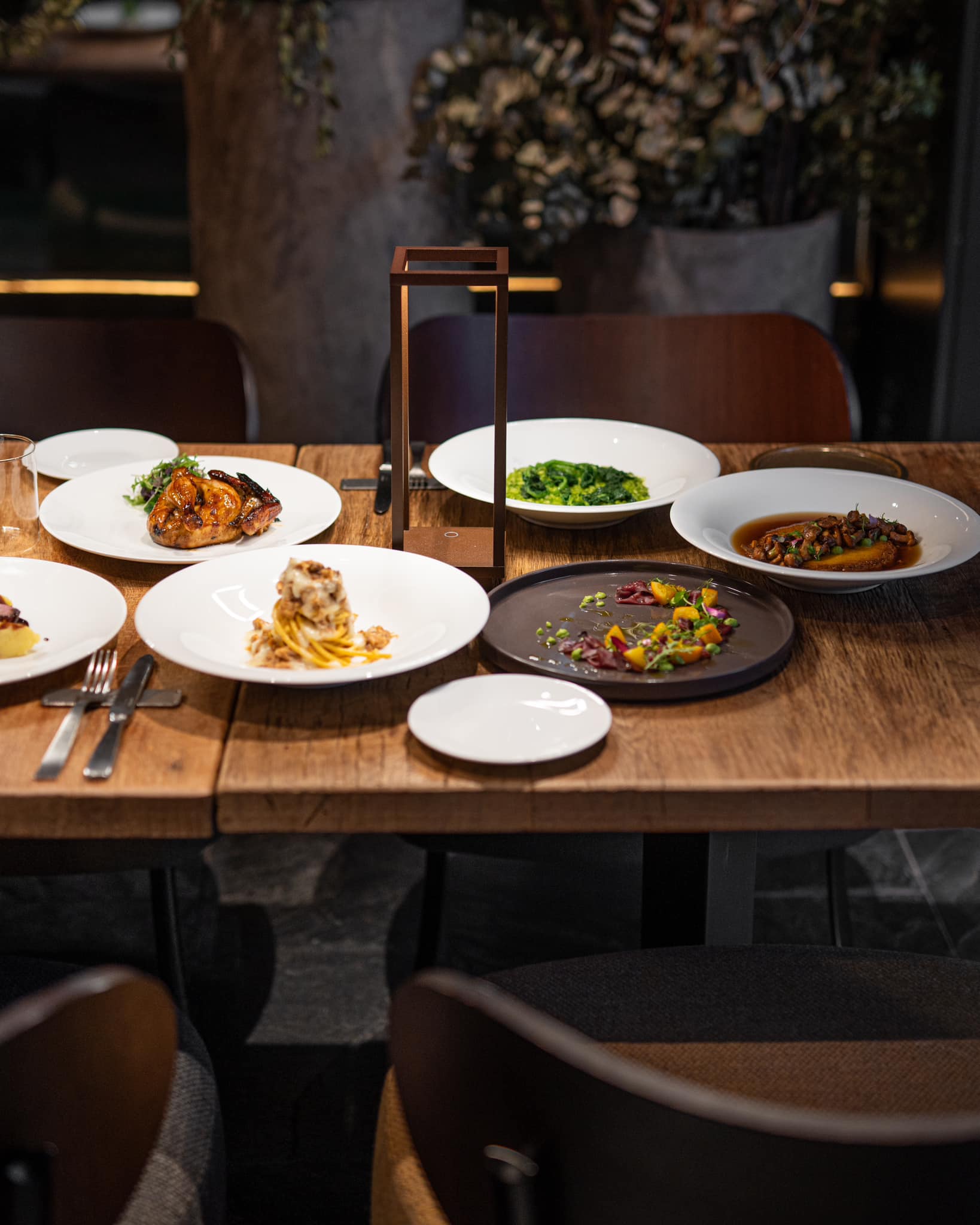
On the gastronomic front, the new ownership opts for continuity, retaining Chef Riccardo Rasina at the helm of the brigade. His kitchen articulates a solid, modern Italian trajectory, bypassing creative excess to focus on raw material integrity and the concrete nature of flavor. Remaining untouchable within the menu is the house signature: the onion spaghetti, a classic executed with the surgical technique required to achieve a sweet, creamed consistency. Alongside this emblem, the card traverses handmade pastas—truffle tagliolini and domestic ravioli—to a selection of premium grilled meats.
DE LEN: RADIANT ALPINE ELEGANCE
Within the shell of the former Hotel Impero, Andrea Ribaldone’s strategic oversight and ancient oak interiors delineate a versatile format, spanning from morning service to the laboratory of the cocktail bar.
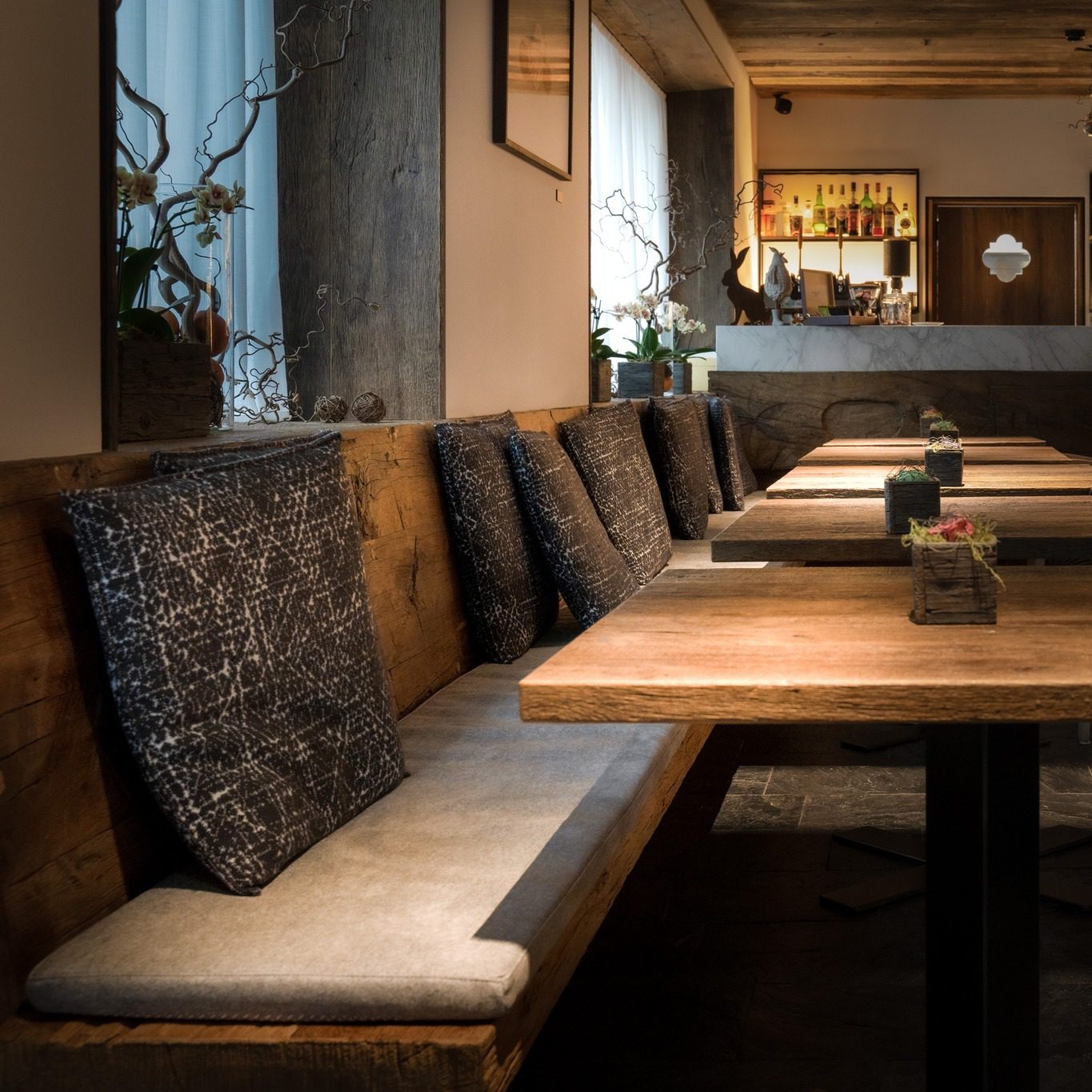
Situated on Via Cesare Battisti—secluded yet immediate to Corso Italia—De Len constructs its identity around raw matter. The name, “of wood” in Ladin, serves as a promise fulfilled: a casing of ancient oak skins nearly every surface, ceiling, and furnishing, sketching an intimate environment of contemporary alpine elegance.
Conceived as a fluid volume, the space sheds its skin to match the rhythms of the day. Operative from breakfast through the late evening, the venue eventually transitions to the below-ground level (–1), which functions as a true laboratory of mixology. Here, regional botanicals and territorial extracts form the foundation for unprecedented alchemy, resulting in cocktails of classical structure but startling aromatic profiles.
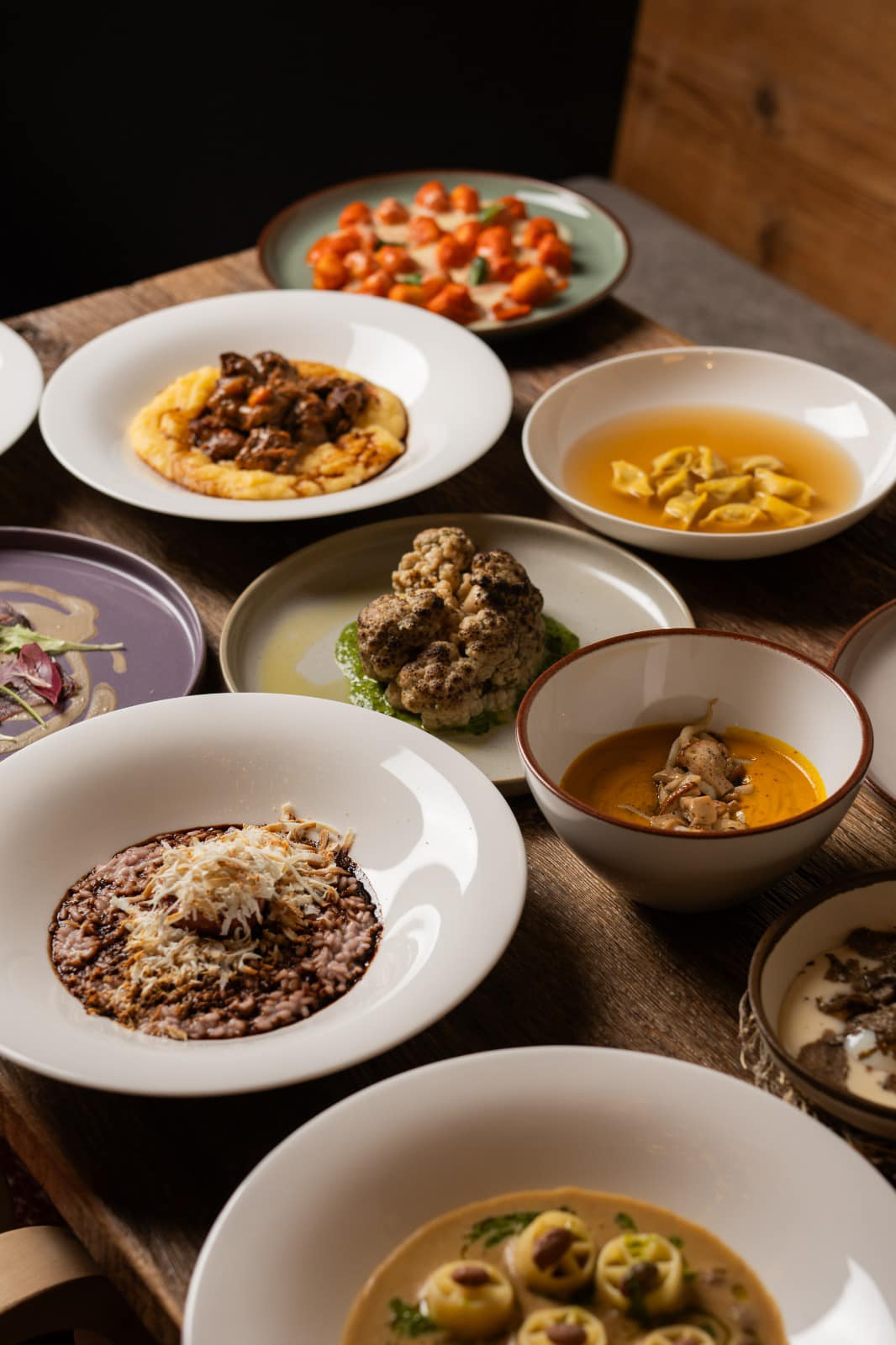
Under the supervision of Andrea Ribaldone and executed by a young, high-velocity resident brigade, the gastronomic line offers a creative reinterpretation of Ampezzo flavors. Modern techniques are deployed to extract the essence of strictly local, curated raw materials. This concept mutates throughout the day: from agile lunches to the evening service, where the menu organizes itself around four cardinal elements—vegetables, meat, fish, and cheese.
Eschewing the exhaustion of infinite lists, the selection remains focused and researched. Essential to the experience are the Bigoli with veal ossobuco ragù and Saporito d’Alpeggio fondue. Supporting the plate is a well-structured cellar with a decisive emphasis on organic and biodynamic labels.
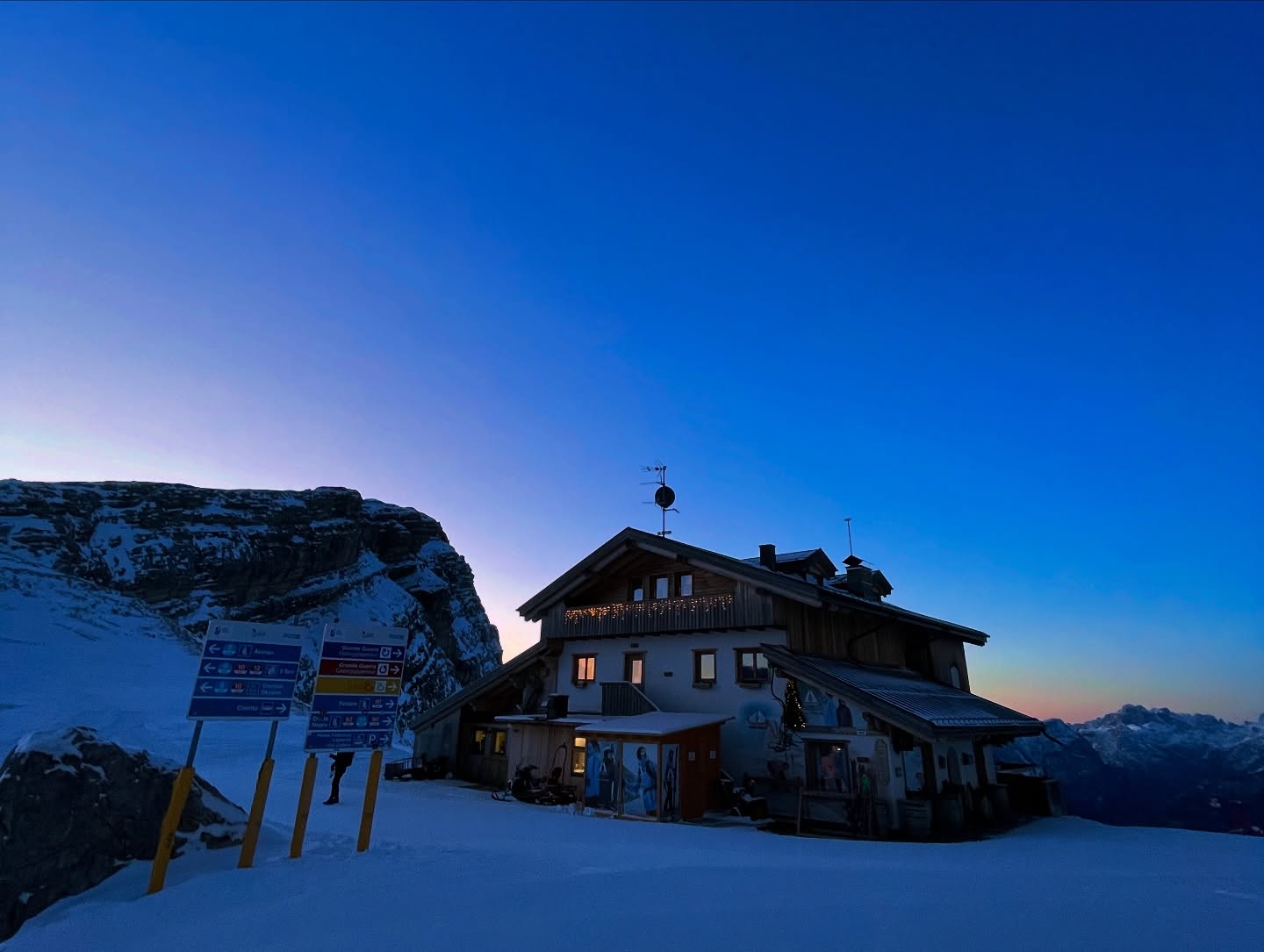
RIFUGIO AVERAU: THE RESTAURANT AT THE EDGE OF THE UNIVERSE
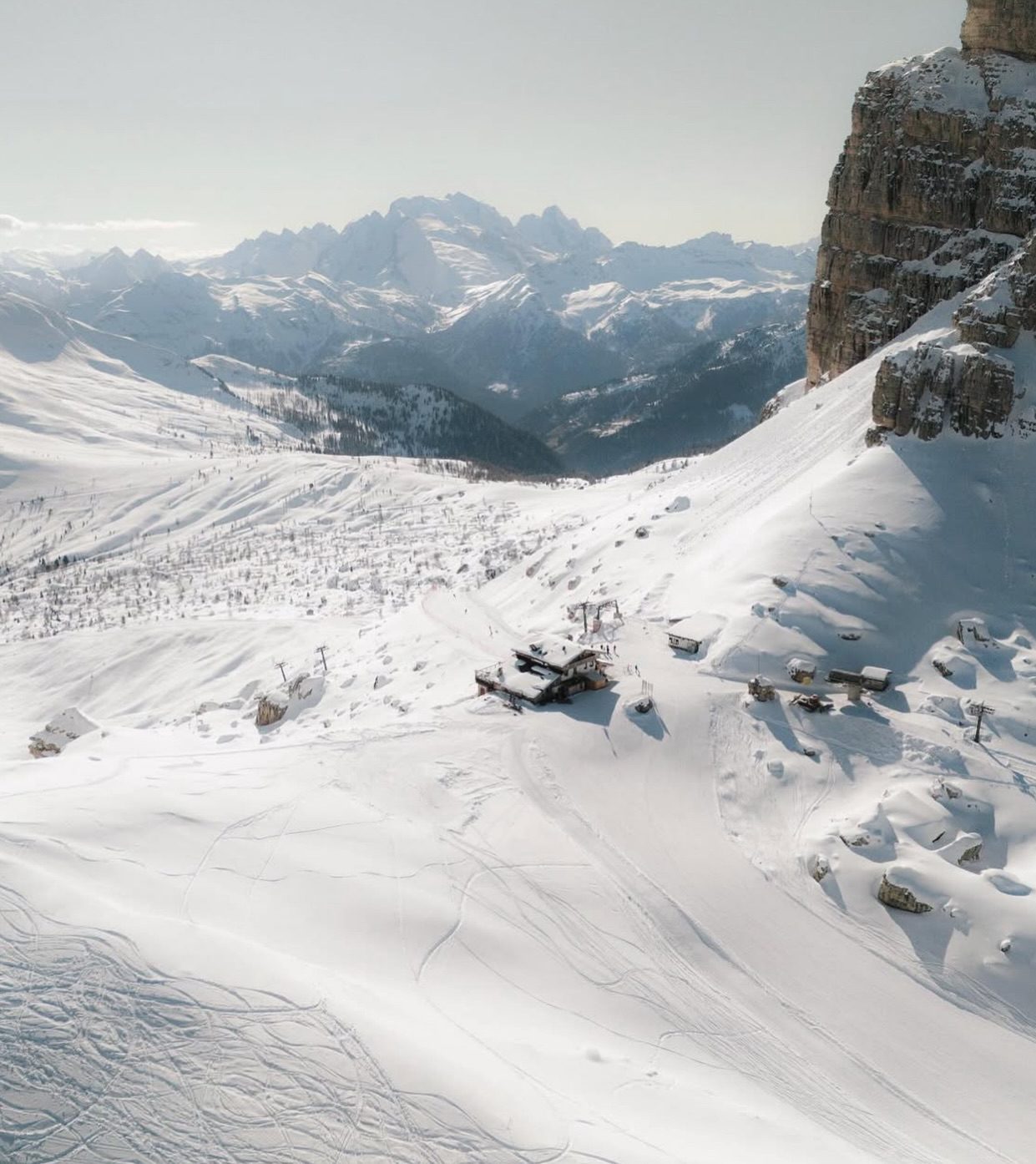
Perched upon the Forcella Nuvolau at 2,413 meters, the imprint of Margot and Matteo Siorpaes. Between a cellar honoring Giacomo Tachis, the rite of the Stammtisch, and moonlit descents, high-altitude dining secures its status as an essential pilgrimage.
Situating itself at 2,413 meters on the Forcella Nuvolau—the pivotal axis between the Cinque Torri and Passo Giau—Rifugio Averau stands as a definitive pillar of the Belluno Dolomites. Recognized by the Sunday Times as one of the Alps’ ten premier dining destinations, it is colloquially known as the “Restaurant at the Edge of the Universe,” a moniker justified by its commanding vista over Civetta and Marmolada.
Having served as the domain of Sandro Siorpaes since 1980, the refuge witnessed in 2024 a transition to his children, Margot and Matteo, who have successfully safeguarded the site’s core identity. While Sandro remains a spectral presence—mentor and historical memory—the operational reins are held firmly by this second generation: Margot orchestrating the bar and dining floor, Matteo directing the kitchen brigade.
At the heart of the room, the Stammtisch delineates the social logic of the space. This traditional “friendship table,” reserved for regulars, exists as a social institution symbolizing the Siorpaes’ hospitality, where the radiance of the central hearth transmutes a simple meal into an act of deep collective sharing.
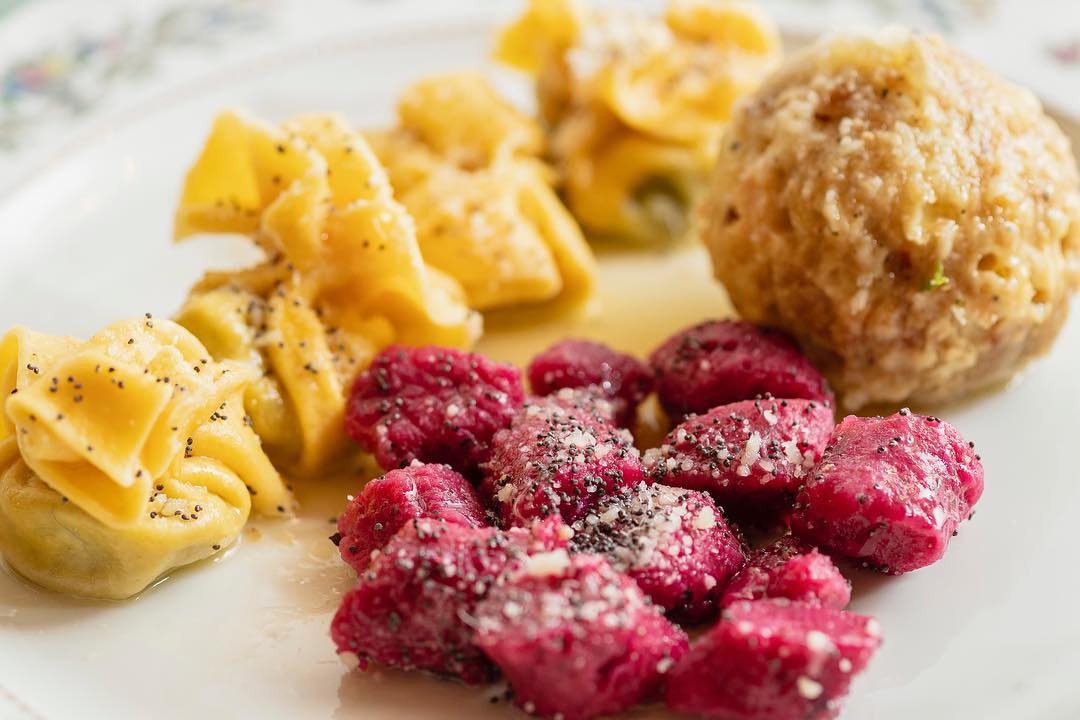
Technically precise and grounded in Ampezzo tradition, the culinary line avoids artifice. Essential are the half-moon casunziei filled with beets and poppy seeds, alternating with porcini and speck pappardelle or the signature cappelli dell’alpino. Concluding the experience is the mandatory Buckwheat cake—laced with walnuts, almonds, and cranberries—steeped in rum.
Startling for such an altitude is the wine list, curated by Matteo and Margot (the former a sommelier, the latter an aspirant). The cellar houses approximately 170 Italian and European labels, punctuated by two specific focal points: a selection dedicated to Vigneti delle Dolomiti IGT and a vertical homage to the legendary oenologist Giacomo Tachis.
During the winter season, on Fridays and Saturdays, high-altitude dining shifts into a cinematic experience. The approach via snowmobile from Rifugio Scoiattoli renders the arrival at the peak a moment of heightened tension—a prelude to an equally evocative finale: the nocturnal descent across solitary slopes, immersed in the absolute silence of the mountain.
RIFUGIO SCOIATTOLI: DINING BEFORE THE CINQUE TORRI MONOLITHS
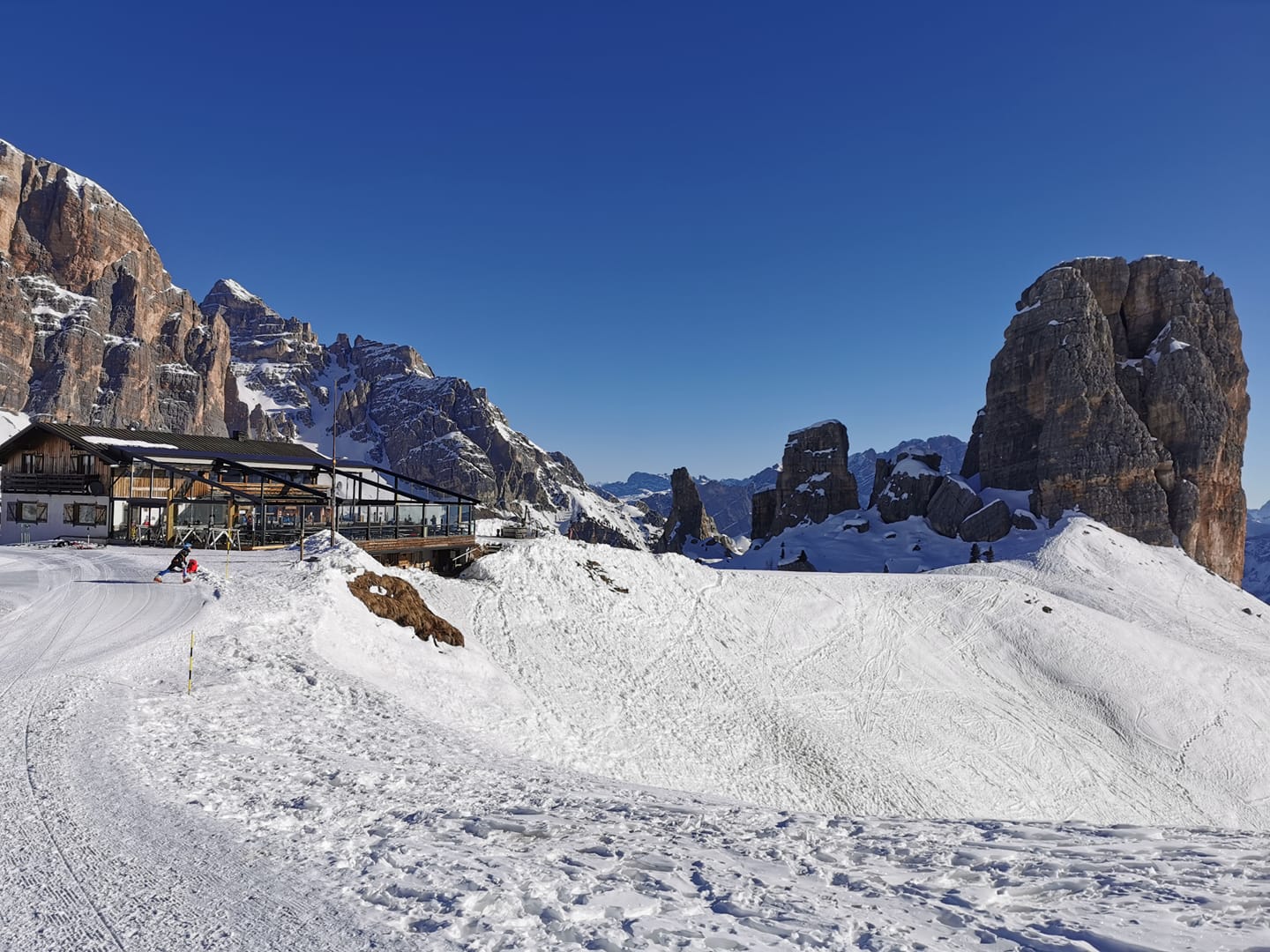
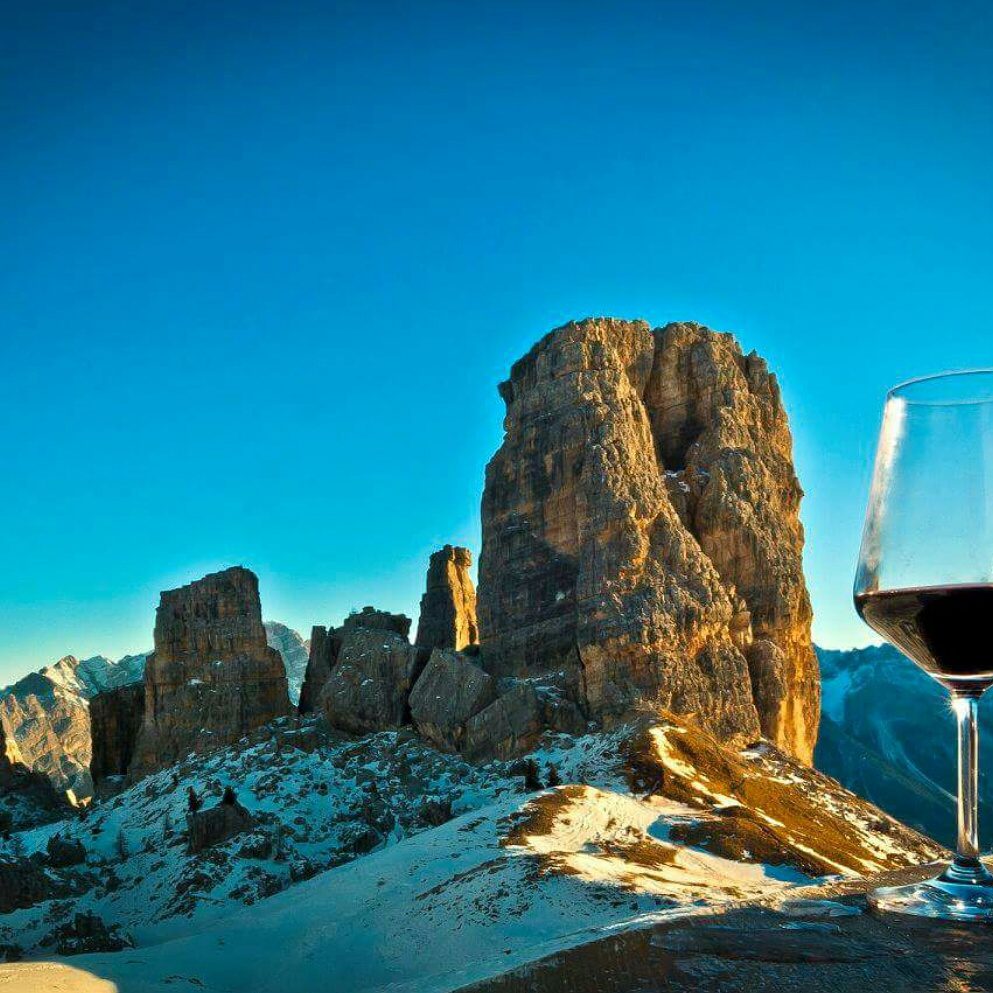
At 2,255 meters, the Lorenzi family’s outpost stands as a tectonic crossroads of taste and vitality. Merging territorial flavors with high-altitude events, it anchors the basin beneath the Cinque Torri.
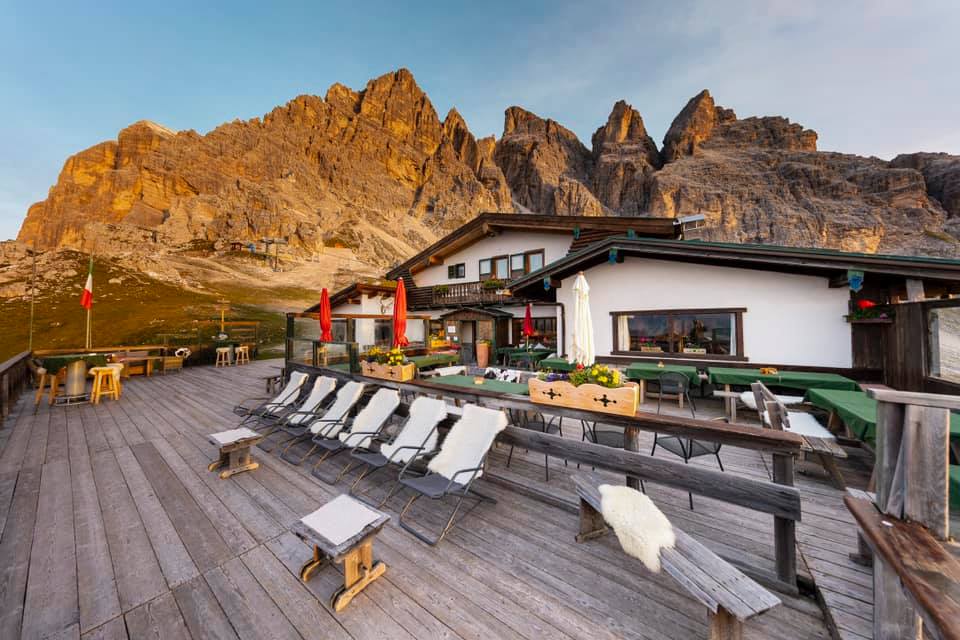
Occupying a privileged vantage point directly facing the Cinque Torri, Rifugio Scoiattoli (2,255 m) acts as a natural proscenium overlooking the Ampezzo valley. Established in 1969 by mountain guide Lorenzo Lorenzi and currently governed by his children, Guido and Claudia, the refuge has navigated a deliberate evolution—merging a vibrant, fashionable pulse with a refusal to abandon its structural substance.
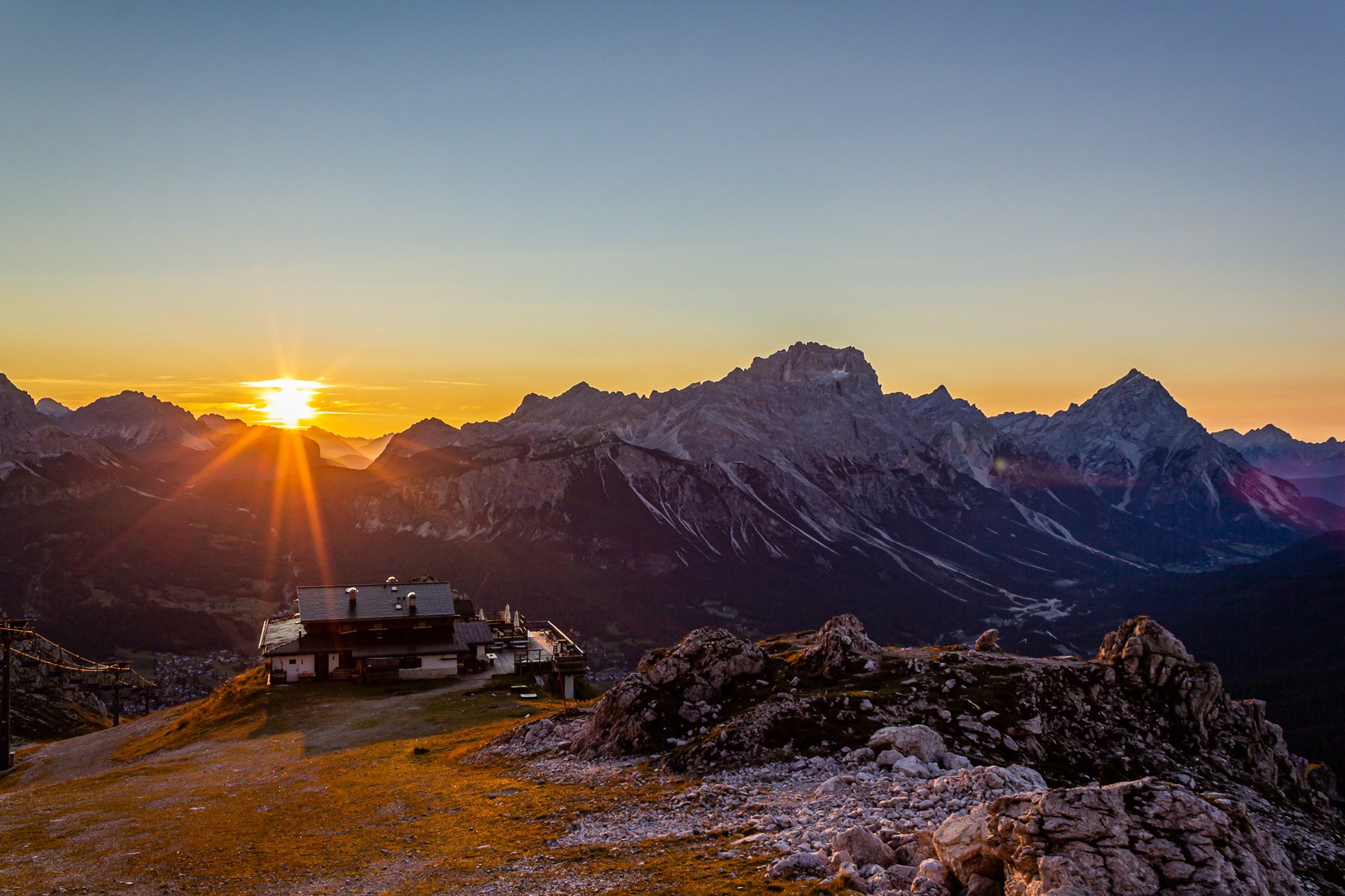
Strategic in its placement, the refuge sits directly on the slopes, integrated into the Super8 Ski Tour and the Great War Circuit. It serves as the primary tactical base for exploring the adjacent Great War Open Air Museum or scaling the renowned climbing walls of the Cinque Torri. Accessible via the 5 Torri chairlift, the site transforms the mountain into a dynamic arena.
Here, the terrace becomes a stage for national-scale events such as “Calici di Stelle”—featuring tasting counters with over 100 labels—and the Cortina Delicious initiatives, ranging from high-altitude concerts to “Stellar Dinners” where the kitchen pivots toward curated tasting menus designed for oenological dialogue.
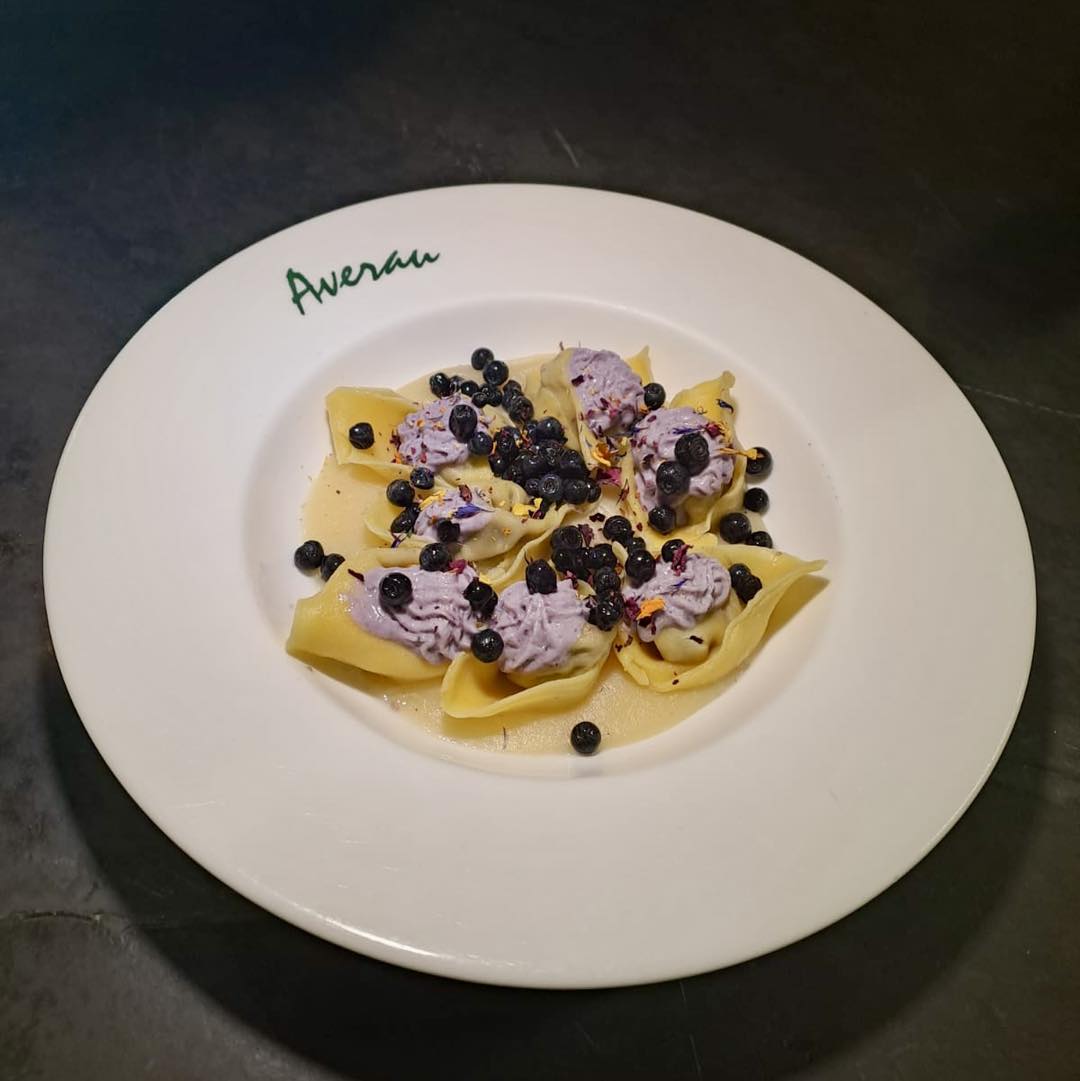
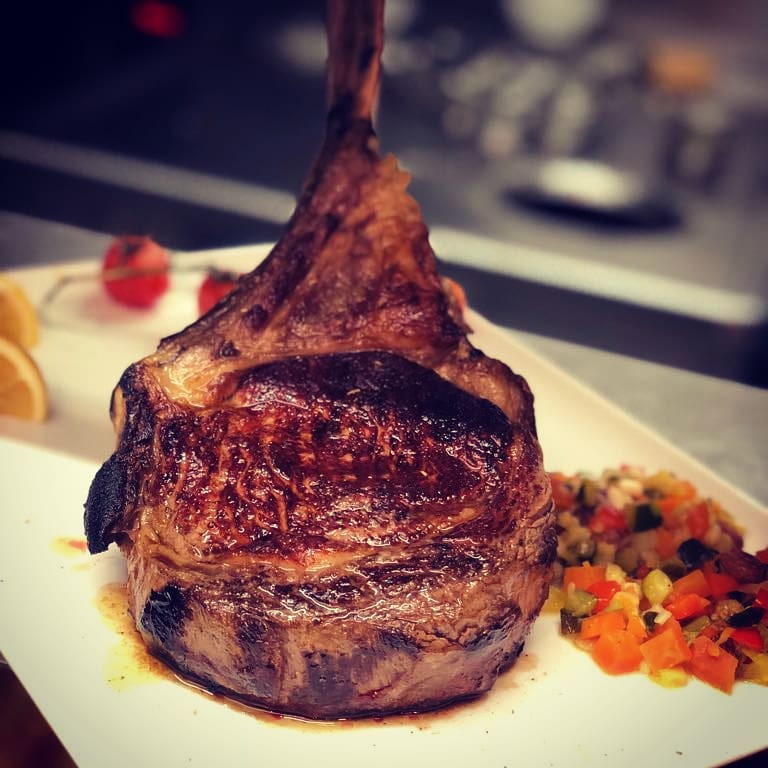
Supervised by the family, the culinary line eschews unnecessary flourishes in favor of an intelligent territorial reading. Essential is the Violette ai sapori di bosco: fresh egg pasta infused with blueberries—granting a deep violet hue and a critical acidic counterpoint—bound by porcini, crisp speck, and a silken cream.
Equally compelling is the variation on the Cotoletta alla Milanese. Here, the breading utilizes Puccia—the traditional cumin-spiced rye bread of the Dolomites. The result is a dark, aromatic, and intensely crisp crust where the cumin lends a perceived lightness to the fry. Served alongside patate all’ampezzana, it stands as the definitive piatto di resistenza. For the finale, Claudia leans into direct indulgence: a chocolate salami enveloped in a warm vanilla crème.
RIFUGIO POMEDES: THE EAGLE’S NEST UPON THE SCHUSS
At 2,303 meters, the Ghedina family guards the memory of Olympic skiing. Sustenance-driven cuisine and a dizzying terrace overlooking the Tofane massif.
Wedged like an eagle’s nest between the crags of the Tofane at 2,303 meters—positioned precisely at the ignition point of the Olympic Schuss—Rifugio Pomedes offers a perspective more aerial than architectural. Under the stewardship of Ruggero and Renata Ghedina, the refuge preserves the legacy of its founder, the legendary mountain guide Luigi “Bibi” Ghedina. The interior remains that of the pure alpine sanctuary: dark timber, vintage mountaineering photography, and the olfactory embrace of a kitchen operating at full throttle. Outside, the terrace serves as the definitive observatory for watching skiers commit to the World Cup’s most technical precipices.
Filtering through the menu is a commitment to uncompromised tradition, bypassing the caprices of modern trends. One arrives here for the flavors of the past, executed with ancestral rigor. Among the finest in the valley are the red casunziei—their thin membranes enclosing a beet filling both sweet and precisely spiced, dressed in a deluge of melted butter and poppy seeds. Abundant and tactile are the Tyrolean platters, weighted with speck, mountain cheeses, and sharp pickles. The goulash, paired with polenta, is dense and dark, slow-cooked until the fiber of the meat dissolves—a thermal necessity for the bite of winter. Pomedes stands as a guarantee of authenticity in a space saturated with history and alpine devotion.
RIFUGIO ANGELO DIBONA: A BALCONY BENEATH THE MYTH
At the base of the Rozes, the fifth generation guards the legacy of the great climber. A dizzying scenery framing a cuisine of unvarnished, genuine substance.
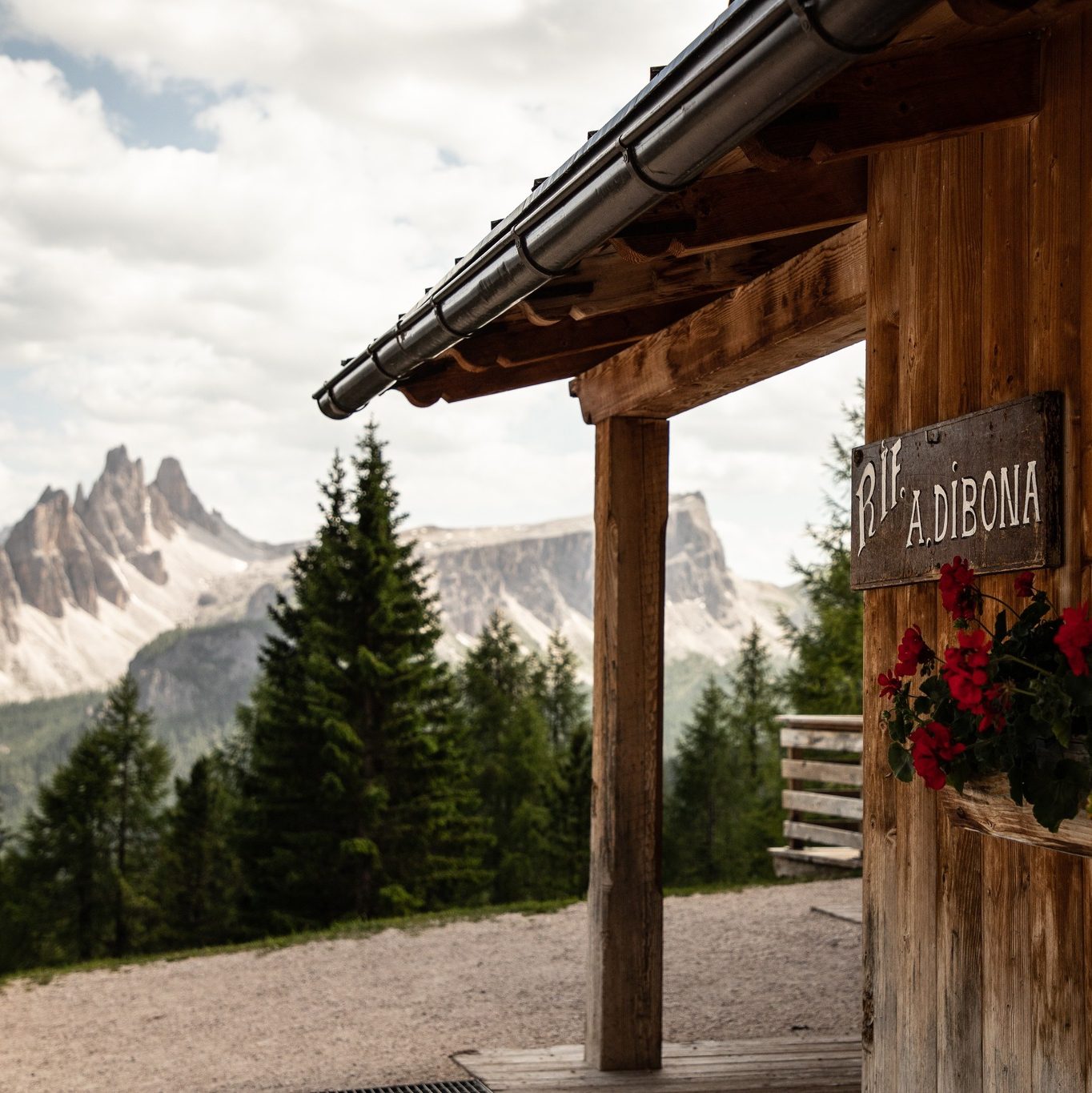
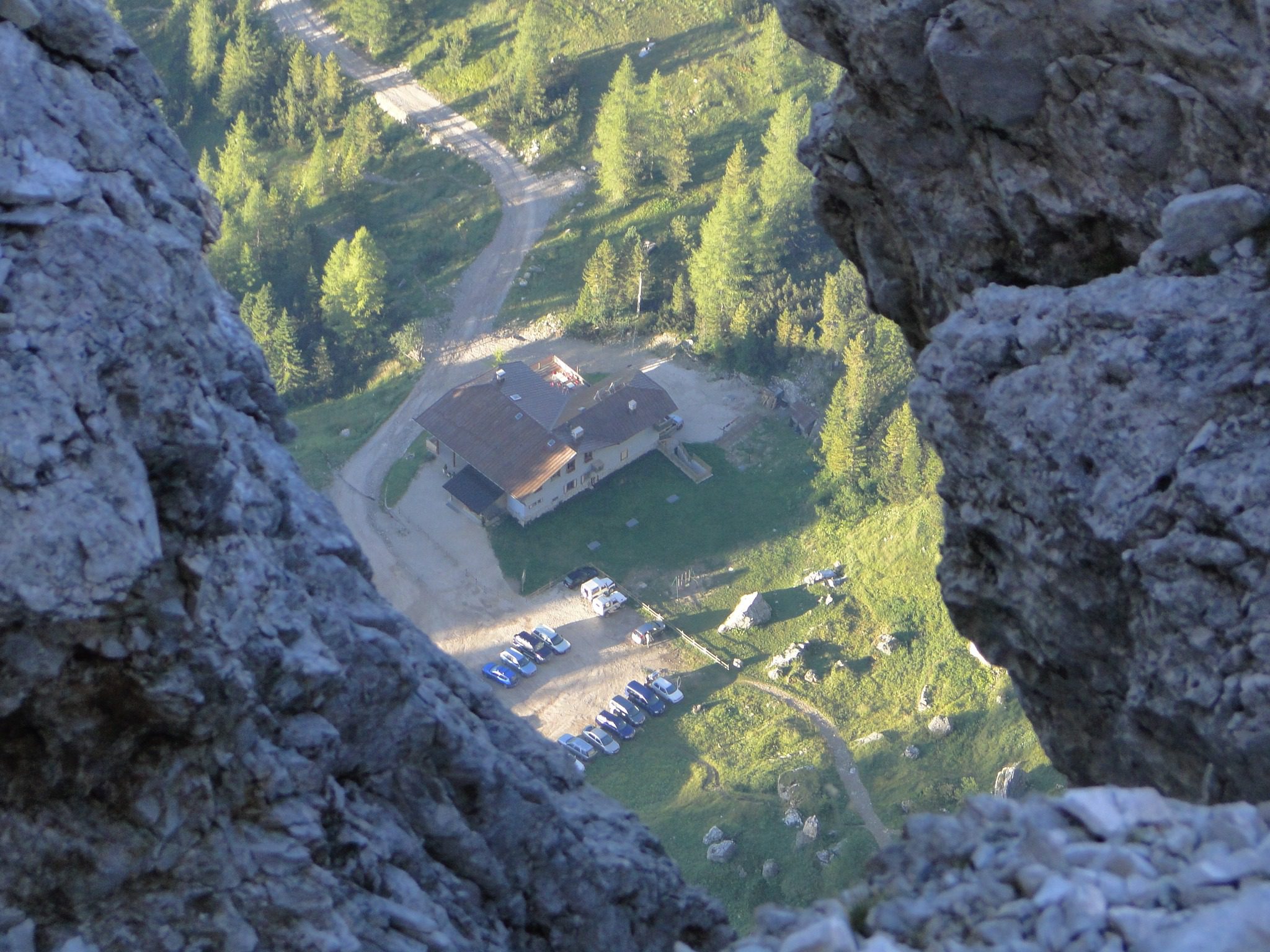
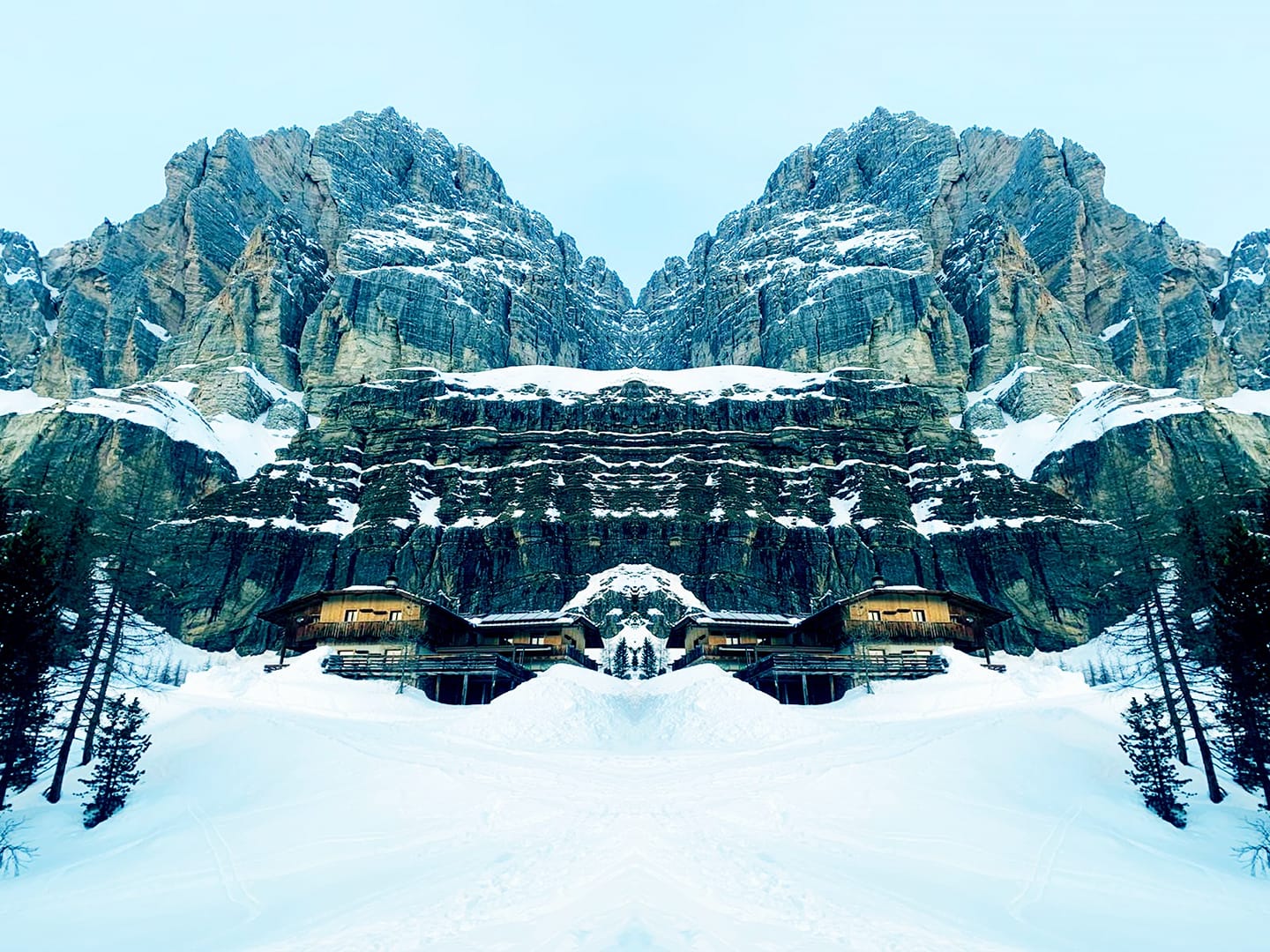
Beneath the sheer vertigo of the Tofana di Rozes’ south face (2,083 m), Rifugio Dibona defies the logic of mass tourism. Named in honor of the mountaineering legend Angelo Dibona, the outpost is steered by Riccardo and Nicola Recafina—the fifth generation of custodians—who have drawn a definitive line: the cessation of snowmobile transport. This radical choice, nearly provocative within the Ampezzo circuit, restores the mountain’s original soundtrack. Reaching the site demands an hour’s trek—an honest “price” for the reward of a terrace flung open toward Croda da Lago and Lastoi de Formin, and for an interior where the refuge returns to being a refuge.
Authentic and decisively carnivorous, the kitchen features portions that honor the labor of the climb. Dominating the table are the blueberry tagliolini with mascarpone and speck: a robust composition where the sweetness of the dressing tempers the salinity of the cured meat. The remainder of the menu rests upon the pillars of tradition, spanning mixed grills to polenta served with sausage and fungi. Concluding the experience are house-made strudels and tarts, executed as they once were—devoid of flourish.