Merging professional-grade technical rigor with artisanal Florentine metalwork, the modular system redefines the Wine Room through material honesty and industrial precision.
Increasingly central to bespoke residential architecture, the Wine Room evolves from a purely technical zone into an identity-defining, scenographic, and experiential environment. Transitioning from its origins as a subterranean utility, the space now serves as a primary structural focal point. With the introduction of the New Collection, Officine Gullo—a manufacturer specialized in bespoke metal engineering—addresses such evolution by treating the enological environment as a total interior landscape. The system responds to a demand for interiors prioritizing technical performance, high-spec materials, and a rigorous, design-led aesthetic.
Technical Rigor and Material Specifications
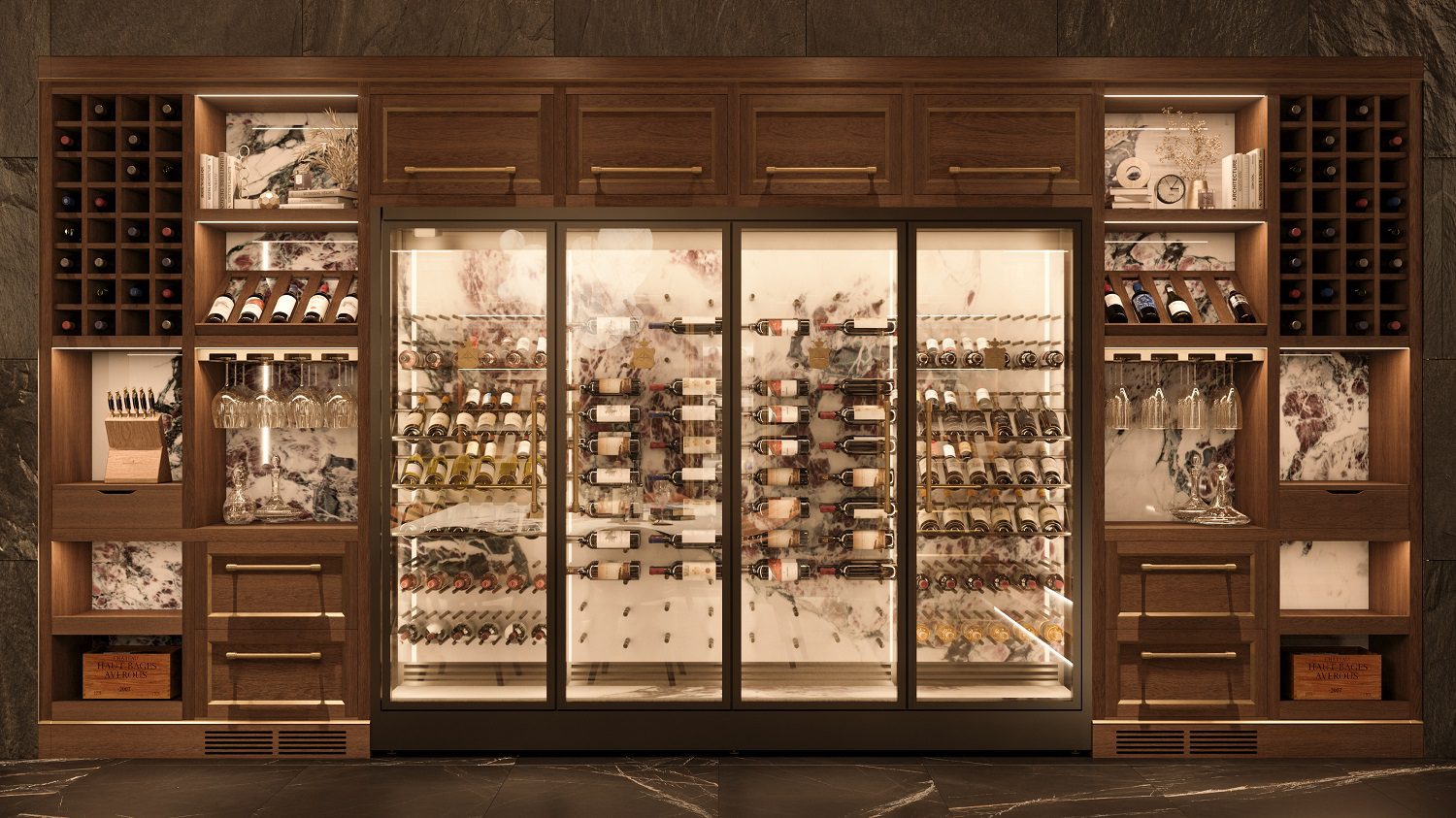
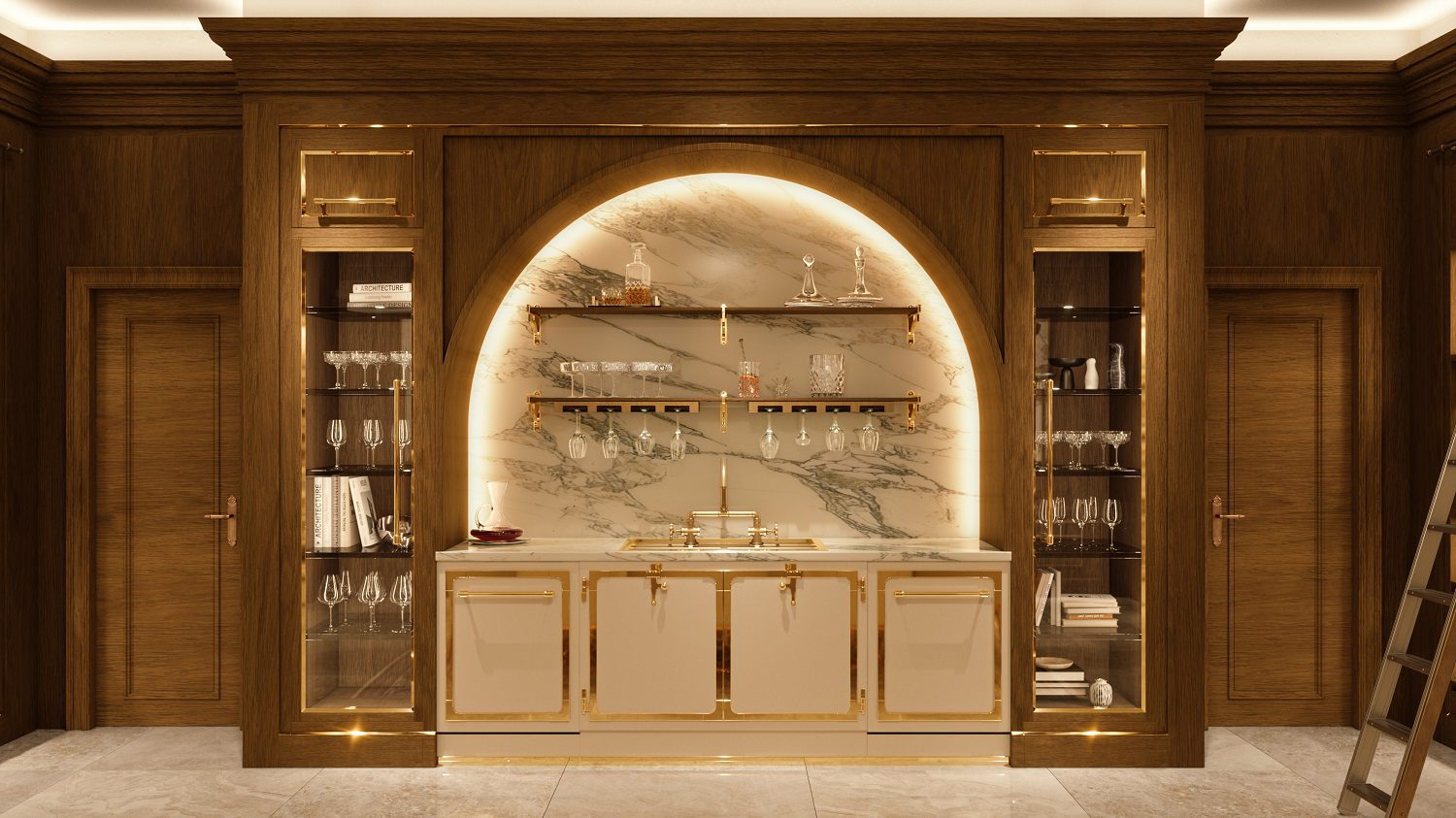
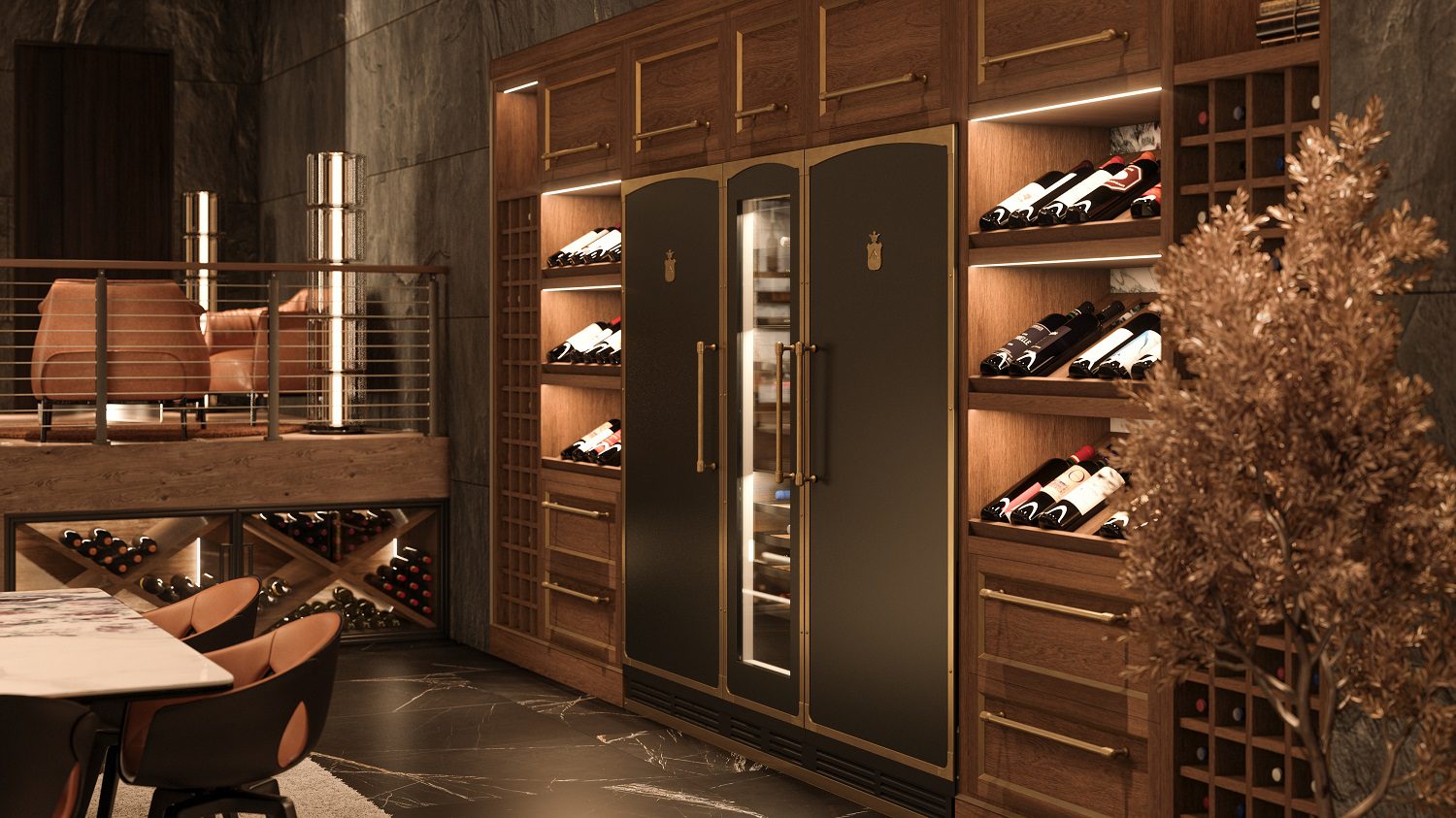
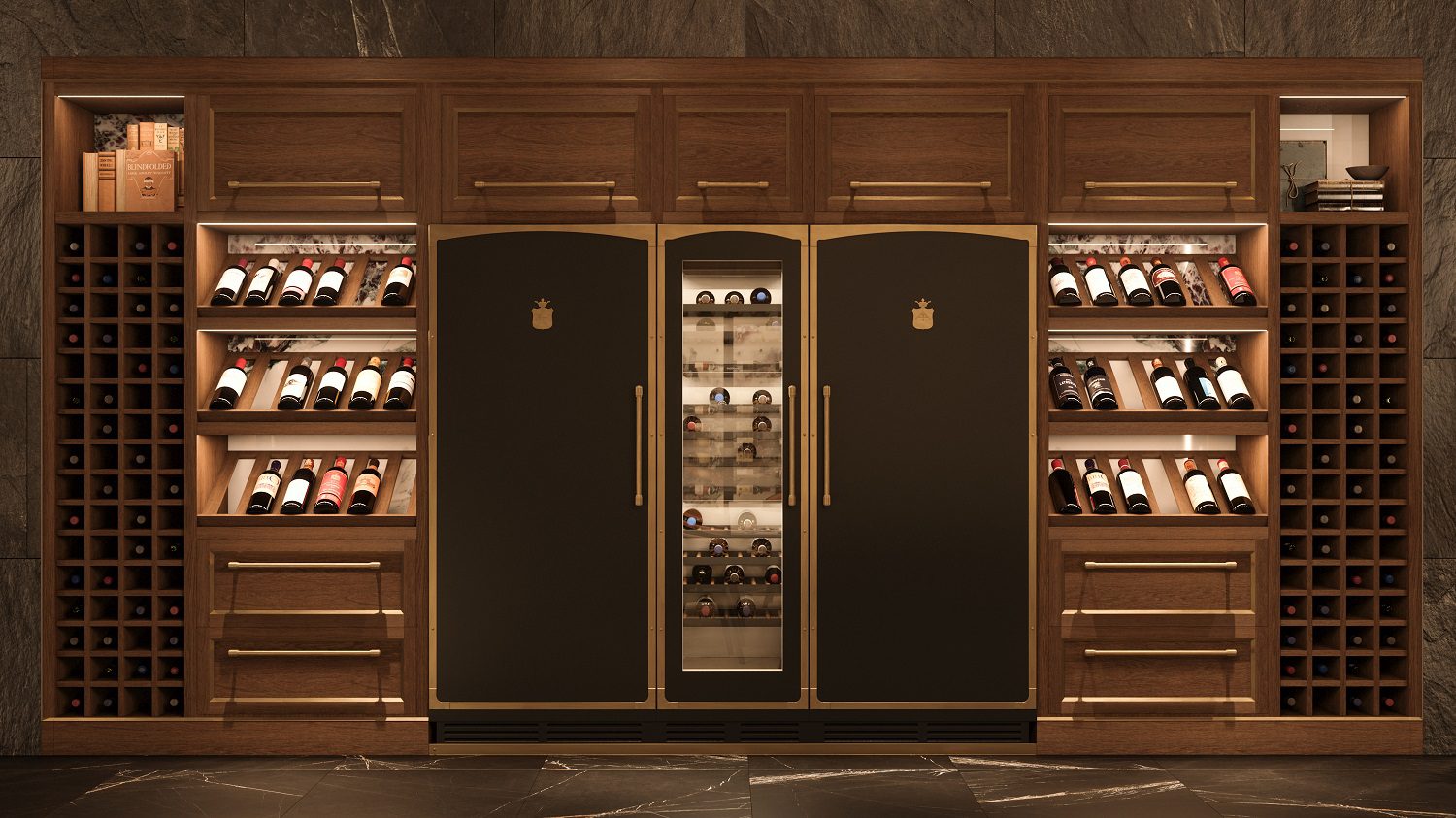
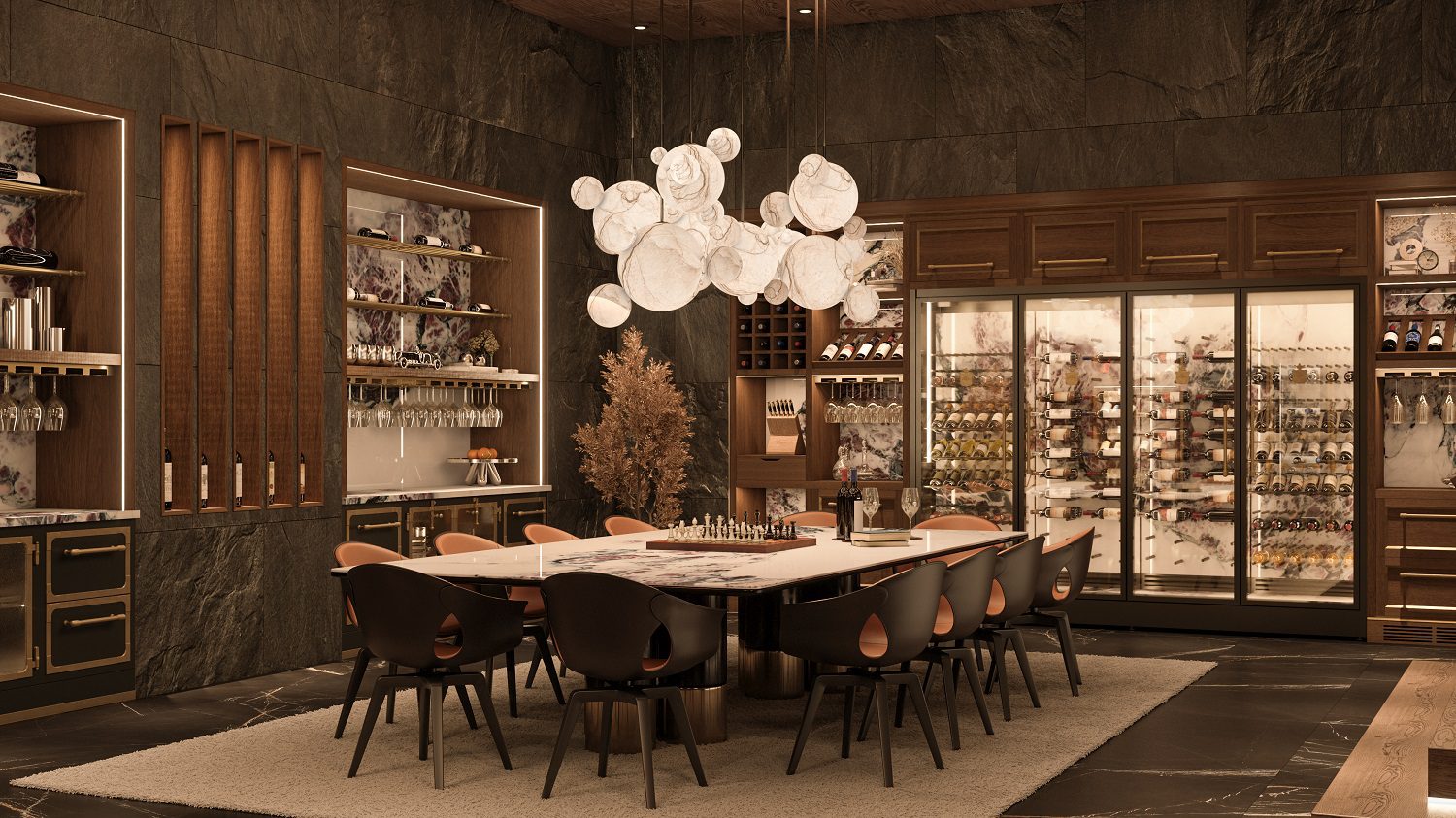
The design of the Wine Room is structured around a precise dialogue of contrasting textures: metal, timber, and stone. Beyond mere ornamentation, the material palette serves as a series of fundamental structural components, establishing a definitive spatial rhythm. The environment is configured through a modular boiserie system that provides a linear, architectural grid across the vertical surfaces, punctuated by expansive marble backdrops selected for their thermal mass and density.
The brand’s signature material—noble metal—is utilized for its inherent structural integrity. Hand-burnished brass, copper, and stainless steel are engineered into frames, handles, and structural profiles characterized by clean, mitred joints. Within this technical framework, metal provides the precision required to interface with both organic wood and heavy stone, elevating the construction quality of the Wine Room through bespoke artisanal execution.
Professional Performance and Domestic Ergonomics
At the core of the collection is the seamless integration of professional preservation technology. Officine Gullo has adapted the mechanical requirements of professional enology—vibration dampening, UV-filtered glazing, and precision humidity and temperature zoning—into a domestic Wine Room format. Cooling units and mechanical systems are built directly into the cabinetry, maintaining a flush, architectural profile while ensuring the professional-grade stability of the internal climate.
Domestic ergonomics provide the foundational philosophy, where every element—from telescopic shelving to wine dispensing systems—undergoes calibration for tactile ease and daily use. High-performance technology and formal purity exist in total equilibrium, with mechanical systems functioning as a silent core within a shell of materials prioritizing durability and tactile feedback.
Spatial Anatomy: The Environment as an Experience
Integrated tasting stations utilize central convivial tables with solid stone tops and reinforced metal supports as dedicated workspaces for decanting and tasting. Complementing the workspace, precision sliding ladders—custom-engineered and mounted on integrated rails—allow for ergonomic access to high-density vertical storage within the Wine Room. Clean-line glazing further employs large-format glass partitions with ultra-slim metal profiles, ensuring visual continuity between the enological area and adjacent architectural volumes while maintaining critical thermal isolation. The resulting configuration functions as a theatrical composition, presenting the preservation of the collection through a rigorous architectural lens.
Officine Gullo: Engineering the Florentine Tradition
Development of the Wine Room represents the latest evolution for a company established as a global authority in the production of bespoke metal kitchens, professional cooking machines, and high-spec accessories. Founded in Florence by Carmelo Gullo, the firm is currently directed by his three sons—Pietro, Andrea, and Matteo. Family-led governance ensures continuity of the savoir-faire allowing the brand to establish a presence in international design capitals, including London, New York, Milan, and Los Angeles.
The production process remains centered in the Antella workshop, where artisanal traditions balance with contemporary technological innovation. Each project is treated as a unique piece of industrial design, tailored to the specific spatial and mechanical requirements of the interior. Constant focus on bespoke engineering and hand-finished noble metals defines the Officine Gullo identity within the international design landscape.