Conceived by Alessio Ranaldi, Lorenzo Campoli, and Paolo Carpino, the third edition at Palazzo Brancaccio pairs unscripted talks with Alessandro Scorsone, Apulian Coratina olive oil by Pozzo Serpi, and deep-dive tastings of Firriato and Revì.
Setting a benchmark for Italian artisanal wines in Rome, the Baroque halls of Palazzo Brancaccio hosted a full-day dialogue between craft producers and the hospitality trade. The third edition of Itinere 2026 cemented a clear format in the Italian capital: bringing winemakers, olive oil growers, and distillers face-to-face with the buyers, sommeliers, and chefs who put quality on the menu every day, weaving together technical tastings, trade meetings, and gastronomic deep dives.
Behind the scenes sits a three-way direction: Alessio Ranaldi’s Taste Factory, Lorenzo Campoli’s Berefacile, and the press office led by Paolo Carpino. Three complementary outfits bound by a single rule of engagement: no permanent venue, opting instead for a nomadic showcase redesigned annually over twelve months of planning and preceded by warm-up stops on the Road to Itinere circuit.
The “Itinere” Format and the Organizing Team
“We operate like an attacking trident: me in the center, Lorenzo on the right, and Paolo on the left,” says Alessio Ranaldi.“We aren’t three separate companies, just three teams working under a single banner: Itinere. Because the format is nomadic by design, we can select the most fitting venue for each edition, backed by a full year of planning—kicking off on November 15—and laid down across the territory through Road to Itinere previews, where we introduce a curated selection of the producers later featured at the tasting tables.”
Championing Italian Artisanal Wines: Target Audience and Philosophy
The primary focus centers on the entire Horeca sector—restaurants, trattorias, wine bars, lounge bars, and hotels—alongside specialist press and food lovers, drawing a steady turnout throughout the day.
“We want to close the gap between winery and market, building an agora where producers speak directly with the professionals who select and pour their labels daily,” Ranaldi continues. “Admission stays free for attendees, funded entirely by the exhibitors. The goal is to condense a full year of commercial groundwork into a single day through direct contact with trade operators, press, and enthusiasts. The real validation? Seeing wineries and artisans already locking in their spaces for next year.”
Alongside the tasting tables, high-level culinary education took center stage with the Intrecci and Aura academies exhibiting on the floor. On the operational side, forty students from DAM and the Pellegrino Artusi, Domizia Lucilla, and Gioberti hospitality institutes—selected and supervised for Taste Factory by Ivana Feliziani—ran the show. Under the direction of Ranaldi, who already teaches their internships and masterclasses, the students handled reception, floor service, and photo-video production, testing their skills against the pace and pressure of a major trade event.
Thematic masterclasses and unscripted panels at the Salotto di Scorsone—hosted by Alessandro Scorsone, State Sommelier and Master of Ceremonies at the Presidency of the Council of Ministers at Palazzo Chigi—anchored the technical program. At the close of the day, attendees cast their votes via a unique digital code to crown the top three tasting tables: organic winery Marco Carpineti from Cori (Latina) for Wine, Rome-based seafood specialist Due Emme – Eccellenze Ittiche dal 1982 for Food, and historic Tuscan craft distillery Liquorificio Morelli from Valdera (Pisa) for Spirits.
Il Salotto di Scorsone: Producers Unscripted
“Deep friendship and mutual respect tie Lorenzo, Paolo, and me to Alessandro Scorsone,” explains Ranaldi. “His moderation brings technical rigor, balance, and authority to the room. We dedicated an entire hall to the Salotto di Scorsone: four or five public conversations across the day, strictly off the cuff and with no script. We wanted the unvarnished reality of daily agricultural work to come through, with zero staging.”
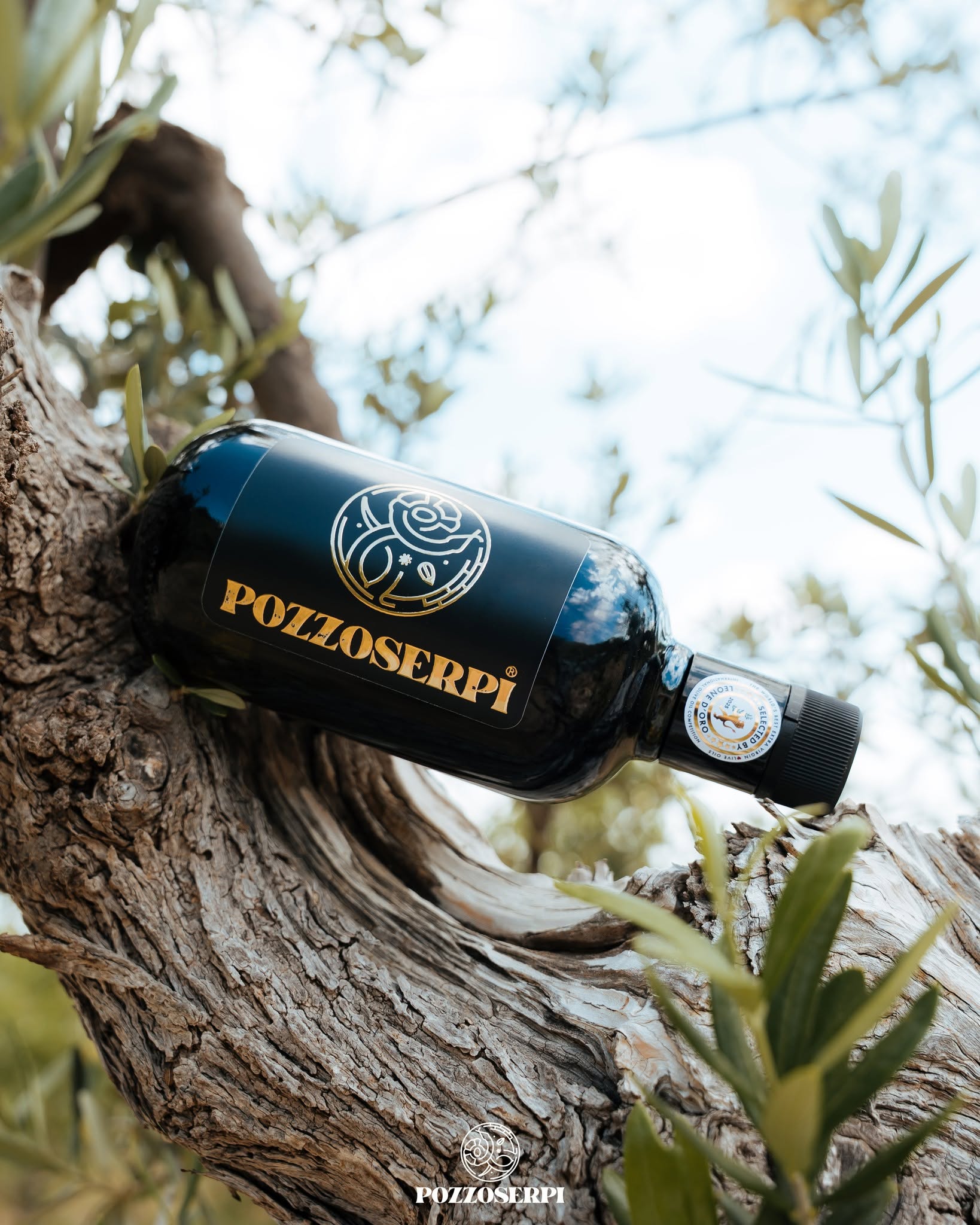
“Our scouting spans 15 years, and genuine friendships have grown with many of these growers,” Ranaldi adds. “We champion under-the-radar Italian producers whose quality is extraordinary. Take Pozzo Serpi, who has joined us for three years: they grow almonds and press an exceptional olive oil in Puglia. Thanks to a subsurface irrigation system, they have shielded their groves from Xylella, remaining the only estate in the area untouched by the bacterium. Every exhibitor here carries a story like theirs.”
Pozzo Serpi took a leading voice inside the Salotto di Scorsone. The estate sits in Ruvo di Puglia, on the Murgia plateau north of Bari: a rugged expanse of white limestone and rocky, free-draining soils forcing the roots of century-old olive and almond trees deep underground in search of nutrients.
The Apulian sun and steady sea breezes complete the microclimate of a land historically suited to olive growing, packing the drupes with an unusually high polyphenol count. At the helm, Giusy, Francesco, and Francesca farm under strict organic protocols, steering the family estate away from bulk production to bottle a sharply defined regional identity.
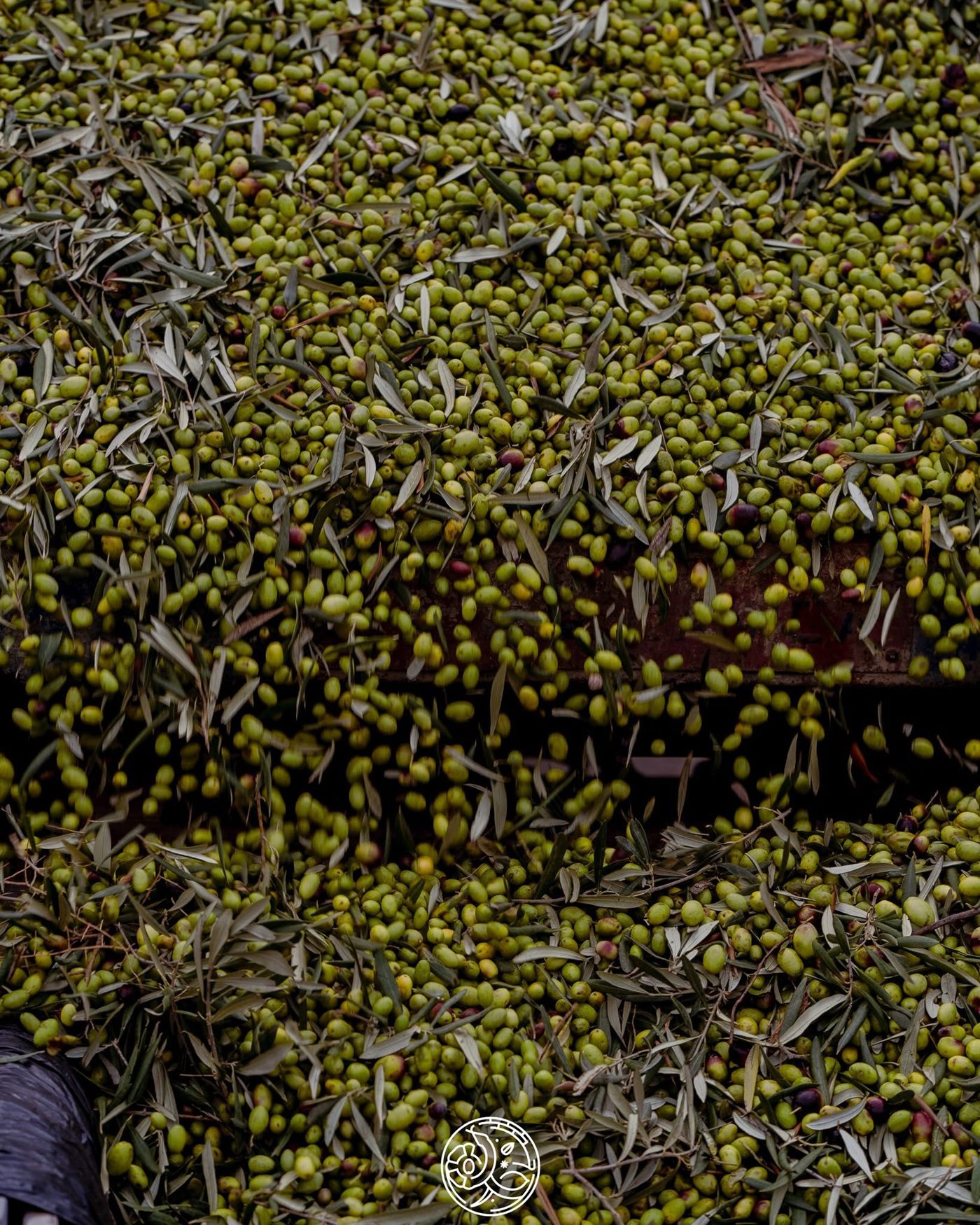
At the heart of the estate is Coratina, a native cultivar of unmistakable character. At Pozzo Serpi, timing in the grove and mill is surgical: early harvesting at the very onset of veraison locks in volatile aromatics and polyphenols, followed by milling within four hours of picking. State-of-the-art cold extraction runs in an oxygen-free environment to prevent premature oxidation, while immediate post-extraction filtration removes every trace of solid residue or vegetation water, delivering aromatic clarity, precision, and shelf stability.
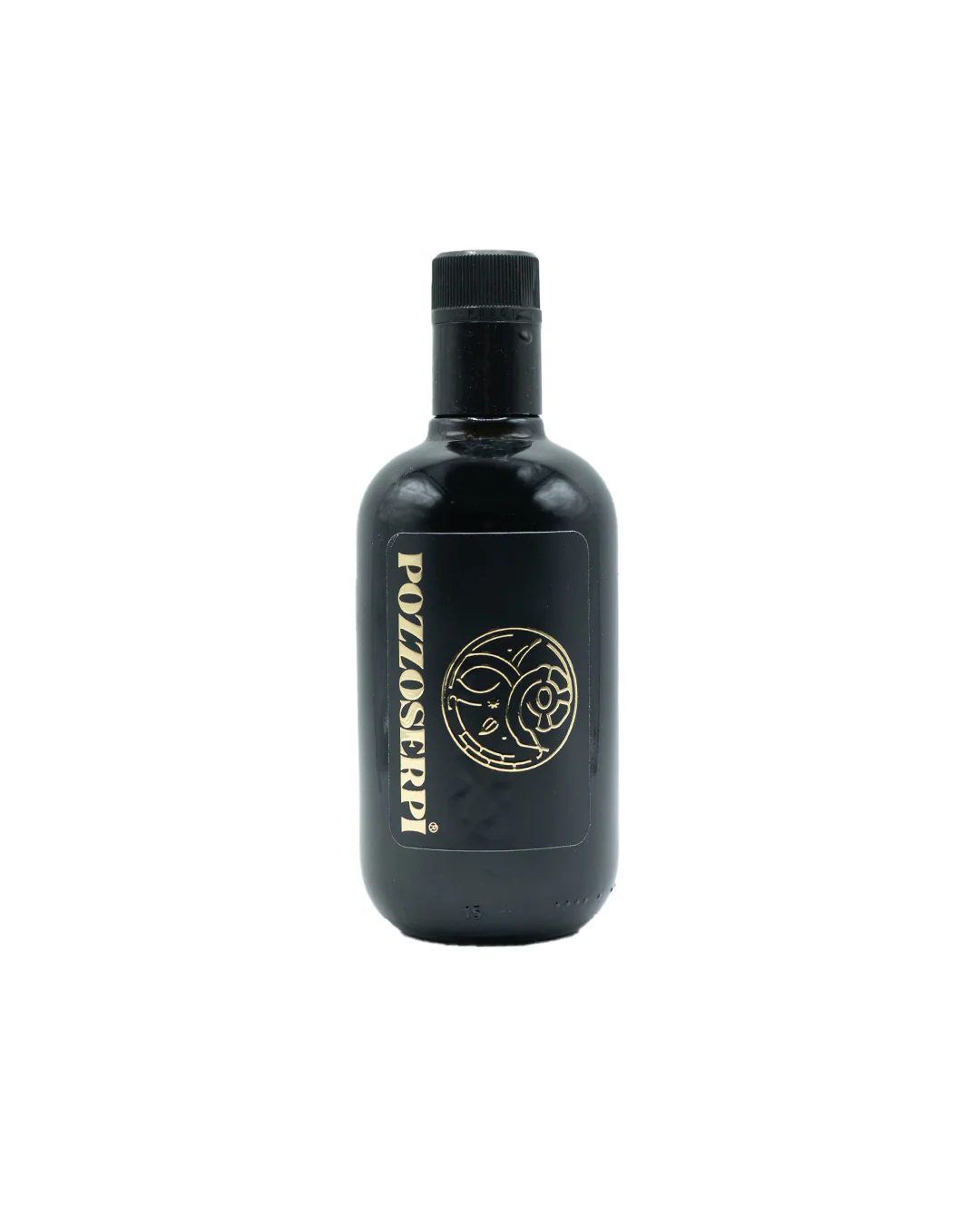
In the Linea Lux bottling, Coratina shows full Murgian energy: a dense green hue shot through with gold highlights,opening on the nose with crisp tomato leaf, freshly cut grass, and raw artichoke heart. On the palate, it enters with power and viscosity; bitterness and pungency—the direct signature of its high polyphenol load—move in lockstep toward a long, clean, finely spiced finish.
It is an extra virgin olive oil built for bold, structured cooking. Drizzled raw, it elevates mountain legume soups, bitter greens like wild chicory, toasted rustic pane cafone bruschetta, beef carpaccio, tartare, and aged cheeses. In the kitchen,it stands up to charcoal-grilled red meats, sautéed wild mushrooms, and slow-cooked Mediterranean dishes such as braised meats, stews, and baked pasta.
Such precision has already earned the estate 5 Gocce Bibenda, a podium finish at the Leone d’Oro, and listings in Slow Food guides and international competitions, alongside the ultimate benchmark: daily loyalty from chefs and discerning cooks.
Transitioning from the Bari Murgia to volcanic wine terroirs, Cucine d’Italia followed the masterclasses—starting with sommelier Lorenzo Campoli‘s deep dive into the high-altitude crus of Sicilian house Firriato.
Firriato’s Etna Terroir: Heroic Viticulture on Black Sands and Lava Flows
A pioneer of Etna’s viticultural renaissance since the early 1990s with its Cavanera Etnea estate in Castiglione di Sicilia, Firriato farms the volcano’s northern slope, Etna’s historic wine valley. While the southeastern quadrant of Milo holds exclusivity for the Etna Bianco Superiore designation, the northern face shifts dramatically: younger lava flows and vineyards planted between 650 and 800 meters above sea level form a true high-mountain viticultural zone.
Dry-stone walls built from basaltic lava shore up the terraces where alberello bush-trained vines dominate—a heroic system yielding minimal fruit per plant, concentrating every resource into a handful of bunches. Beneath them lie loose,mineral-rich black volcanic sands full of rock fragments; their dark surface absorbs solar heat by day and releases it slowly after dark. The resulting diurnal temperature swings of up to 20°C drive slow, late ripening—pushing red grape harvests into the final ten days of October—while locking crisp aromatics and razor-sharp acidity into the berries.
Cool drafts descending from the Nebrodi mountains and sea breezes off the Ionian keep the canopy dry and healthy, warding off humidity and rot. Inside the winery—housed in a restored historic palmento featuring an underground cellar carved straight into the basalt—vinification relies purely on gravity: the cellar ditches mechanical pumps altogether,protecting the integrity of fruit harvested from century-old, pre-phylloxera ungrafted vines.
Alongside still single-vineyard Etna Bianco and Etna Rosso, Firriato champions the volcano’s sparkling heritage dating back to the late nineteenth century: its Metodo Classico Gaudensius line—crafted as a Blanc de Noirs from Nerello Mascalese and a Blanc de Blancs from Carricante—proves the aptitude of native Etna varieties for high-altitude bottle fermentation.
Three Expressions of TrentoDOC
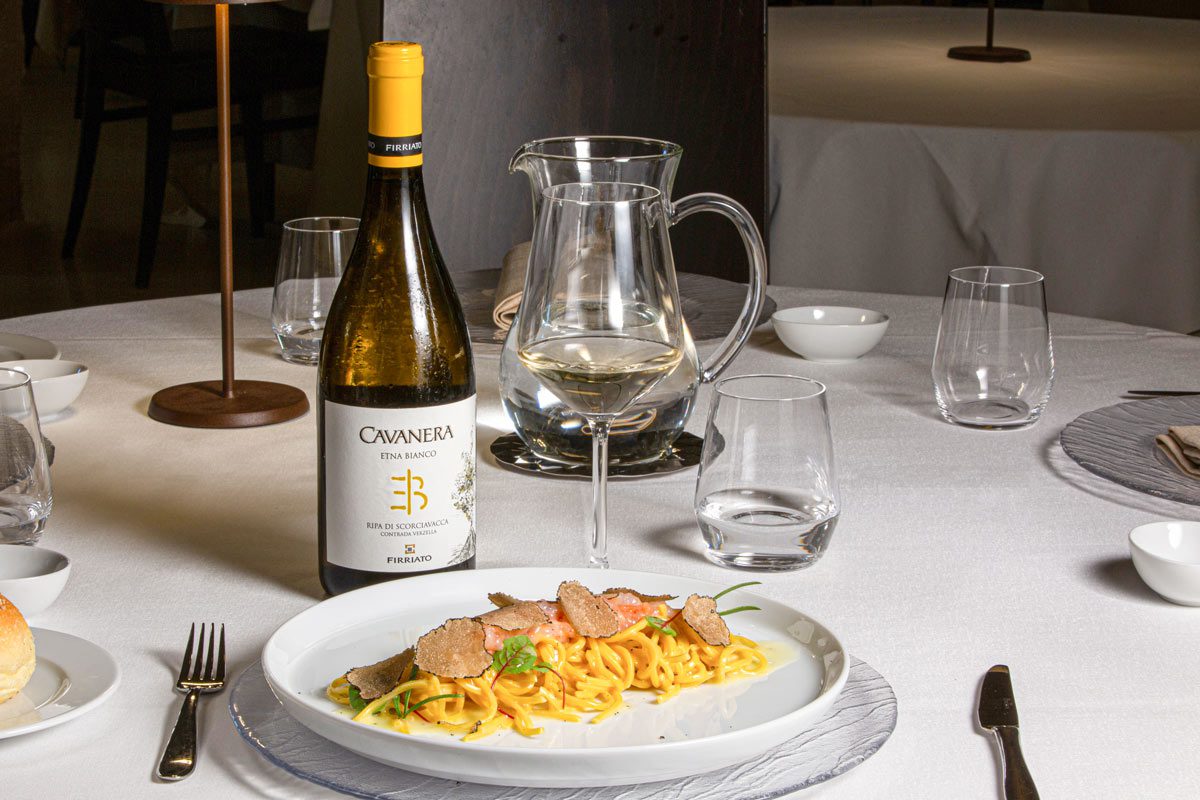
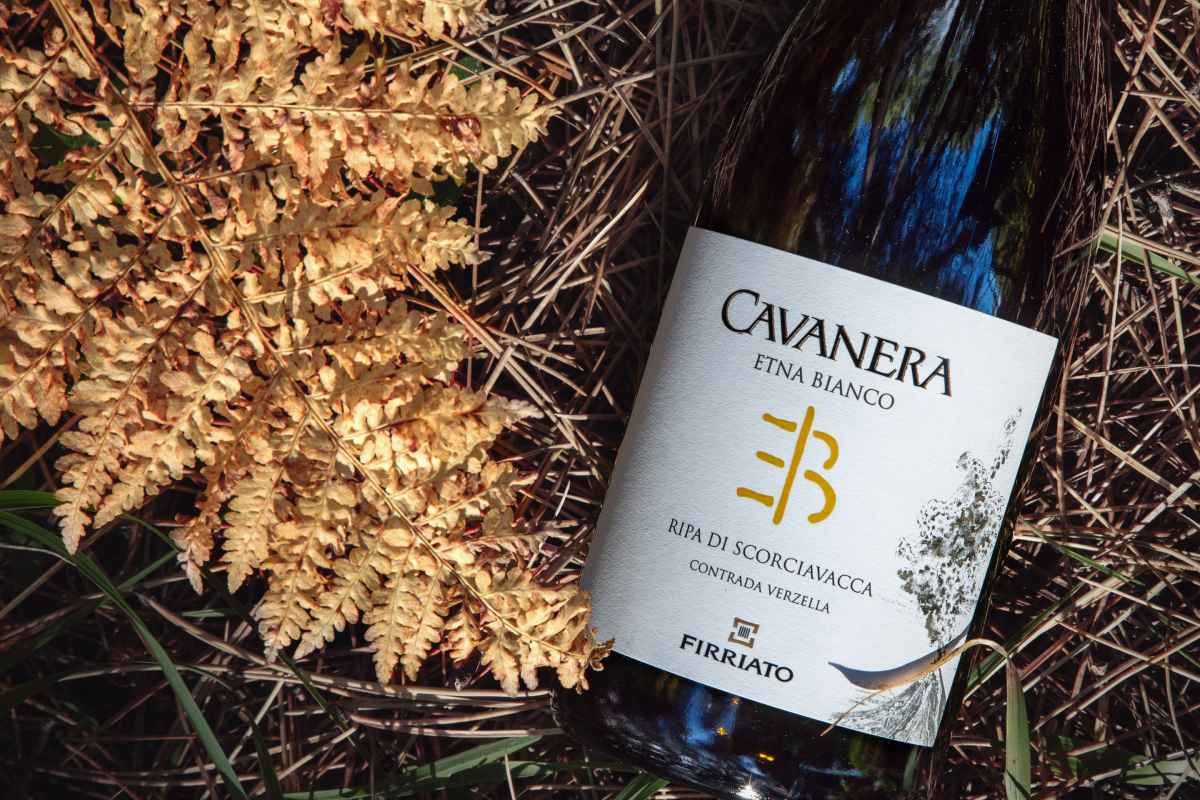
Etna Bianco DOC – Cavanera Zottorinoto (Contrada Verzella) – 2023 – 100% Carricante
Between 650 and 700 meters in Contrada Verzella, on the northern slope of Castiglione di Sicilia, loose, free-draining volcanic sands—partially planted to ungrafted vines—host pure Carricante, a white grape naturally wired for brisk acidity and longevity. In the cellar, batches vinify separately: the main portion ferments in stainless steel, while a small fraction ferments and ages for 6 to 10 months on fine lees in French oak tonneaux prior to bottle rest—a calibrated choice to build mid-palate volume without masking varietal character.
Luminous straw-yellow with golden glints, it opens immediately with flinty, smoky minerality, followed by acacia honey, Sicilian citrus peel, crisp apple, and fresh almond. Despite 13% alcohol, the palate carries broad, authoritative weight, buoyed by vibrant acidity and a balsamic, almost mentholated finish leaving the mouth crisp and clean.
Youthful yet deeply persistent, it will hit peak expression after two to three years in bottle. At the table, its acid backbone calls for savory, rich fare: bloomy-rind cheeses or, by contrast, blue cheeses like sweet Gorgonzola, stuffed pastas, flavorful white meats such as pollo alla cacciatora, and structured island seafood like amberjack braised with cherry tomatoes and olives.
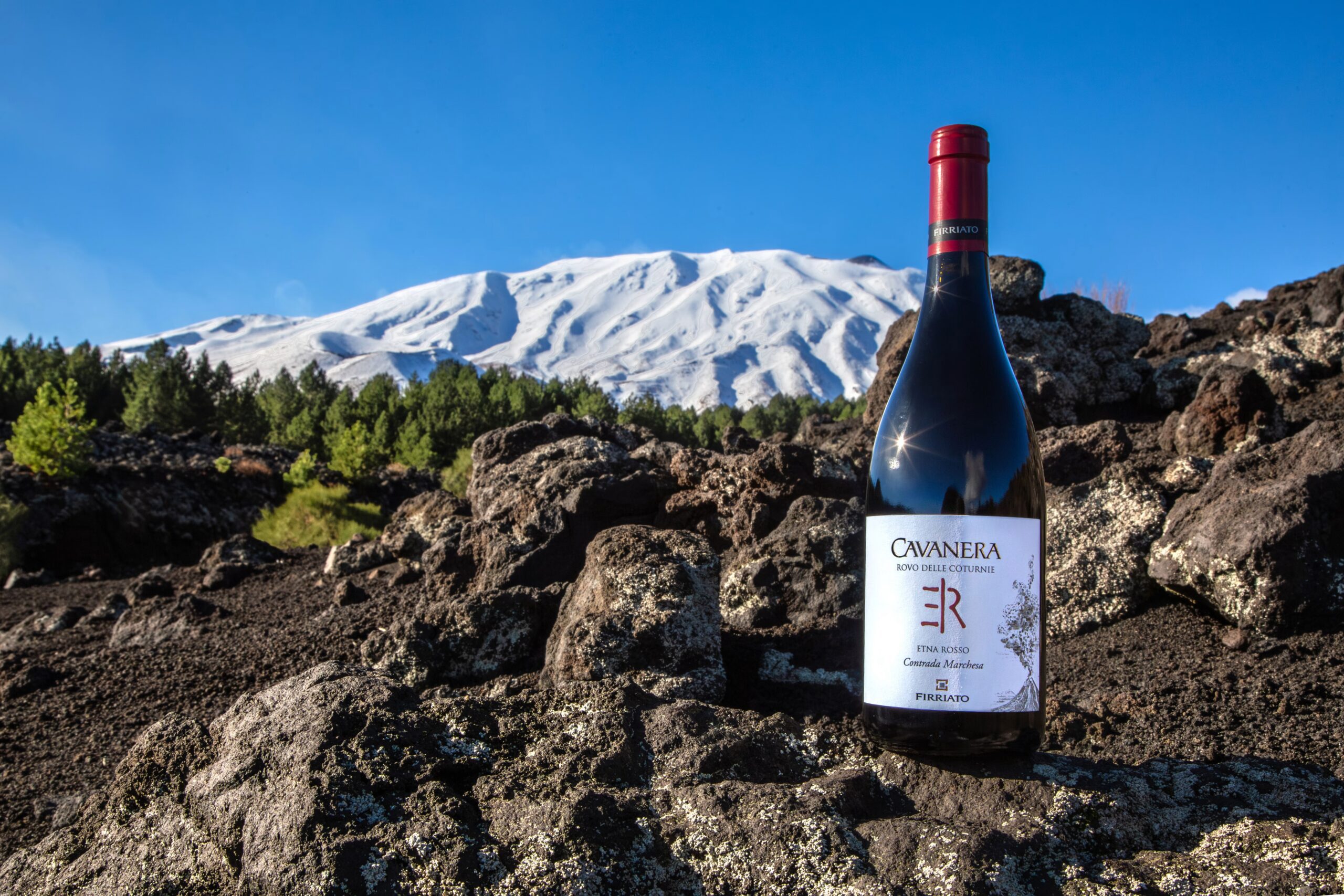
Etna Rosso DOC – Cavanera Rovo delle Coturnie (Contrada Marchesa) – 2022 – 100% Nerello Mascalese
Climbing to between 700 and 750 meters on the northeastern quadrant, Contrada Marchesa faces harsh winters and severe temperature drops. Here, pure alberello-trained Nerello Mascalese grown on lava sands ferments in truncated-cone wooden vats before maturing for 12 to 16 months in tonneaux and large oak casks.
A single sniff shows why the grape is dubbed the Pinot Noir of the Mediterranean: a pale, luminous ruby hue introduces a nose of surgical finesse built on verticality and floral lift, weaving dried rose petals, wild berries, sweet spice, and balsamic herbs. On the palate, it strikes taut and juicy, paced by driving salinity and silky yet firm young tannins signaling long cellar evolution.
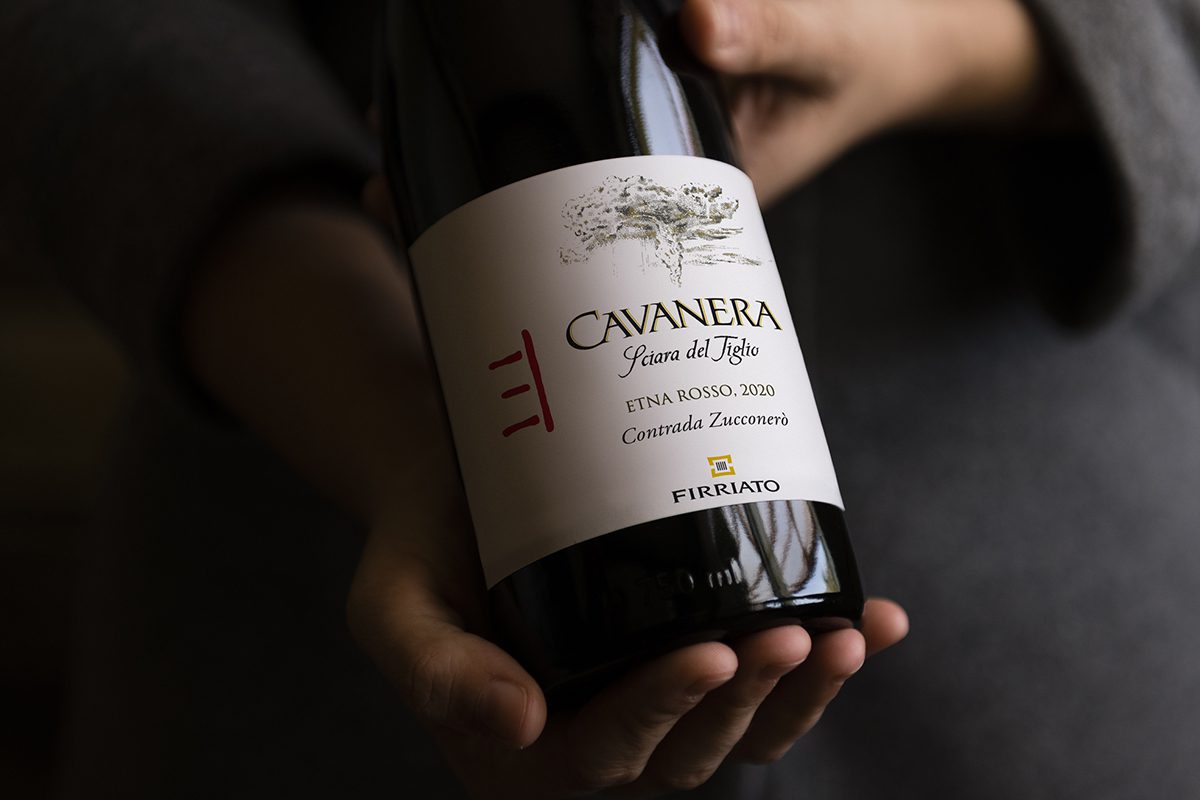
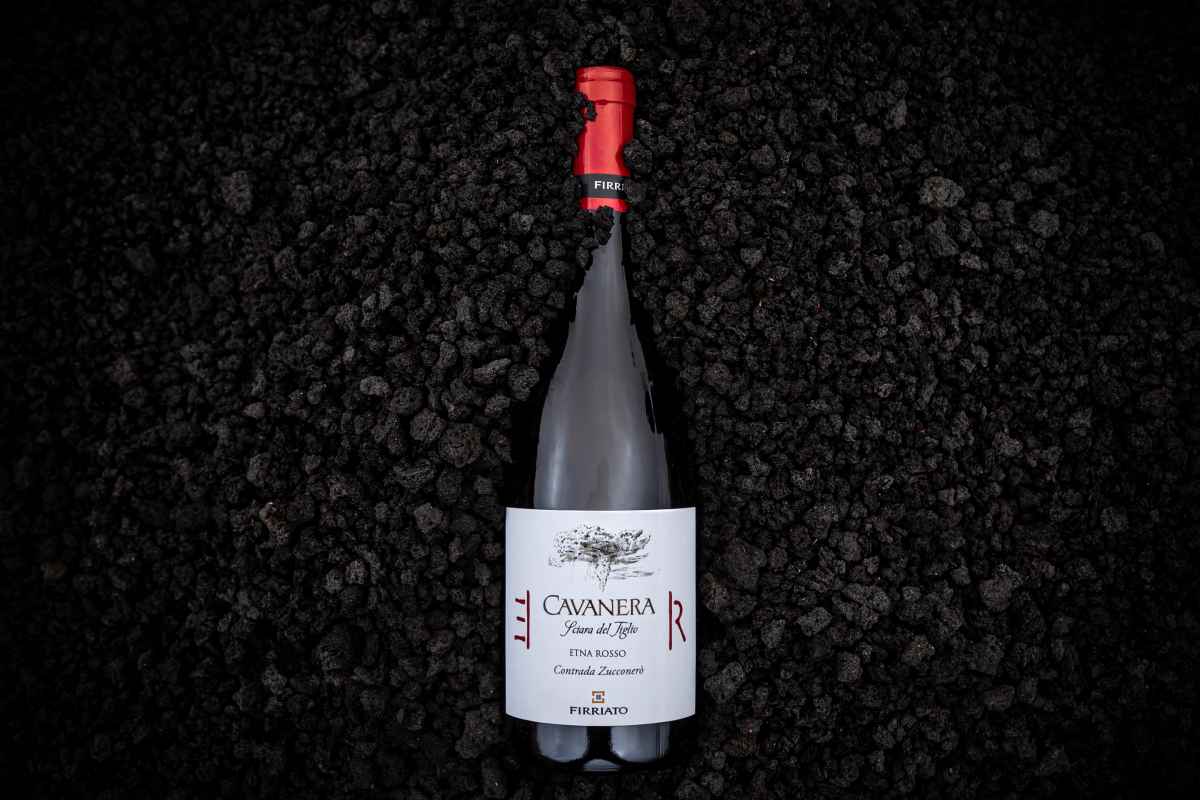
Etna Rosso DOC – Cavanera Sciara del Tiglio (Contrada Zucconerò) – 2022 – 100% Nerello Mascalese
Moving just a few hundred meters higher to 800 meters in Contrada Zucconerò on the northern slope flips the expressive register entirely. Same 2022 vintage, same 100% Nerello Mascalese, and identical winemaking—yet a stonier lava flow richer in organic matter delivers the exact foil to Contrada Marchesa.
Here the bouquet turns dark, sun-drenched, and extroverted: spice gives way to ripe plum, blackberry, black berry compote, and macerated rose petals. The palate is full, warm, and broad-shouldered, framed by dense, muscular tannins, while the volcano’s trademark acid-saline spine remains intact to support greater opulence and aging potential.
Two Nerello Mascalese crus built for rich, structured cuisine, far from easy-drinking aperitif pours: both pair seamlessly with braised meats, substantial roasts, feathered game, and rich, succulent cuts such as slow-cooked, lacquered Casertano black pork cheek, where acid drive and tannic grip cleanse the palate and cut straight through the richness.
From Sicilian lava sands to Dolomitic limestone, the second masterclass turned the spotlight onto the TrentoDOC sparkling wines of maison Revì, presented firsthand by Giacomo Malfer, who leads the family estate alongside his brother Stefano.
The Genesis of Revì: Family Roots and Alpine Precision
At the foot of Mount Bondone, in the village of Aldeno just kilometers south of Trento, Revì’s twelve hectares rest on the alluvial fan of the Arione stream: a bed of loose soils, river cobbles, and rocky scree banking daytime heat and radiating it back to the vines overnight.
The story began in the early 1960s inside the pages of an old agricultural manual. Paolo Malfer, father of Giacomo and Stefano, was just fourteen, living in a rural Trentino far from sparkling wine prestige. Reading the chapter on bottle refermentation, he decided to test the theory at home, asking his father for a few liters of white table wine, bottling it, and wiring down the corks by hand to hold the pressure.
Uncorked with the family at Christmas 1963, that first experiment sparked a lifelong vocation, well ahead of Italy’s quality sparkling wine movement. “My father had probably never even tasted Champagne in his life, yet at fourteen he set his mind on mastering the méthode champenoise,” recalls Giacomo Malfer.
Today, the second generation farms fragmented mountain parcels stretching from the valley floor up to 700 meters, where alpine drafts and sharp diurnal shifts lock in piercing aromatics. Vineyard management follows certified integrated viticulture protocols (SQNPI) paired with meticulous canopy work to maintain physiological balance without synthetic shortcuts.
In the cellar, annual production of 170,000 to 180,000 bottles follows a strict rule: extended lees aging and minimal dosage—from Dosaggio Zero to Brut—so stone and fruit speak unencumbered. “We look for purity, tension, and above all drinkability: a serious sparkling wine should never tire the palate after one glass, it should make you want to finish the bottle,” Malfer notes.
The Wines in the Glass
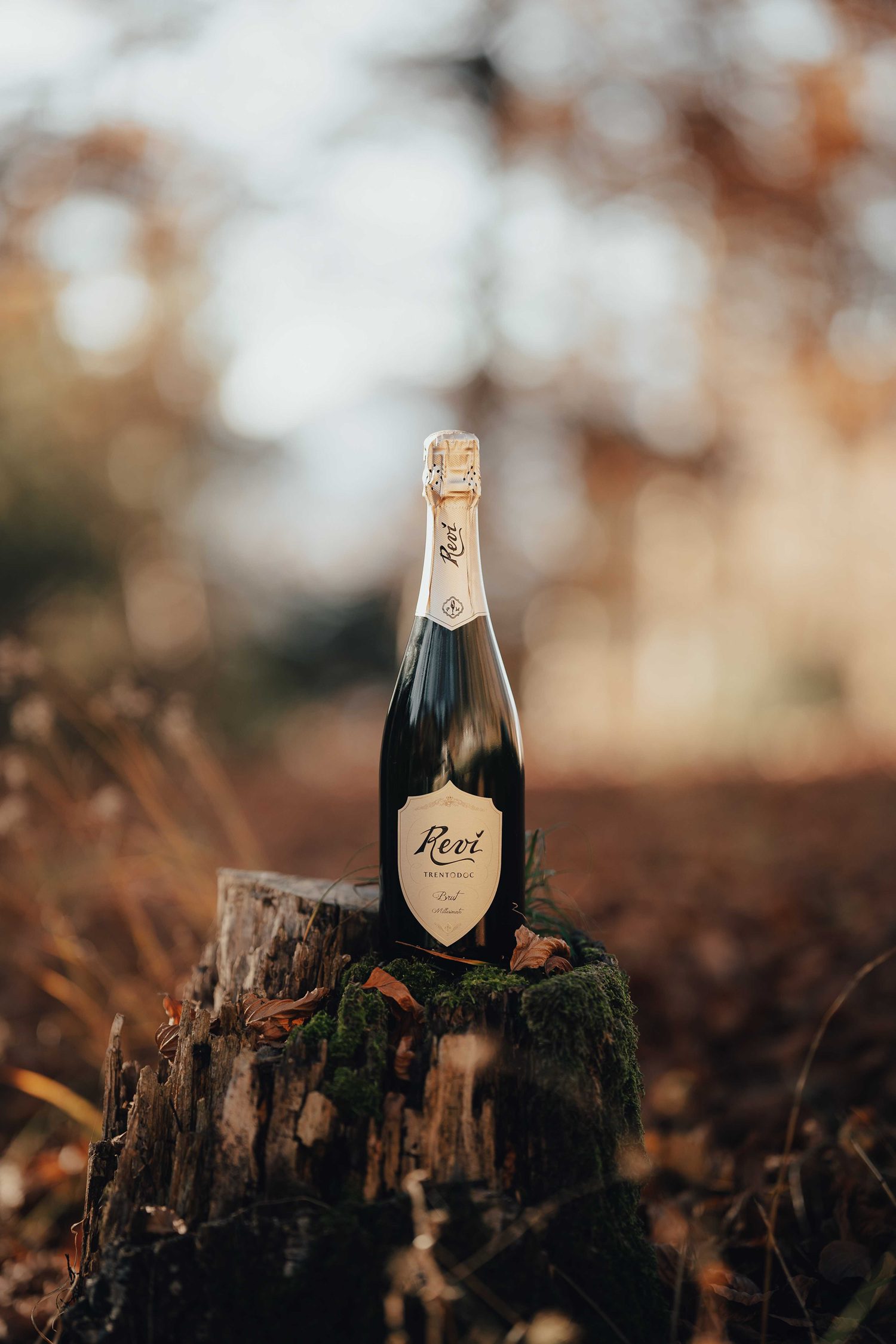
Trento DOC Brut – Millesimato (Linea Classica) – 2022
A blend of 80% Chardonnay and 20% Pinot Noir harvested from hillside and mountain vineyards trained to pergola trentina and vertical trellis (VSP): the estate’s flagship label, aged to Riserva standards. Lees contact runs 36 months—more than double the appellation’s minimum requirement for a Brut. “I struggle to call it an entry-level wine: we produce exclusively vintage bottlings aged at least three years on the lees to strike the right balance between brisk acidity and aromatic development,” Malfer explains.
Dosed at 6 g/l and laced with a pinpoint bead, it layers ripe Golden Delicious apple, fresh citrus, white blossoms, and a fine mineral streak on the nose. On the palate, it flows taut and poised between racy acidity and creamy texture, finishing clean and thirst-quenching—an immediately appealing, food-friendly TrentoDOC ideal with traditional Alpine charcuterie or freshwater fish dishes.
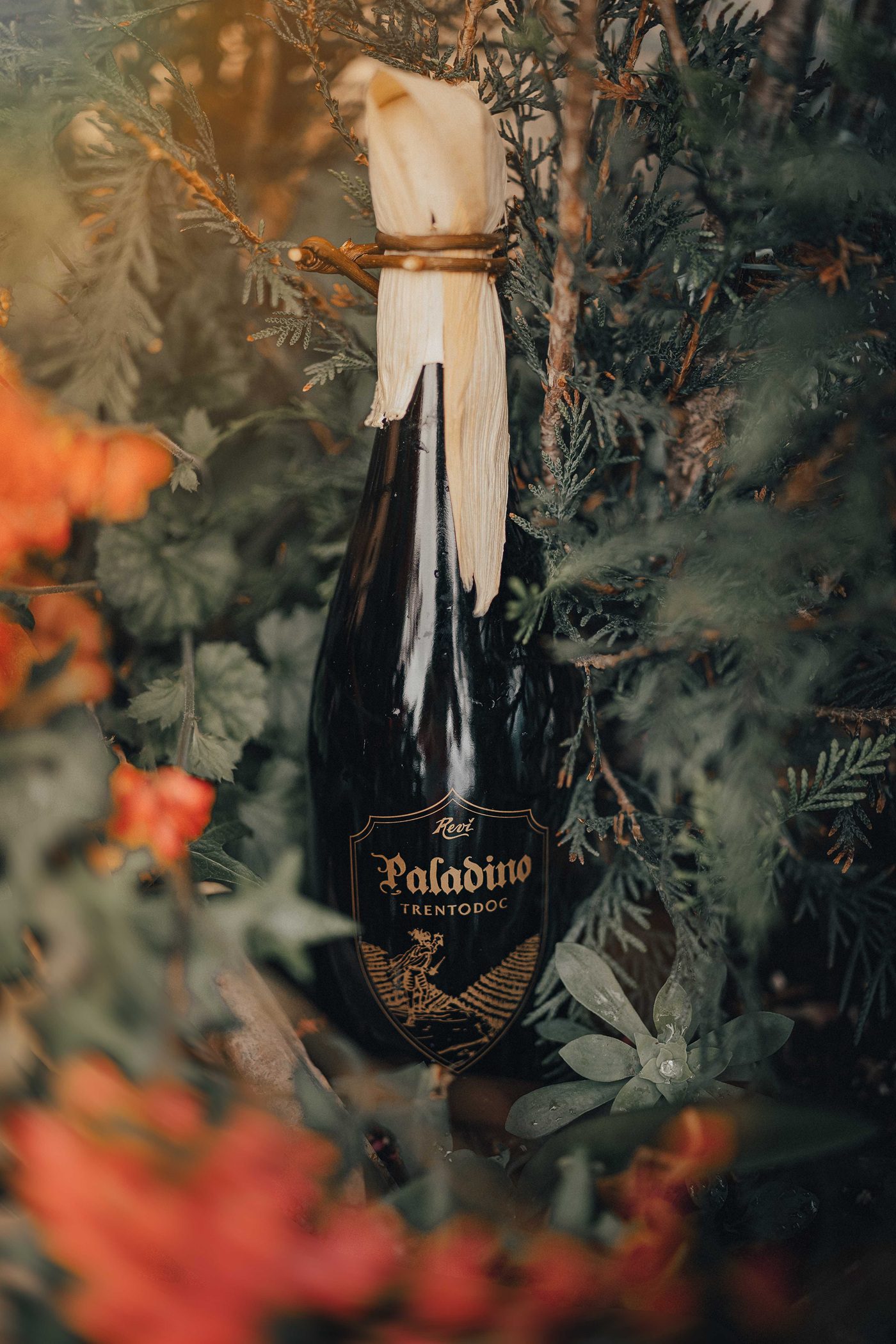
Trento DOC Paladino Biologica Millesimato 2020 – Extra Brut
Revì’s most uncompromising, identity-driven bottling: the house’s first certified organic TrentoDOC, named Paladino in tribute to alpine farming heritage. Every detail of the hand-finished packaging reflects the ethos—from the willow-twine closure and dried corn husks wrapped around the neck to the reusable raw cotton bag.
A 100% Chardonnay Blanc de Blancs—grown at roughly 600 meters and undergoing full malolactic fermentation—rests on the lees for a full 58 months, with secondary fermentation calibrated to lower-than-standard pressure (capped at 5.8 atmospheres) to yield a silky, enveloping mousse. Limited to just 2,000 bottles, the cuvée delivers the estate’s signature high-altitude markers: flint, bread crust, ripe yellow orchard fruit, and subtle toasty notes. The palate is dense, structured, and remarkably persistent, built to stand up to complex land-based dishes, elaborate white-meat preparations, or medium-aged cheeses.
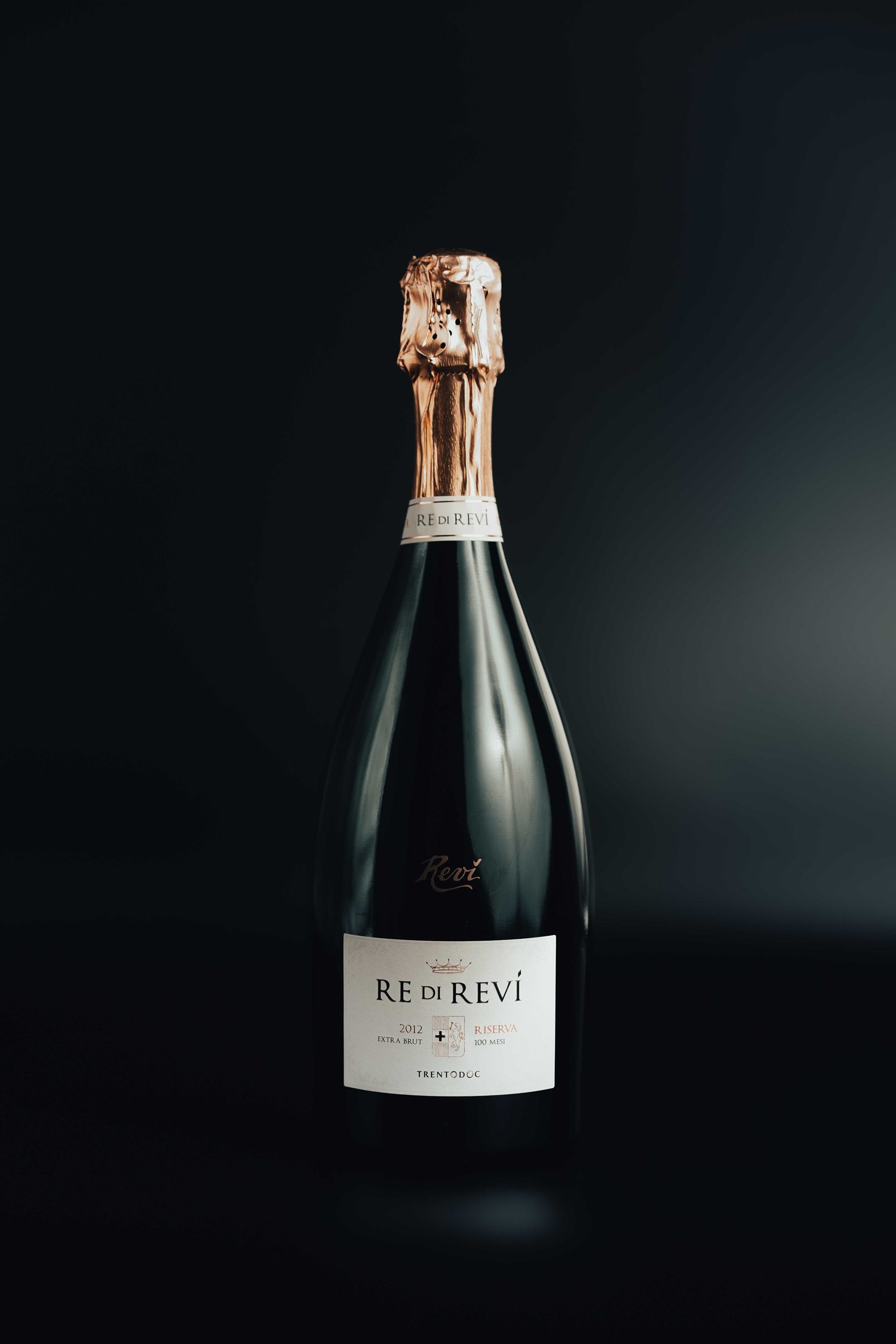
Trento DOC Re di Revì Riserva 2016 – Extra Brut
The pinnacle of Revì’s range, in both quality and history. Blended from the top mountain parcels—70% Chardonnay and 30% Pinot Noir—it matures on the lees for 100 to 106 months prior to disgorgement, finished at an Extra Brut dosage of 5 g/l.
The nose is deeply layered and incisive: over a core of ripe fruit and candied citrus emerge fine pastry, melted butter, and toasted hazelnut, with unmistakable high-altitude smoky and chalky notes preceding a return of Morello cherry. On the palate, the structure is commanding and authoritative, underpinned by vibrant acidity ensuring tension, harmony, and long-term aging potential. Built for crustacean-driven seafood, substantial roasts, or richly structured traditional dishes.
Photo Courtesy of Pozzo Serpi, Firriato, and Revì
Alessandra Fiori