The renovated Milan space becomes the starting point for narrating the brand’s evolution, oriented toward new perspectives of research and design dialogue.
Cesar consolidated its strategic path during a moment of clear evolution: a brand that has built its own grammar over time and now projects it forward, toward new spaces and new meanings. The Milan Flagship Store became the place where this journey took concrete form.
Over the past twelve years, under the artistic direction of García Cumini, Cesar has developed a design approach that does not seek linearity as a rule, but composition as an expression of freedom. A vision that, over the course of the company’s 60-year history, has transformed the product and its relationship with materiality and space.
“The starting point was the concept of transversality: moving beyond the logic of closed collections to build an open system, where each element interacts with the others and moves freely within the architecture. The kitchen thus ceases to be a finished object and becomes a compositional device” explain Cinzia Cumini and Vicente García, Art Directors of Cesar.
This has been accompanied by research into fluidity: not a formal matter, but the ability to create dynamic relationships between products and environments. The kitchen is thus transformed into a flexible organism, capable of adapting, flowing, and connecting—collaborating with architecture rather than limiting it.
The latest step in this journey was the introduction of the concept of a material multiverse. After exploring color as a system with Orama, research now opens to a horizon in which material multiplies, unfolding into diverse possibilities.


Today, the brand enters a new phase of growth, coherently extending its DNA beyond the kitchen: toward spaces of everyday conviviality such as living and dining areas, but also toward more functional environments such as laundry rooms, corridors, and bathrooms. This is not diversification, but the natural evolution of a way of conceiving the domestic space in its entirety.
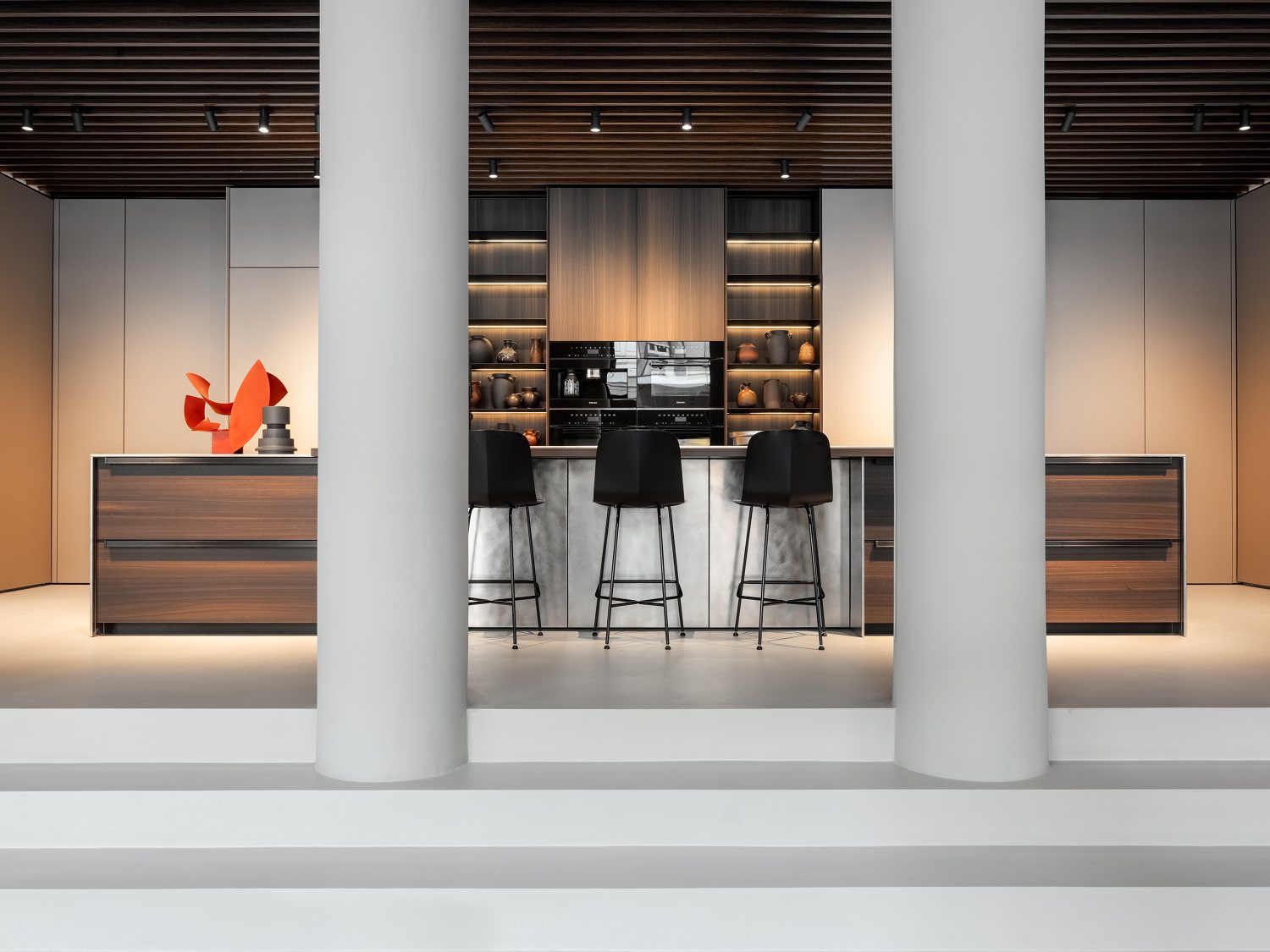
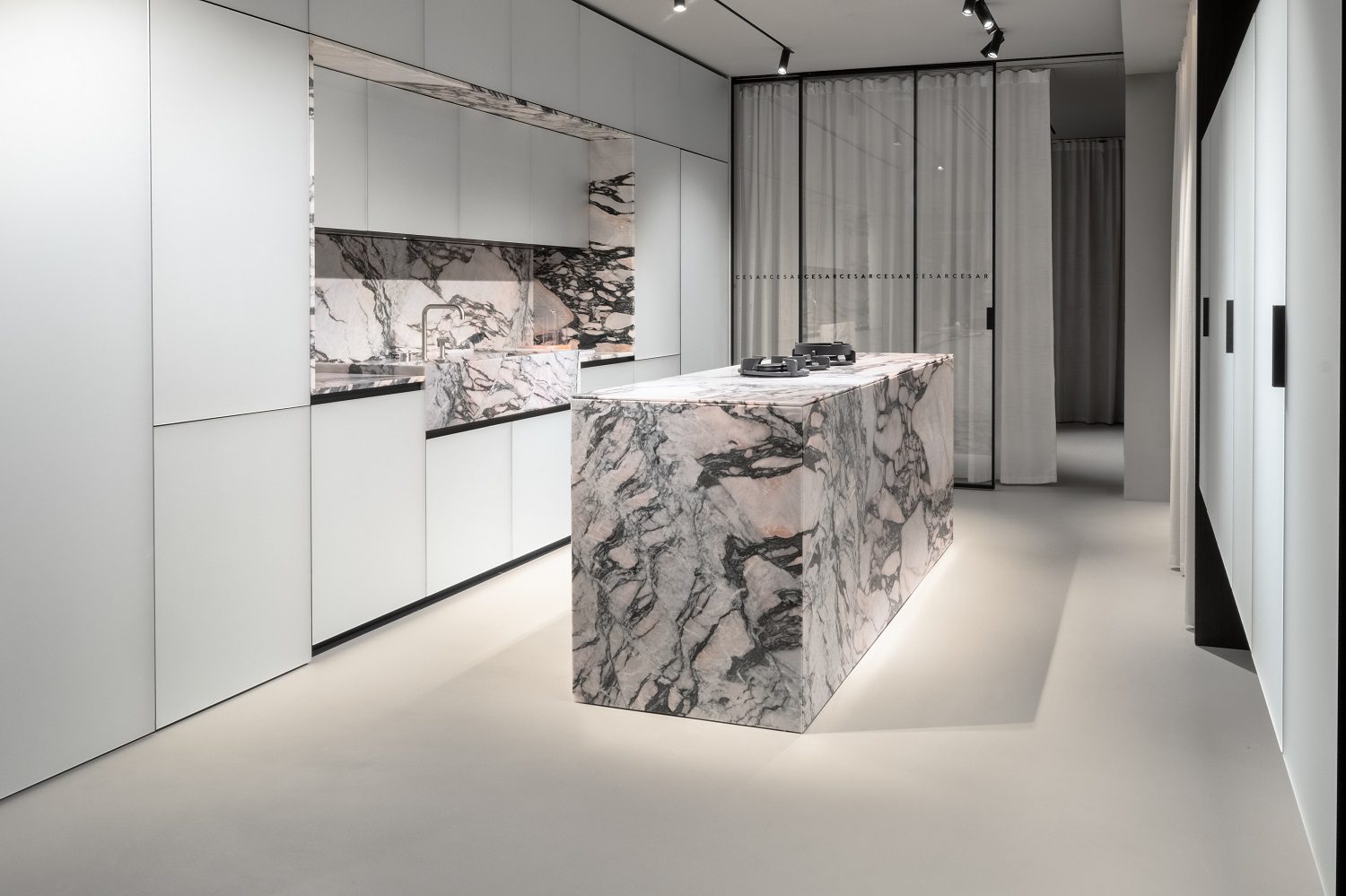
Each time Cesar undergoes a transformation, the Milan Flagship Store evolves as well. It is here that the direction of the brand becomes visible and tangible. The new space, designed by García Cumini, was conceived as an immersive manifesto in which architecture and product construct a continuous narrative. The environments unfold fluidly, without sharp separations, alternating more open and convivial areas with more intimate and design-focused zones.
Material surfaces, sophisticated finishes, and carefully calibrated combinations give life to a layered domestic landscape, where each element contributes to defining a sensory balance. The different display configurations do not present closed solutions, but rather suggest possibilities—allowing the brand’s systems to demonstrate their ability to adapt to different contexts and functions. For Cesar, speaking about the future means listening to the present, embracing change, and transforming it into design.
Exhibition Design
At Via Larga 23, the new Cesar Flagship Store unfolds across three levels with a total surface area of approximately 500 square meters. Its seven street-facing windows, overlooking the heart of one of Milan’s main design districts, introduce a space conceived to welcome visitors into a warm and refined atmosphere, where design, material, and architecture engage in a continuous dialogue.
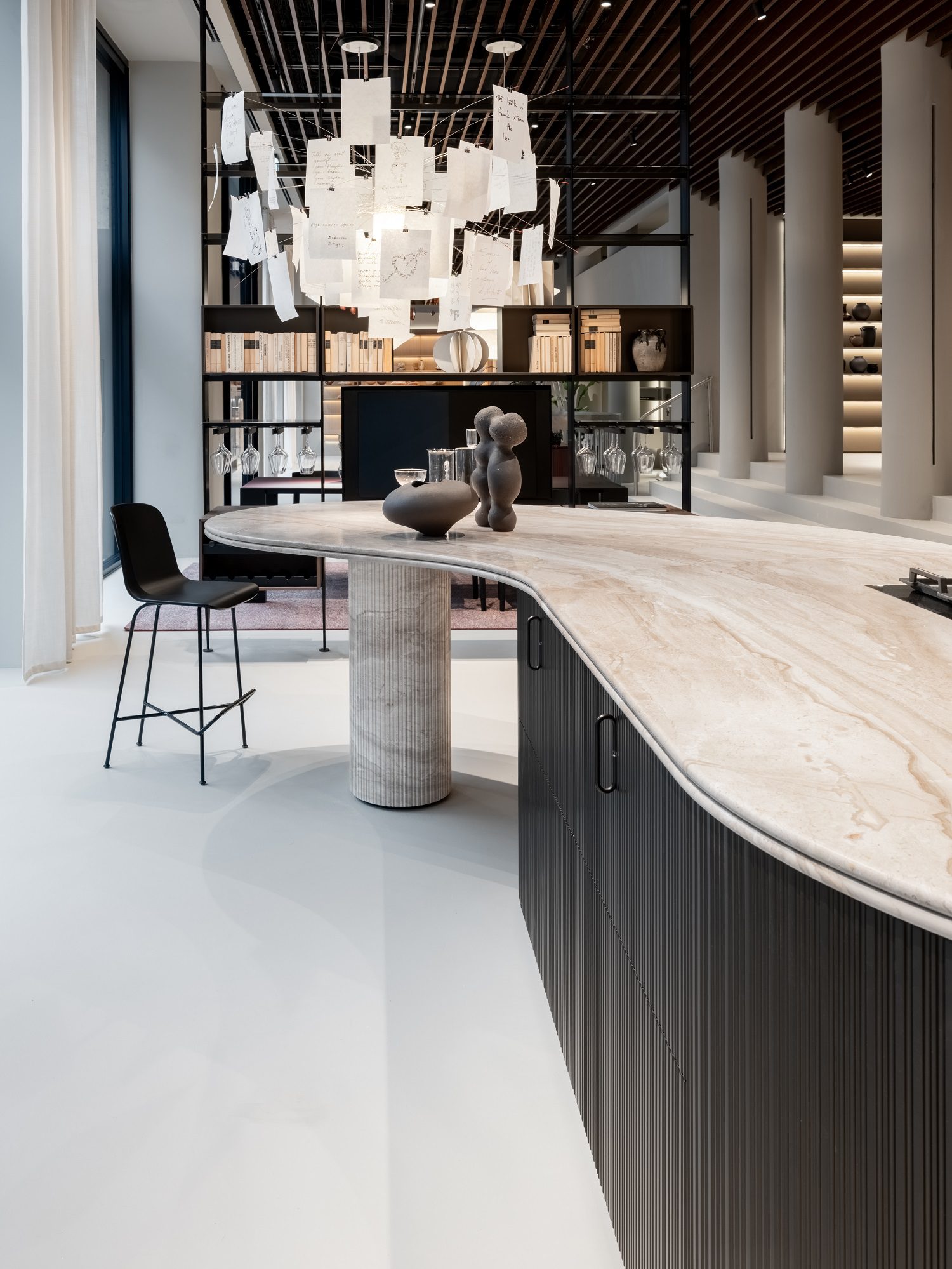
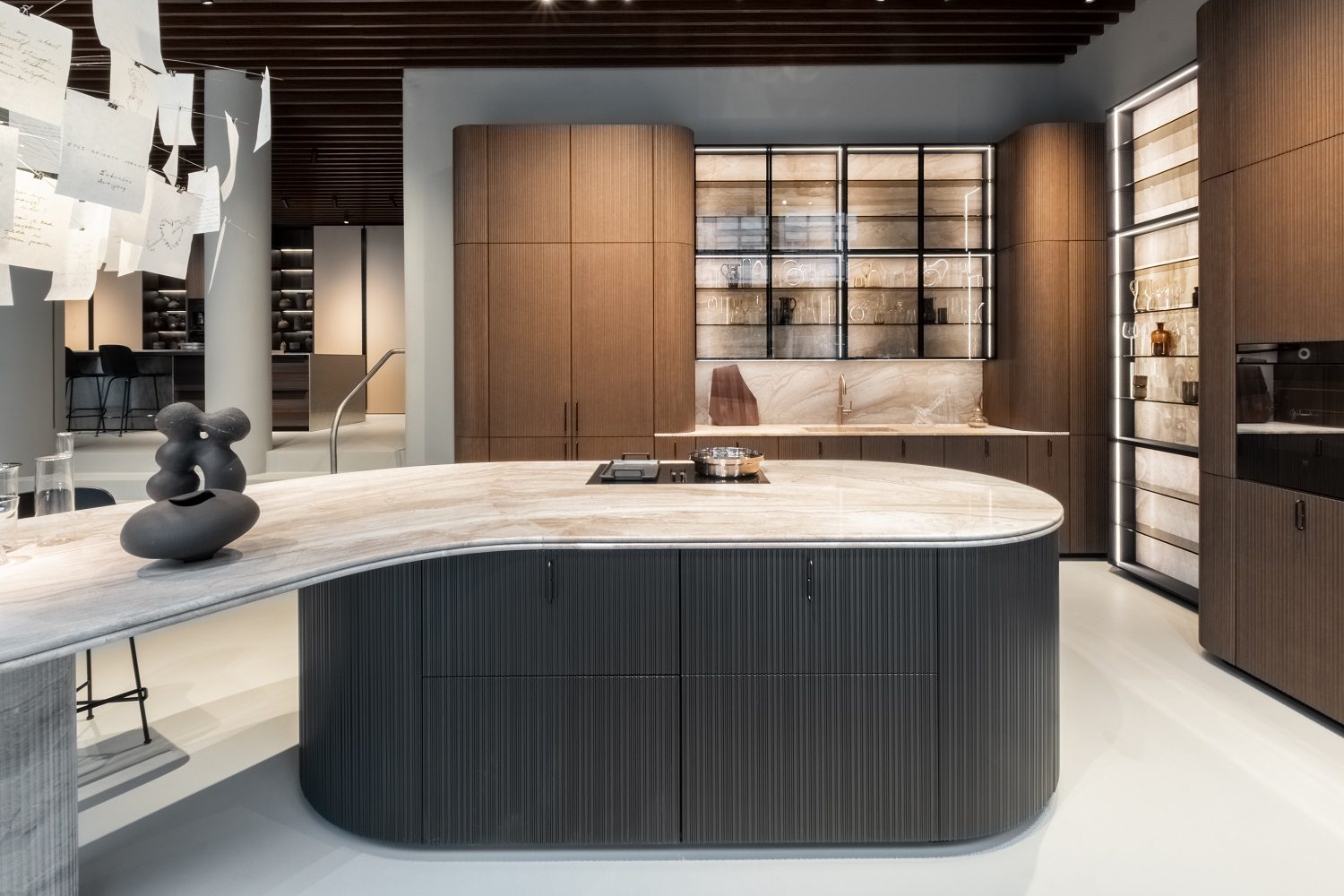
At the entrance, the scene opens onto a composition that highlights the evolution of the Tangram collection: a tall wall-mounted unit with Groove doors in Rovere Cortado is paired with a central island in Anodyc Bronze, a strongly scenographic element whose Breccia Sarda top extends seamlessly into a snack counter, supported by a natural stone column. The new Palmier edge defines the perimeter of the top, emphasizing attention to detail and craftsmanship.
Adjacent to this, the living area introduces The 50s in its double-sided version, enriched by a new rotating TV module in Rovere Cortado, designed to define the space without interrupting visual continuity. The Solido table features a new top in the Nuance Rosso Jaipur finish, further expanding the chromatic dialogue of the environment.
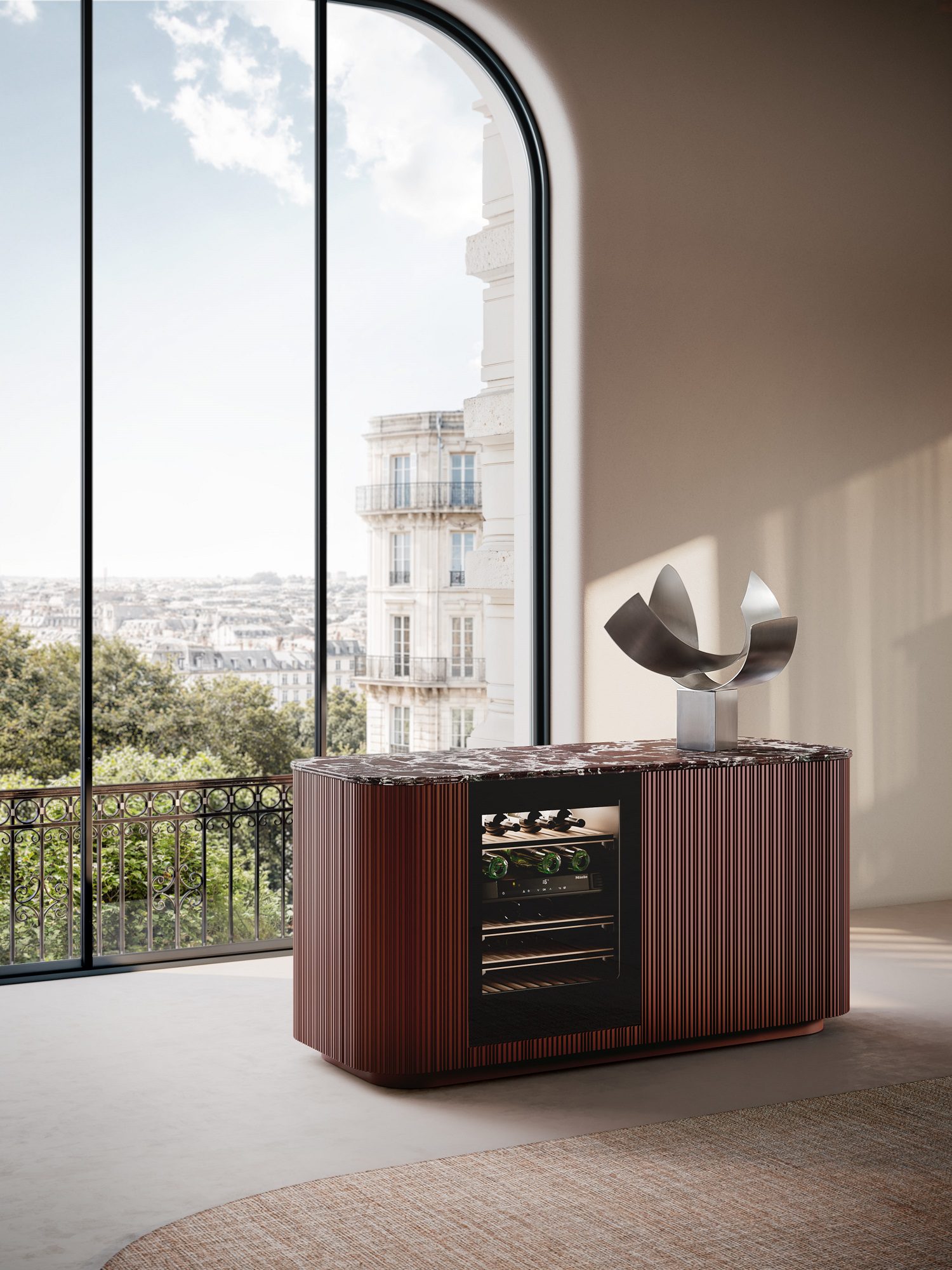
The composition is completed by a Tangram sideboard with Groove doors and a Rosso Lepanto marble top, in a material interplay that expresses the chromatic and compositional potential of the system.
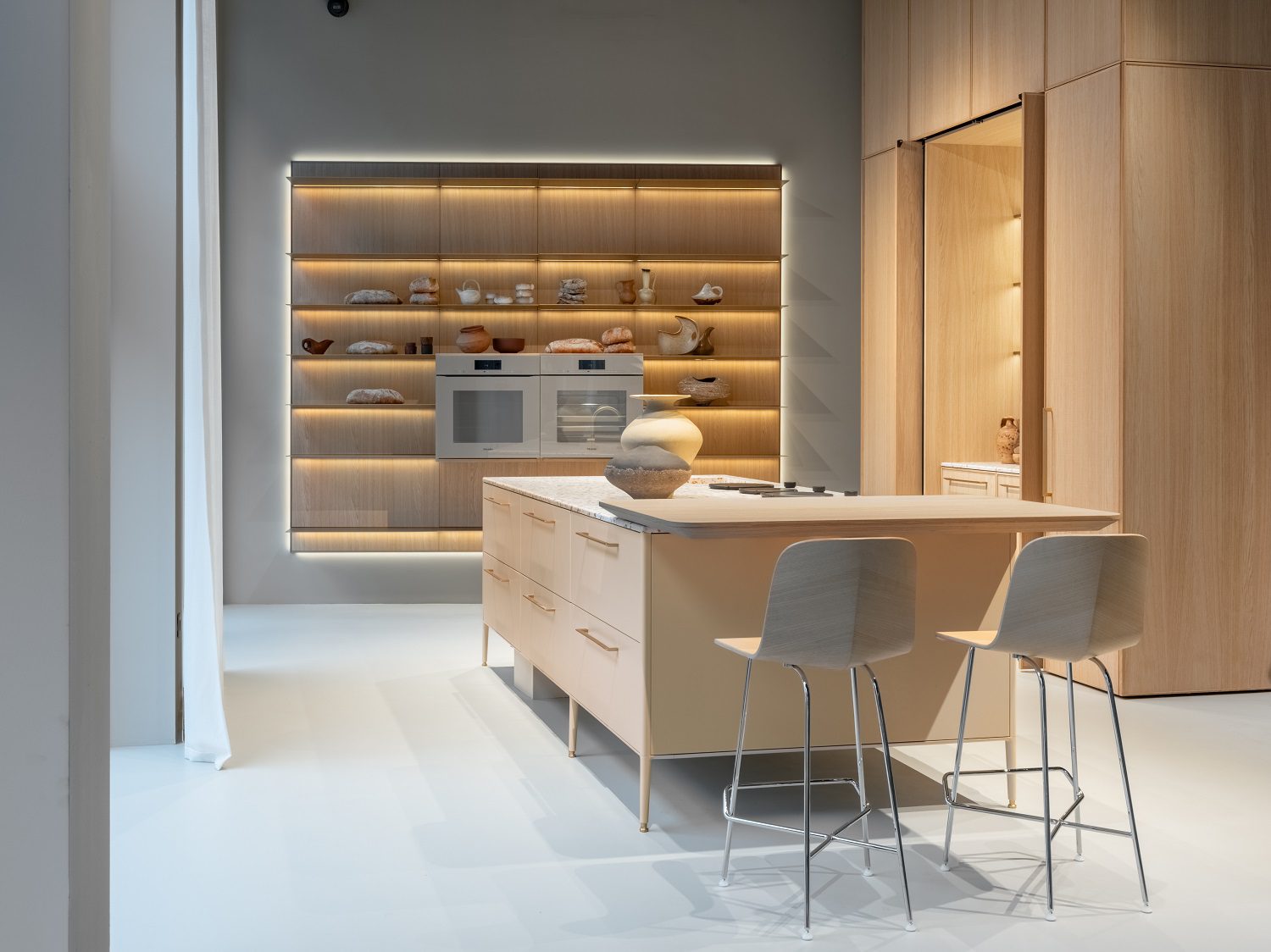
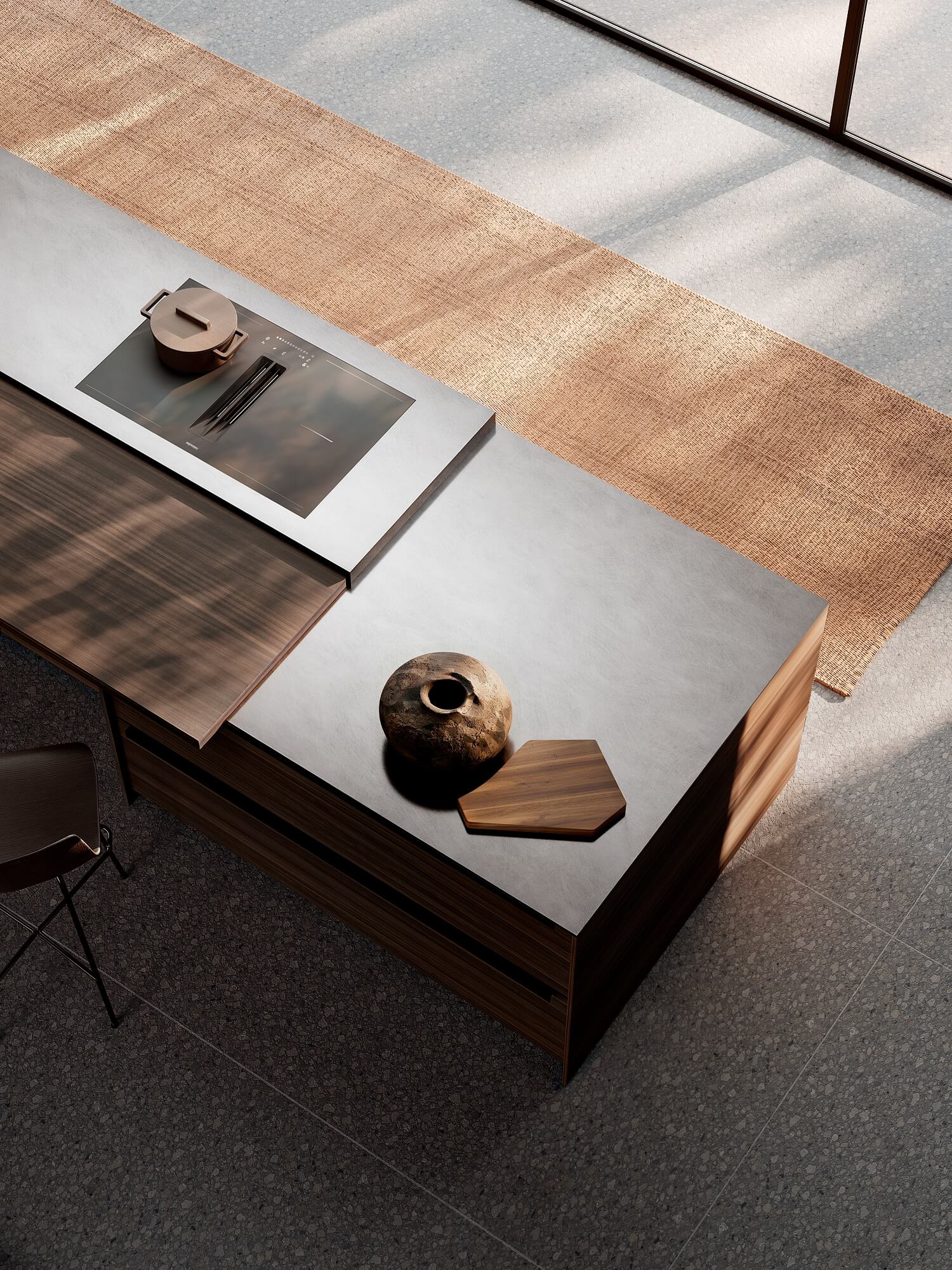
On the opposite side, the Unit island presents a new pull-out snack top in Nordic Oak, combined with a top in the new Palazzo Foscari terrazzo and doors in Trama essence, characterized by a texture that evokes the materiality of fabric. The whole is integrated with the new Chassis boiserie system, designed to accommodate suspended appliances and shelves, expanding the functional and design possibilities of the kitchen environment.
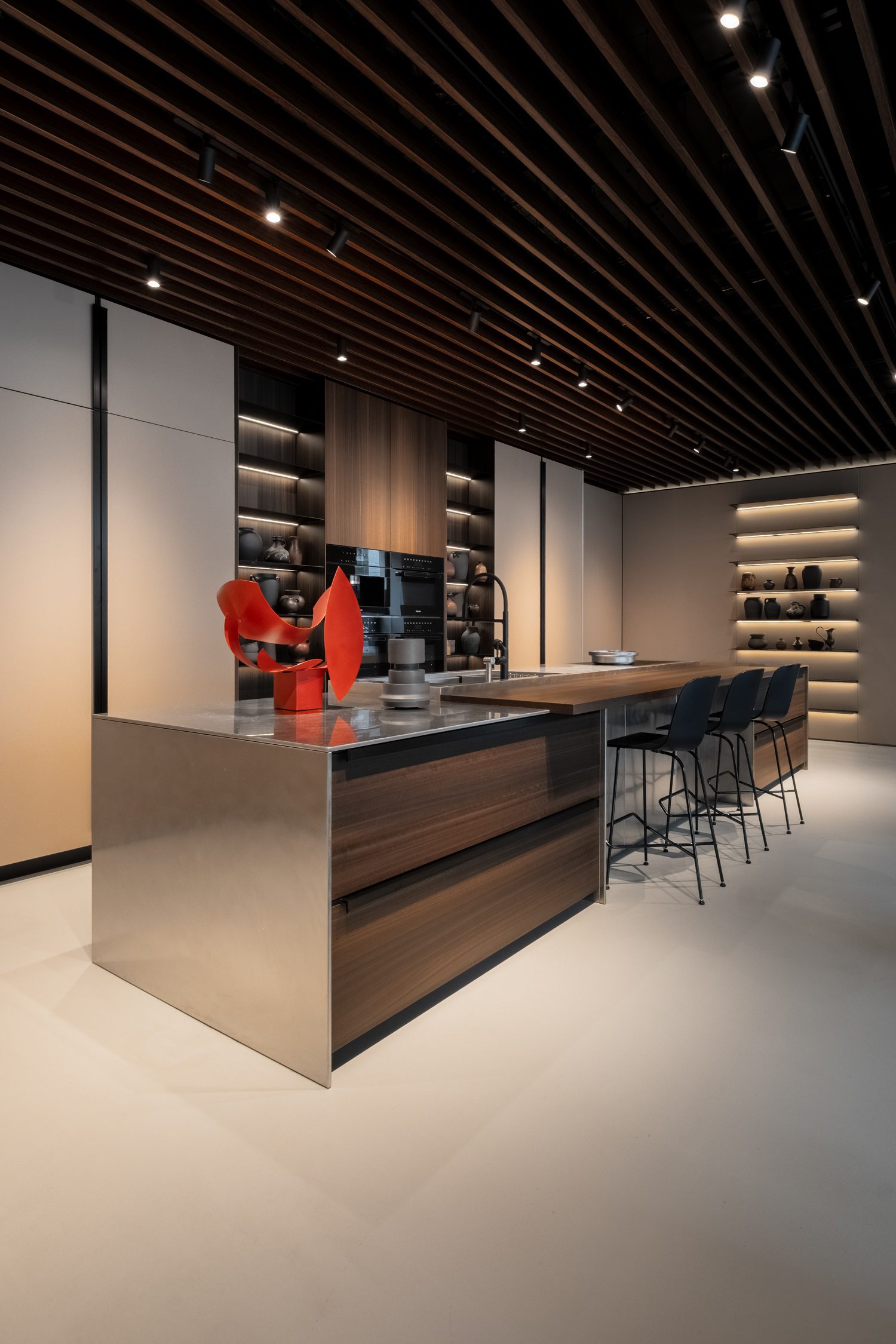
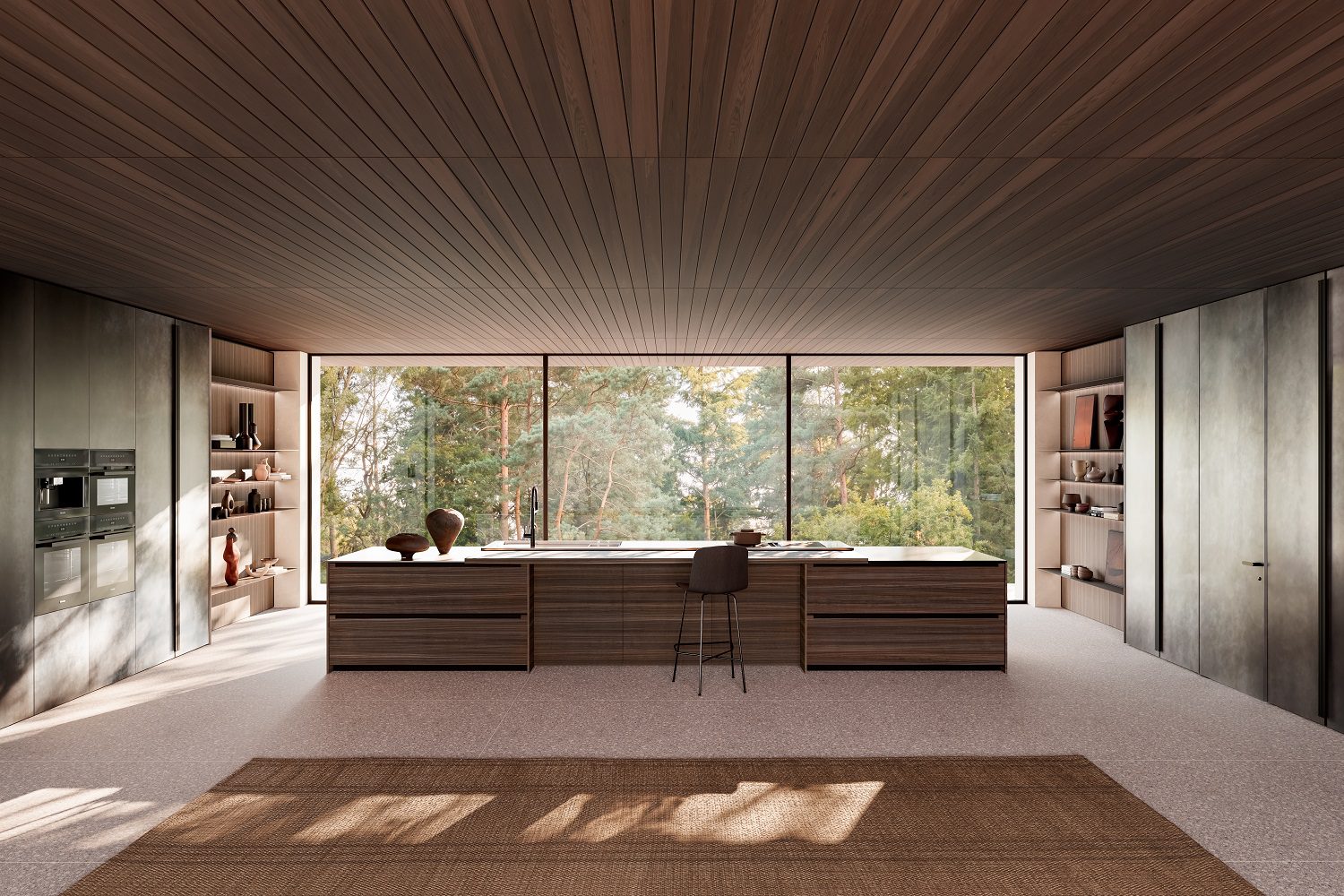
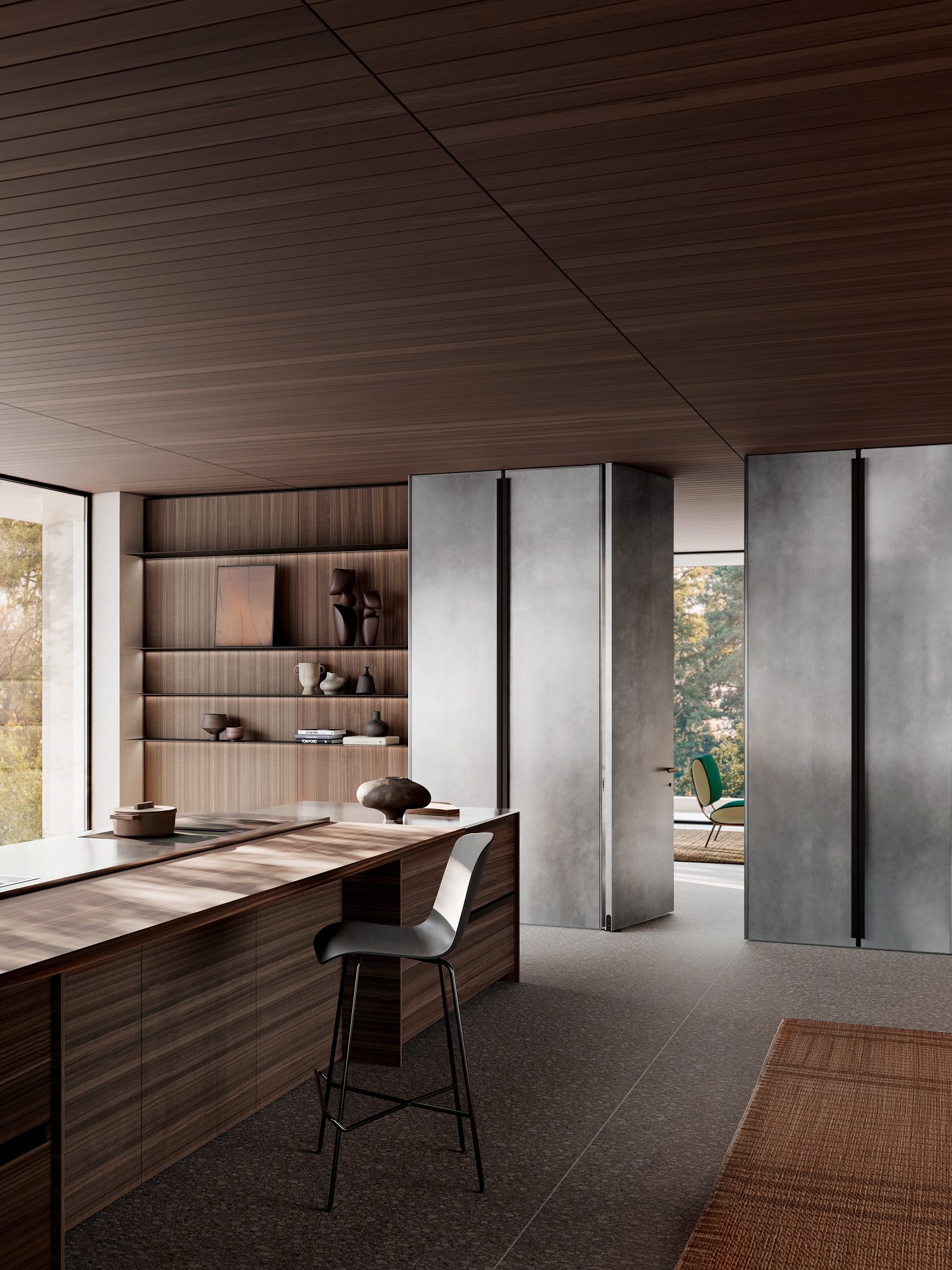
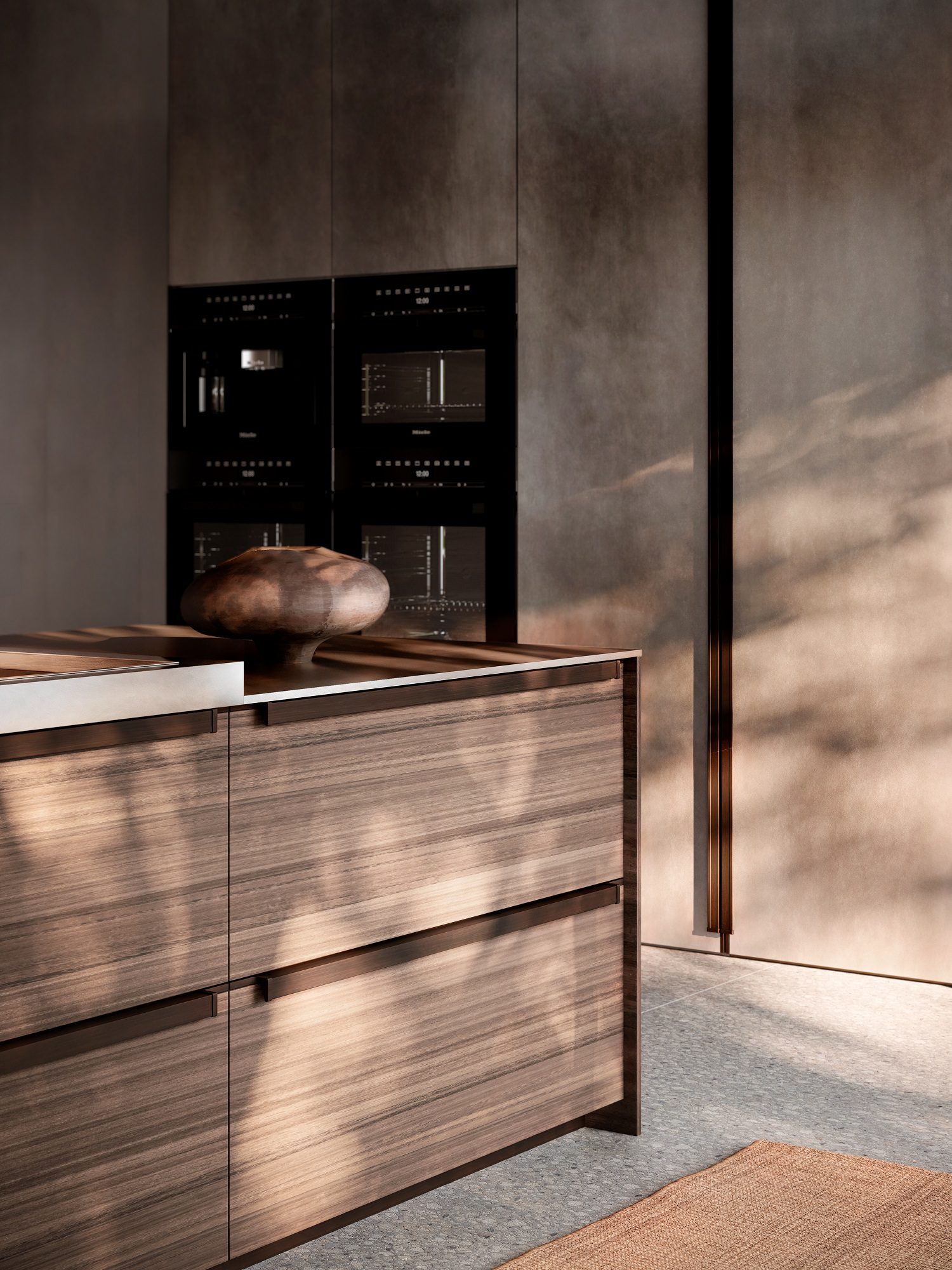
At the center of the space, on a raised platform, the Maxima 2.2 kitchen stands as a synthesis of Cesar’s design capability. Here, the new Contour handle, designed by García Cumini, was introduced, redefining the system’s aesthetic. The island is presented in Eucalyptus essence with vintage stainless steel tops and sides, while the wall composition is finished in Mineral Stone Canyon lacquer. Completing the environment, the Chassis boiserie reinforces the continuity between kitchen and architecture, contributing to an increasingly integrated vision of the domestic space.
A metal helical staircase, characterized by a play of solids and voids that rhythmically structures the surface, leads to the lower floor, where the exhibition continues and opens onto a constantly evolving material library.
On the lower level, the N_Elle kitchen features a central island emerging as a monolith in Notre Dame marble, while the linear Maxima 2.2 composition is presented in a new mirrored extra-clear etched glass finish, expressing the ongoing evolution of Cesar’s material language.
The space is completed by an additional living area, highlighting the versatility of the Archè boiserie system and storage elements such as Dress Up and suspended solutions in the exclusive Quercia Tabacco finish. The Unit coffee table, crafted in the same marble, reinforces the material coherence of the environment, confirming the brand’s ability to extend its design language across the entire domestic space.
New Perspectives in Italian Kitchen Design
Tangram: System Evolution
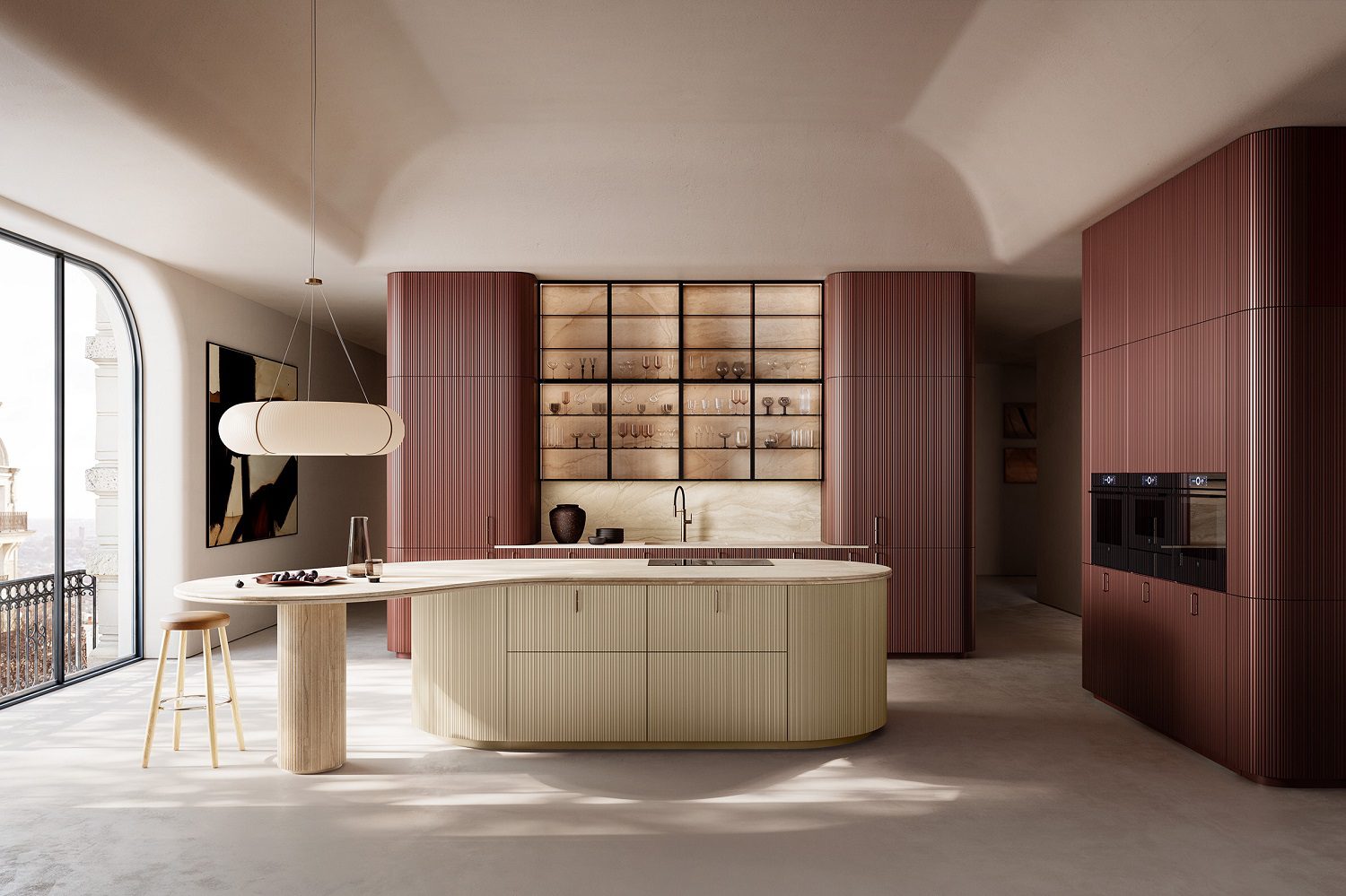
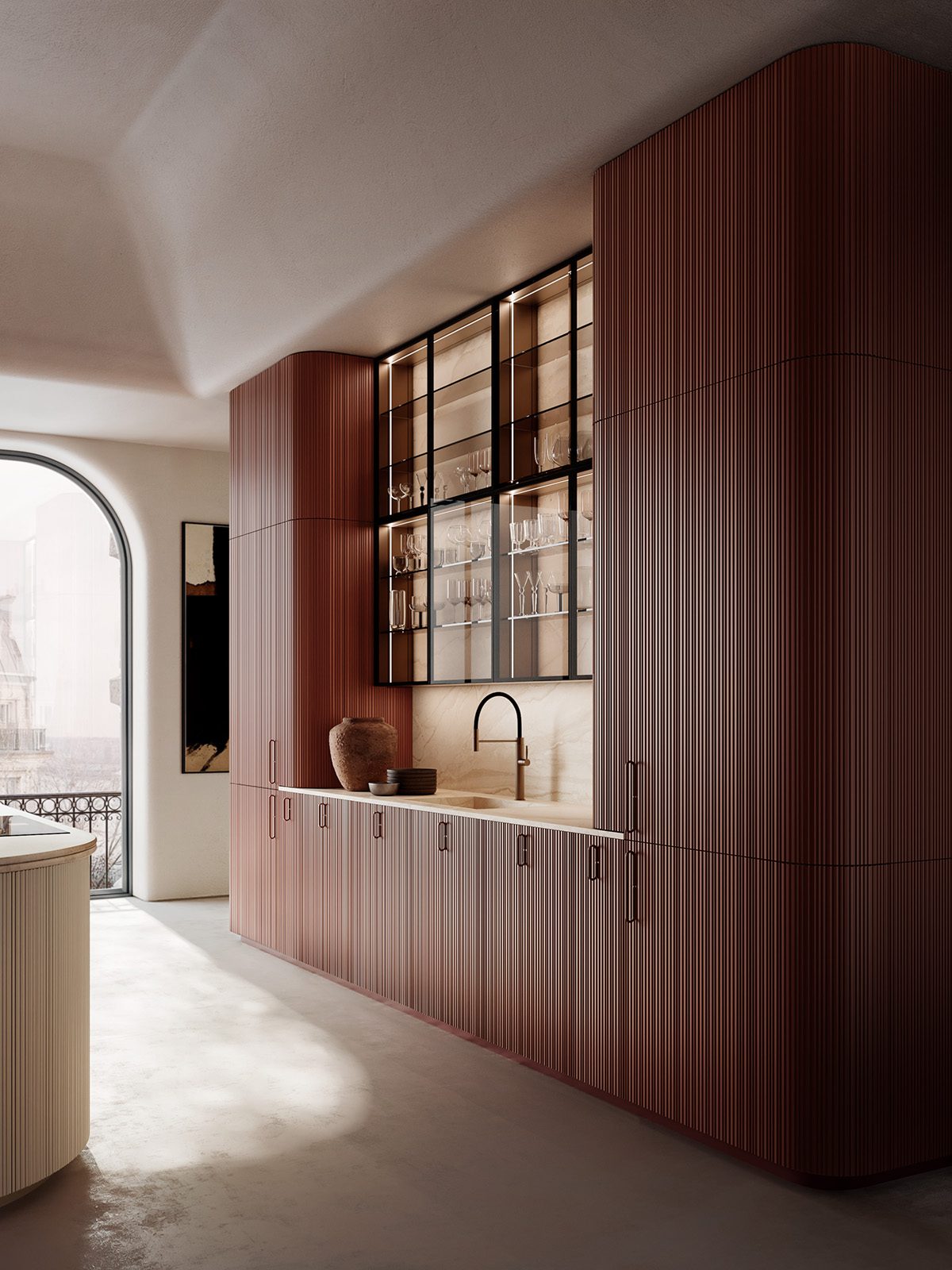
With its latest update, Tangram consolidates and expands its design language, extending its compositional logic beyond the island to include columns, wall units, and base cabinets. Designed by García Cumini, the system stands out for its unconventional approach to geometry: surfaces shaped through variable-radius curves, sometimes combined with fixed radii, generate organic and ever-changing configurations.
The visual rhythm defined by the Groove pattern becomes an identity element, activating a dynamic dialogue between light and shadow that transforms the surface into a perceptual experience. With the introduction of the new Palmier edge, Tangram further strengthens its character, confirming itself as a system capable of combining formal research and technical complexity in a fluid and recognizable language.
Maxima 2.2: Evolutionary Continuity
Maxima 2.2 represents the most complete expression of Cesar’s design vision: a system conceived to evolve over time through continuous updates while maintaining its coherence. Not simply a configurable kitchen, but an open design platform capable of embracing new interpretations without losing identity. The recent introduction of the new Contour handle, with a more defined and geometric profile, reinforces the system’s contemporary character and its enduring relevance. Maxima 2.2 stands out for its ability to adapt to changing ways of living, constantly renewing itself without ever appearing dated.
Unit: The Kitchen as a Free Element
Unit further evolves its concept of an independent kitchen, freed from the rigidity of traditional configurations. Characterized by a structure raised on feet that visually lighten its presence, it emerges as a flexible and dynamic system capable of inhabiting space autonomously. The new snack top introduces an even more convivial dimension, transforming the island into a central point of interaction and sharing. With Unit, the kitchen loses its static nature and becomes a mobile, open element in continuous dialogue with its surroundings.
Home Elements: Extending the Domestic Language
Cesar continues its expansion beyond the kitchen, bringing its design language into living and dining spaces. The 50s bookcase, enhanced by a new rotating TV support, becomes an architectural element capable of defining and connecting environments, separating without interrupting visual continuity. The Solido table introduces the new Nuance top, characterized by red tones that expand the brand’s chromatic research. In this context, each element contributes to building a coherent environment in which function and identity interact harmoniously.
Chassis and Archè: New Boiserie Systems
Cesar introduced a new design category with the Chassis and Archè boiserie systems, conceived to extend the functionality and language of the kitchen across the entire domestic space. Not merely accessory elements, but true wall architectures capable of integrating storage, display, and suspended appliances. These systems expand compositional possibilities, offering new ways to organize space and reinforcing continuity between kitchen, living areas, and service spaces.
New Finishes
Cesar’s research into finishes continues steadily, driven by the desire to expand and enrich its material language year after year. A path rooted in continuous design exploration, aimed at investigating new surfaces, colors, and textures to offer increasingly sophisticated combinations. In this context, finishes become true design tools, conceived to generate unprecedented pairings and material stratifications capable of defining distinct identities—not merely aesthetic variants, but active elements contributing to the creation of coherent and recognizable environments.
Melaminici: Quercia Tabacco, Avorio Soft ed Effetti pietra
La famiglia dei melaminici Quercia si amplia con l’introduzione della finitura Tabacco: una tonalità marrone medio-scura, calda e avvolgente, che conferisce profondità ed eleganza agli ambienti. Una proposta esclusiva Cesar, esito di una ricerca attenta sul rapporto tra materia e percezione cromatica.
La palette delle tinte unite si arricchisce con Avorio Soft, una nuance neutra e accogliente, pensata per integrarsi con naturale equilibrio all’interno delle composizioni. Una finitura trasversale, capace di dialogare con tutte le superfici di gamma, incluse ceramiche e marmi.
La collezione si amplia poi con tre nuovi effetti pietra dal carattere contemporaneo: Pietra Grey, Pietra Graphite e Pietra Gold. Superfici dalla texture materica ma controllata, declinate in due varianti grigie e in una versione dorata più luminosa. Un insieme di finiture che introduce profondità e raffinatezza, ampliando le possibilità espressive del progetto.
Unicolor: Malta e Travertino e Noce Dogale
All’interno della palette Unicolor, nuove interpretazioni materiche arricchiscono la gamma con le tinte unite Malta Ivory e Malta Light Grey, essenziali e versatili, affiancate dalla finitura Travertino, più intensa e materica, che reinterpreta la pietra naturale in chiave contemporanea. Completano la proposta due ulteriori varianti pietra, chiara e scura, pensate per definire ambienti dal carattere deciso e distintivo.
La collezione si completa con una nuova finitura noce che reinterpreta il calore e la nobiltà del legno in chiave contemporanea. Una superficie profonda e sofisticata, capace di generare atmosfere accoglienti e di forte identità materica.
Melamines
Quercia Tabacco: The Quercia melamine family expands with the introduction of the Tabacco finish: a medium-dark brown tone, warm and enveloping, that brings depth and elegance to interiors. An exclusive Cesar proposal, the result of careful research into the relationship between material and color perception.
Avorio Soft: The solid-color palette is enriched with Avorio Soft, a neutral and welcoming nuance designed to integrate with natural balance within compositions. A versatile finish, capable of harmonizing with all surfaces in the range, including ceramics and marbles.
Stone Effects (Pietra Grey, Pietra Graphite, and Pietra Gold): The collection expands with three new stone-effect finishes defined by a contemporary character: surfaces with a tactile yet controlled texture, developed in two grey variants and a brighter gold version. A set of finishes that introduces depth and refinement, broadening the project’s expressive possibilities.
Unicolor (Malta and Travertino): Within the Unicolor palette, new material interpretations enrich the range with the solid colors Malta Ivory and Malta Light Grey—essential and versatile—alongside the Travertino finish, more intense and textural, reinterpreting natural stone in a contemporary key. The offering is completed by two additional stone variants, light and dark, designed to define interiors with a strong and distinctive character.
Noce Dogale: The collection is completed with a new walnut finish that reinterprets the warmth and nobility of wood in a contemporary key. A deep and sophisticated surface, capable of creating welcoming atmospheres with a strong material identity.
Woods
Rovere Nordico: Research on oak is renewed through a new interpretation in sliced veneer, creating a refined inlay effect across the surface. A light, vibrant interplay that responds to light, bringing movement, depth, and a new tactile perception of the material.
Glass
Ghiaccio, Grigio, Brown: Experimentation with glass continues with a new family of mirrored surfaces developed in three color variations. Finishes that amplify light and generate controlled reflections, introducing unprecedented visual effects and a new perceptual dimension to spaces.
Natural Stone
Breccia Sarda: Among the new stone proposals, Breccia Sarda stands out for its dynamic and strongly material character, where warm tones and intricate veining create highly expressive surfaces. A stone that becomes a narrative element, capable of imparting character and depth to interiors.
Terrazzo
Palazzo Foscari and Crema: The terrazzo range expands with two new variants that reinterpret tradition in a contemporary key. Palazzo Foscari and Crema introduce surfaces with a carefully balanced design and refined texture, conceived to enrich compositions with a harmonious balance between materiality and visual lightness.