In the gardens of Villa Antinori, a visual narrative unfolds through images and videos dedicated to Italian cuisine, with the aim of sharing and promoting its values, culture and spirit of conviviality around the world. The project takes shape in the context of the recent recognition of Italian cuisine as UNESCO Intangible Cultural Heritage of Humanity.
Officine Gullo and Villa Antinori, the historic label of Marchesi Antinori, come together to celebrate Italian cuisine as an expression of culture, identity and sharing. The project unites two names with deep roots in Florence and Tuscany, brought together by a shared commitment to research, knowledge and the promotion of Italy’s food and wine heritage.
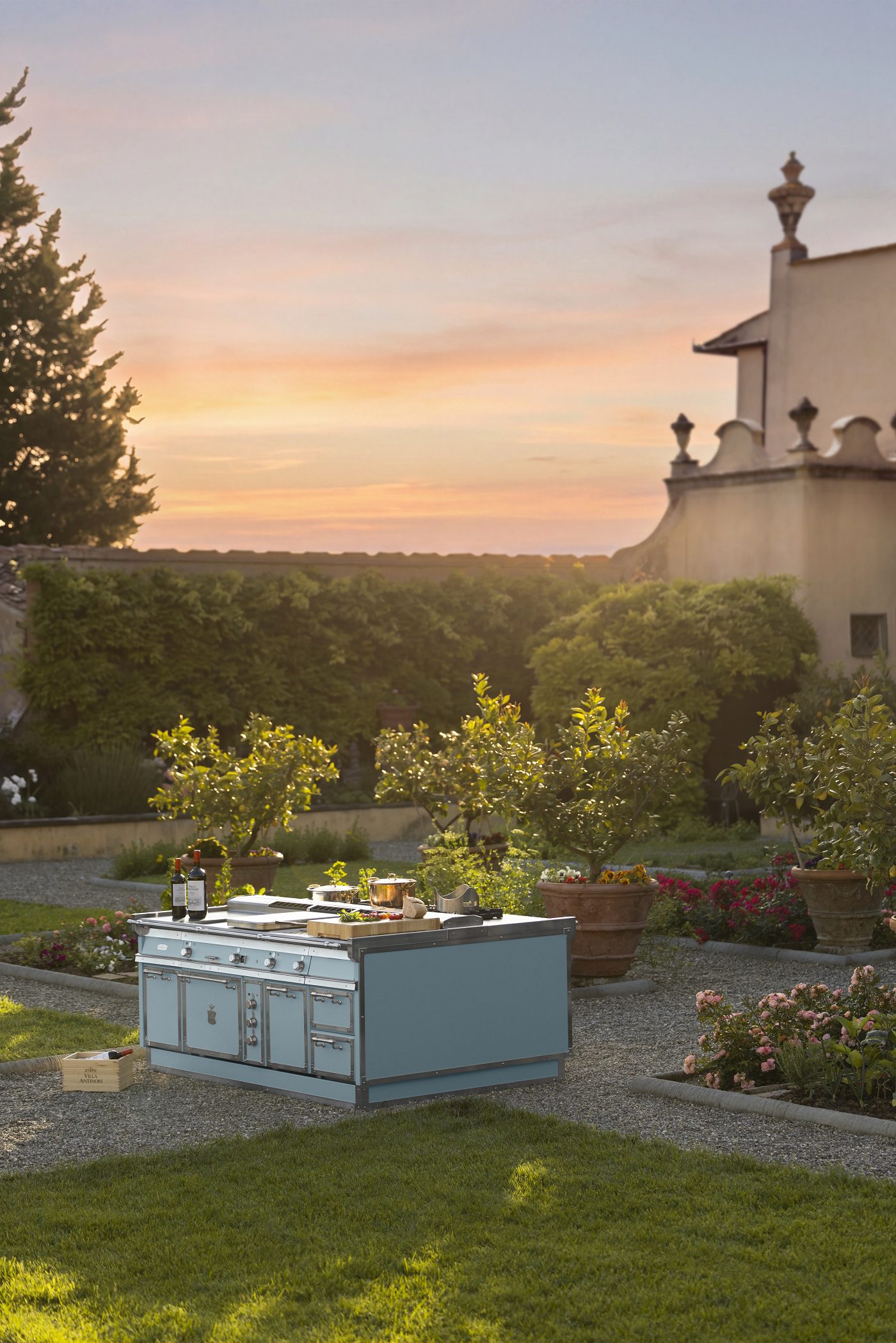
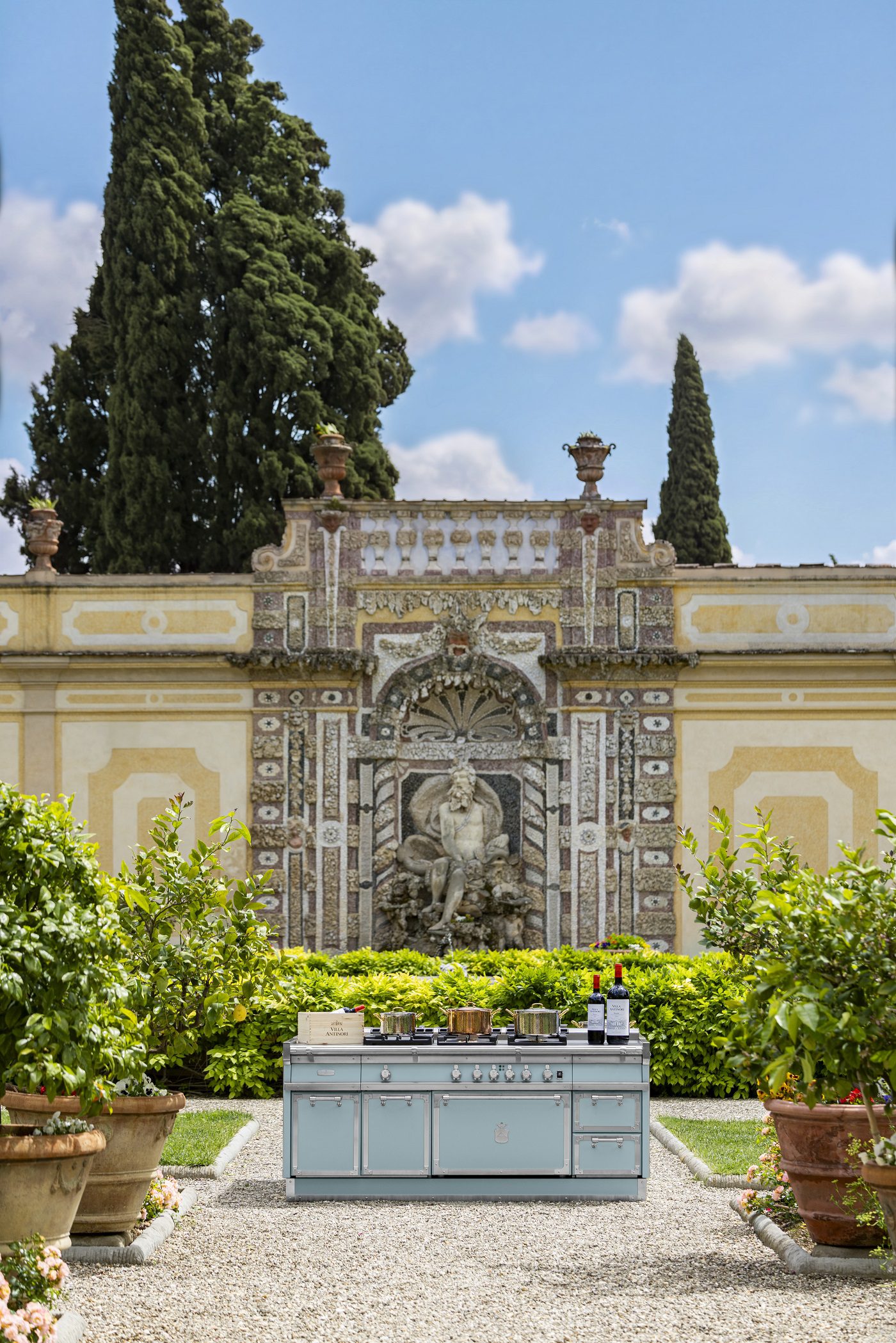
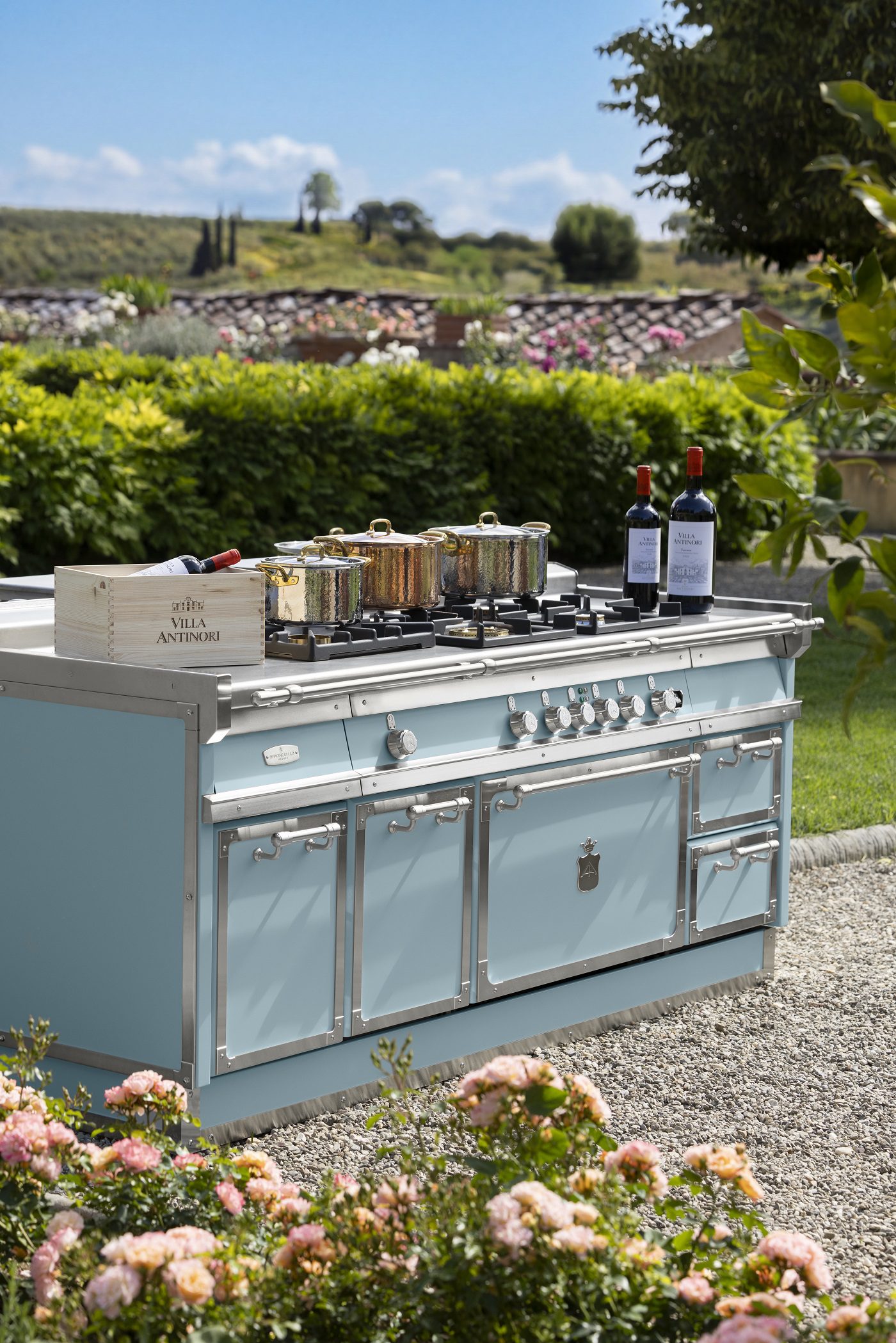
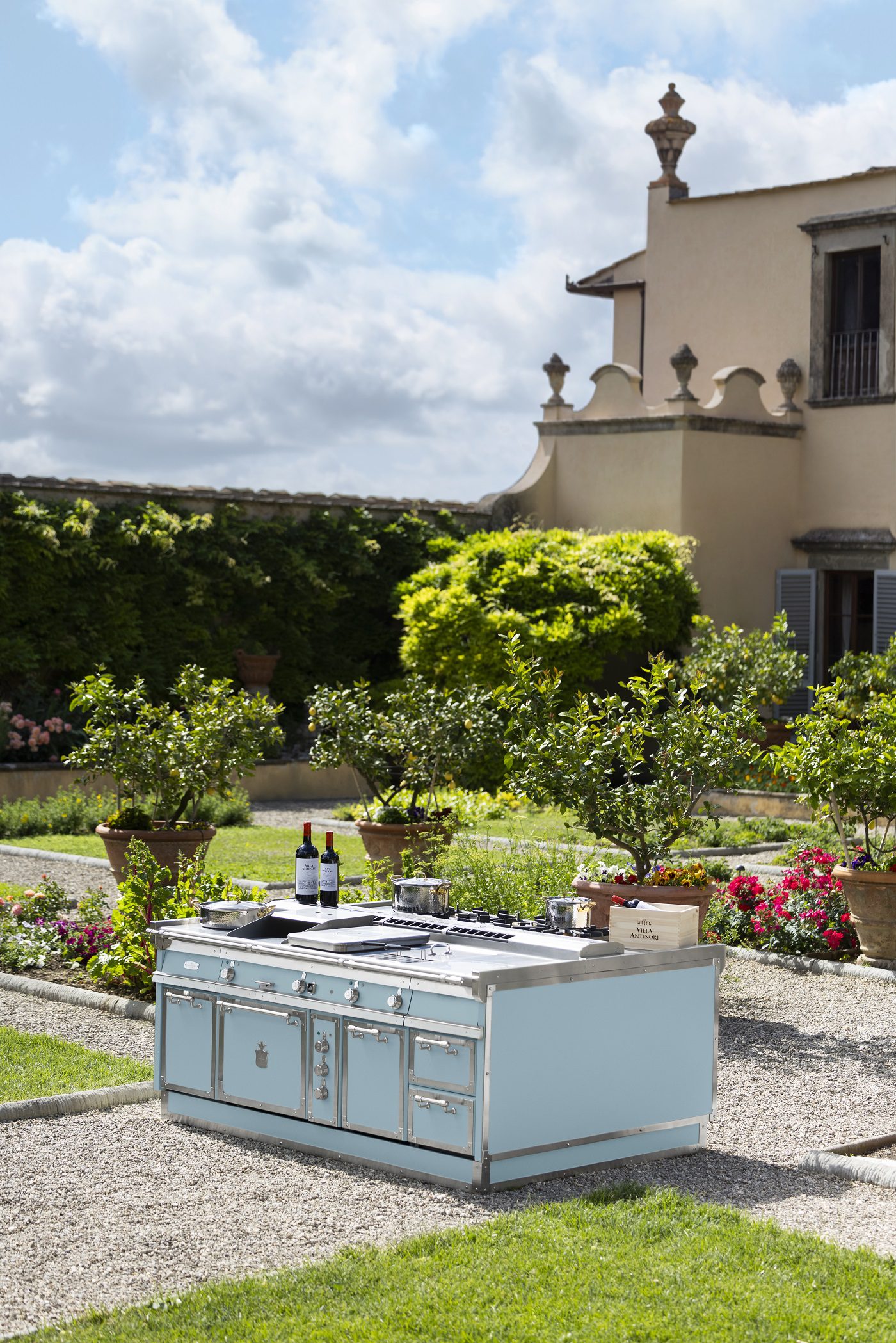
On one side is Villa Antinori, an ambassador of Tuscan wine culture and quality for almost a century; on the other, Officine Gullo, with its bespoke metal kitchens. Two different worlds, united by attention to detail, an intimate knowledge of materials and the ability to renew their respective heritage without compromising its identity.
The story unfolds in the gardens of Villa Antinori, where an Officine Gullo cooking island sits naturally among historic architecture, stone, vegetation and vineyards. The structure’s delicate light-blue tone reflects the colours of the sky and landscape, while the strong presence of metal creates a measured contrast with the natural surfaces around it.
The care devoted to the vineyards, knowledge of the land and the time required for a wine such as Villa Antinori to fully express its identity find an echo in the precision with which the finest materials are crafted and in the bespoke character of Officine Gullo kitchens. In both cases, tradition is not a fixed formula, but living knowledge, capable of evolving and finding new forms of expression.
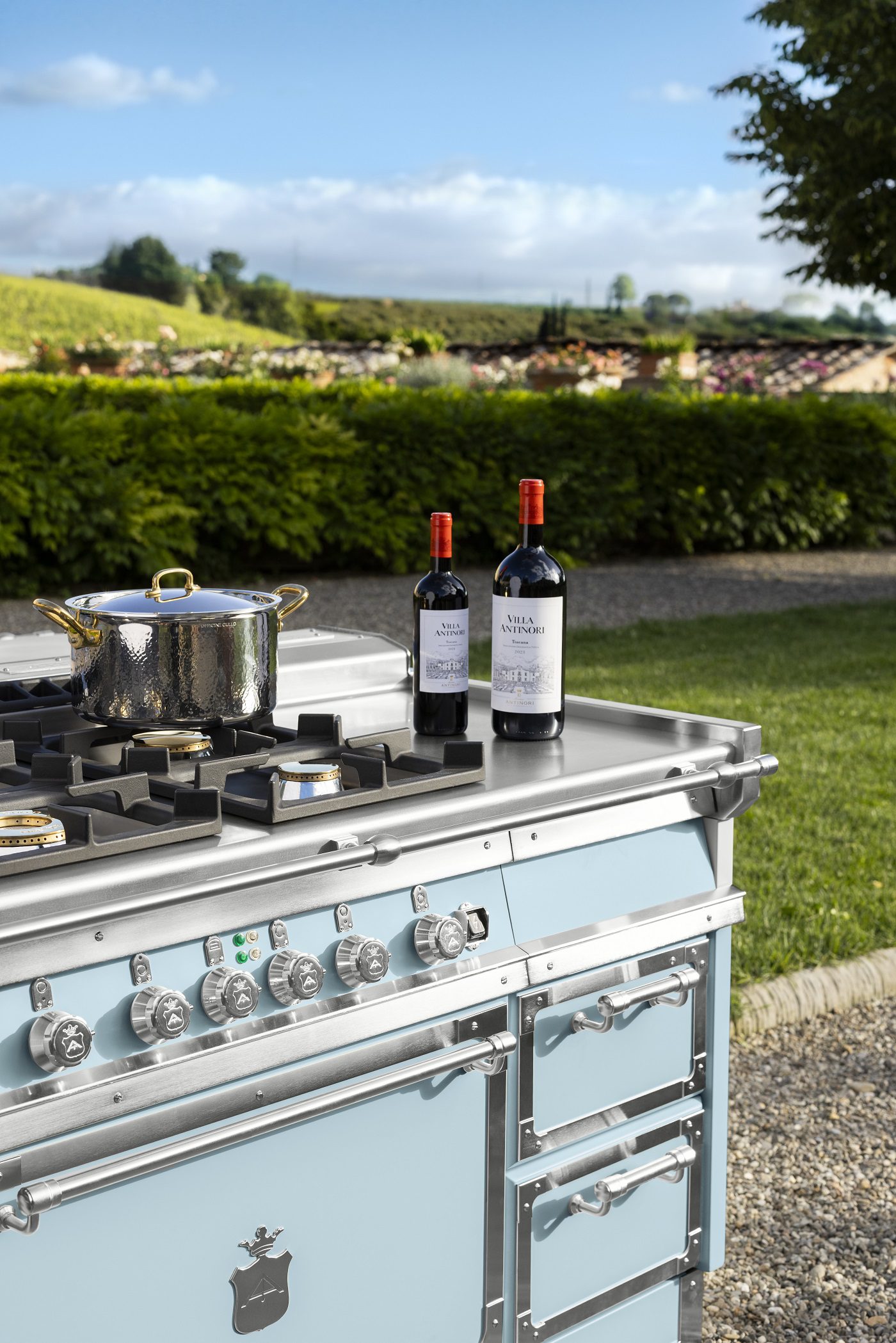
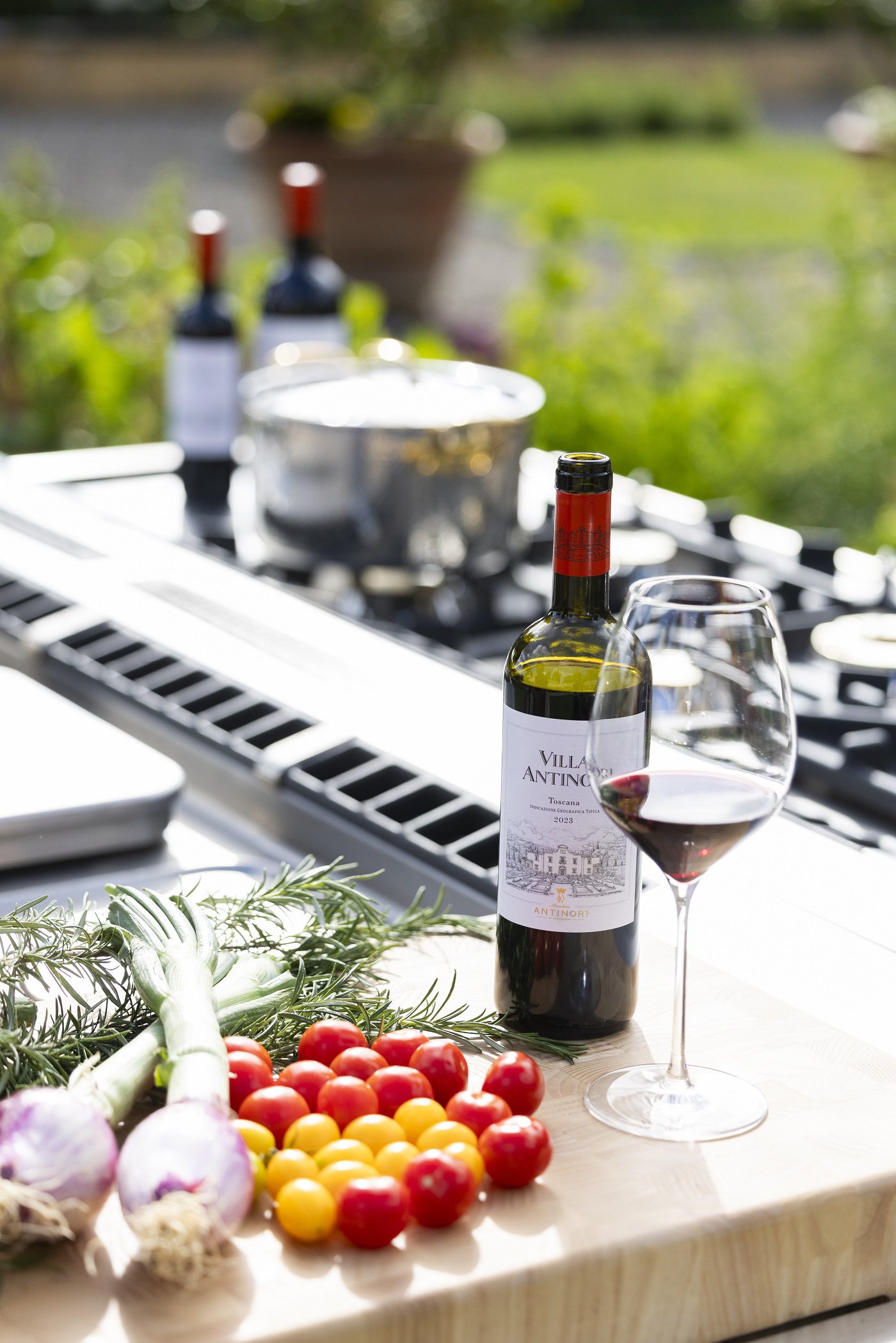
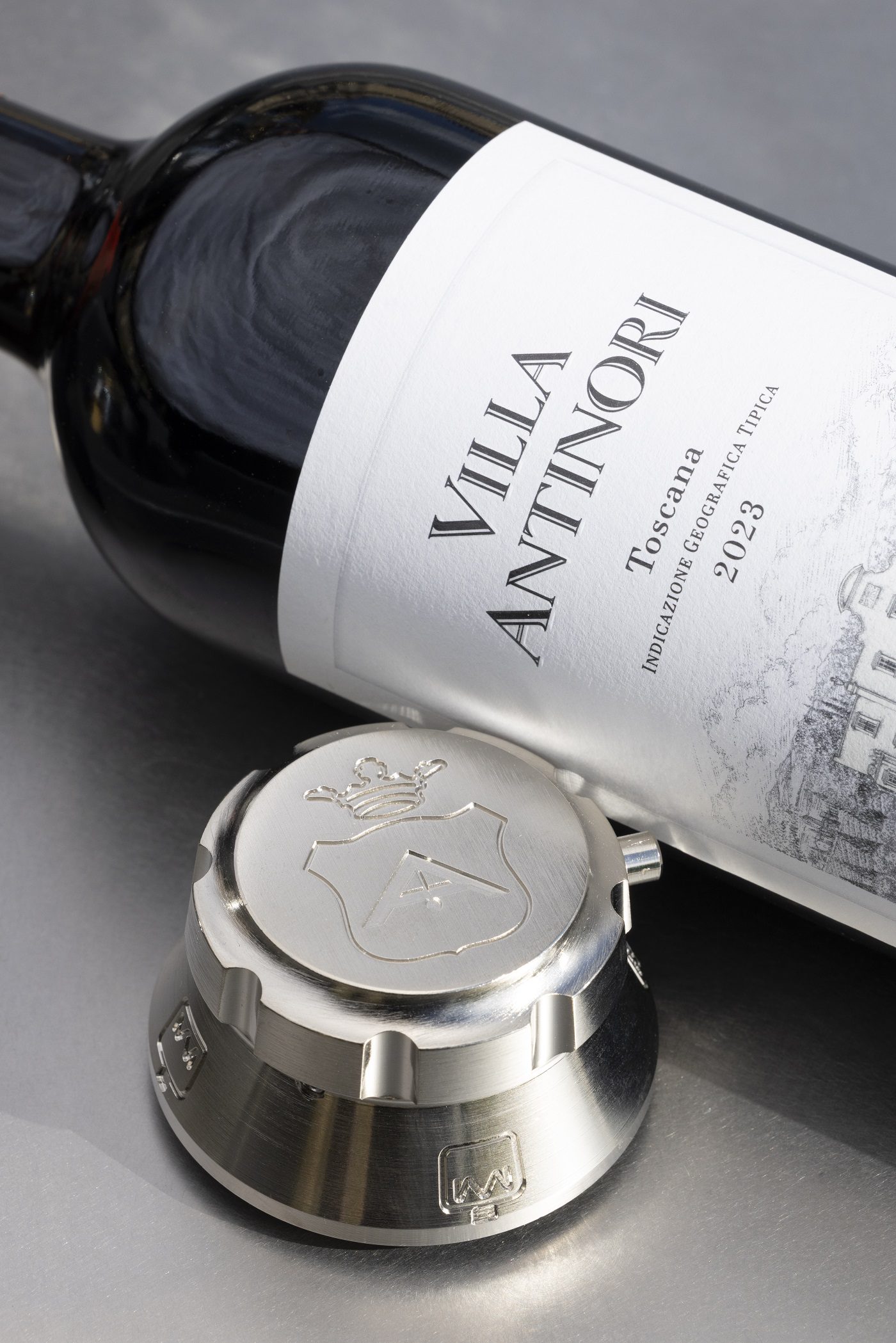
The inscription of Italian cuisine on UNESCO’s Representative List of the Intangible Cultural Heritage of Humanity in 2025 lends further significance to this encounter. Italian cuisine is recognised not merely as a collection of recipes and techniques, but as a cultural and social practice: a setting for human connection, the transmission of memory, respect for ingredients and sharing.
In this Tuscan setting, food and wine meet as complementary expressions of the same culture of hospitality. An everyday heritage that Officine Gullo and Villa Antinori intend to explore and share through a joint programme of research and cultural outreach, helping to keep its values alive and pass them on to future generations.
About Officine Gullo
Officine Gullo is a symbol of Italian excellence in the creation of luxury metal kitchens, professional cooking appliances and kitchen accessories. The company was born from the passionate vision of founder Carmelo Gullo, who now leads it together with his three sons, Pietro, Andrea and Matteo.
The brand has flagship showrooms in leading international cities and design capitals, including Florence, Milan, London, New York, Los Angeles, Palm Beach, Boston, Miami, Dallas, Shenzhen, Moscow and Cape Town.
An authentic expression of Florentine craftsmanship and technological innovation, Officine Gullo creates its products exclusively from noble metals such as brass, copper and stainless steel, using traditional Florentine artisan techniques. The result is an aesthetic that achieves a perfect balance between classic and contemporary style, offering a genuine expression of Italy’s great manufacturing tradition.
Every Officine Gullo kitchen delivers professional-level performance in both cooking and refrigeration, and is designed with particular attention to domestic ergonomics, ensuring maximum comfort and practicality in everyday use.
About Marchesi Antinori
Villa Antinori is Marchesi Antinori’s signature wine, a historic Tuscan label with a contemporary style. In 1928, Niccolò Antinori decided to name the wine after the family villa, so that it would embody his personal interpretation of the identity of Chianti and Tuscany.
Throughout almost a century of history, Villa Antinori has represented, and continues to represent through a contemporary style, the idea of home, place and Tuscany. A wine born from a particular approach to winemaking: experimentation and evolution on the one hand, and historical value on the other.