Buckwheat flour, high-mountain butter, and aged alpine cheese define the traditional Pizzoccheri recipe, a dish rooted in farming history and mountain craftsmanship.
Pizzoccheri, the signature pasta of Valtellina, open a direct window onto their home territory. Local farming history shapes the buckwheat flour; high-altitude pastures and dairy farmers sustain the cheese and butter; time-honored, recognized gestures guide the Pizzoccheri recipe; a deep culture of hospitality anchors the dining table.
Buckwheat flour, white flour, potatoes, savoy cabbage, butter, and Valtellina Casera DOP: simple ingredients tied to the history and environment of the valley. Together, they form a hearty dish born from rural tradition and now celebrated as a gastronomic symbol of Valtellina.
Where other grains failed to thrive, buckwheat—a pseudocereal likely introduced in the late Middle Ages from Siberia and Manchuria via Central Europe and the Black Sea—spread rapidly across the terraced slopes of Valtellina, becoming a cornerstone of peasant cooking. Its dark, intensely aromatic flour takes center stage in the pasta, while providing a solid source of protein, fiber, minerals, and antioxidants.
To dress the pasta, cooks rely on Valtellina Casera DOP, a semi-skimmed cow’s milk cheese prized for its delicate flavor and melting quality. Its ability to meld with the hot ingredients builds the signature creaminess of the dish, expressing the culinary heritage of Valtellina.
Alpine pasture butter (burro d’alpe) completes the Pizzoccheri recipe, bringing richness and depth of flavor. Churned from the cream of cows grazing at high altitudes, it captures the essence of mountain pastures. Once a vital winter food reserve, it remains a pillar of traditional Valtellina cooking.
The Artisanal Craft Behind the Pizzoccheri Recipe
In the heart of Valtellina, in the small village of Teglio, the Accademia del Pizzocchero di Teglio was founded in 2002 to protect, promote, and share the Pizzocchero of Teglio alongside the broader food and wine heritage of the Sondrio province. Over the years, its commitment has turned the Academy into a benchmark for preserving Valtellina’s culinary culture.
Making pizzoccheri preserves an artisanal dimension central to the heritage safeguarded by the Academy. Key to these gestures is scarellatura, the craft of working and rolling out the dough with a rolling pin to reach the exact thickness needed for cutting the pasta strips. Written instructions alone cannot teach the technique. One observes, practices, and repeats. Skill passes directly from experienced hands to learners. For this reason, the Academy runs educational programs with younger generations, bringing the culture of pizzoccheri into schools and keeping traditional know-how alive.
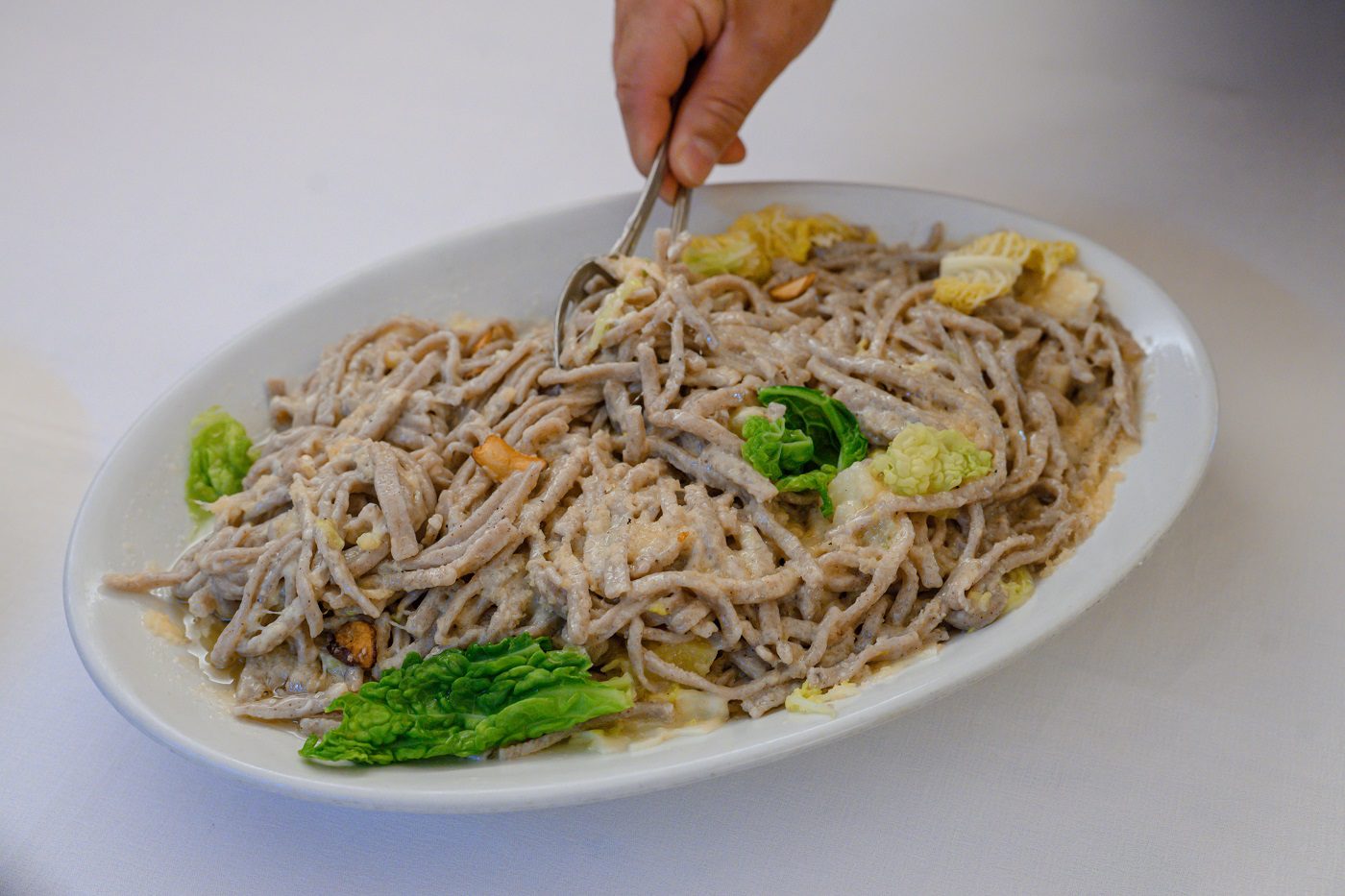
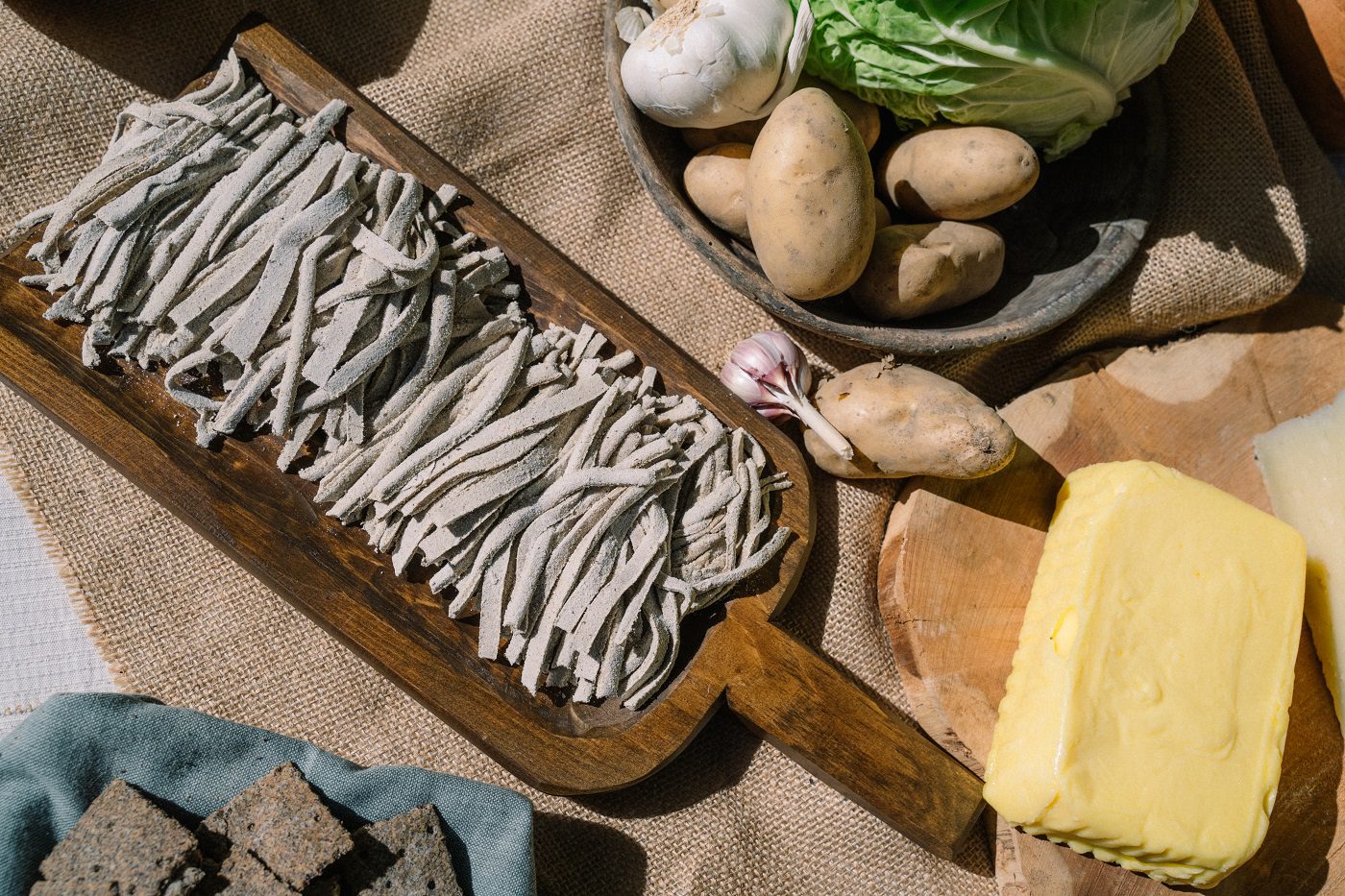
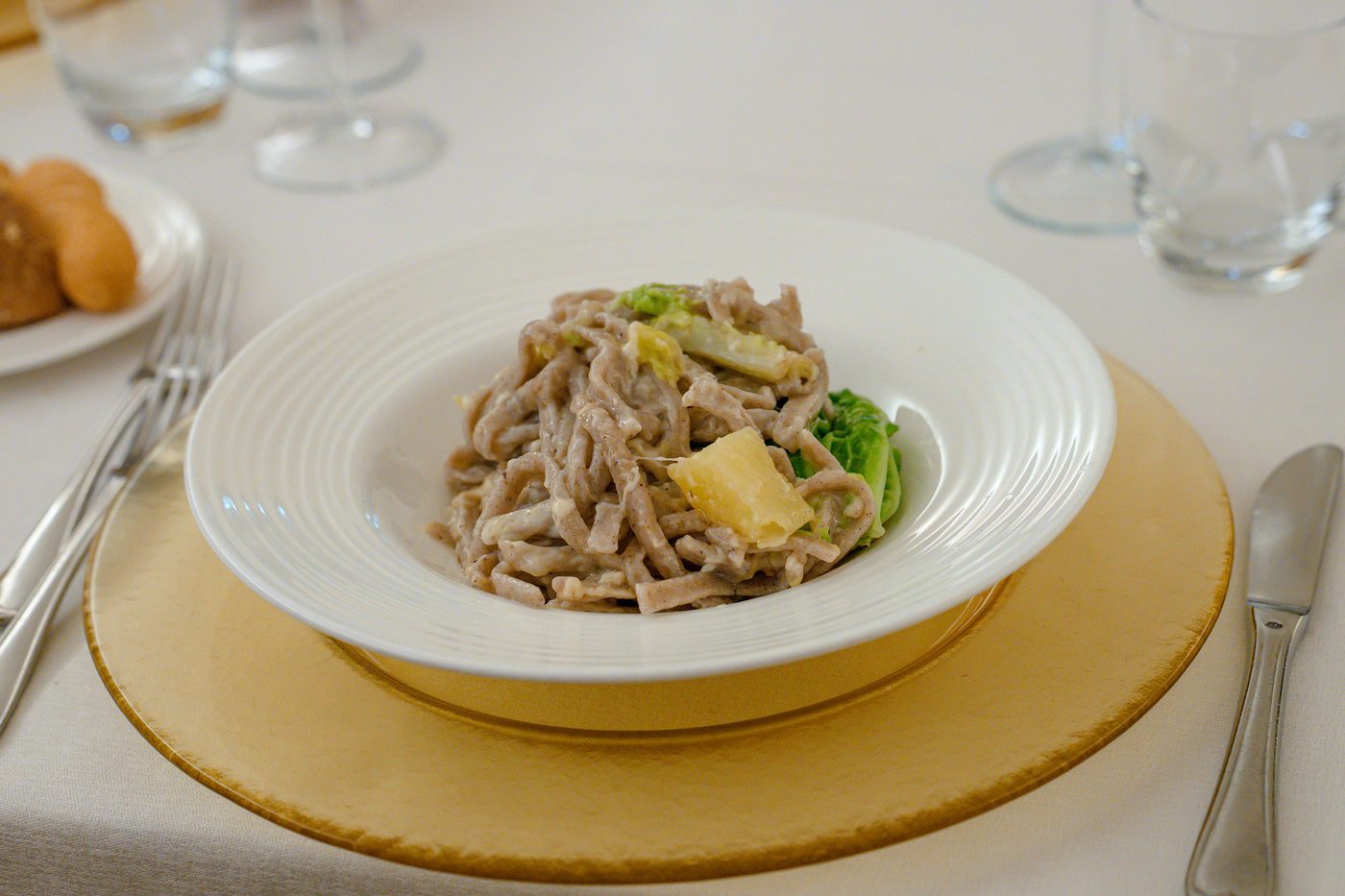
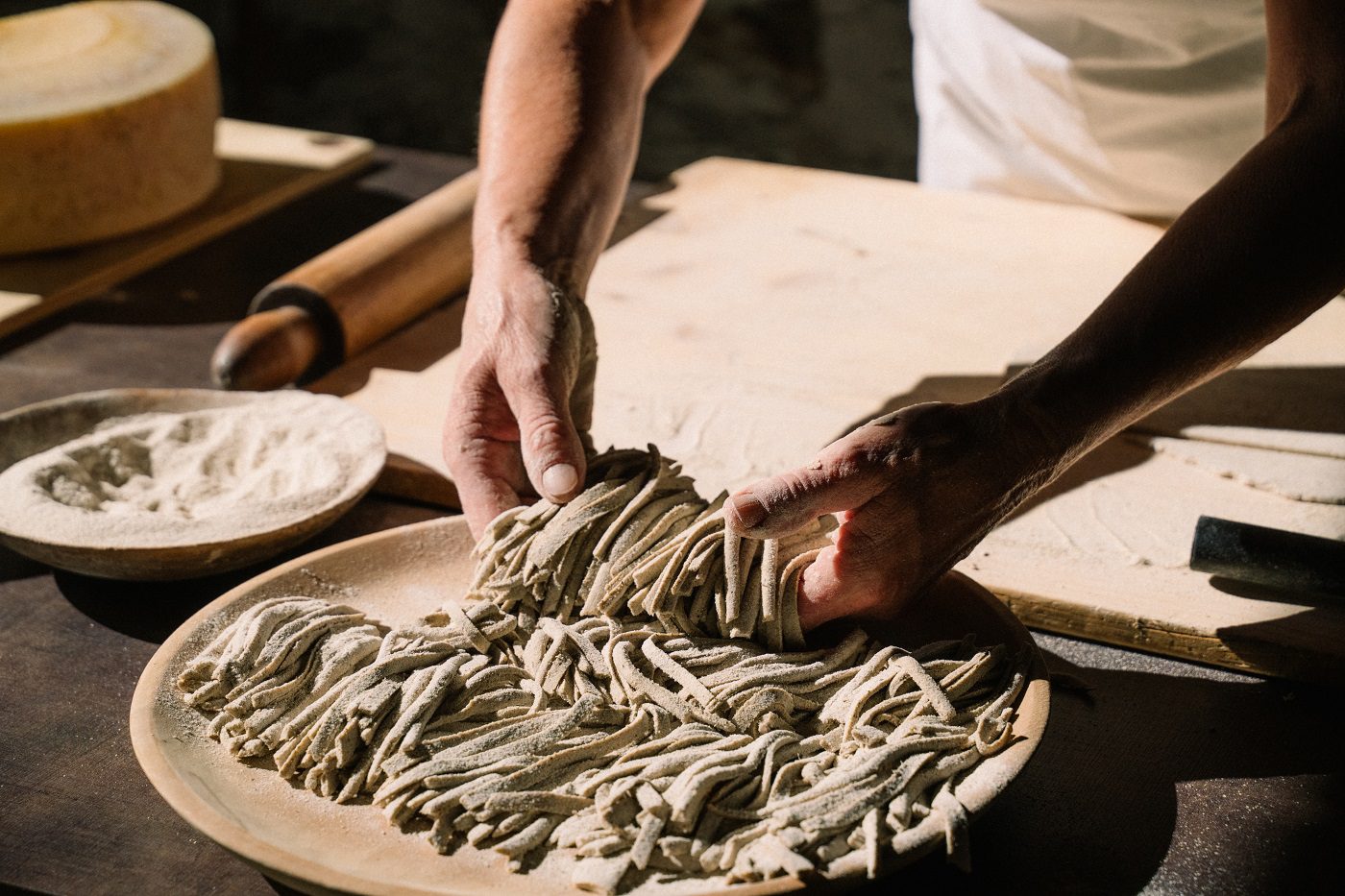
The Traditional Pizzoccheri Recipe (IGP)
Ingredients for 4 people
Method for the Traditional Pizzoccheri Recipe
Blend the two flours, knead them with water, and work the dough for about 5 minutes. With a rolling pin, roll out the dough sheet to a thickness of 2–3 mm, then cut it into bands 7–8 cm wide. Stack the bands and slice them crosswise into short ribbons about 5 mm wide (the classic tagliatelle cut of Valtellina).
Boil the vegetables in salted water—savoy cabbage chopped into small pieces and potatoes cut into cubes—and drop in the pizzoccheri after 5 minutes (potatoes remain a constant, while Swiss chard or green beans can replace savoy cabbage depending on the season).
After about ten minutes, lift the pasta and vegetables out with a slotted spoon and transfer a portion into a hot baking dish. Scatter with grated Grana cheese and flaked Valtellina Casera DOP, continuing to alternate layers of pasta and cheese.
Fry the butter with the garlic clove until nut-brown and fragrant, then pour it sizzling over the top. Without stirring, serve the pizzoccheri piping hot with a fresh grind of black pepper.