From the volcanic tensions of the Euganean Hills to the high-altitude clos of South Tyrol, we explore the foundational geography of Abbey wines.
Few institutions have shaped the evolution of viticulture as profoundly as Christian monastic orders. Around the 5th century, as the decline of the Roman Empire threatened to erase classical agronomic expertise, monasteries emerged as bastions of stability—stewards of a viticultural heritage that would otherwise have been lost. While the monastic brewing tradition remains more globally widespread today—with approximately 180 active communities—the universe of Abbey wines is defined by an extremely selective geography. With fewer than fifty producers across Italy, France, and the Benelux, these estates represent a masterclass in cultural and agricultural resilience.
Such a custodial legacy is etched into the roots of contemporary oenology’s most celebrated names. We owe the affirmation of varietals and denominations such as Cirò, Greco di Tufo and di Gerace, Ragnano, Freisa, Monsonico, and Santa Maddalena to the Benedictines. The Cistercians were the primary architects of Gattinara and Spanna, and single-handedly determined the global success of Riesling in Germany, cultivated on a large scale by the monks of Eberbach since the 15th century.
The influence extends to the chivalric and religious orders: the Knights of Malta, designers of Bardolino, Soave, Valpolicella, and the wines of the Trasimeno hills; the Jesuits, who linked their name to Lacrima Christi; the Templars to Locorotondo; and the Discalced Monks to the viticulture of the Euganean Hills.
The labor within the rows, historically associated with the Benedictine synthesis of Ora et Labora—though the phrase does not appear literally in the Rule—elevated agriculture to an ethical and spiritual duty. It was the Cistercians, in particular, who revolutionized the approach to the soil, interpreting manual labor as direct stewardship of the Earth. They codified complex systems like the marcite (water-meadows) and transformed viticulture into a scientific discipline. Under the guidance of the prepositus, the patres vinearum (fathers of the vineyard) perfected independent vine rows, grafting techniques, and systematic fertilization, aiming for a wine of absolute purity for the mystery of transubstantiation.
The monks were the first true engineers of terroir. Through meticulous documentation unparalleled in the Middle Ages, they mapped the most gifted plots, identified the pedoclimatic aptitudes of individual vines, and laid the foundations for modern classification and zonation. Land reclamation, advanced drainage, and crop rotation allowed them to tame hostile landscapes, transforming them into legendary crus.
This wisdom survives today in a management of minute craftsmanship. Today’s monastic estates, often organic-certified, stand out for their refined productions and limited volumes. In this special feature, we cross Italy to discover those cloisters where every glass interprets an ancient wisdom, more contemporary today than ever.
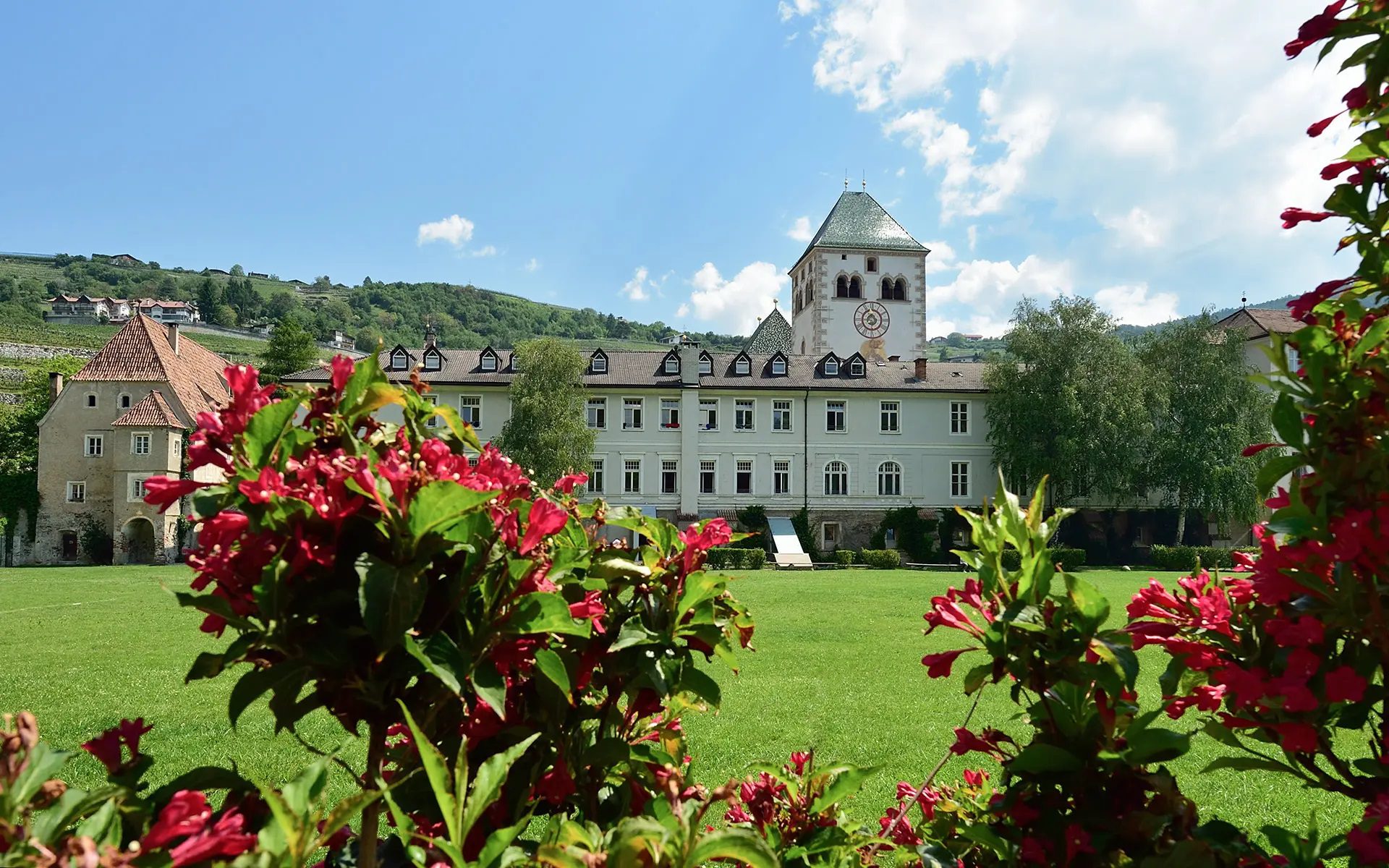
Abbazia di Novacella (Alto Adige)
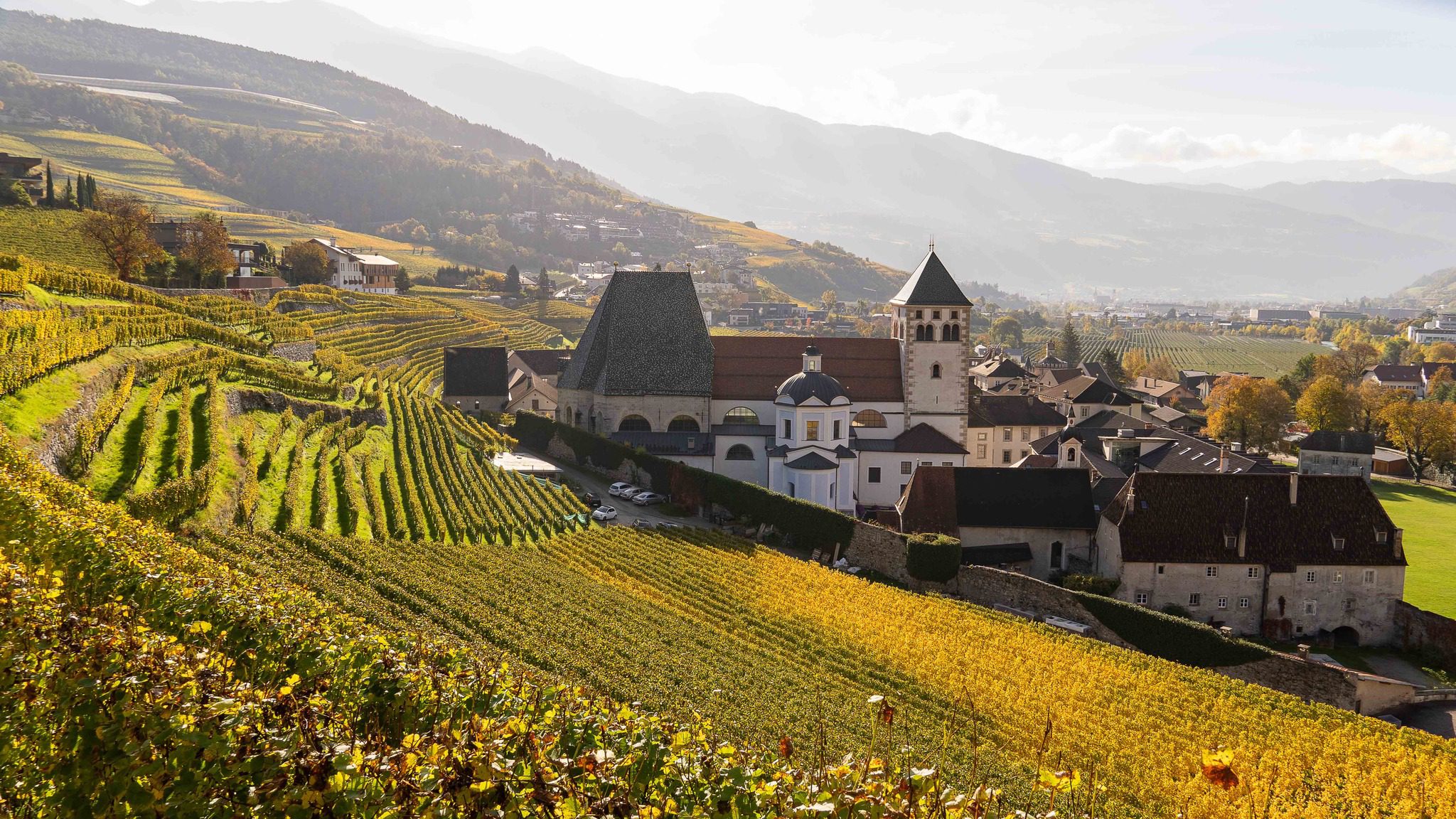
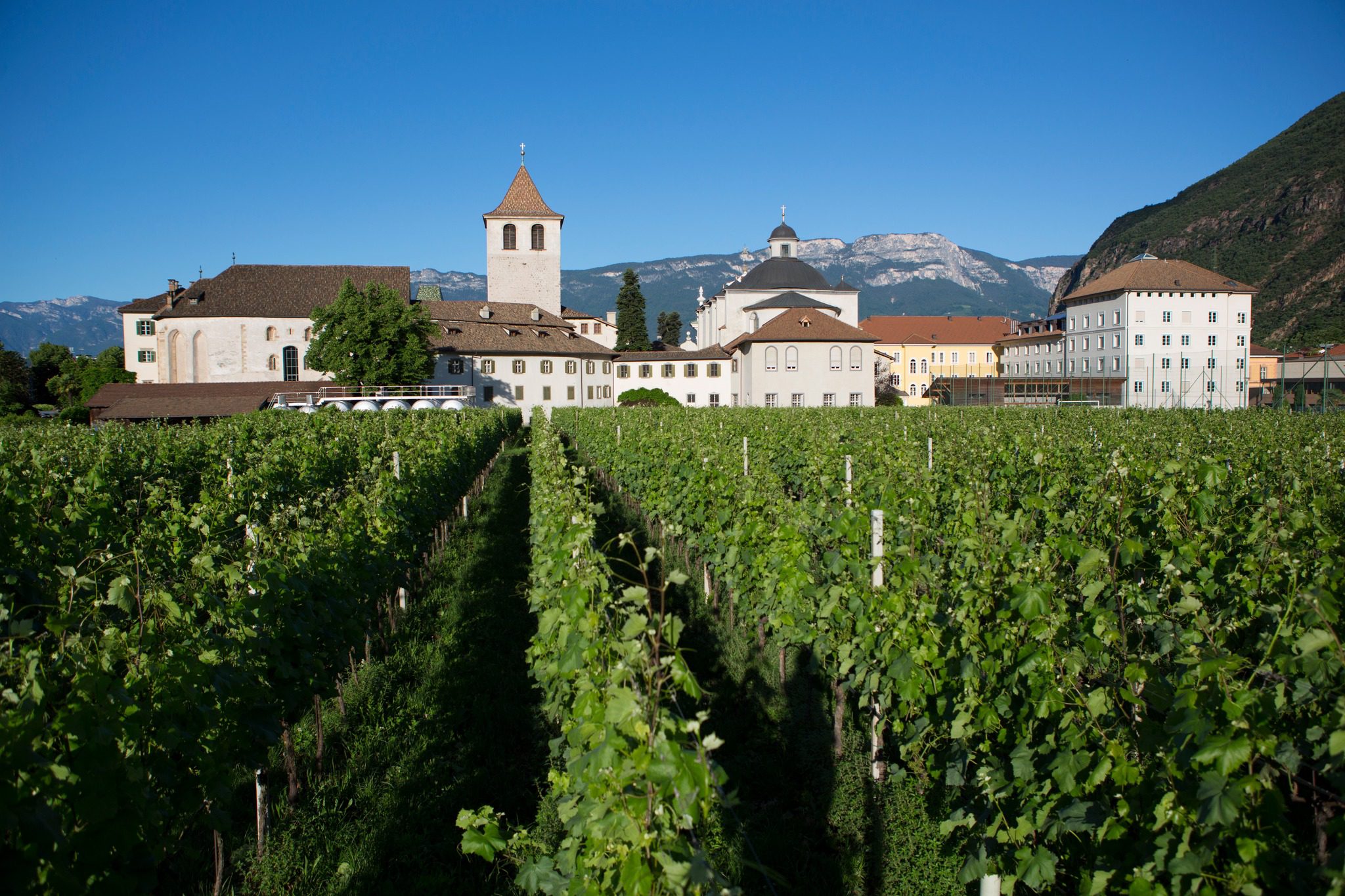
Located in Varna, Novacella Abbey represents one of the world’s oldest and most authoritative oenological bastions, with an uninterrupted tradition dating back to its foundation in 1142 by Blessed Artmanno. The abbey’s vineyards—the northernmost in Italy—climb the steep slopes of the Bressanone basin between 600 and 900 meters. In this high-altitude landscape, mineral-rich soils and dramatic Alpine temperature shifts forge white wines of rare verticality, crystalline precision, and intensive fruit aromas.
The legacy of the Augustinian Canons, oriented toward the stewardship of Creation and sustainability—the estate has been carbon-neutral since 1992—extends strategically south to the Mariaheim estate in Bolzano and Marklhof in Cornaiano, prime sites for the structure and elegance of Lagrein and Pinot Nero. Production, overseen with technical rigor by cellar master Celestino Lucin, is organized into a qualitative hierarchy where 80% of the annual output—amounting to 800,000 bottles—is focused on the prestigious whites of the Valle Isarco.
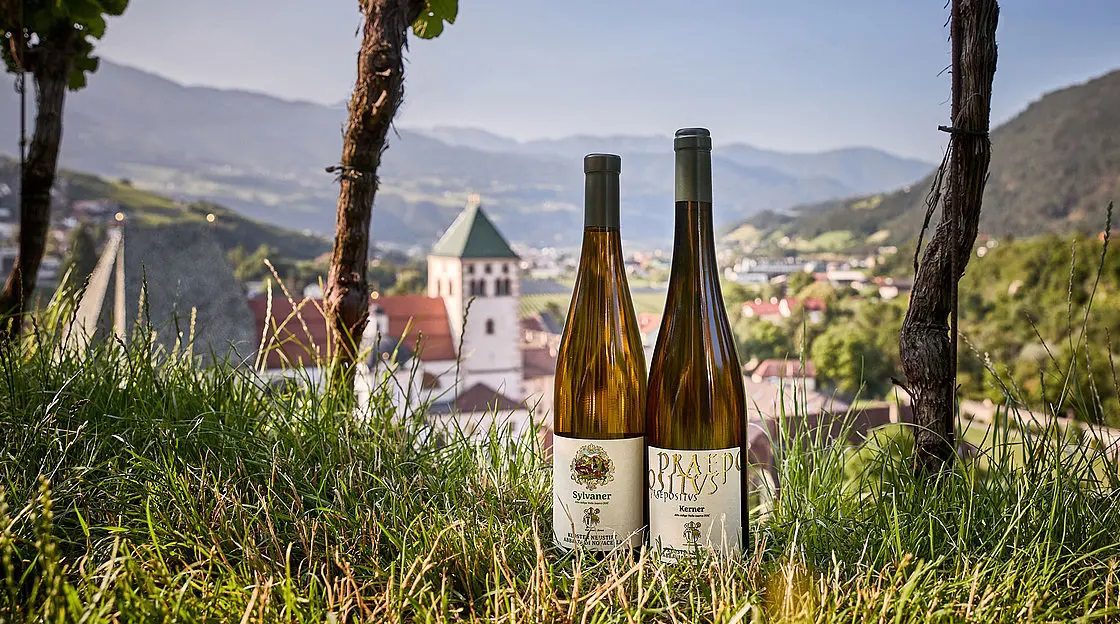
The Praepositus line represents the excellence of the estate’s crus, capable of defying time with Sylvaner, Kerner, and Riesling of extraordinary longevity. Alongside the varietal freshness of the Classic line, the Abbey explores new frontiers with the Insolitus range, dedicated to experimentation and the challenges of climate change, and the prestigious single-vineyards Stiftsgarten and Vigna Oberhof.
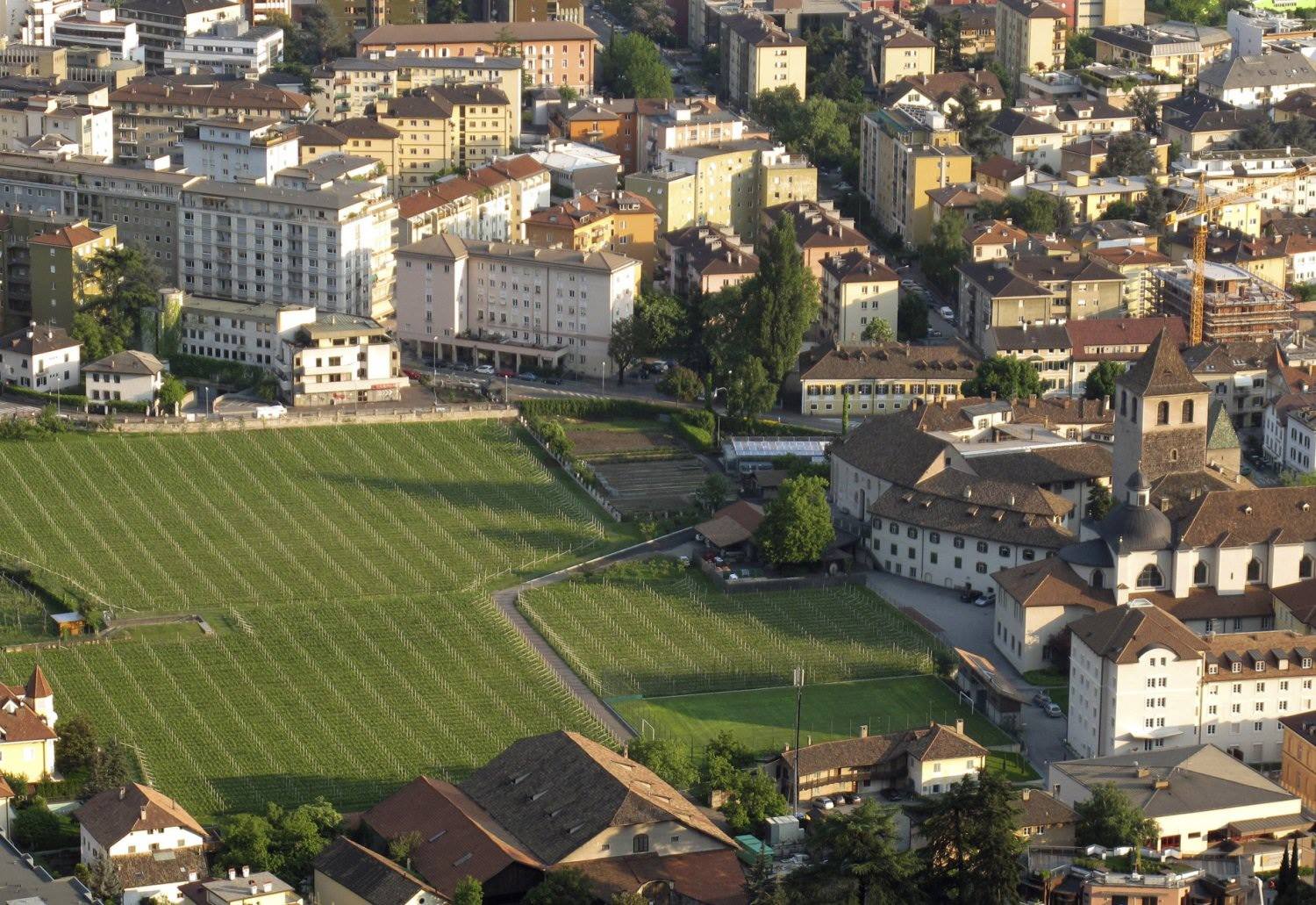
Muri-Gries ((South Tyrol)
The viticultural assets of Muri-Gries were consolidated in 1845 when Swiss Benedictines took over from the Augustinian Canons. Today, the estate spans 60 hectares distributed between the Bolzano basin and the Oltradige plateau. Agronomic management differentiates the production sites based on specific pedoclimatic vocations: the warm, alluvial soils of Gries-Moritzing are dedicated to Lagrein, while the sites of Appiano and San Michele, located at higher altitudes with greater ventilation, are reserved for Burgundian varieties, particularly Pinot Bianco and Pinot Nero.
The operational and qualitative heart of the estate is the Vigna Klosteranger, a historic 2.8-hectare walled vineyard (clos) located within the abbey walls. Here, twenty years of research have selected over twenty Lagrein biotypes, ensuring a production based on low yields and high extractive concentration.
Oenological activity is highly specialized, with 80% of production dedicated to red wines and a vinification protocol that integrates steel, large casks, and barriques. The Lagrein production is articulated in three technical styles: the traditional Kretzer (rosé), vinified entirely in steel; the Classic line, partially aged in large wood; and the Abtei Muri and Vigna Klosteranger selections. For these Reserves, sourced from vines dating back to the 1930s, aging lasts between 14 and 19 months in barriques. The selection is complemented by the alpine whites of Appiano and the experimental Insolitus line, which explores new micro-vinification techniques to address climate change while maintaining analytical rigor.
Abbazia di Rosazzo (Friuli-Venezia Giulia)
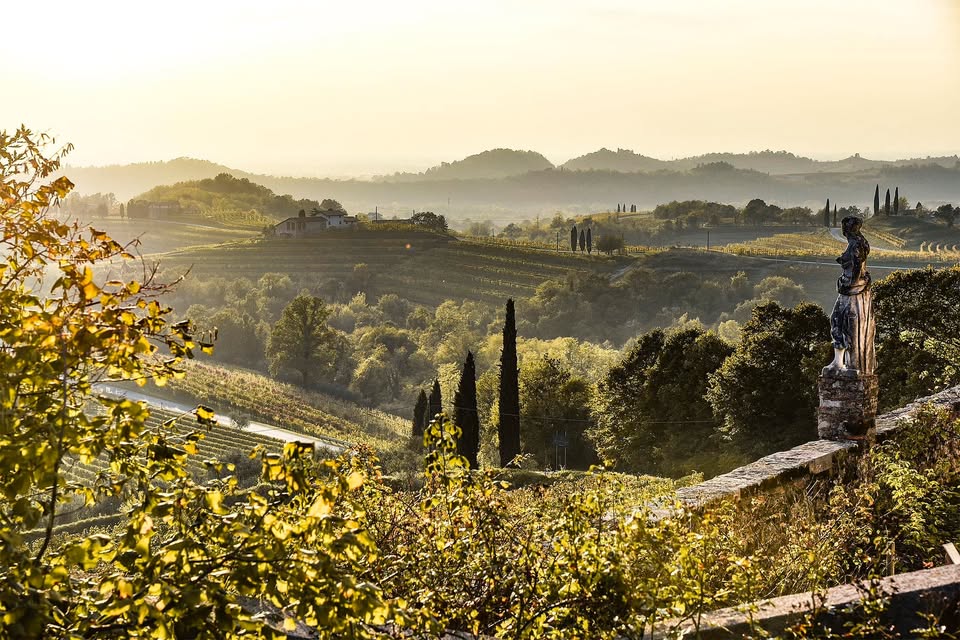
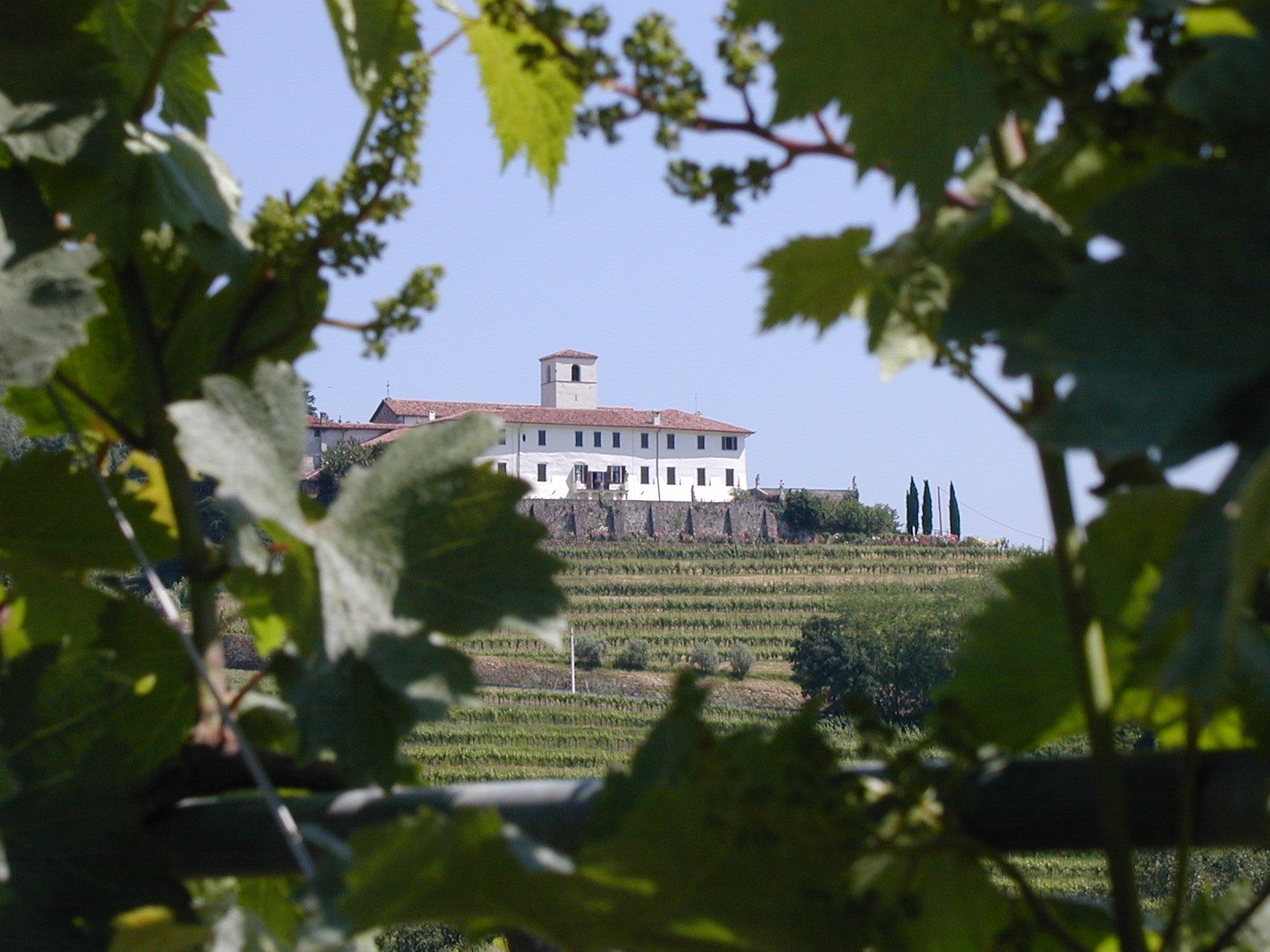
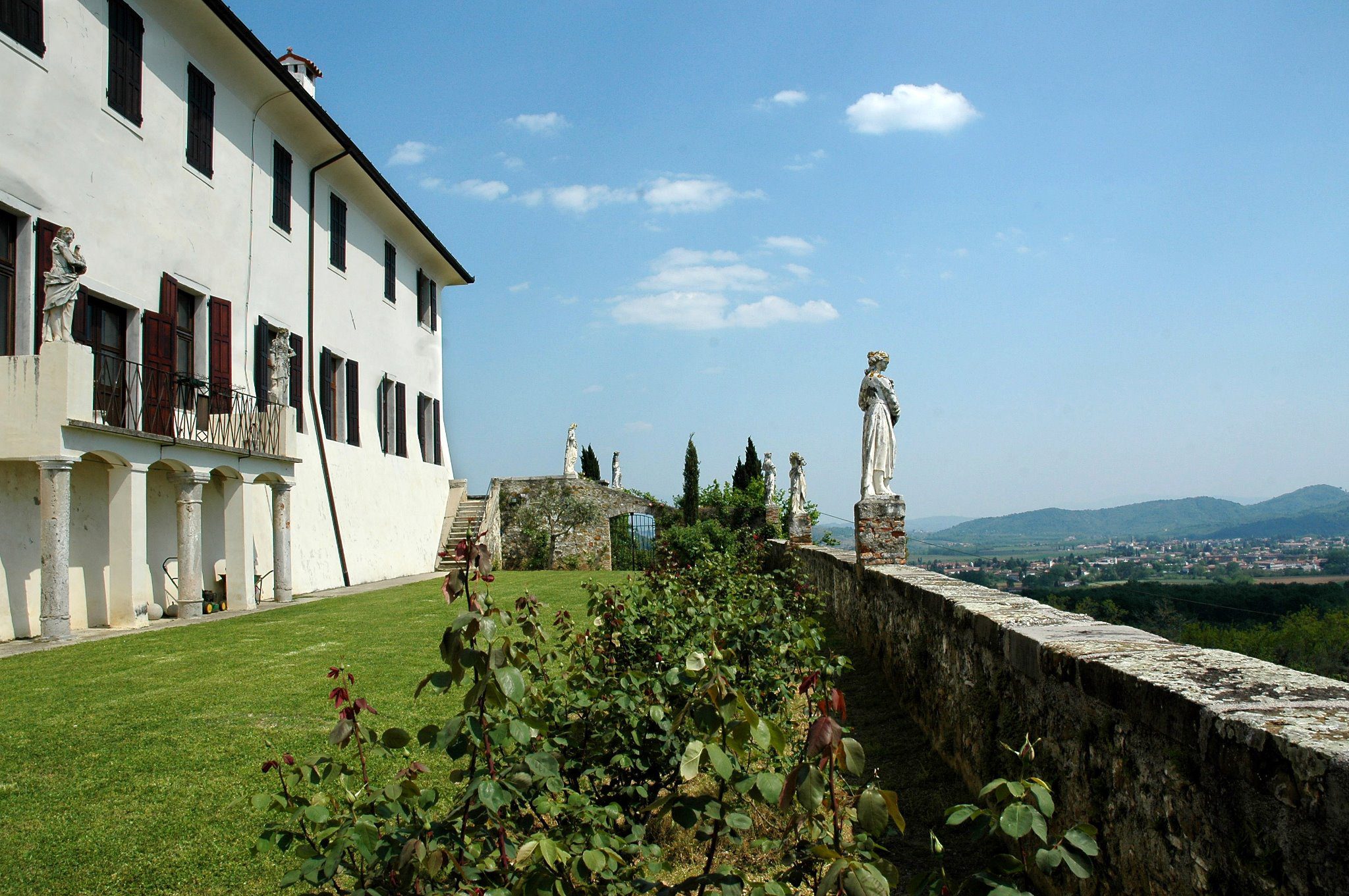
Situated in the southern quadrant of the Colli Orientali del Friuli, at an elevation of 176 meters, Rosazzo Abbey dominates a natural amphitheater protected by the Julian Prealps and tempered by Adriatic breezes. The terroir is defined by Ponca—marl and sandstone of Eocene origin—which imparts a distinctive mineral tension and salinity to the wines. The viticultural vocation, introduced by the Benedictine monks of Milstatt at the end of the 13th century, is sanctioned by historical records such as Patriarch Bertrando’s 1341 mandate, which imposed the planting of vines under threat of excommunication.
In these lands, exceptional indigenous varieties have found their elective habitat: Ribolla Gialla—historically reserved for the table of the Doge of Venice—Picolit, and Pignolo. These are enhanced by an agricultural layout that, since 1979, has restored the historic terraced vineyards (gradonamenti). Since 2009, the stewardship of these ancient rows has been entrusted to Livio Felluga, operating with meticulous management and extremely low yields per vine to ensure maximum qualitative concentration.
The aging cellar, dating back to the late 13th century, represents the oldest underground environment in the region: a space characterized by vaulted ceilings and cobblestone floors where natural thermal inertia favors the slow, noble refinement of the great white wines. The expressive summit of the estate is the Rosazzo DOCG, a masterly blend of Friulano with Sauvignon, Pinot Bianco, Malvasia, and Ribolla Gialla, combining rare aromatic finesse with an aristocratic structure built for longevity. This millennial bond between faith and viticulture is celebrated today by the Vigne Museum, an installation that transforms the landscape into a permanent cultural laboratory.
Monastero di Bose (Piedmont)
In the quietude of the Serra d’Ivrea, the Bose Monastery stands as a contemporary and authoritative voice within the monastic wine landscape. The community, renowned for its ecumenical openness, applies the same meticulous care to the land as it does to the study of the Scriptures. Viticulture here is conducted according to organic principles, with the steadfast objective of preserving the biodiversity of a precious hilly territory.
The production at Bose is distinguished by an ethical and sustainable approach, dedicated to the enhancement of Piedmont’s indigenous grape varieties. The Monastery’s wines are the result of a process that seeks the absolute essence of the raw material, eschewing oenological forcing to restore the authentic “truth” of the Biellese terroir to the glass. It is a reality that demonstrates how monastic tradition can evolve, fluently speaking the modern language of environmental responsibility.
Abbazia di Praglia (Veneto)
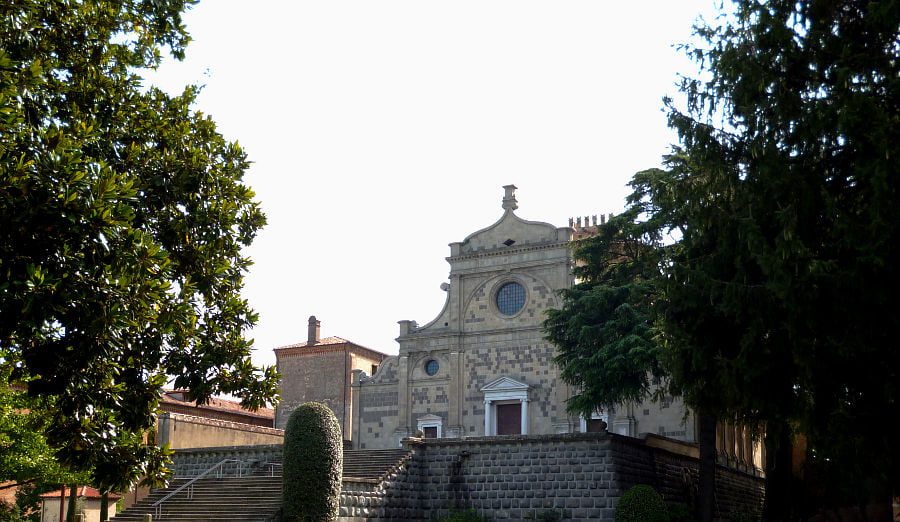
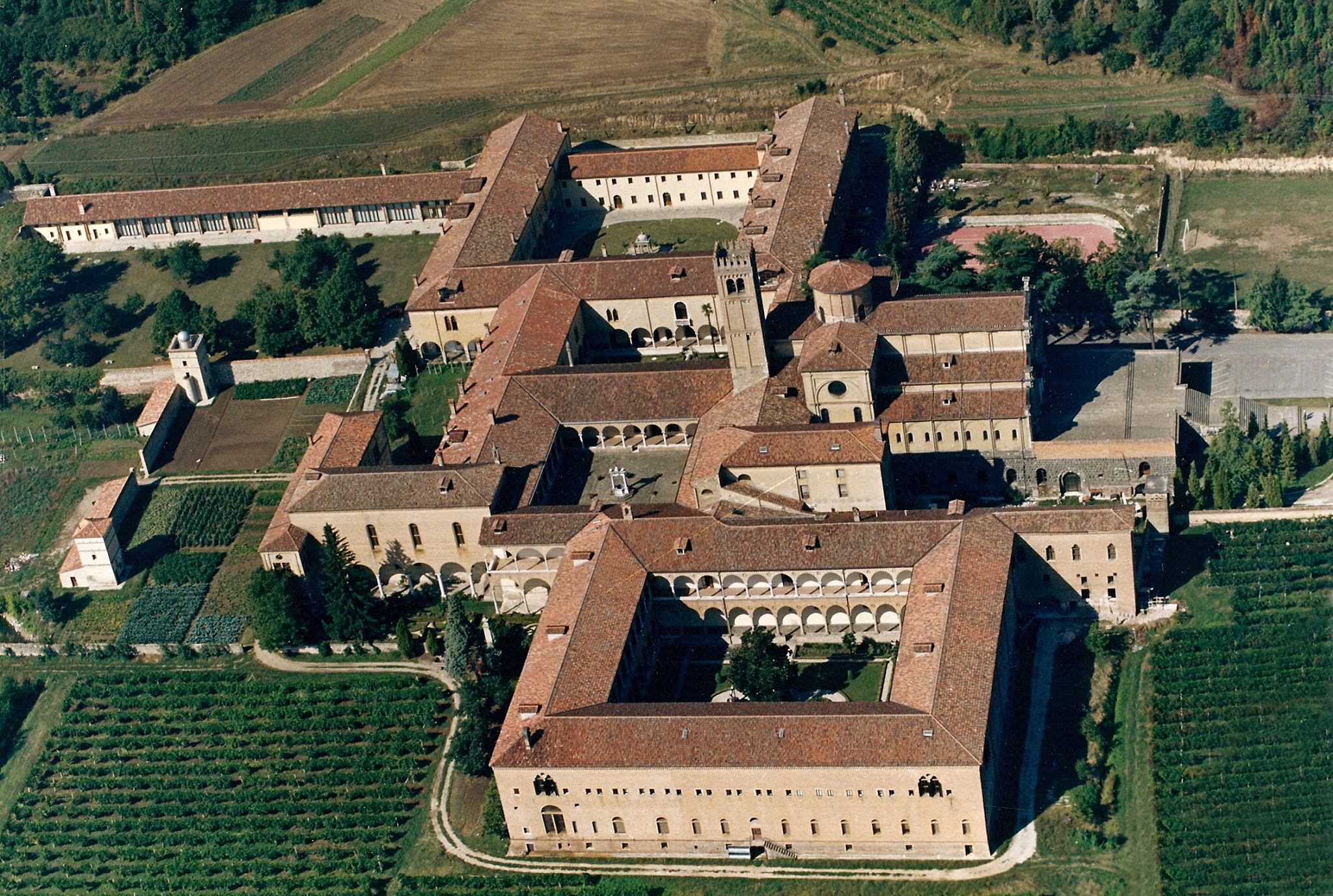
At the slopes of the Euganean Hills, Praglia Abbey—whose name evokes the ancient Pratàlia—stands as the beating heart of Benedictine spirituality in Italy, home to the country’s largest male monastic community. Here, viticulture has undergone a renaissance of excellence since 2011, merging millennial wisdom with avant-garde technological protocols in the pursuit of bonum vinum purum. The 10 hectares of vineyards, managed under organic regimes between the plains and heights exceeding 500 meters, rest on volcanic soils that impart an unmistakable mineral tension to the wines.
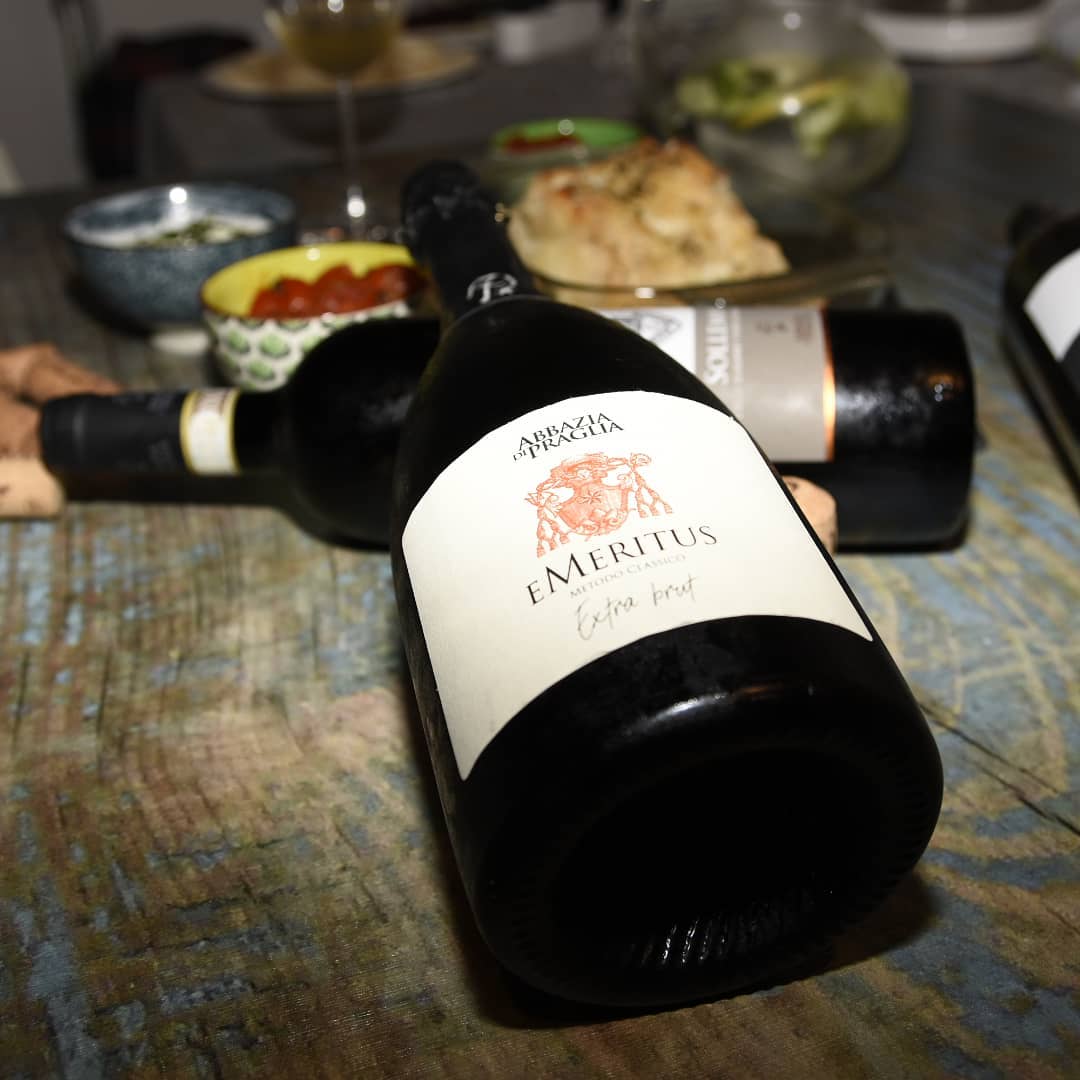
Within masterfully vaulted 15th-century cellars, the meticulous manual care of the monks transforms historic varieties such as Garganega, Friularo (Raboso), and Moscato Fior d’Arancio into labels with a rigorous and identity-driven stylistic signature. The production finds its expressive summit in the Domnus Abbas Metodo Classico, a refined assembly of Chardonnay, Garganega, and Raboso aged for 36 months on the lees, revealing an aromatic complexity and persistence that dialogue harmoniously with the austerity of the site. The range is articulated with technical coherence through the red Decanus, a solid interpretation of Merlot and Cabernet Sauvignon, and the precious Claustrum, a passito from Moscato grapes that embodies the quintessence of meditative sweetness.
Every sip reflects the equilibrium of an ecosystem where the restoration of ancient books, the care of the monumental library, and apiculture merge into a single philosophy of precision and ethics, creating a narrative of a unique territory.
San Francesco della Vigna (Veneto)
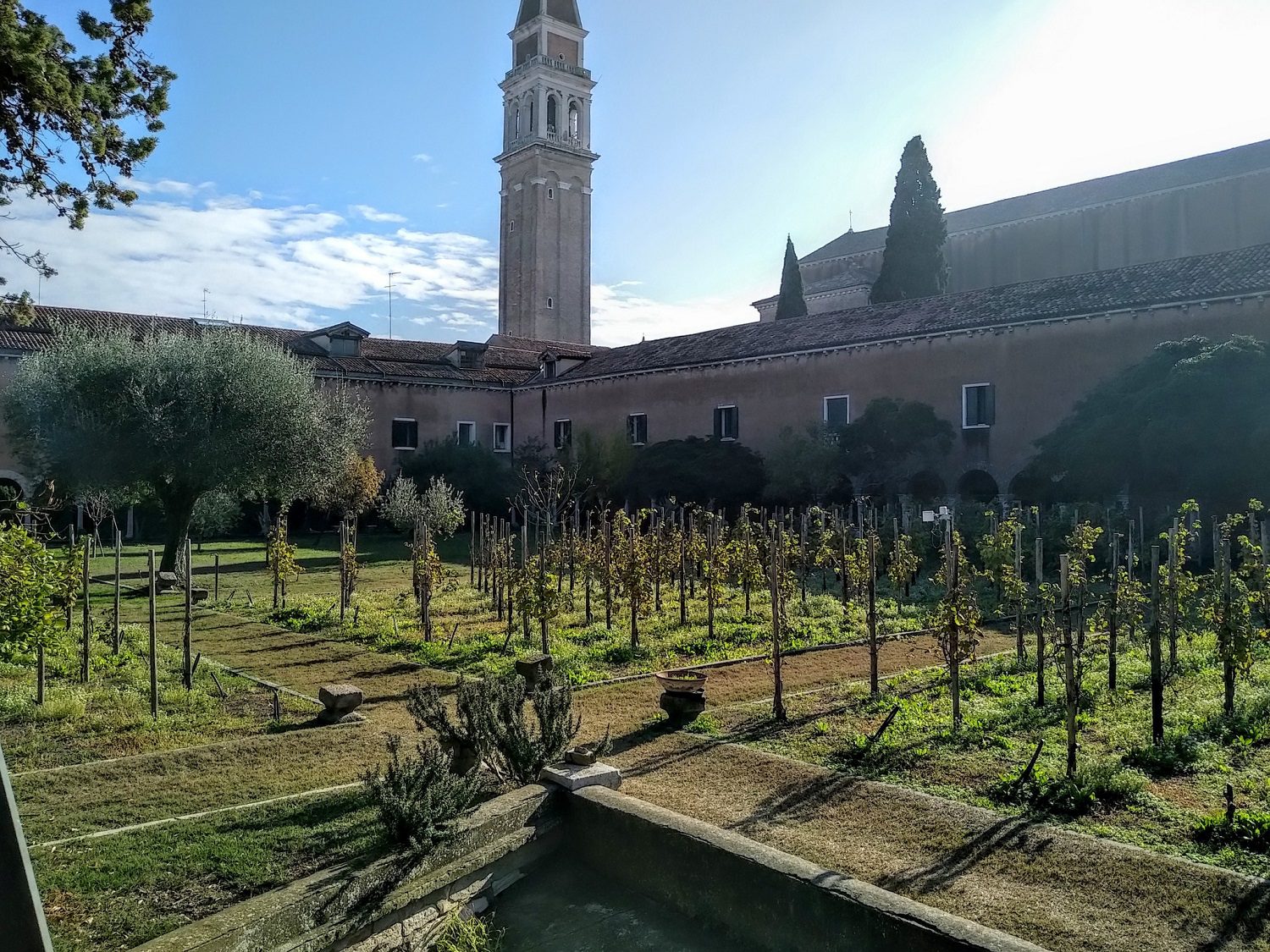
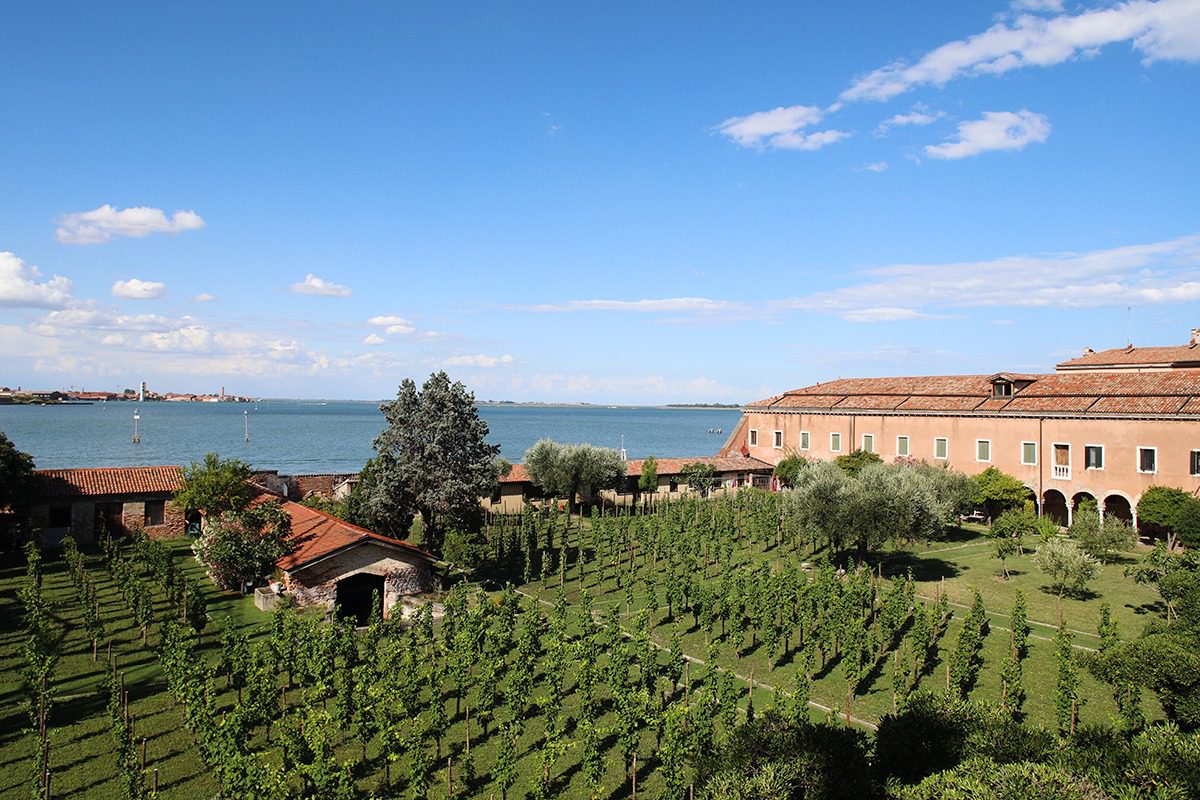
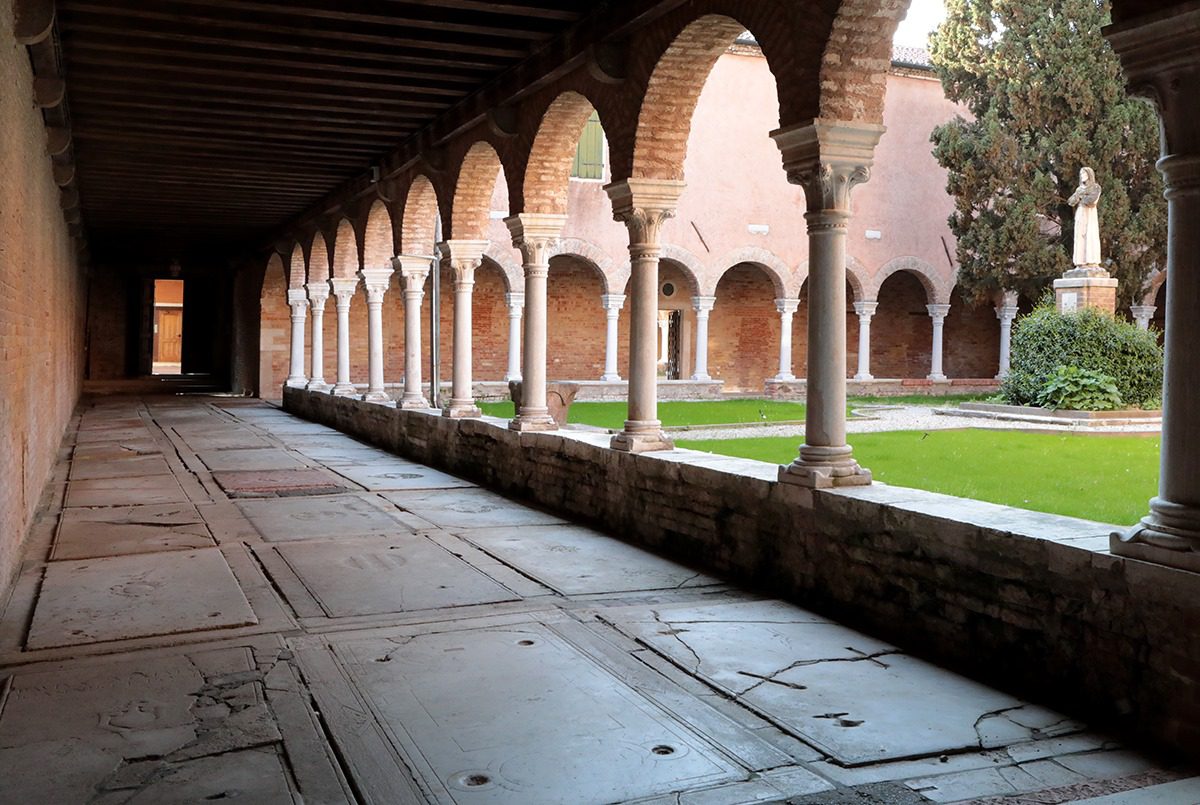
In the Venetian district of Castello, overlooking the northern lagoon, the San Francesco della Vigna complex guards the oldest urban vineyard of the Serenissima, with roots tracing back to a 1253 testamentary legacy signed by Marco Ziani. This site—where Franciscan asceticism meets the heights of the Renaissance, featuring the church designed by Jacopo Sansovino in 1534 and the monumental façade by Andrea Palladio—serves as a stage for mysticism and culture unique in the world. Amidst cloisters rich in symbolism, masterpieces by Veronese and Bellini, and a library boasting a heritage of over 200,000 volumes, the vineyard represents an hortus conclusus where time seems to have stood still, rigorously preserved within the cloistered area.
The oenological rebirth of the site, initiated in 2019 through the partnership between the Friars Minor and the Santa Margherita Group, has transformed these 1,890 square meters of lagoon land into an avant-garde viticultural laboratory. The rows, cultivated in the alberello (bush-vine) style and under organic conversion, feature the traditional Glera and Malvasia varieties, capable of translating into the glass the salinity of a soil positioned just a breath away from the water.
The summit of this production is Harmonia Mundi, a Charmat Method sparkling wine in an extremely limited release of only 1,107 numbered bottles—a figure that symbolically references the vineyard’s length. It is presented in screen-printed bottles housed in boxes crafted from decommissioned briccole wood, a perfect synthesis of lagoon aesthetics and technical abbey precision.
Convent of the Immacolata di S. Pietro di Barbozza (Veneto)
Along the historic Prosecco Road, in the heart of San Pietro di Barbozza, the Convent of the Immacolata has represented a fundamental stronghold for high-altitude Valdobbiadene viticulture for over a century. The agronomic management unfolds across a hilly surface characterized by steep slopes, where the specific solar exposure and the mineral matrix of the soil favor optimal phenolic ripening, resulting in grapes with a pronounced sugar concentration.
At the core of the production mission lies the protection of Pucinum, a grape variety whose documented origins date back to the 2nd century B.C. (historically cited as the favorite wine of Empress Livia), today considered the noble ancestor of local varieties and cultivated here as a precious identity resource of the territory. The technical hallmark of the cellar is based on entirely manual harvests and meticulous craftsmanship, aimed at preserving the fruit’s fragrance and the characteristic bitter finish which defines the sensory profile of the Convent’s vineyards.
The excellence of the production is represented by the Valdobbiadene Prosecco Superiore DOCG Colle del Santo, articulated in the Millesimato Brut and Extra Dry versions—wines of great aromatic clarity and balanced body. The range is complemented by the Prosecco DOC Treviso Millesimato Colle dell’Eremo, a blend of Glera with small contributions of historic varieties such as Verdiso, which confirms the analytical rigor of the religious community in the enhancement of the sparkling cuvées of the Marca Trevigiana.
Convento dell’Immacolata di S. Pietro di Barbozza
Convent of Santissima Annunciata (Lombardy)
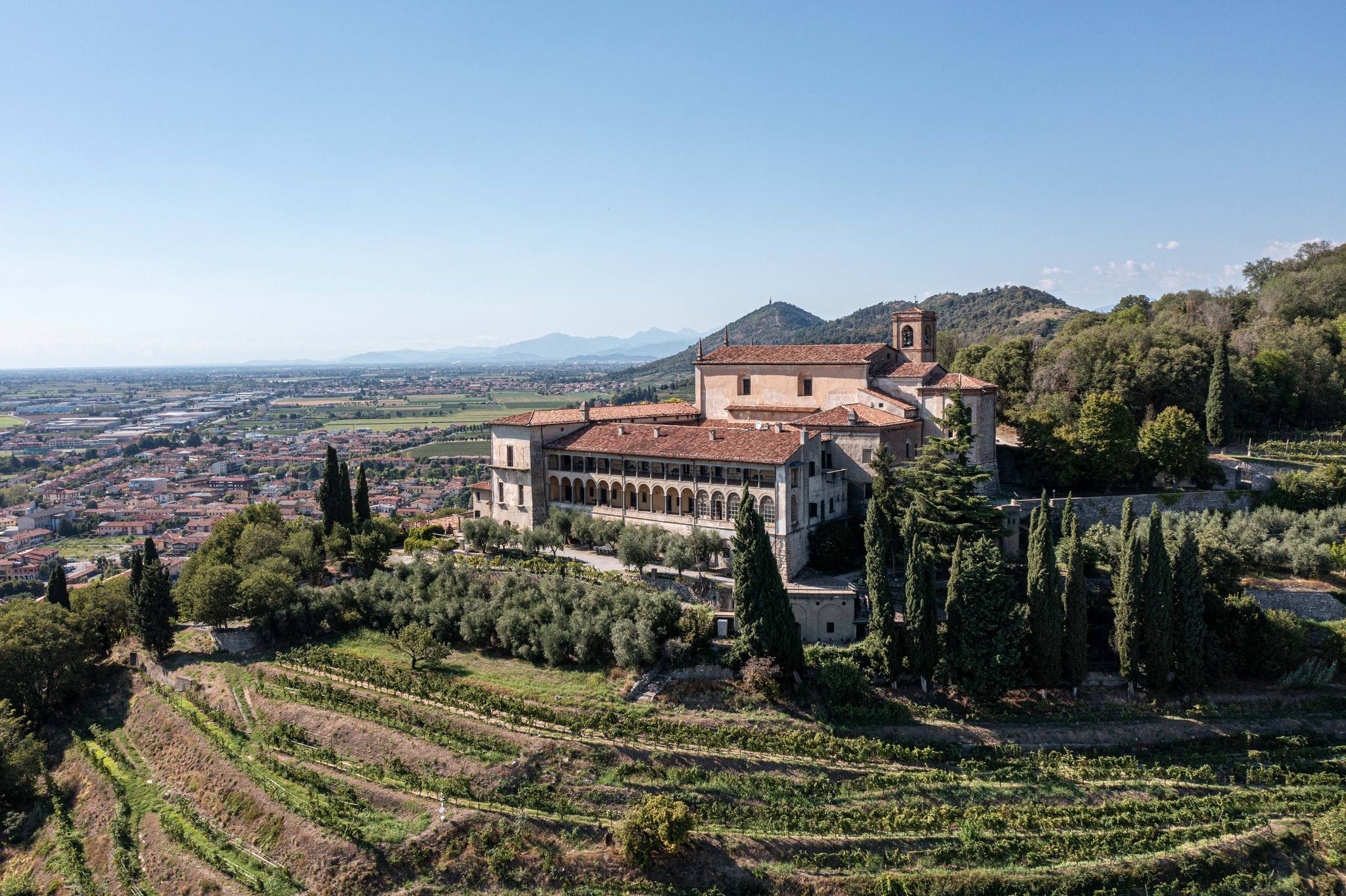
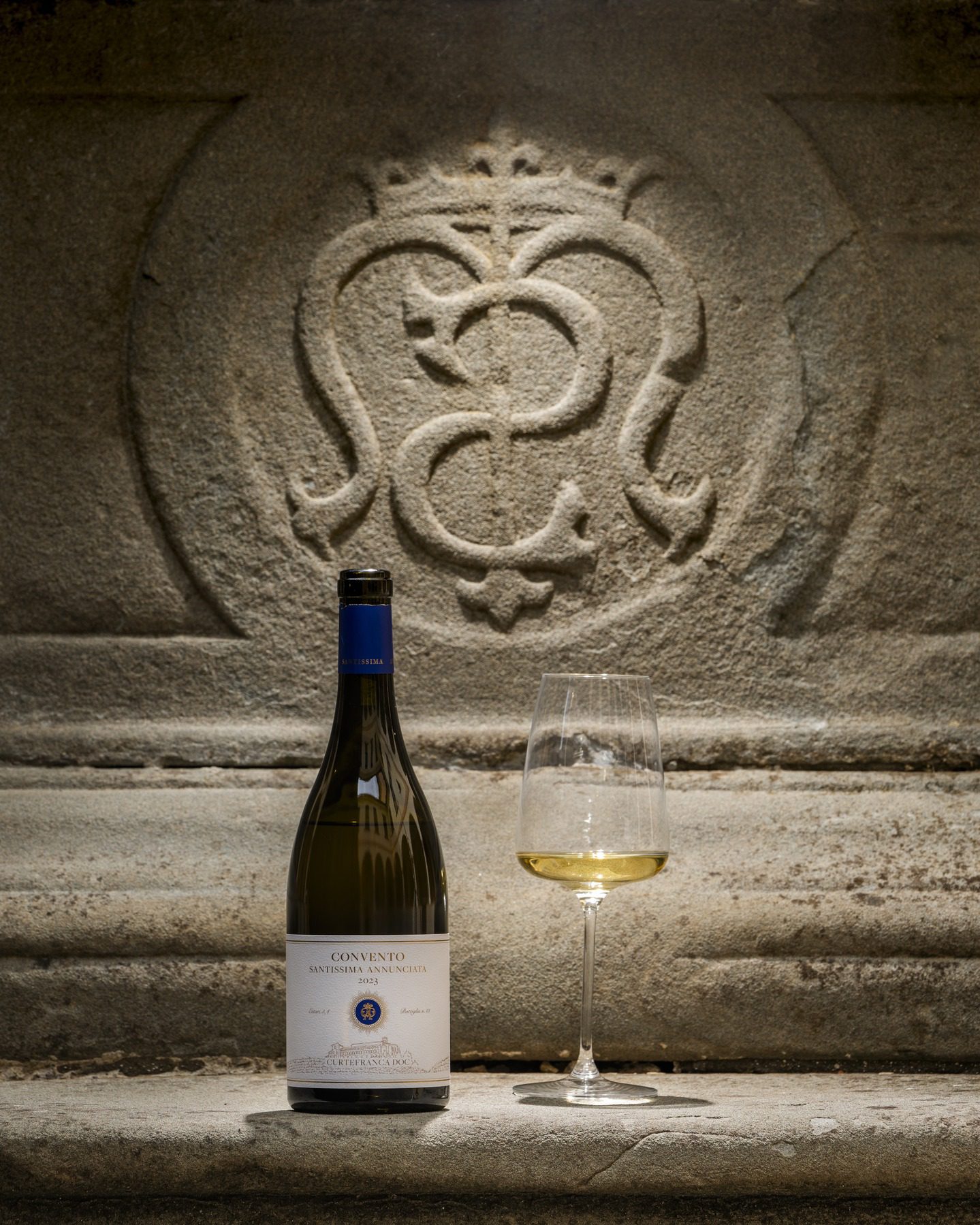
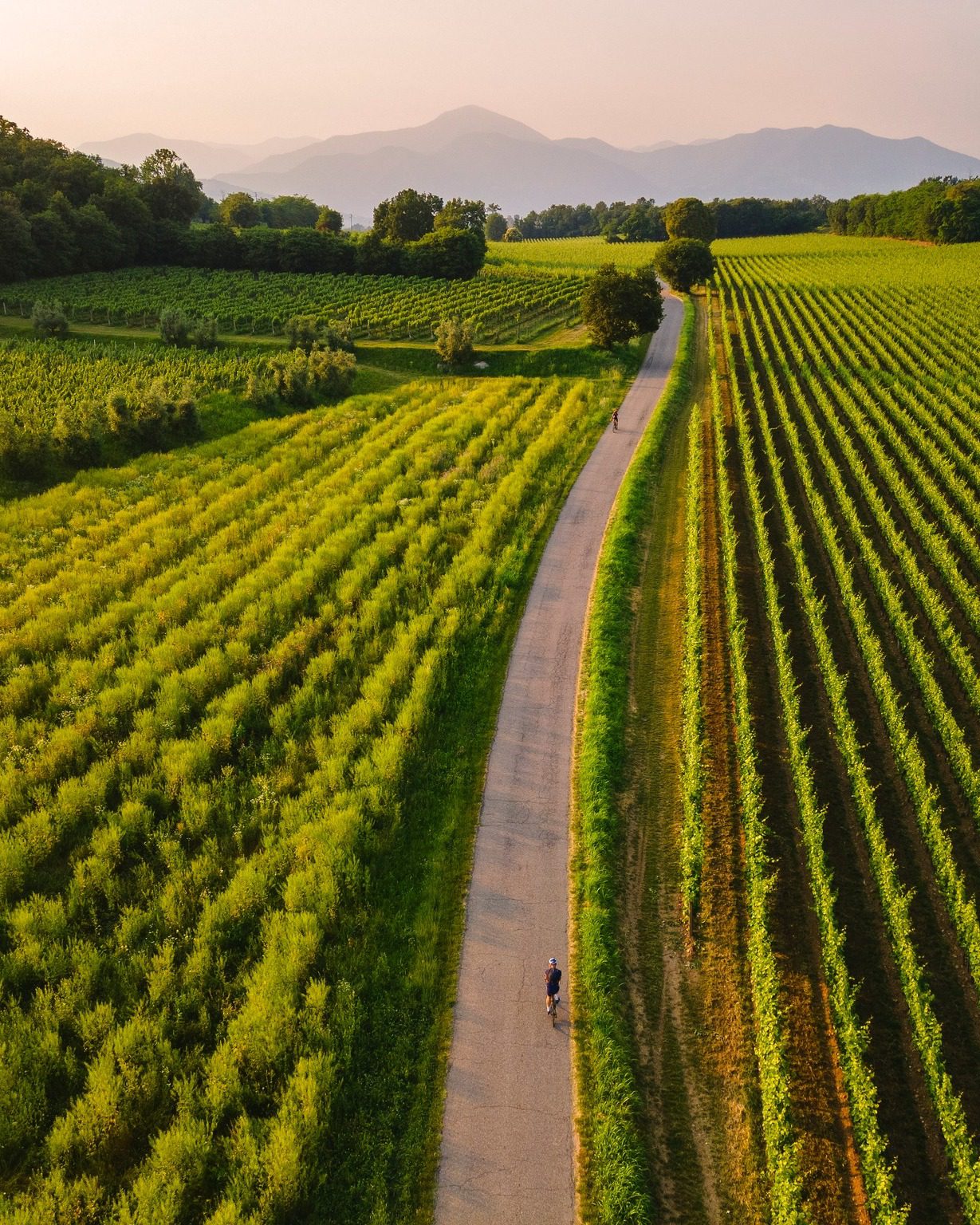
On Monte Orfano, the extreme southern border of Franciacorta, the Convent of Santissima Annunciata represents a geological and viticultural unicum, where ancient terraces dating back to the year 1000 coexist with a transitional microclimate between Mediterranean and subalpine influences. Founded in 1449 by the Order of the Servants of Mary, the complex guards a historic 5.45-hectare vineyard, entrusted in 1984 by Friar Sebastiano to Vittorio Moretti (Bellavista) for a project focused on the restoration and enhancement of abbey crus.
Meticulous management has allowed for the regeneration of the ancient vines‘ genetic heritage, documenting the exceptionality of a soil that benefits from constant southern exposure and natural protection provided by the secular woods of the morainic relief.
The technical hallmark is expressed through two labels of distinct personality and analytical rigor: the Chardonnay Convento Santissima Annunciata, vinified in small used oak barrels with a 12-month stay followed by an additional two years of bottle refinement, and the Merlot Zuanne. The latter, sourced from the Vigna Brera and dedicated to the memory of journalist Gianni Brera, undergoes a 16-month evolution in wood followed by a year of rest in the cellar.
While the Chardonnay is distinguished by the equilibrium between the freshness of northern acidity and Mediterranean aromatic intensity, the Merlot expresses a velvety structure and a complex fruity texture, confirming the Convent as a laboratory of excellence where Bellavista’s oenological research merges with the centuries-old heritage of the Servants of Mary.
Convento Santissima Annunciata
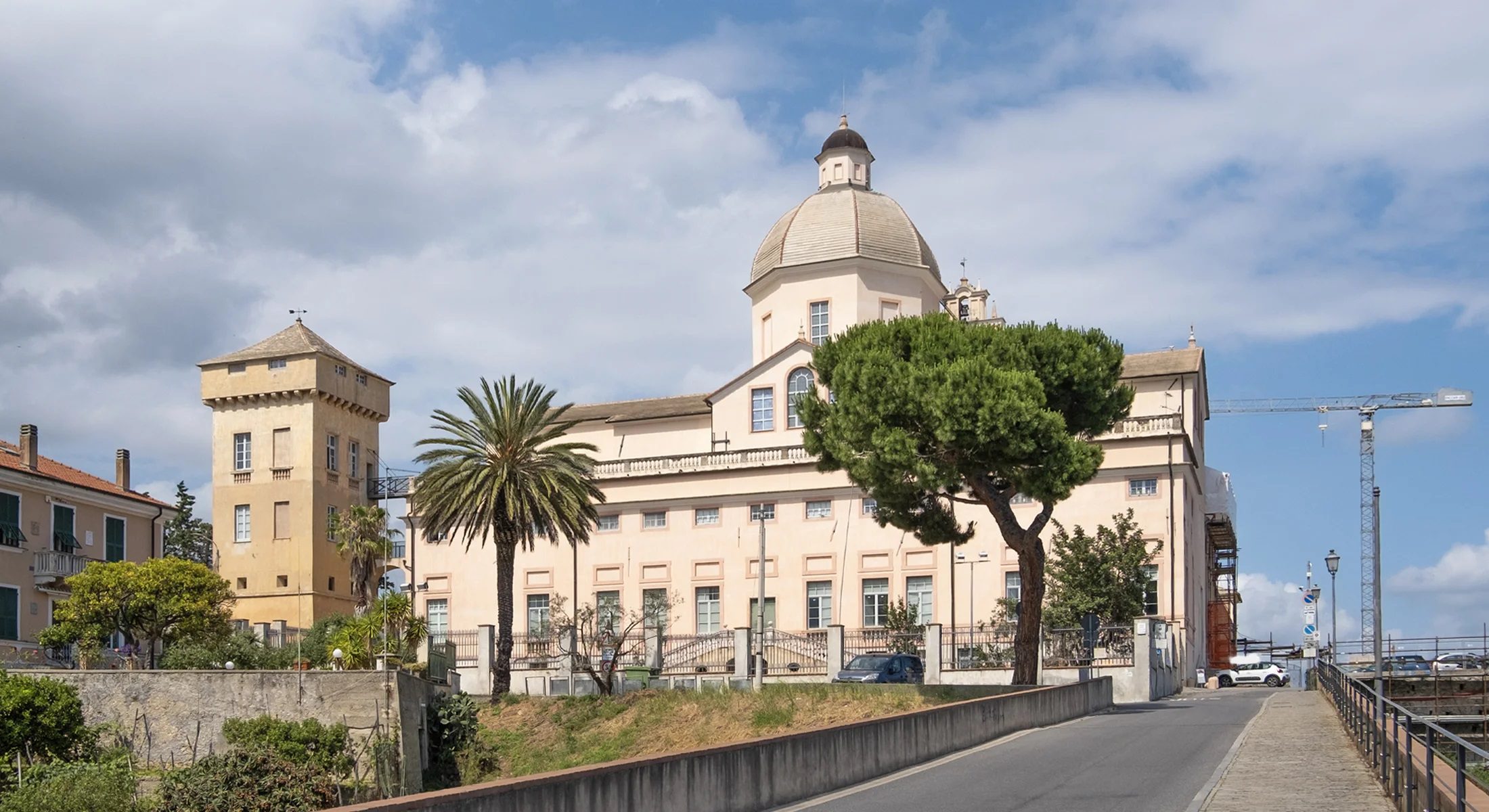
Convent of Monte Carmelo (Liguria)
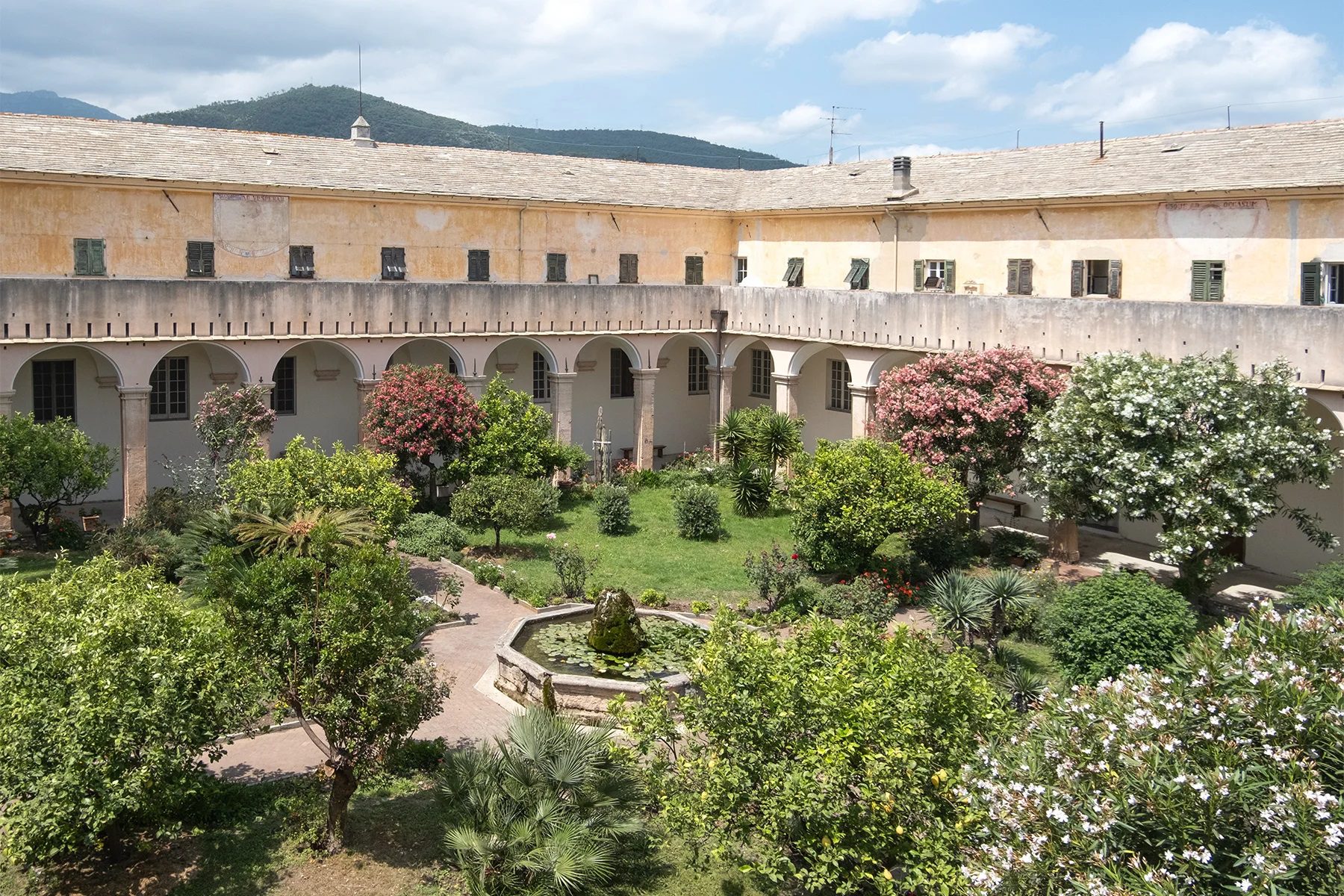
The Convent—part of a monumental complex situated on a small rise in Loano overlooking the sea—comprises the Church of the Blessed Virgin, built in 1609, the Palace of the Doria Princes, a historic watchtower, and extensive agricultural land. Here, the Discalced Carmelite Friars manage a diverse farm where viticulture coexists with olive groves, citrus orchards, and vegetable gardens, representing the primary source of subsistence for the community. The productive activity extends to apiculture and the organic processing of preserves, oils, and syrups, distributed through an internal farm shop dedicated to the enhancement of the convent’s natural products.
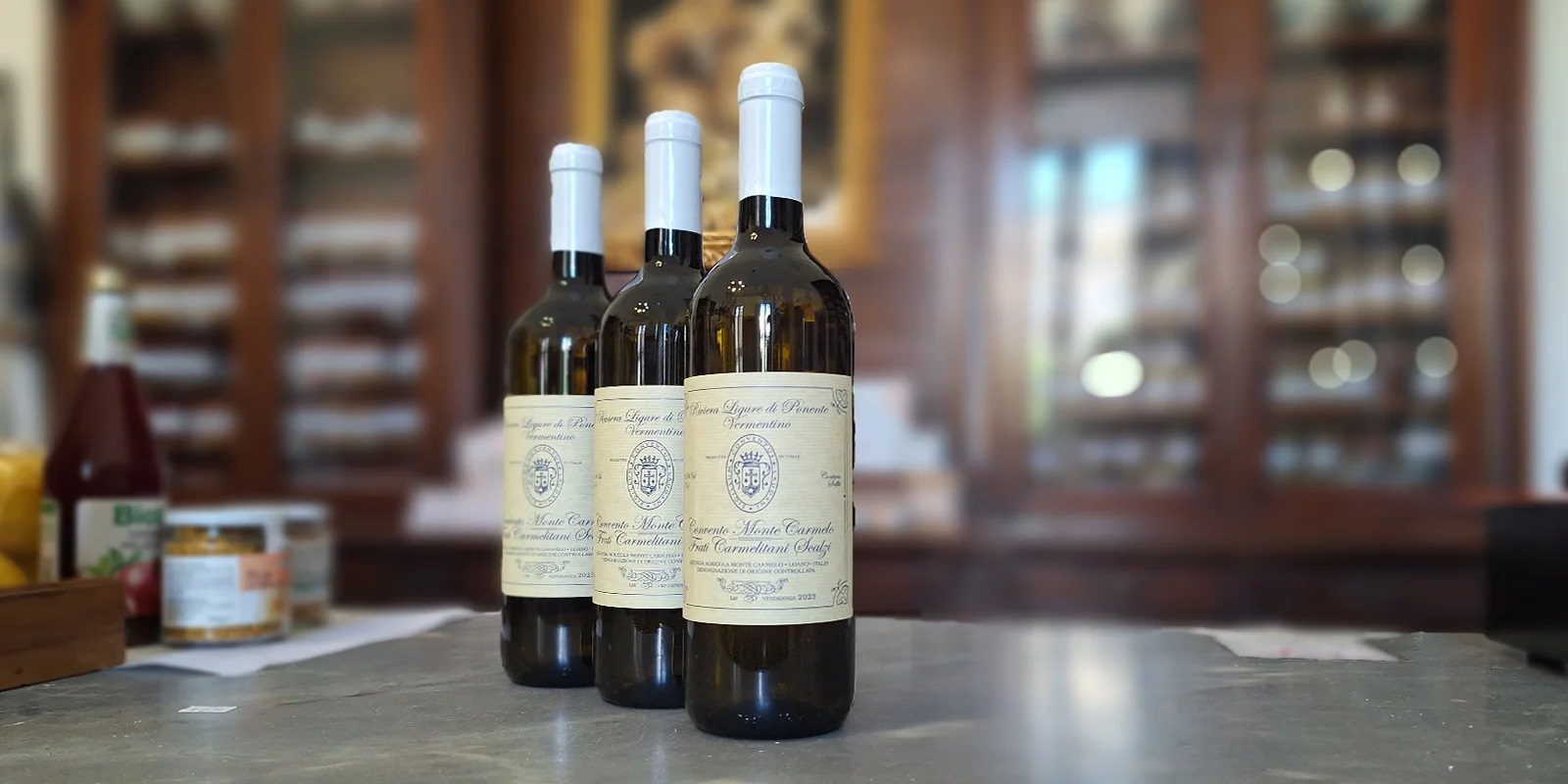
The viticultural production is concentrated on the enhancement of Vermentino Riviera Ligure DOC, a label obtained through entirely manual labor on ancient terraces characterized by constant solar exposure and steady ventilation. The agronomic management follows an integrated organic cycle: permanent grassing of the soil is managed through the daytime grazing of farm animals, which naturally provide fertilization and soil movement, drastically reducing the need for phytosanitary interventions. The result is a white wine with an alcohol content of 13%, distinguished by sustained acidity and sharp fruity notes, produced in limited volumes following the strict parameters of organic certification.
Abbazia di Monte Oliveto Maggiore (Tuscany)
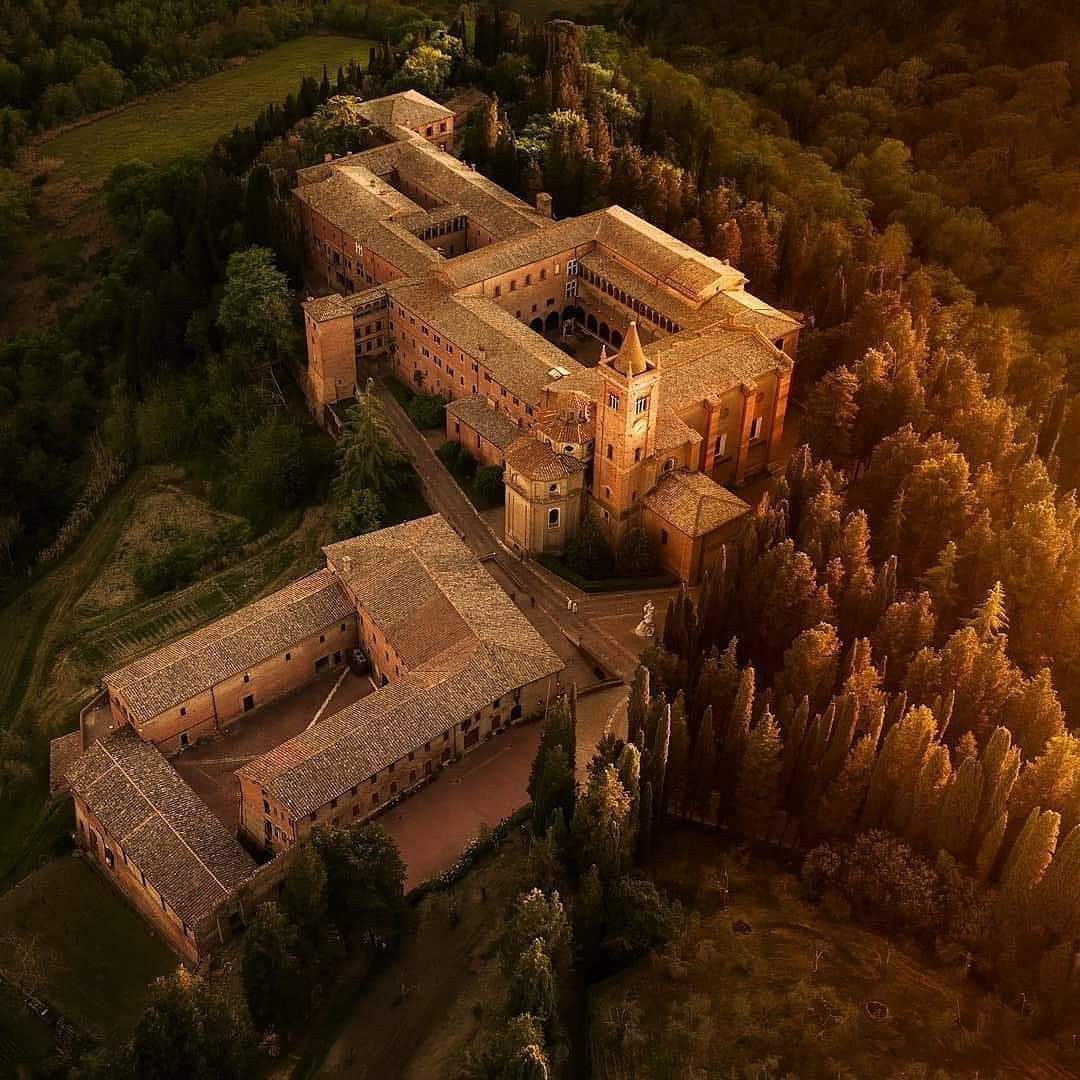
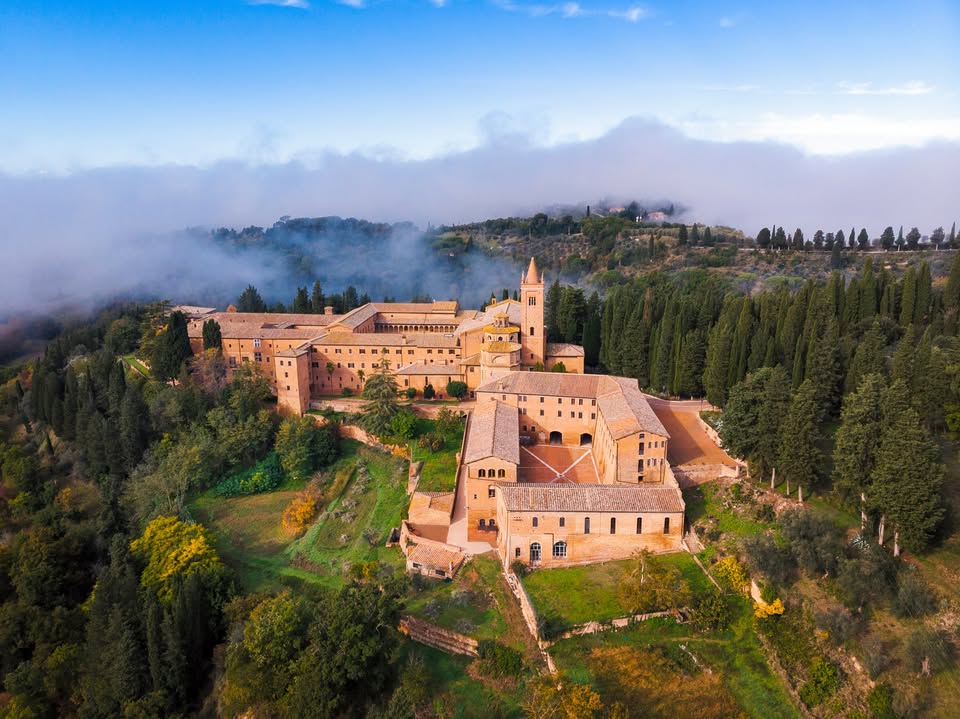
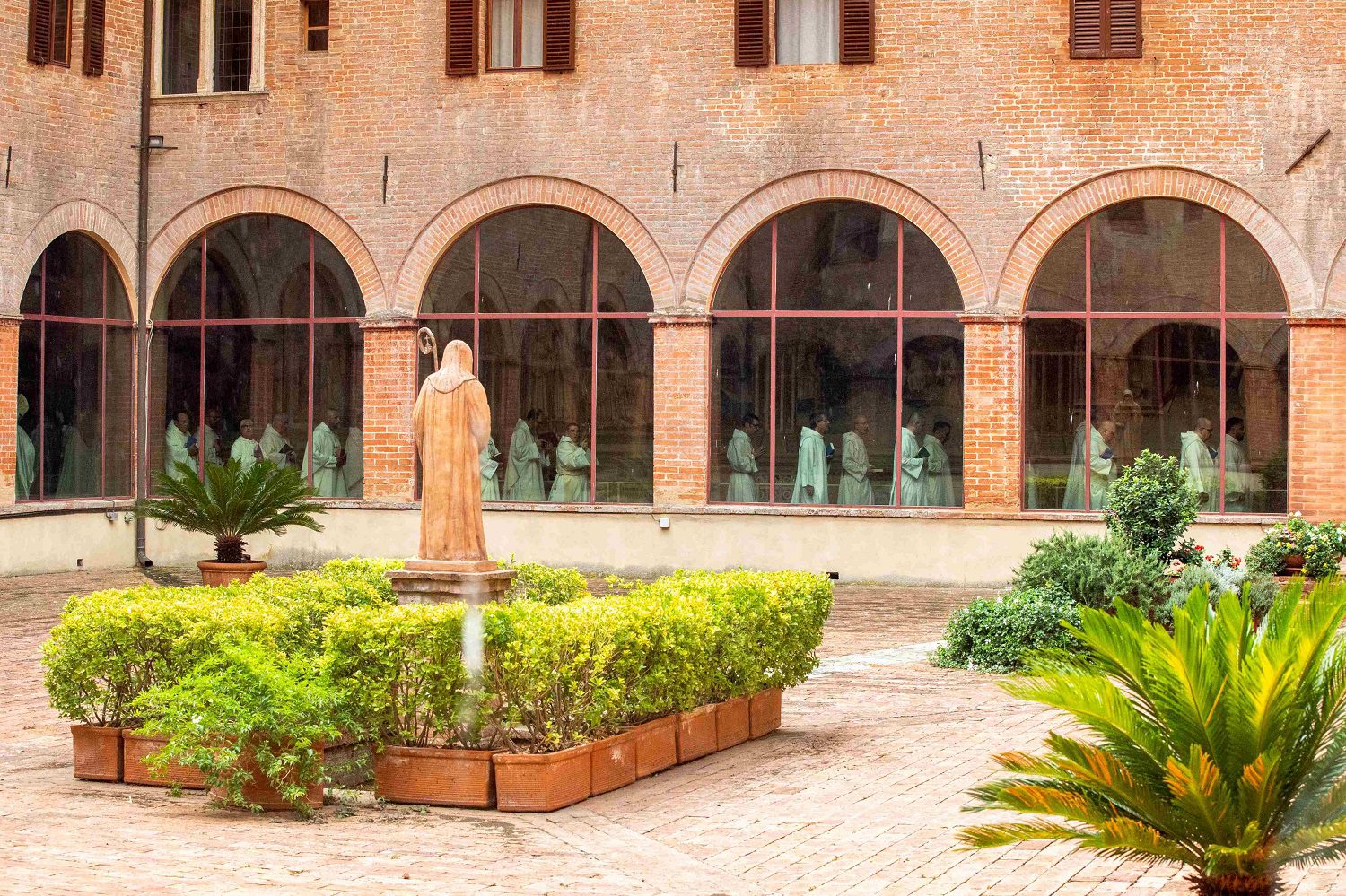
Perched on a ridge in the heart of the Crete Senesi, the Abbey of Monte Oliveto Maggiore stands as a monumental example of a city in the form of a monastery. Founded on March 26, 1319, by the Sienese nobleman Giovanni Tolomei (Saint Bernard Tolomei), the complex has been the uninterrupted sanctuary of an Olivetan community, which today counts approximately thirty monks dedicated to prayer and agricultural labor.
Over the centuries, monastic stewardship has shaped an originally wild environment into an oasis of biodiversity, where vineyards and olive groves alternate with the natural precipices of the crete; a viticultural heritage documented since the founding bulls and detailed as early as 1348 to 1370 in the registers of the monk Fra Lando di Feo of Arezzo.
The viticultural production originates from the initial 16 hectares (200 iugeri) situated in Accona, bestowed by the founder alongside the lands of Patrizio Patrizi in Melanino. Currently, the farm manages 8 hectares of organic vineyards, utilizing the oenological consultancy of Gianni Terzuoli, whose family has been linked to the Abbey for seven generations. The flagship variety is Sangiovese, articulated in high-profile labels such as the Toscana Rosso 1319—a structured blend with Merlot and Cabernet Sauvignon—and the Sancte Benedicte. The selection is completed by the traditional dessert wines, including the Santo dell’Abbate, aged for over three years in the evocative 14th-century cellar, where the wine evolves surrounded by the frescoes of Sodoma and Luca Signorelli.
Abbazia di Monte Oliveto Maggiore
Monastero di Camaldoli (Tuscany)
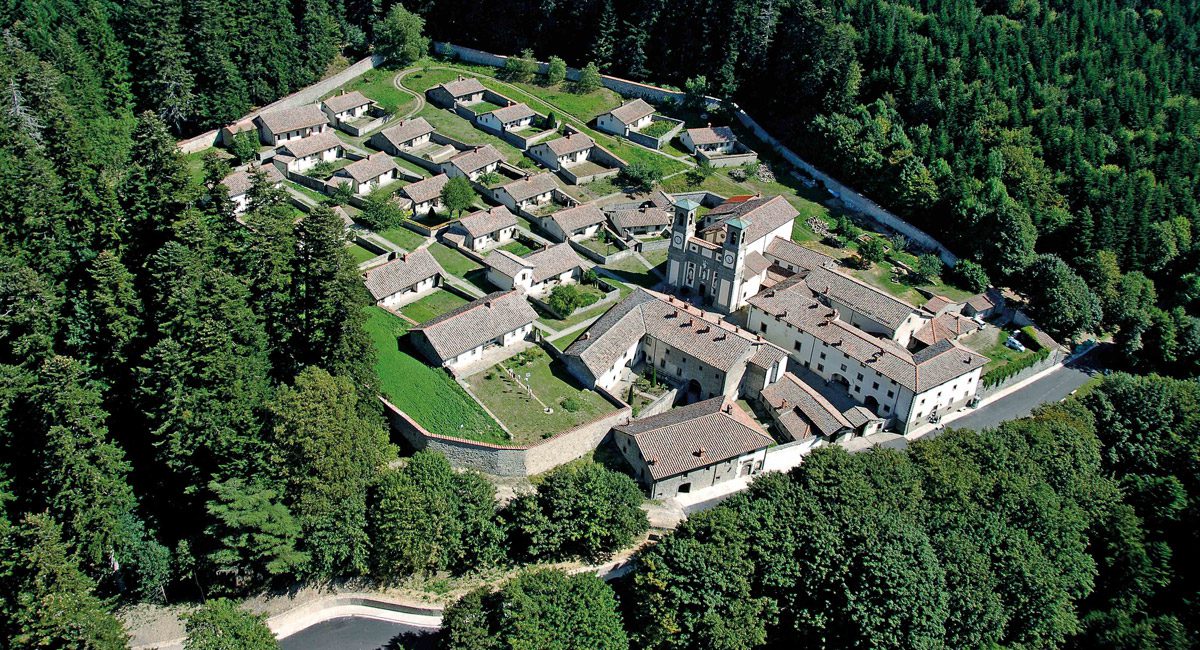
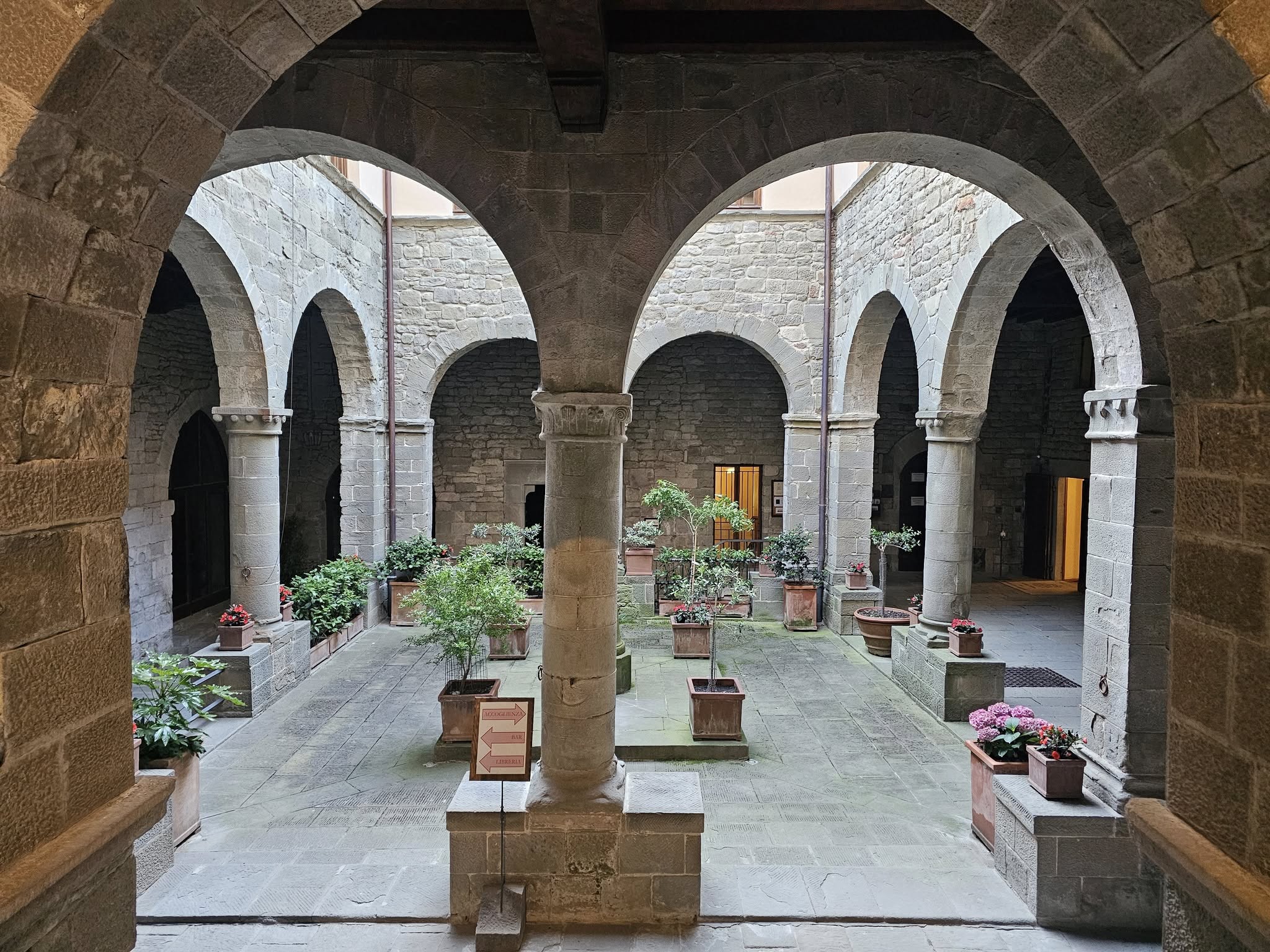
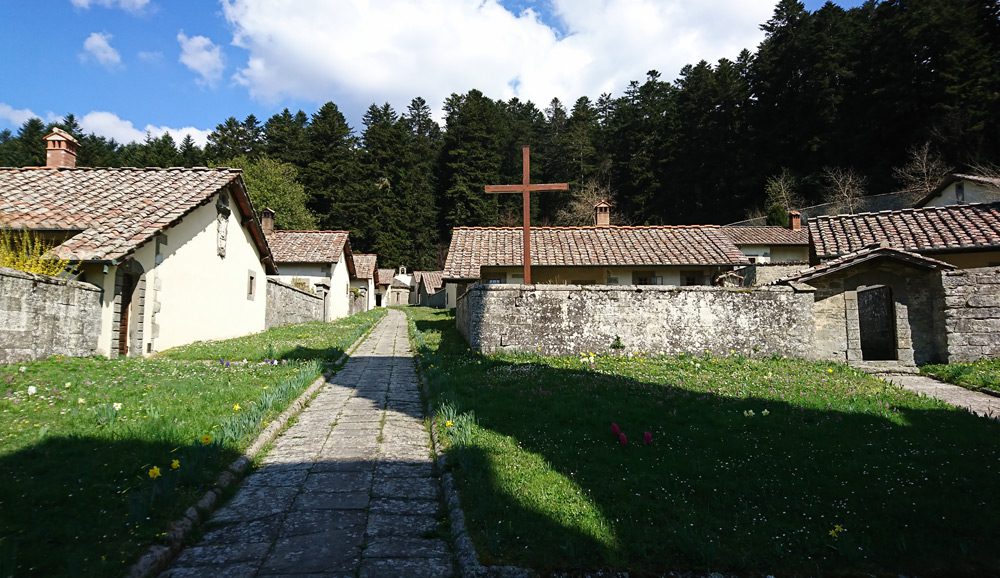
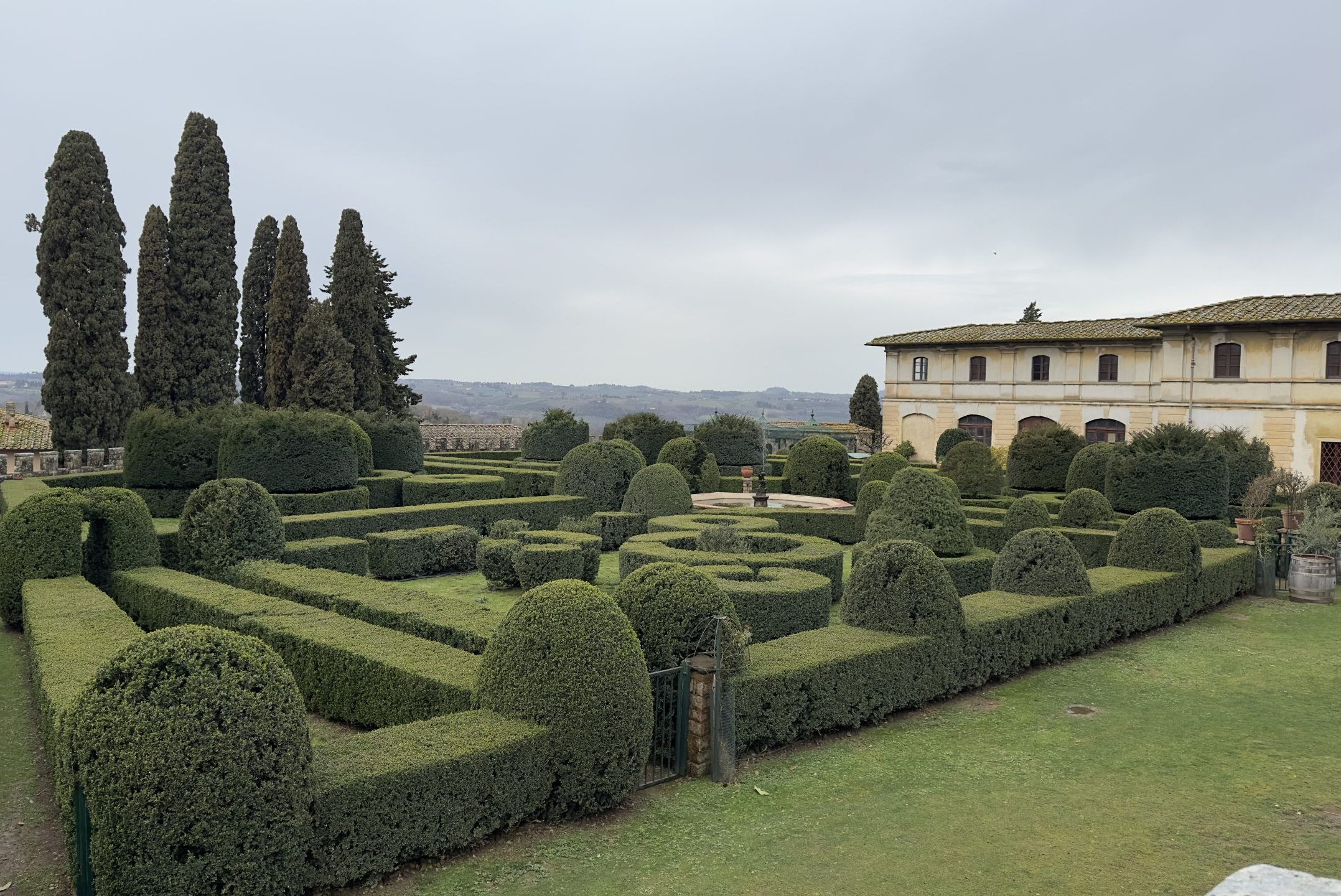
In the Casentino region, the Mausolea represents the evolution of the Benedictine grancia toward precision viticulture. Built in 1492 at the behest of Prior General Pietro Delfino upon 13th-century foundations, the structure serves as the economic and spiritual hub of the Camaldolese community. The vineyards, arranged along the Archiano stream on steep, east-facing slopes, demand a rigorous, almost heroic manual management. Here, a blend comprising Sangiovese, Canaiolo, and international varieties such as Merlot and Syrah reaches fulfillment in historic underground cellars (ipogei), where thermal stability and casks dating back to 1753 guarantee an evolution protected from vibrations and air currents.
The technical hallmark is expressed in the pursuit of extractive purity, finding its experimental peak in the Mausolea Rosso: a blend of Montepulciano and Canaiolo managed without added sulfites, a choice that privileges fruit integrity and the truth of the terroir. Alongside it, the Borbotto Rosso IGT outlines a more dynamic profile, centered on the fragrance of small red fruits and gustatory freshness. Both labels reflect the ancient Camaldolese precept that elevates wine to a vehicle of superior quality, following the rigor of the psalmic maxim: Vinum laetificat cor hominis.
Badia a Passignano (Tuscany)
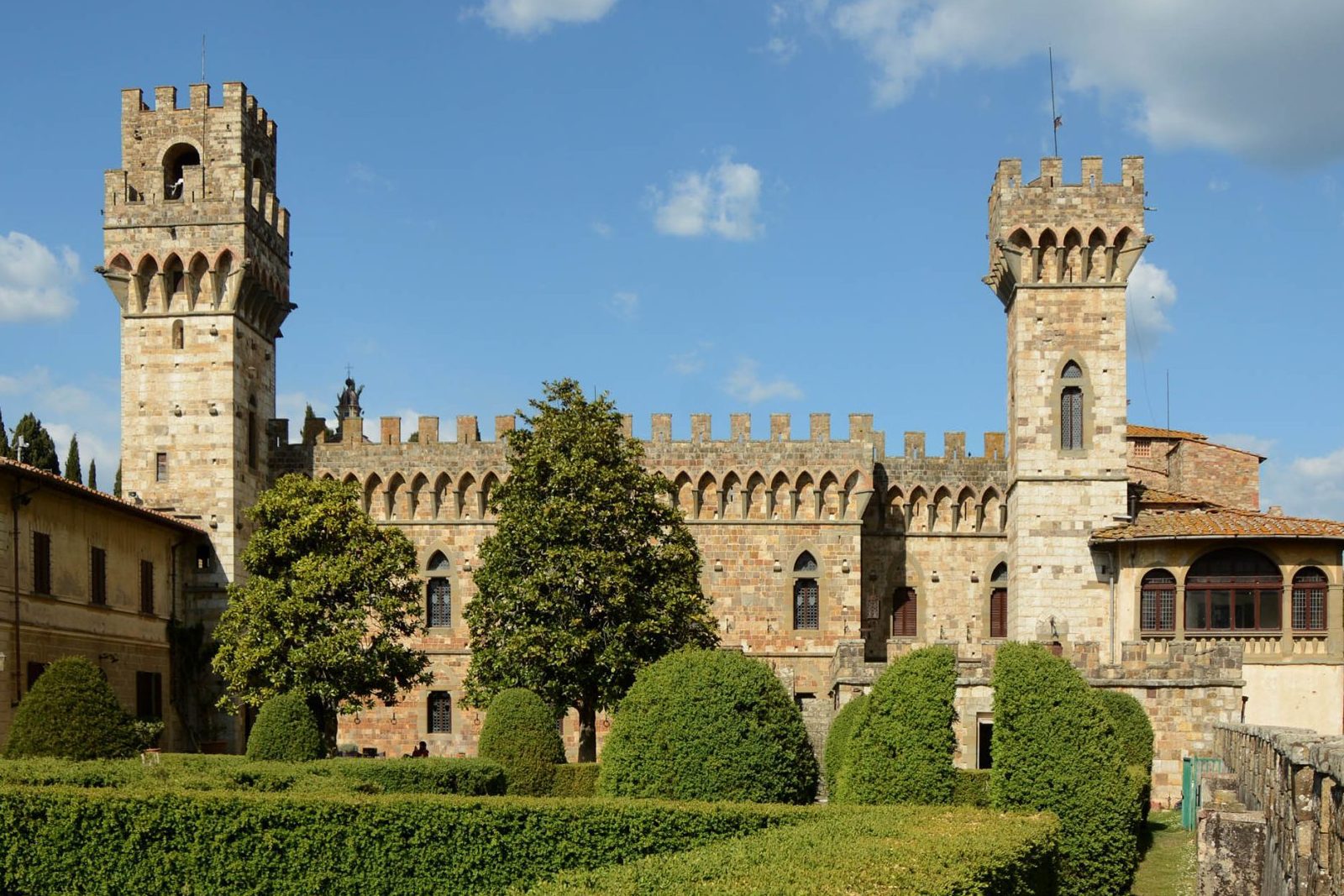
In the heart of Tavarnelle Val di Pesa, the settlement of Badia a Passignano represents one of the pinnacles of monastic viticultural culture. Founded in the Early Middle Ages and passed in 1049 to the Vallombrosians—a Benedictine congregation historically dedicated to viticulture—the structure is now an integral part of the Marchesi Antinori patrimony. Beneath the monastery lie the ancient 10th-century cellars: an underground environment characterized by vaulted ceilings and massive walls that naturally guarantee the thermal inertia and constant hygrometry necessary for the refinement of great red wines.
The highest technical expression of the estate is concentrated in the Chianti Classico Gran Selezione Badia a Passignano, a 100% Sangiovese resulting from a rigorous selection of the 65 hectares surrounding the abbey. The oenological protocol involves a fermentation of approximately 10 days followed by a maturation of 12 months in Hungarian oak barriques—a process that forges a wine with a ruby hue and a velvety profile, featuring silky tannins and a complex bouquet of ripe fruit and sweet spices. Completing the terroir experience is the Osteria di Passignano, a Michelin-starred restaurant where chef Matteo Lorenzini interprets Tuscan essentiality through historically rooted cuisine, in perfect dialogue with the elegance of the Badia’s wines.
Fattoria La Poggerina (Tuscany)
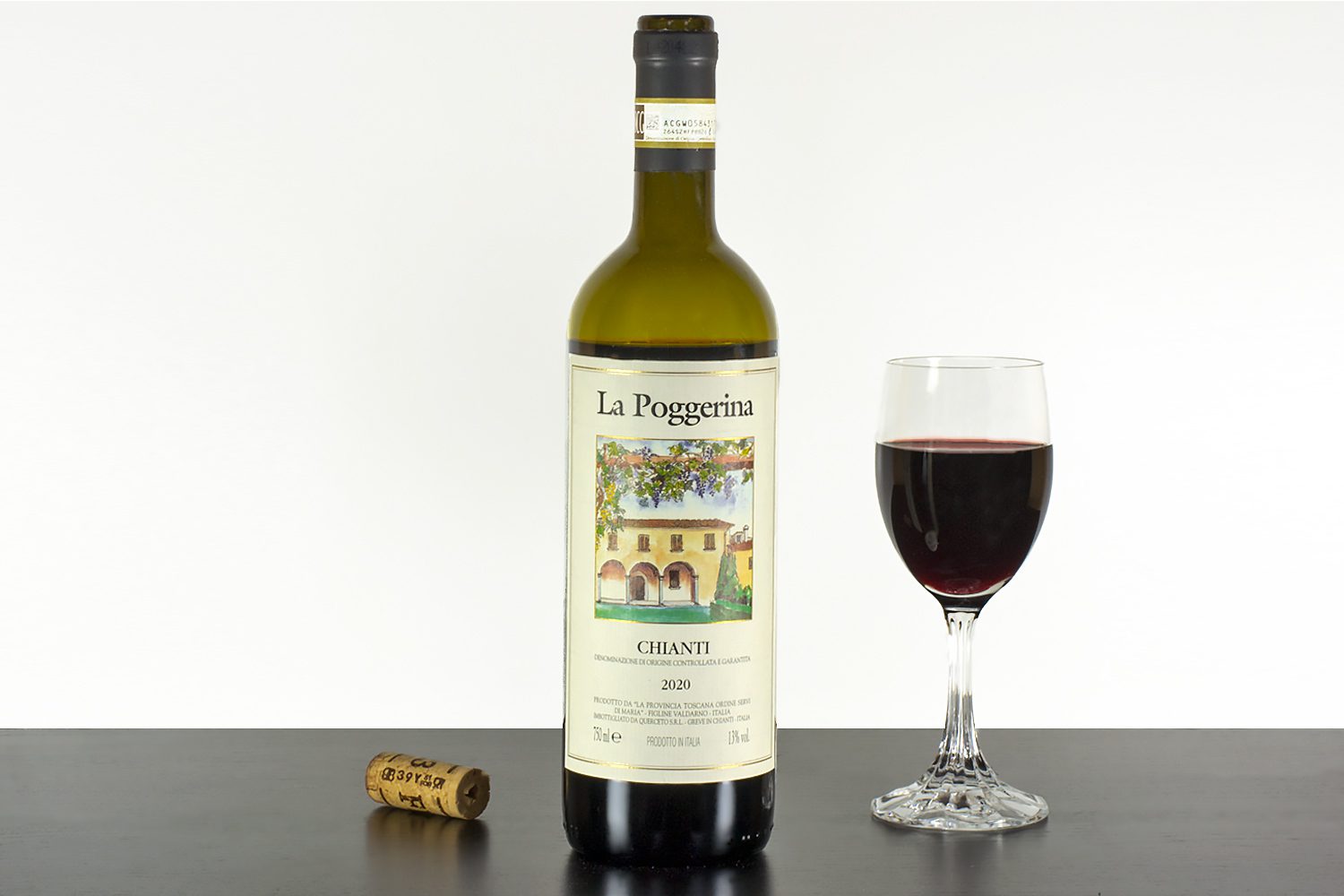
Managed by the Servants of Mary near Florence, Fattoria La Poggerina carries forward a viticultural tradition of great clarity. The heart of the production is represented by the Rosso Chianti DOCG La Poggerina, crafted entirely from Sangiovese grapes. The wine presents a luminous ruby hue and a sensory profile that balances a natural sweetness on the palate with a dry and persistent finish.
The farm is equally renowned for its Vinsanto del Chianti DOC, an amber nectar aged in chestnut carboys (caratelli). Characterized by an intensely aromatic bouquet, it represents the ideal accompaniment for traditional dry pastries, keeping alive a refinement practice that respects the slow rhythms of monastic life.
Fattoria La Poggerina
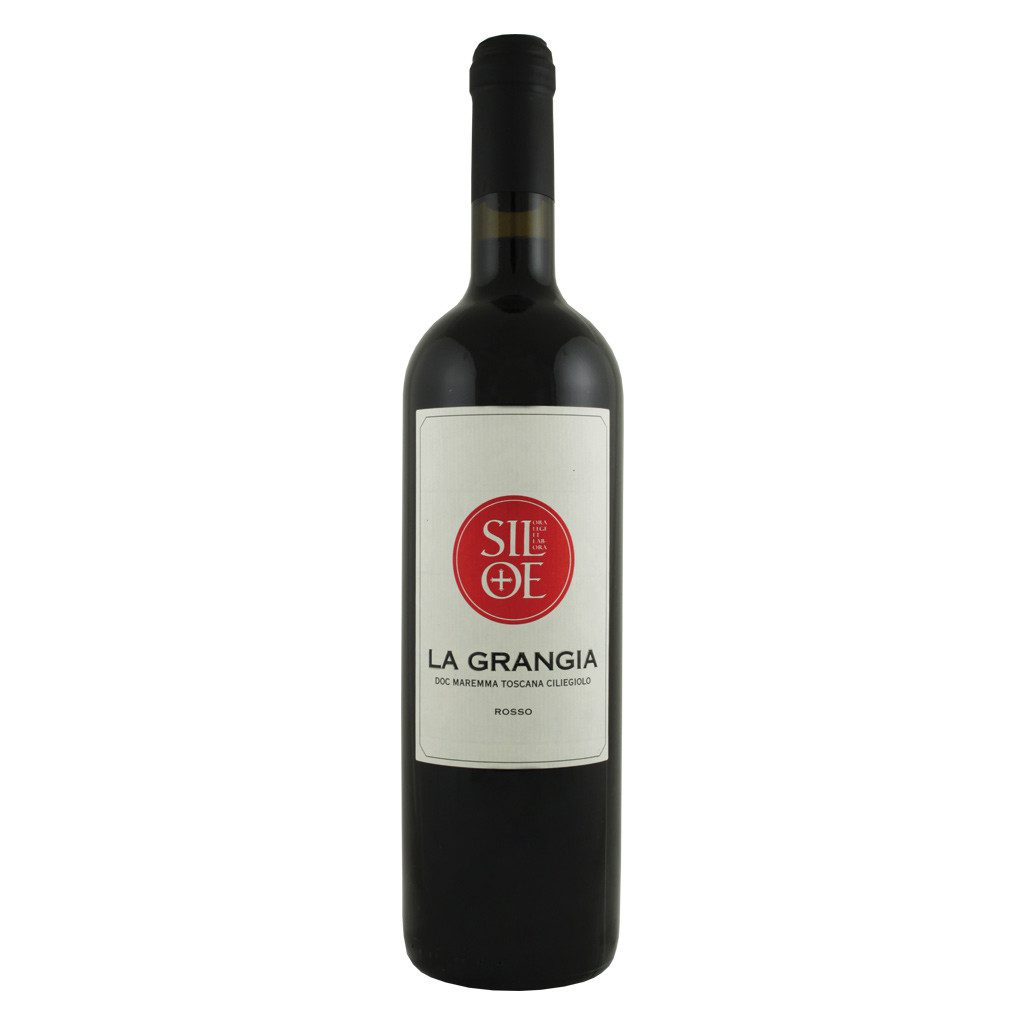
Monastero di Siloe (Tuscany)
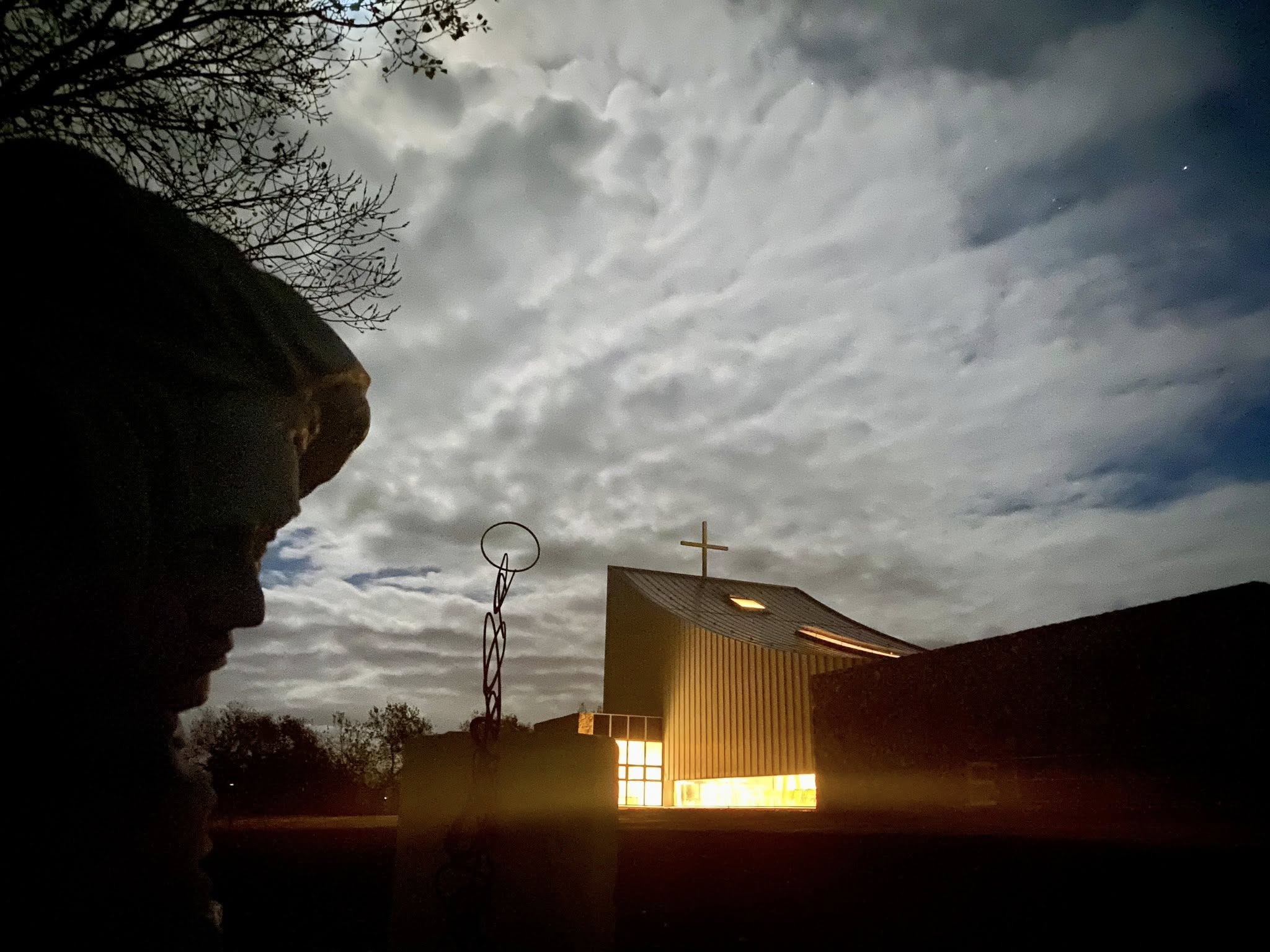
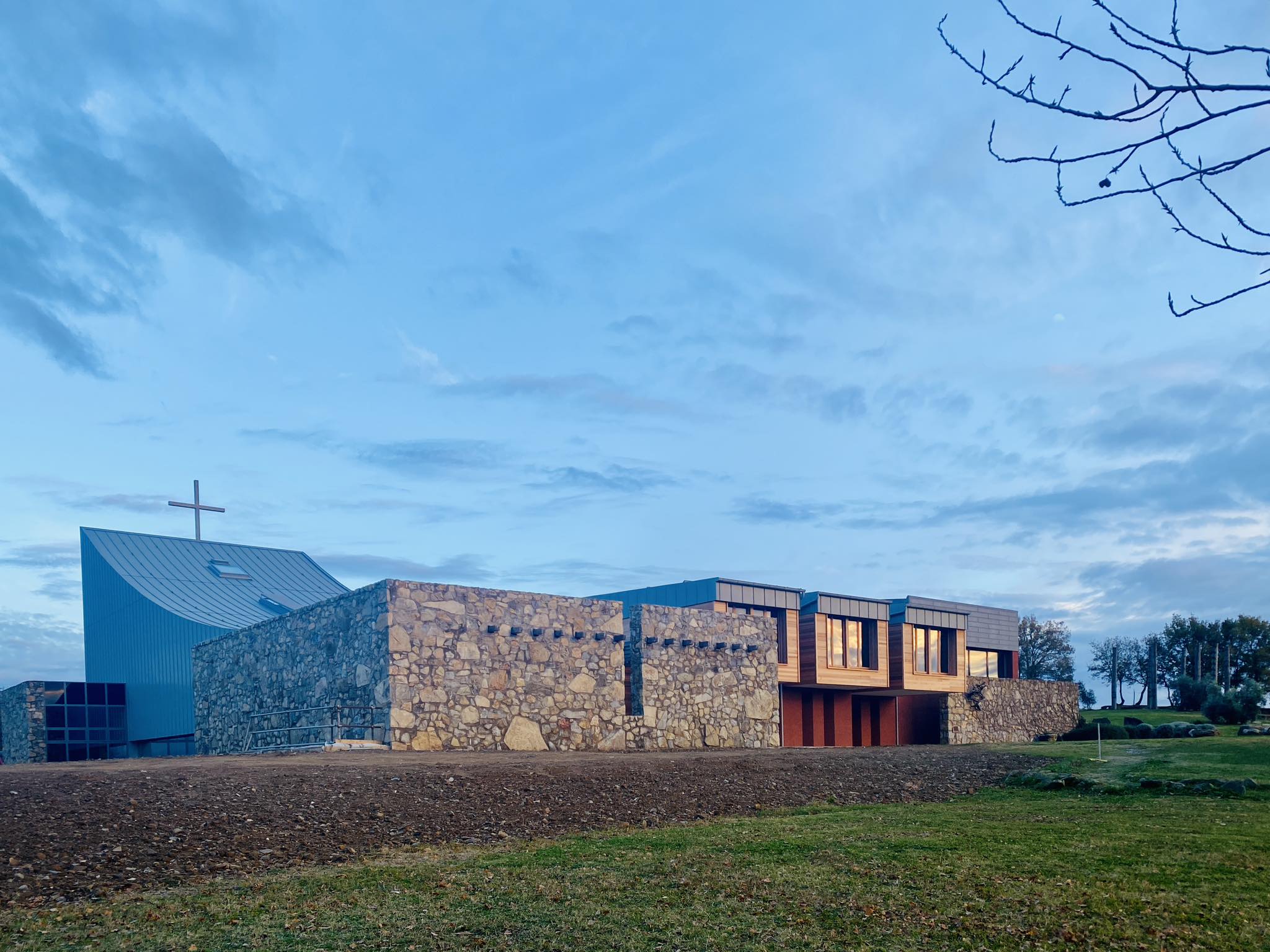
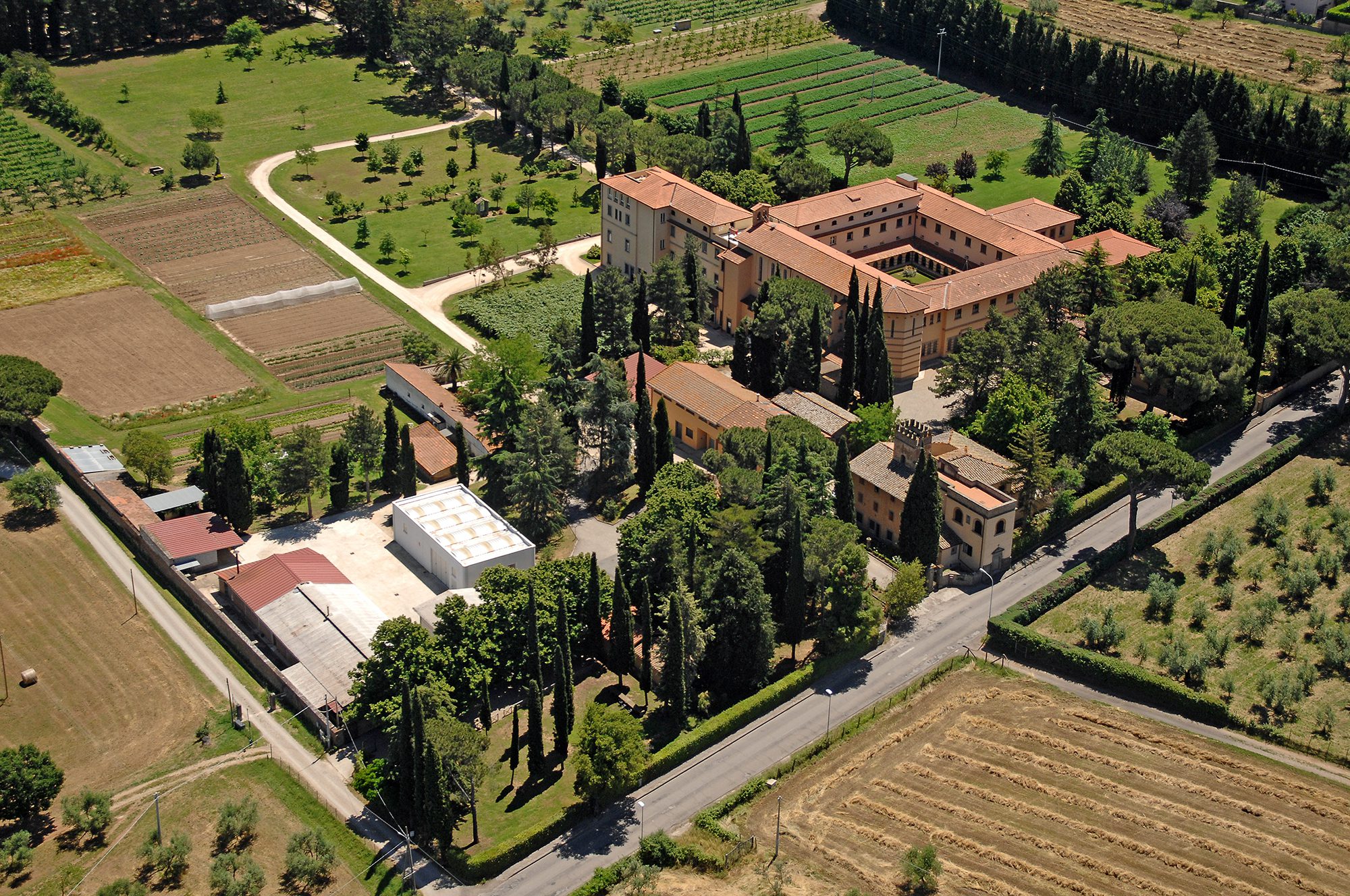
Situated on a hill in Poggi del Sasso, the Monastery of Siloe overlooks the Ombrone Valley, gazing toward Mount Amiata, the Val d’Orcia, and the Uccellina coast. The community, officially recognized in 1997 by Bishop Giacomo Babini, manages the Le Pescine estate—a name linked to a spring that symbolically recalls the Pool of Siloam in Jerusalem—following the tenets of organic agriculture. The agricultural project is centered on the recovery of ancestral varieties: on monastic lands, Mesopotamian wheat (Triticum Turanicum), emmer, and rare black chickpeas coexist with olive groves composed of Frantoiano, Leccino, and Moraiolo cultivars.
The signature wine is the red La Grangia, a pure expression of Ciliegiolo, a historic indigenous variety of the Maremma cultivated in a vineyard of approximately half a hectare with vines over fifty years of age. It is vinified entirely in steel for about nine months to safeguard the original fragrance of the fruit. In the glass, the wine expresses the solarity of the territory through a velvety and harmonious profile, devoid of oenological sophistication, aiming for immediate pleasure and a technical cleanliness that bears witness to the monks’ meticulous attention at every stage of the production chain.
Monastero delle Suore Trappiste di Vitorchiano (Lazio)
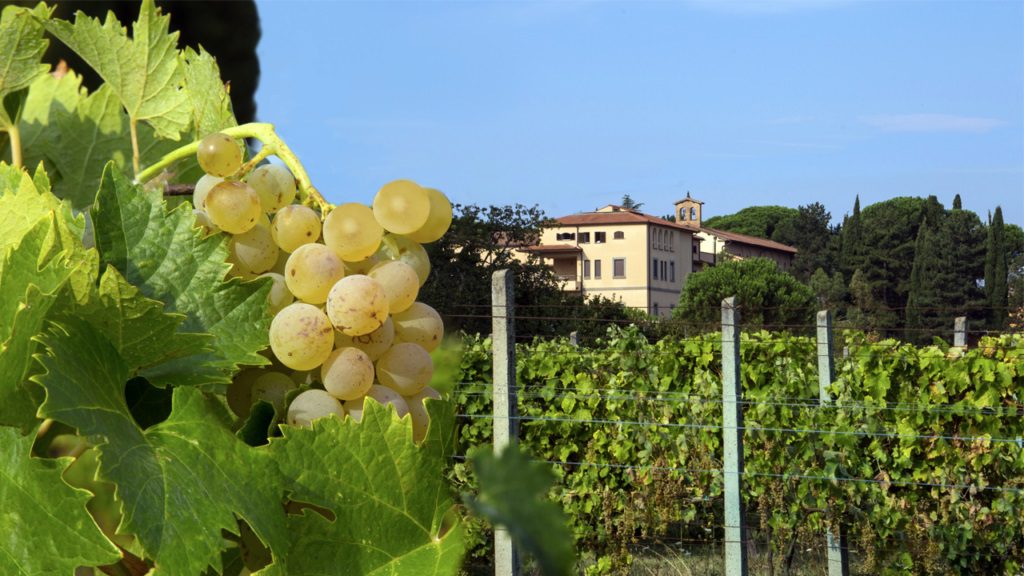
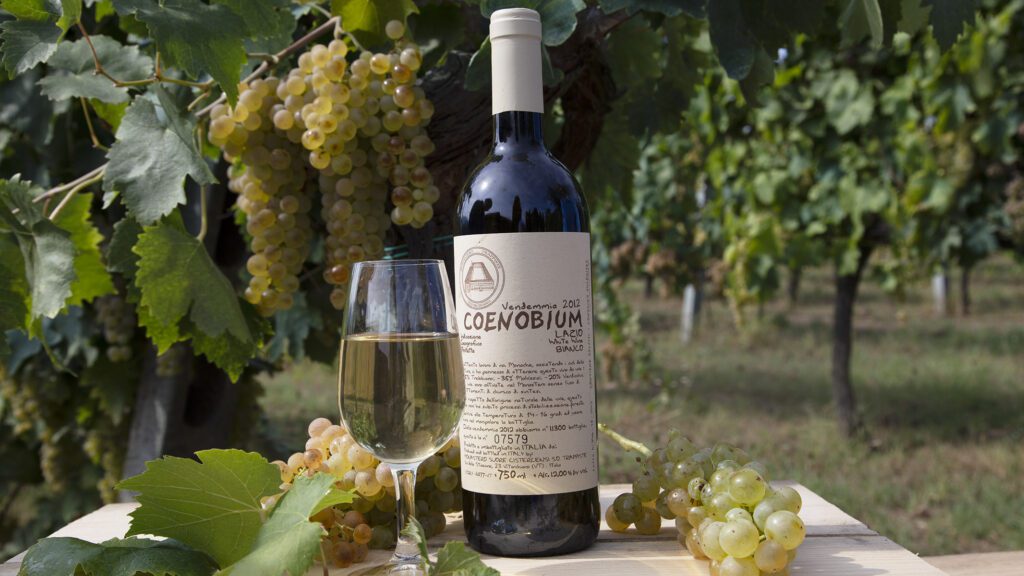
In the heart of the Viterbo area of Tuscia, eighty Trappist nuns live according to a strict observance of the Rule of Saint Benedict, defined by silence and manual labor. Their four hectares of vineyards, cultivated using organic methods on volcanic soils, give life to cult white wines, produced without added yeasts and through artisanal techniques that exclude invasive treatments.
The most representative wine is Coenobium, a white blend of Trebbiano, Malvasia, and Verdicchio. Of immense fascination is the Coenobium Ruscum, which undergoes skin maceration for at least 15 days, acquiring a structure and depth rare for the category. The production also includes the red Benedic, a blend of Sangiovese, Ciliegiolo, and Merlot.
Monastero delle Suore Trappiste di Vitorchiano
Abbazia di Casamari (Lazio)
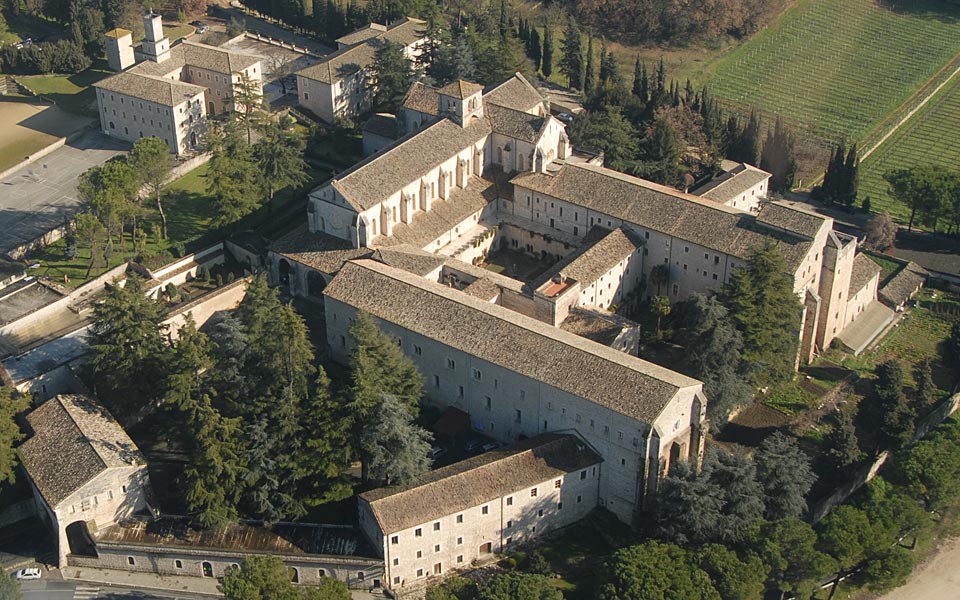
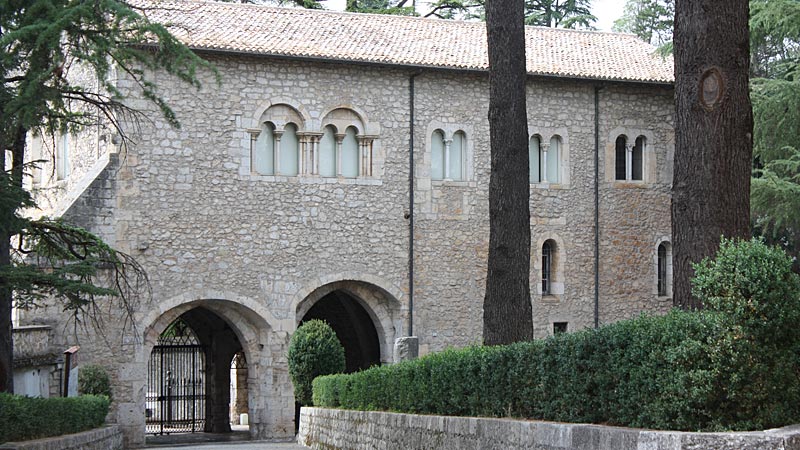
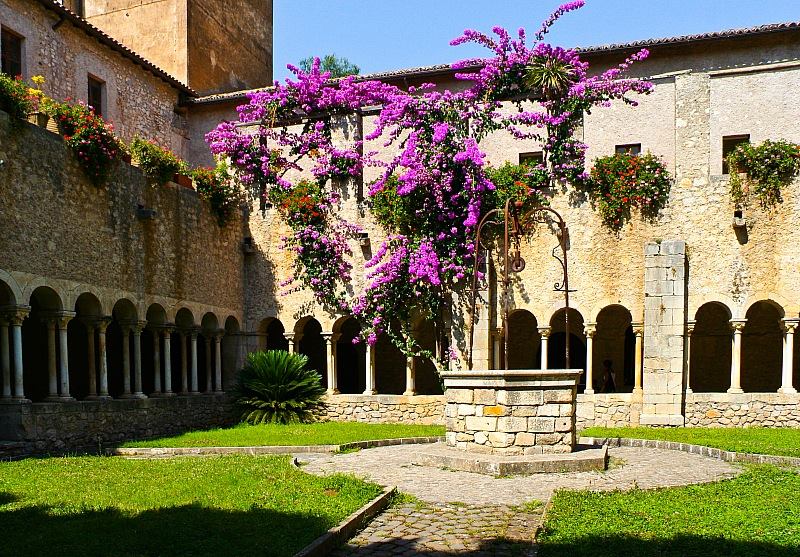
Considered one of the finest examples of Cistercian-Gothic architecture in Italy, the Abbey of Casamari (Veroli) is a vibrant center of activities that extend far beyond liturgy. Founded in 1030, it experienced a renaissance thanks to the Cistercian monks, who introduced innovative agricultural techniques and a rigorous management of the landed estate. To this day, the monastic community remains the custodian of a tradition that places viticulture at the heart of the abbey’s economy.
The monks of Casamari produce white and red wines that reflect the sobriety and strength of their order. This production stands alongside other historic activities, such as the pharmacy, the distillery, and the restoration of ancient books. The labels of Casamari are straightforward expressions of the territory—the result of a stewardship that has never abandoned its bond with the Latin soil and the technical precision characteristic of the Cistercians.
Abbazia di Valvisciolo (Lazio)
At the foot of Mount Corvino, in a position overlooking the Pontine plain, the Abbey of Valvisciolo enchants with its austere Cistercian beauty. Originally founded around the year 1000 by Basilian monks and later passed to the Cistercians in the 12th century, the abbey has maintained a strong agricultural vocation through the centuries.
The abbey manages approximately six hectares of vineyards, primarily dedicated to the cultivation of Merlot, alongside local varieties such as white Cacchione, Malvasia, and Trebbiano. The annual production of about 40,000 liters is a treasure destined almost exclusively for local direct sales. The wine of Valvisciolo is the fruit of a viticulture that respects the rhythms of nature—an authentic taste of the oenological history of the Lepini Mountains.