Florentine metal craftsmanship engages open coastal volumes, translating noble alloys and professional gastronomy into a rigorous architectural statement.
Set against the timber framing and generous fenestration characteristic of Seaside, Florida, Officine Gullo introduces an interior volume rooted in precision metallurgy and calibrated proportions. In Seaside Breeze, the intervention diverges from conventional coastal vernacular, imposing tectonic discipline, clear material hierarchy, and spatial balance.
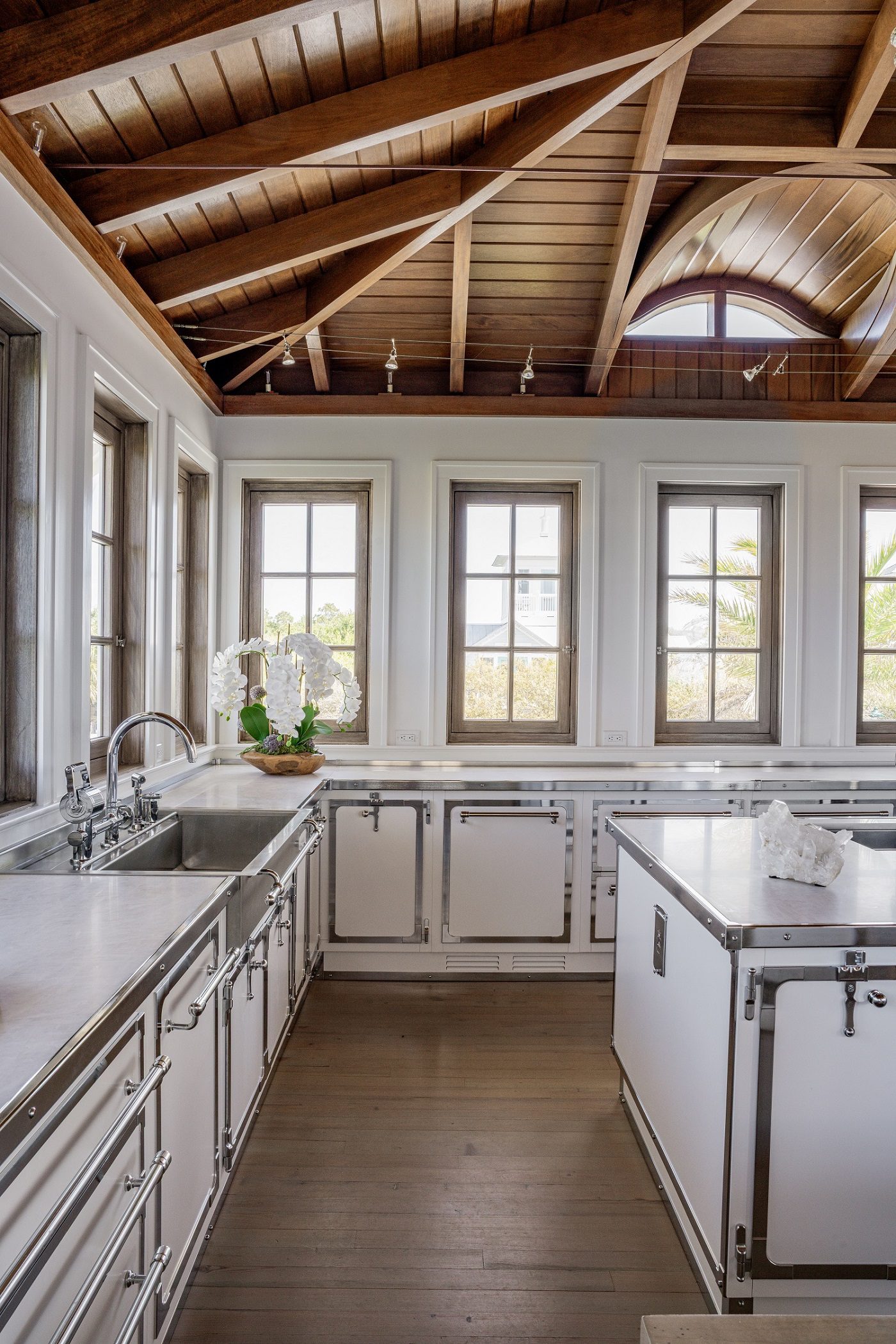
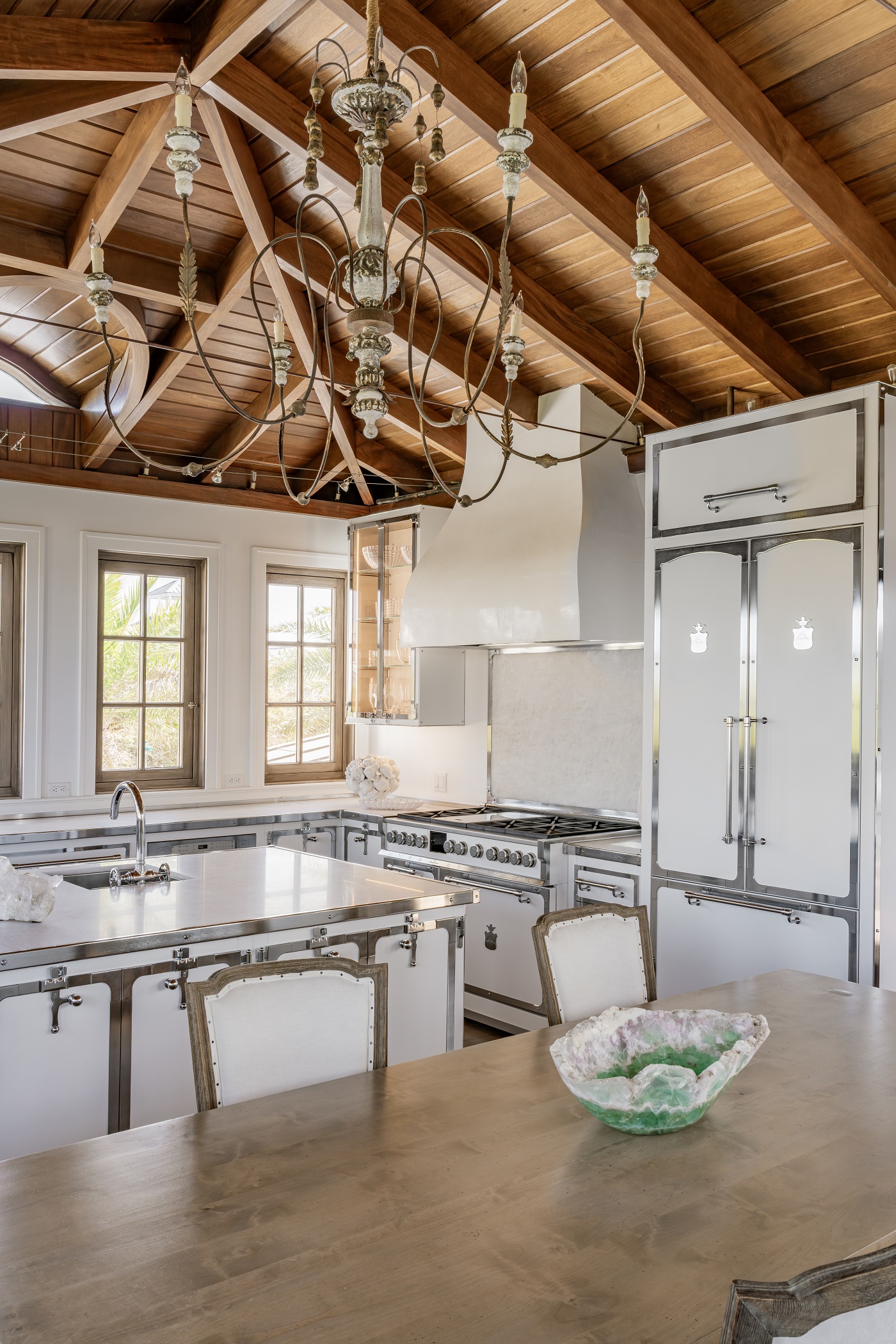
Under exposed wooden beams and generous vertical clearance, the composition maximizes natural daylighting. The architecture establishes a restrained chromatic baseline: metal joinery in a Lily White finish, framed by satin-chrome accents. The metallic profiles modulate natural reflections, softening the transition between heavy functional volumes and incoming coastal light.
READ: The Engineered Wine Room: Officine Gullo’s New Collection and the Architecture of Preservation
The Monolith Island: Programmatic and Structural Centrality
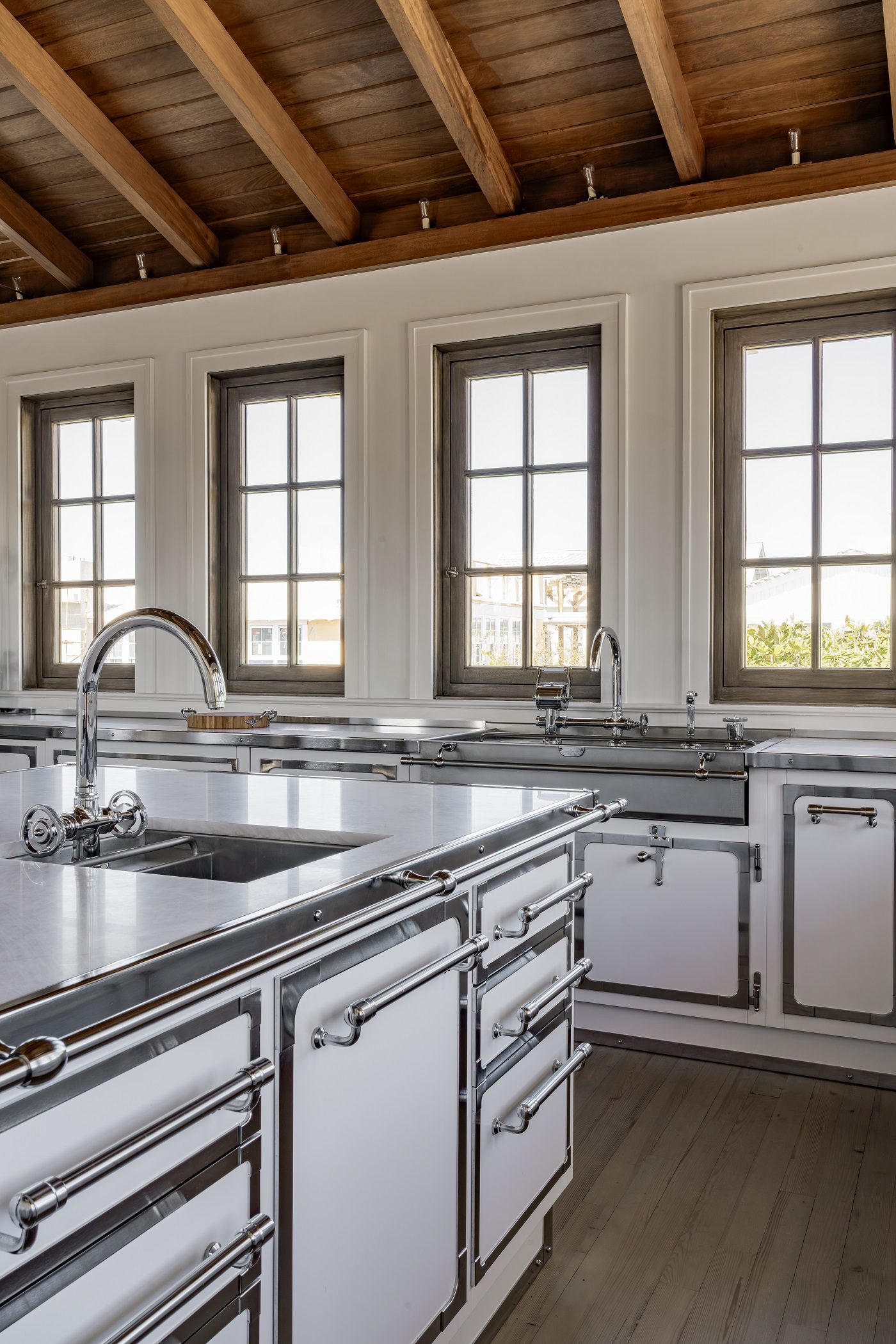
The spatial distribution privileges uninterrupted circulation, structuring domestic rituals around a central island. Conceived as a functional monolith, the island is capped with a thick slab of natural marble, establishing a deliberate tactile contrast with the cold precision of the metallic base cabinetry.
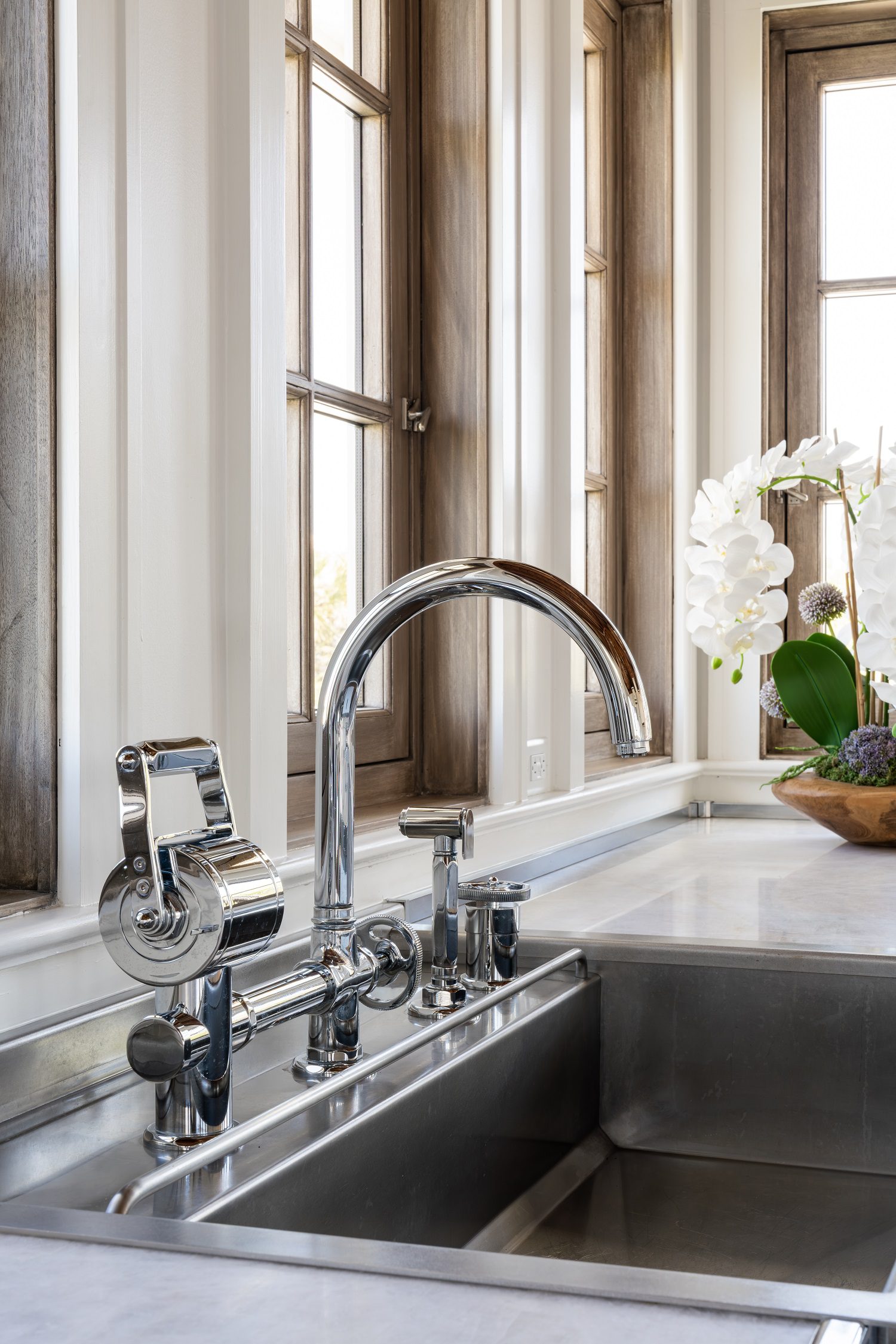
Embedded within the stone, the wet zone is articulated as a calibrated mechanical detail. A high-arched mixer is operated by solid chromed-brass Lobo knobs—components turned and finished by hand in reference to Tuscan foundry traditions while providing precise tactile feedback. The island functions simultaneously as an operational prep hub and a spatial threshold, orienting sightlines toward the living spaces without fragmenting the open layout.
Culinary Technology and Integrated Systems: The Fiorentina Axis
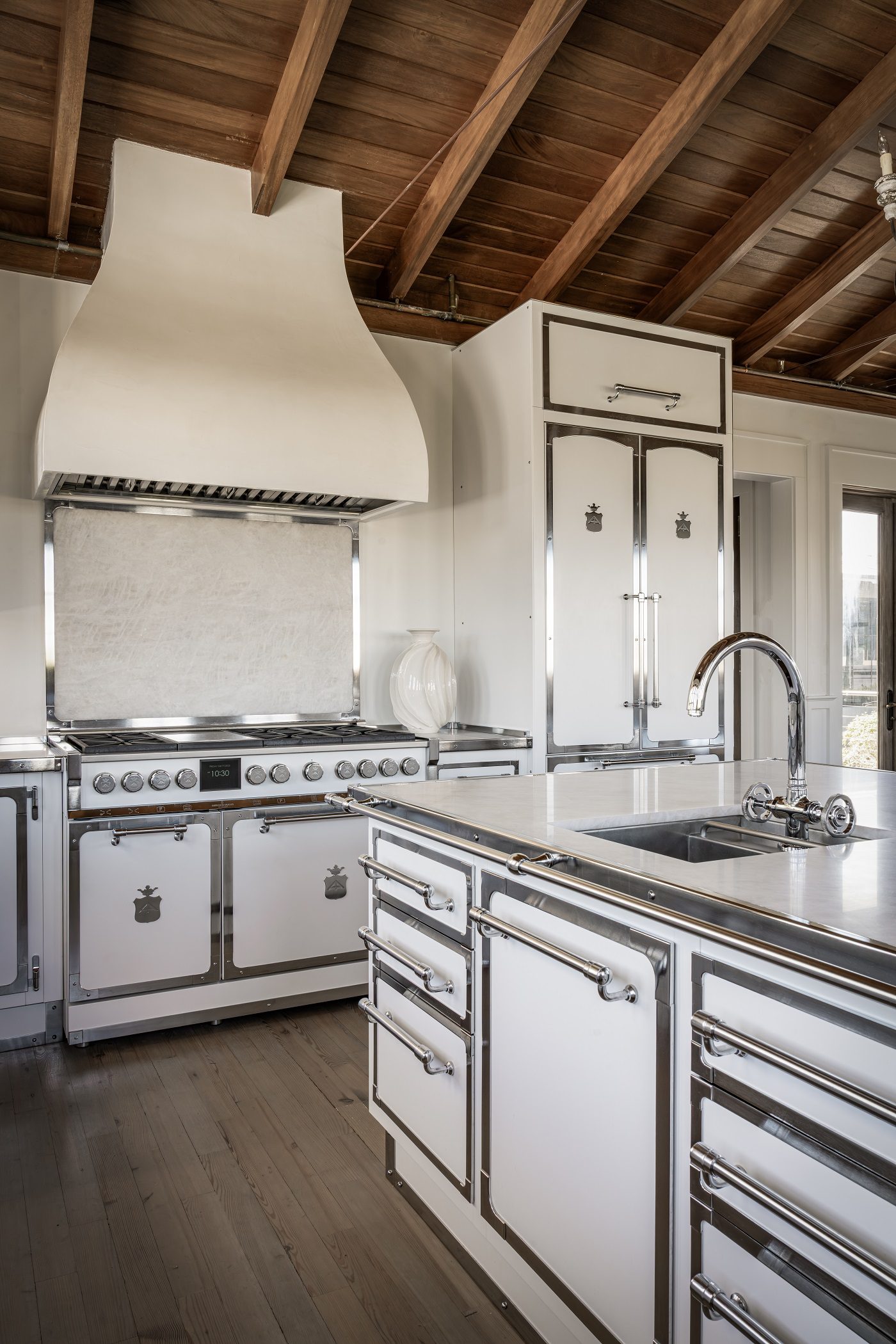
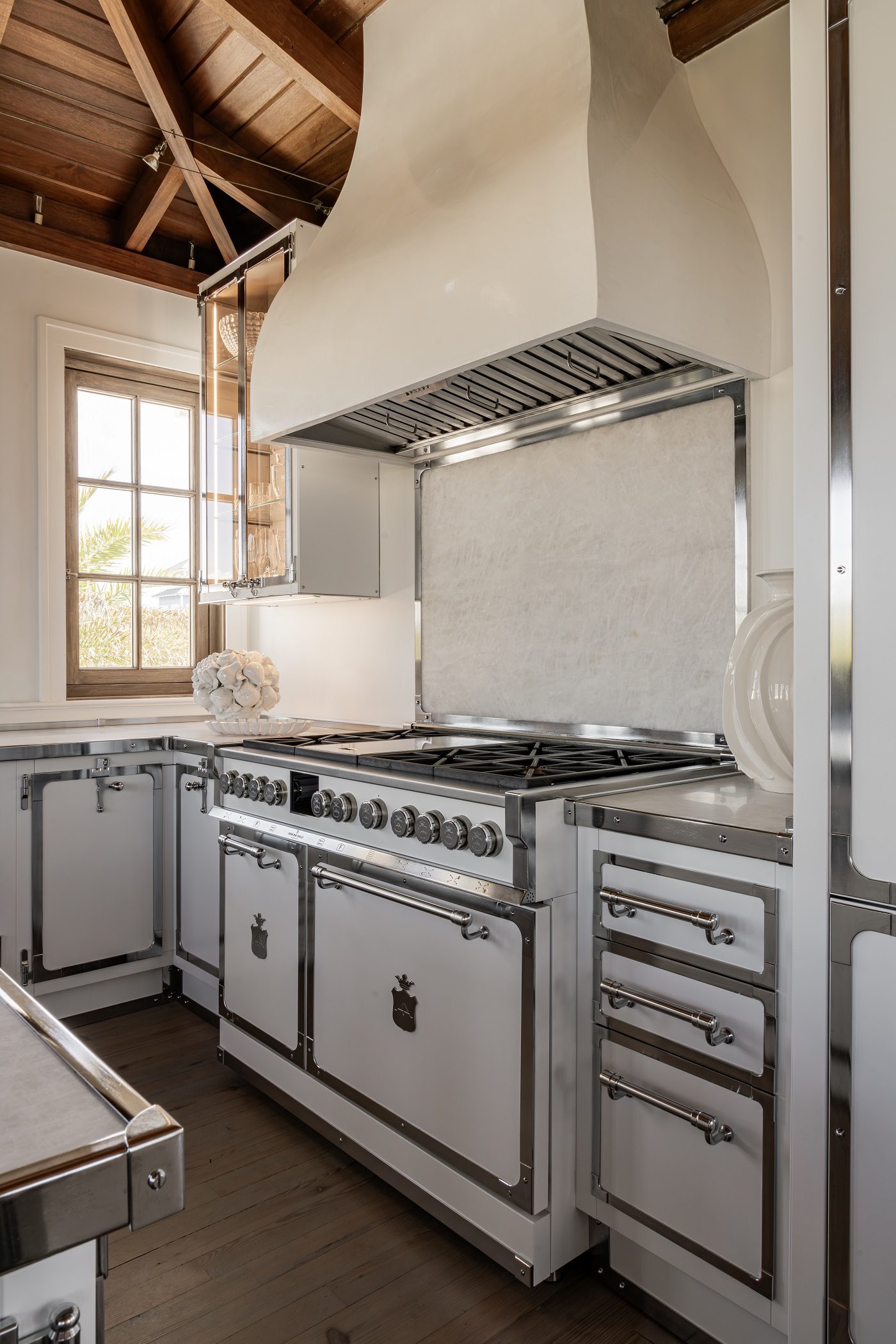
Along the primary perimeter wall, the cooking zone centers on the Fiorentina cooking suite, engineered to guarantee professional-level performance alongside everyday domestic ergonomics. The cooktop configuration features six burners with adjustable dual controls delivering up to 4.5 kW, alongside a professional stainless-steel fry-top and two multifunction ovens.
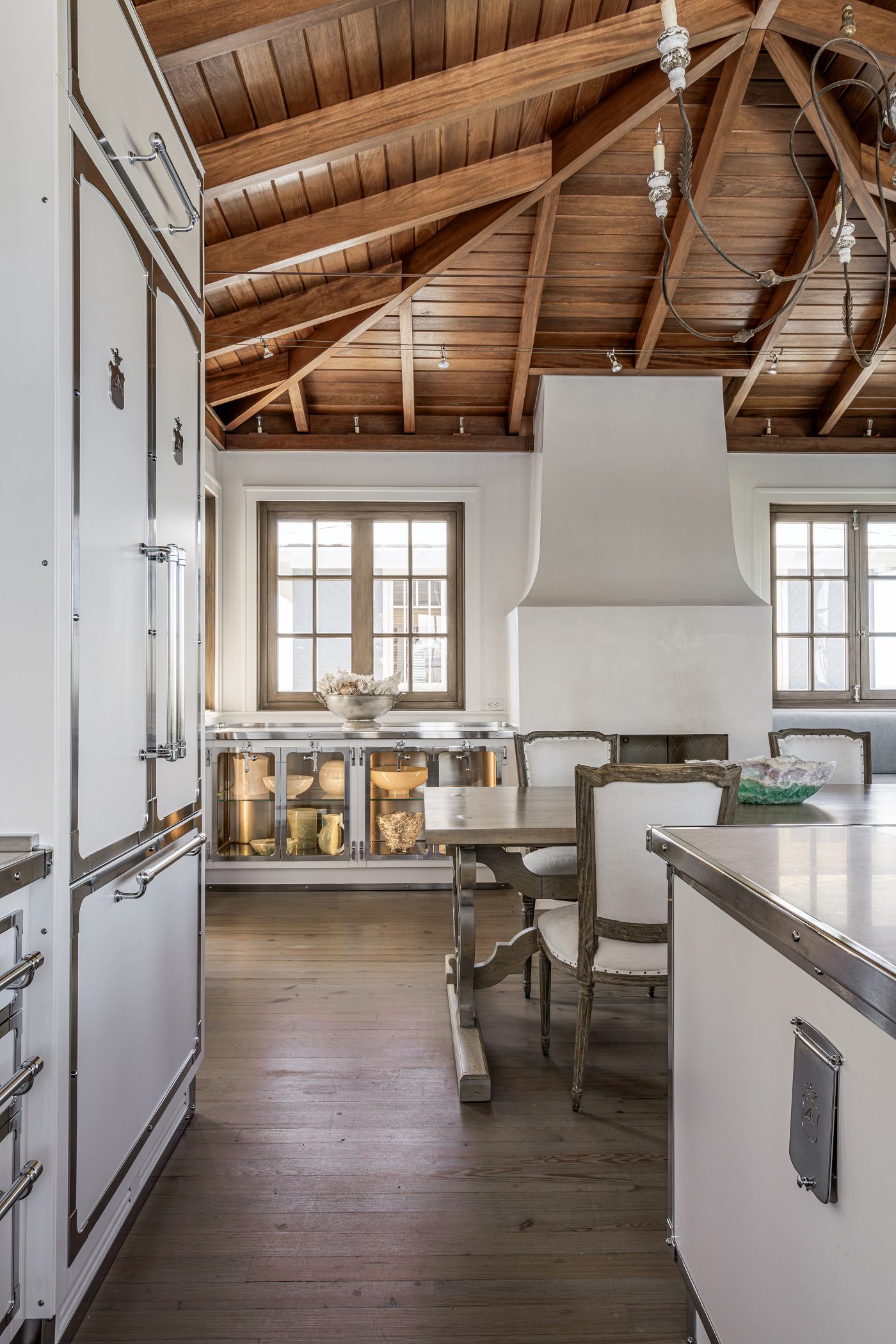
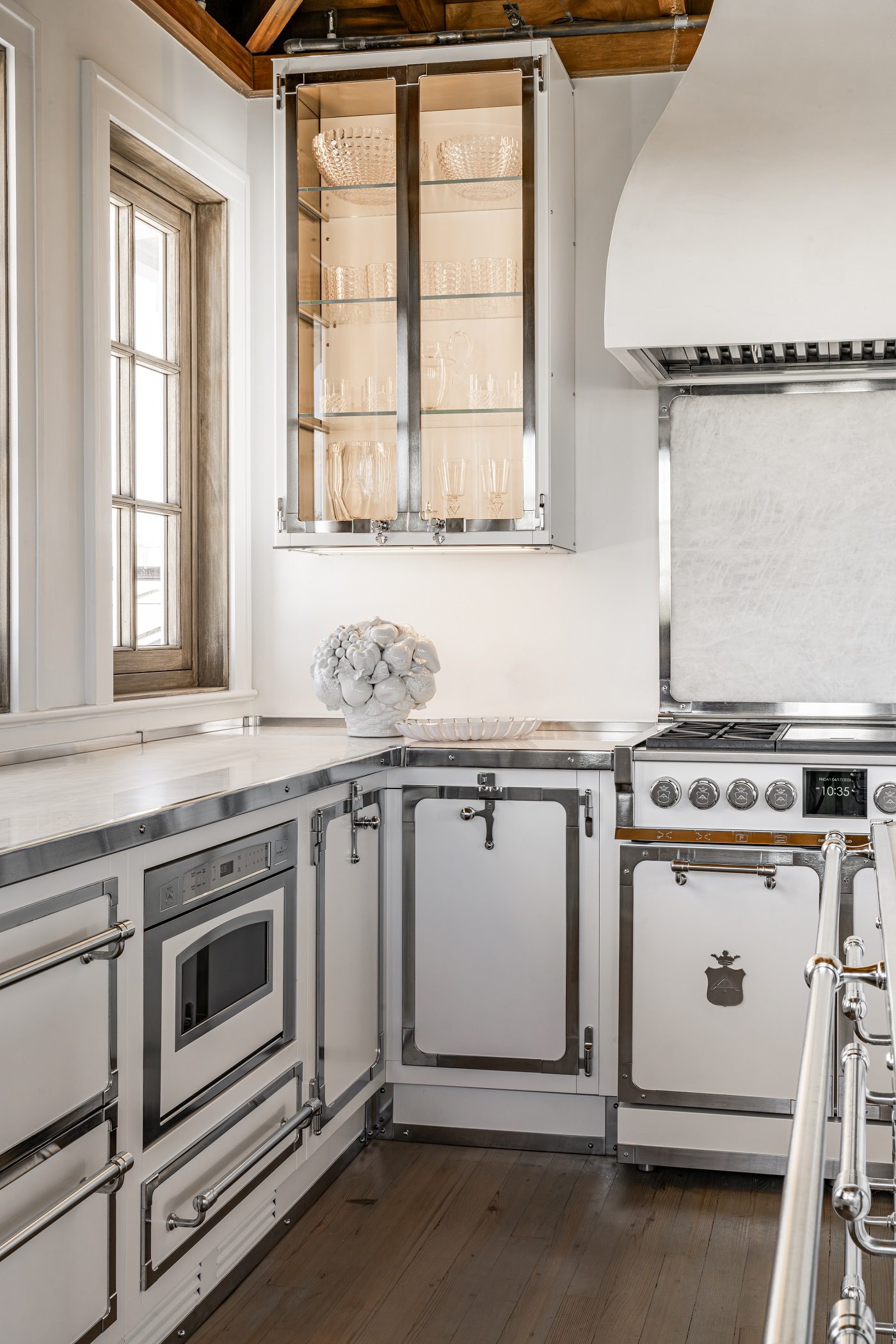
Adjacent to the cooking suite, the layout integrates a three-door refrigerator-freezer, while the continuous line of base cabinetry accommodates a secondary undercounter oven, a built-in microwave drawer, and a 60 cm undercounter wine cellar, preserving a clean horizontal alignment across the entire operational front.
Luminance, Glazing, and the Florentine Metal Tradition
To offset the visual weight of the cooking block, the lateral elevation introduces a rhythmic sequence of glazed surfaces and controlled backlighting. Lower cabinets fitted with backlit glass fronts house glassware and tableware, establishing a soft baseline luminescence. Above, illuminated display cabinets flank the cooking axis, breaking the solid perimeter and generating architectural depth through shadow, framing, and reflection.
The project embodies the founding ethos of Officine Gullo, established in Florence by Carmelo Gullo and steered internationally alongside his sons Pietro, Andrea, and Matteo. By fusing noble metal working—traditionally rooted in cold-rolled steel, copper, and cast brass—with contemporary domestic ergonomics, this high-end metal kitchen demonstrates how tailored metallurgy can define residential architecture, shifting the culinary space from a utilitarian service room into an enduring expression of bespoke material culture.
Photography: Venjhamin Reyes